
RPG Life Sciences plans new acquisition using capital worth 500 crore rupees
Read more
Business Standard
business-standard.com

RPG Life Sciences plans new acquisition using capital worth 500 crore rupees

The integrated pharmaceutical company RPG Life Sciences, based in Mumbai, intends to allocate approximately 500 crore rupees from its reserved capital to purchase another asset within the next twelve months.

RPG Life Sciences Director Ashok Nair stated to Business Standard during a virtual meeting that the company has already utilized about 200 crore rupees from its total reserve of 700 crore rupees and is looking for a new asset, preferably one approved by the US Food and Drug Administration (USFDA) or one that offers synergy with the company's current operations.

This move comes amid the company's plans to grow its active pharmaceutical ingredient (API) manufacturing business by 25 percent annually over five years through organic growth and acquisitions.

Recently, the company acquired Actis Therapeutics and Raghav Lifesciences with the support of private investment firm InvAscent; these assets are expected to start generating revenue by the third quarter of the fiscal year 27.

Nair noted that Actis and Raghava Lifesciences should generate revenue of 70 to 80 crore rupees over the next six months. These acquisitions have increased the company's production capacity fivefold and doubled its client base.

Previously, RPG Life Sciences transferred its API business to RPG Active Pharma, a wholly-owned subsidiary of RPG Life Sciences, and brought in InvAscent as a strategic partner.

According to Nair, this was part of a strategy to create a focused API business with dedicated capital, closer management, and greater strategic flexibility, while the company continues to develop its drug formulation business.

He added that RPG's existing manufacturing facilities can generate around 450 crore rupees in revenue without significant additional investment, with growth expected through increased capacity utilization, attracting new clients, and entering markets such as Europe and South America.

The company will focus on integrating and scaling these assets while continuing to explore opportunities for inorganic growth.

Last week, RPG Life Sciences reported a 16.5 percent year-on-year revenue increase to 211.6 crore rupees for the September quarter, exceeding the quarterly figure of 200 crore rupees for the first time.

Earnings before interest, taxes, depreciation, and amortization (EBITDA) grew by 15 percent, excluding one-time acquisition costs, and the gross margin increased by 260 basis points.

Nair explained the margin expansion due to improved product mix, strategic inventory accumulation, and price increases for customers, despite rising freight, solvent, and packaging costs amid the Middle East conflict. He also emphasized that the company has not faced supply issues.

Regarding future prospects, Nair stated that the company aims to maintain a growth trajectory supported by internal drug development, acquisitions, and the revival of international drug development business.

He added that the company is strengthening its presence in regulated foreign markets in Europe and Canada, as well as in new markets like Latin America and Africa. Nair reported that they have received tenders in some Latin American markets and successfully completed their first contract development and manufacturing (CDMO) project on time.

Nair also noted that RPG Life Sciences does not expect a significant impact on its sales or margins due to government restrictions on the trade markup of anti-cancer drugs.

Although maximum retail prices (MRP) must be reduced for its oncology brands such as Ivzumab (bevacizumab), as well as Densurak, Denbri, and Debrumab (all denosumab), Nair stated that the company's own selling prices will remain largely unchanged.

Welcoming this change, Nair suggested that increased accessibility could ultimately lead more patients to treatment and support volumes in the oncology and specialized drug portfolios.

He also mentioned that the company plans to leverage its existing network of specialists, particularly in nephrology and rheumatology, to promote the newly launched generic version of semaglutide.

Similar stories

BioGeometry raises $100 million to scale AI models that develop drugs from scratch
Read more
ventureburn.com

BioGeometry raises $100 million to scale AI models that develop drugs from scratch

Beijing-based company BioGeometry has raised $100 million in a Series A+ extension round, increasing the total Series A funding by over $100 million. The startup develops artificial intelligence models capable of finding new promising drug compounds in weeks rather than years, which could potentially change the economics of drug discovery.

China Life Capital led the latest round. BioGeometry, which has been operating for about four years, uses its AI models to search for novel molecular compounds. Existing shareholders, including Shanghai Biomedical Industry Fund, which participated in the first round, also contributed additional funds. Participants in the round included China Development Venture Capital, Reliance Investment, and Guofang Venture Capital, as well as several biomedical industry players; Dacheng Wealth Capital also increased its stake. Index Capital served as the exclusive financial advisor.

China Life Capital called BioGeometry 'a benchmark company in China's AI-based biotechnology industry,' noting that this represents progress compared to 2024, when the company closed a pre-A round led by Jiangmen Ventures with participation from Zhipu AI and Gaorong Capital.

BioGeometry's work is based on two AI engines, each functioning at a different scale. The GeoFlow model works with molecules; it is an atomic model that predicts biomolecular structures and creates new ones from scratch. The first version of GeoFlow, launched in June 2024, demonstrated alignment with AlphaFold 3 in predicting protein complexes. Its capabilities then grew: version V2 appeared in April 2025 and became the first Chinese AI model capable of performing de novo antibody design.

Version V3 was introduced in October 2025 and added a generation, evaluation, and optimization cycle. When working with over twenty targets, it achieved an average hit rate of 20% and found promising compounds within three weeks. A larger version, V4, is under development. The other engine, GeoCell, focuses on the cellular level. This is a virtual cell model that predicts how cells react to genes, drugs, or combinations, helping teams select targets, diseases, and suitable patients.

These two models are integrated using an AI agent that connects them to an automated laboratory, ensuring that every experiment provides new knowledge to the system.

The new capital will be used to upgrade GeoFlow and GeoCell, as well as to expand high-throughput automated laboratories and advance proprietary drug programs to market. Numerous projects in drug discovery and synthetic biology are already planned. Several bispecific antibody programs are expected to enter IND submission in 2027. Synthetic biology may generate revenue sooner.

One project stands out—natural borneol, a compound used in traditional medicine. BioGeometry claims to be the first to be able to biosynthesize it with approximately 80% lower costs compared to plant extraction. Significant revenue from this project is expected in 2027.

Despite the slow and expensive process of drug discovery, most candidates fail. AI promises to improve chances by developing more advanced molecules from the outset. BioGeometry is betting on realizing this potential while simultaneously generating revenue through synthetic biology. For investors, this is a rare combination of ambitious goals and short-term income. Furthermore, the AI biotechnology scene in China is rapidly developing, even amid tightening US regulations on deals in this area. Global pharmaceuticals will closely watch who can compete with tools at the AlphaFold level.

Opply raises $7.5 million to scale agentic AI in FMCG supply chains
Read more
ventureburn.com

Opply raises $7.5 million to scale agentic AI in FMCG supply chains

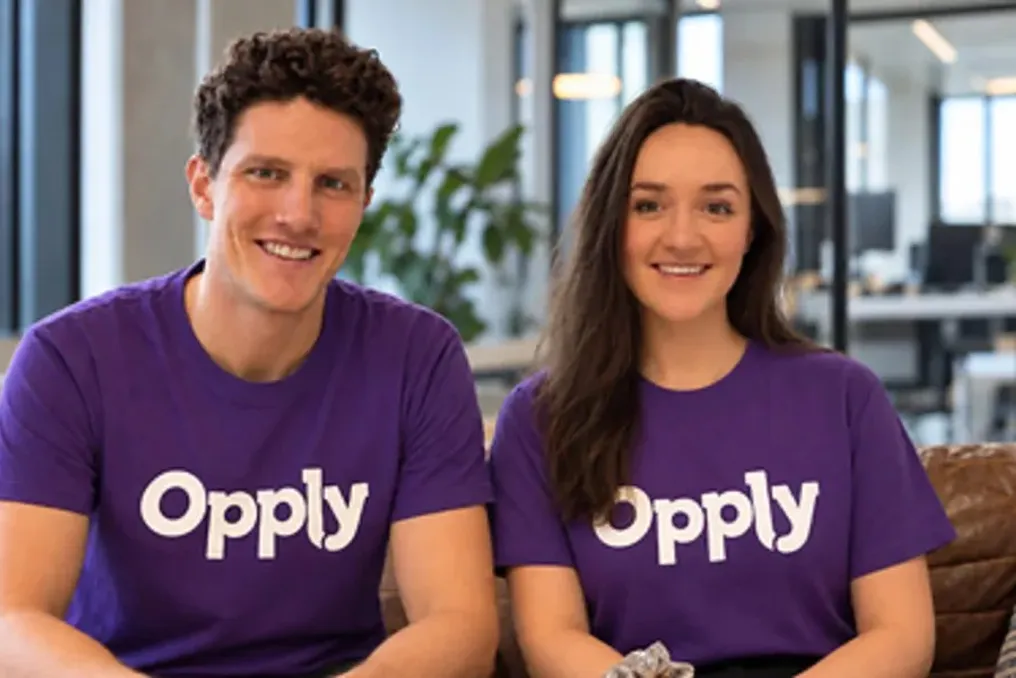
Opply, an agentic artificial intelligence company based in London and Chicago, has raised $7.5 million (equivalent to £5.6 million). These funds will be used to implement its software for managing complex consumer packaged goods (CPG) supply chains.

The funding round was led by Chalfen Ventures, with participation from Index Ventures, Anthemis, Entrepreneurs First, In This Together, and Ventures Together. Opply was founded in 2021 by CEO Helen Murphy and Martin Postel.

Opply addresses the problem of fragmented and manual workflows that still dominate most CPG operations. Their platform, named Opply Brain, integrates specialized AI agents, proprietary data, and a supplier network. This allows the system to manage processes such as ingredient sourcing, procurement, financing, inventory management, production planning, and logistics.

Unlike systems that merely provide advice, Opply's software performs the work directly, controlling all stages, including payment processing and raw material supplier sourcing.

According to the company's report, Opply's gross revenue has increased 15-fold over the last 12 months. This growth was driven by a thirtyfold expansion in the US after opening operations in Chicago. Current implementations include well-known challenger brands, such as the UK kefir producer Agua de Madre and the US kombucha brand RMBR.

According to the company itself, these deployments have resulted in cost reductions of up to 40% and a return on investment of 12 times within a year. Investors are increasingly supporting platforms capable of end-to-end operations rather than just providing passive tools.

Opply is focused on one of the least digitized sectors of global trade—the massive global CPG market, which Allied Market Research forecasts will reach $18.9 trillion by 2031. Information about Opply was first published on Ventureburn.

Popular