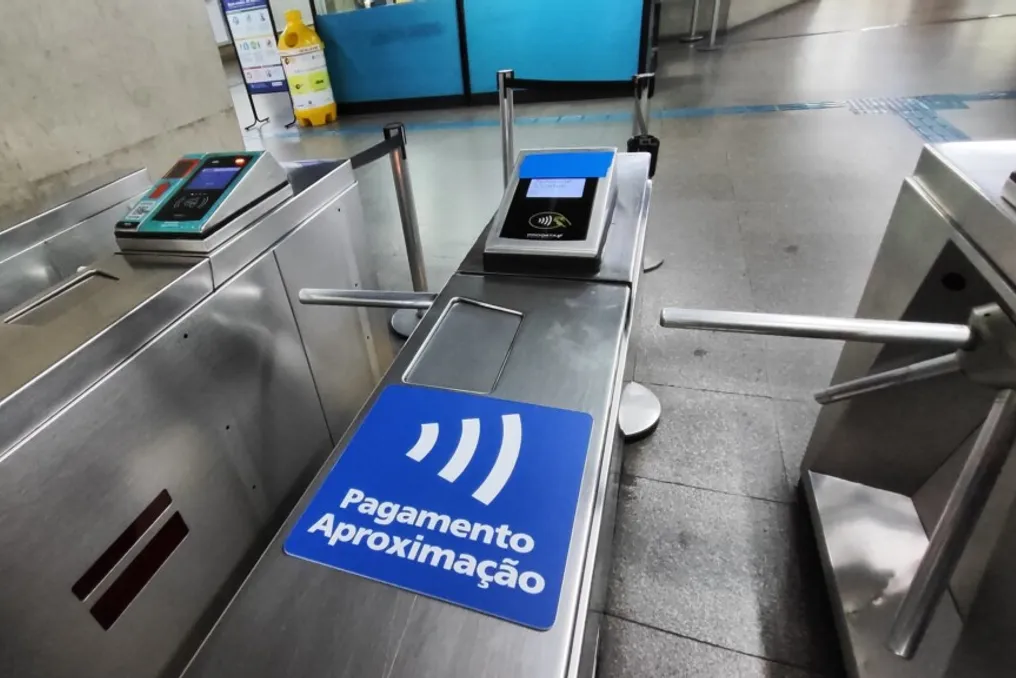
The São Paulo Metro finalized the acceptance of traditional magnetic tickets at its station turnstiles last Saturday (the 31st). This model, named Edmonson, has been in use since the beginning of the system's commercial operations in 1974 and will be gradually replaced by digital, electronic, and contactless solutions.
Until this Saturday, users could use the old tickets on lines 1-Blue, 2-Green, 3-Red, and 15-Silver. Those who still possess these units have an extended period to exchange them for QR code tickets, valid between next Sunday (the 1st) and January 31, 2027.
It is estimated that about one million magnetic tickets remain in the possession of passengers. The exchange can be made at the ticket offices of the Paraíso stations, which serve lines 1-Blue and 2-Green, and Tatuapé, related to line 3-Red.
This change is part of the modernization project for the metro system's payment methods, aiming to expand the electronic and digital options available to users. According to the Metro, the decision was motivated by challenges related to the maintenance of equipment readers and the inherent complexity of producing and distributing these magnetic tickets.
The management process for these tickets requires specialized manufacturing, transportation logistics, and secure storage, in addition to continuous distribution to stations and inventory replenishment. Additionally, there are costs associated with inventory control, ticket collection, and the preservation of the devices used to read the magnetic strips.
The transition to digital and electronic systems aims to simplify this entire operational structure and keep pace with the evolution of payment standards.
Although being phased out, the Edmonson magnetic ticket holds significant historical value for public transport in São Paulo. Used since 1974, when the São Paulo Metro began its commercial operations, this small paper card with a magnetic stripe accompanied millions of people in their daily commutes for work, studies, and other commitments over more than five decades.
For the Metro, this ticket also carries an emotional weight, representing memories of various generations of users. Its journey aligns with that of other artifacts that marked phases of technological and daily life evolution, such as analog clocks, payphones, and telephone tokens.
The name Edmonson honors Thomas Edmondson, who was a station chief at the Newcastle and Carlisle Railway in England. In 1839, he created a standardized system for issuing railway tickets, replacing handwritten tickets with pre-printed and numbered cards. This method allowed validation at the time of purchase, optimizing revenue and operations control for railway companies, and was later adopted by various international companies.
More than a hundred years later, this technology arrived at the São Paulo Metro. In 1974, the paper cards with magnetic stripes represented a contemporary solution for managing access to underground transport. After 52 years of use, the model is giving way to new payment modalities.