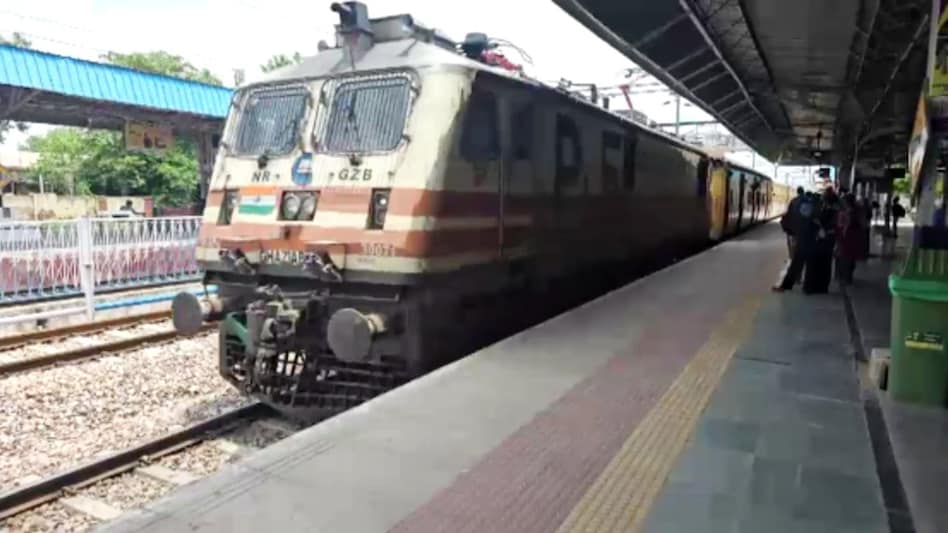
Kavach technology launched on 67 km of railway line in Rajasthan to prevent collisions
Read more
Aaj Tak
www.aajtak.in

Kavach technology launched on 67 km of railway line in Rajasthan to prevent collisions

The Kavach technology has been implemented on the Kanauta-Bandikui railway section in Rajasthan, which is intended to eliminate railway accidents. On this 67-kilometer stretch, which belongs to the West North Western Railway, trains are operating using the modern Kavach system across seven block sections. This is the first implementation of the Kavach technology on the West North Western Railway, and it was launched after numerous tests. Initially, the Kavach technology was installed on 250 kilometers of railway tracks.

The standard Kavach system has been successfully launched on the 67-kilometer Kanauta-Bandikui section in the Jaipur West North Western Railway division. The seven block sections include: Kanauta-Bassi, Bassi-Jhar, Jhar-Jatwara, Jatwara-Dausa, Dausa-Bhankri, Bhankri-Arnia, and Arnia-Bandikui. After the installation of the Kavach system, field tests were conducted, during which the train was checked from all sides, including the braking system, speed, and signal passage.

Furthermore, speed testing was carried out on the Jhar-Jatwara section at speeds up to 50 kilometers per hour, as well as testing at the established full sectional speed on the Kanauta-Bassi section, along with checking all relevant parameters.

According to Amit Sudarshan, an official of the West North Western Railway, the Kavach system will be implemented across the entire jurisdiction of the West North Western Railway. However, in the initial phase, the Kavach technology will be installed on 1586 kilometers of railway tracks, with about 70 percent of the work already completed. In the current fiscal year, the launch of the Kavach system is planned for over 250 kilometers of railway tracks, which will bring direct benefits to train traffic management.

The standard Kavach system is a modern passenger safety system aimed at enhancing safety during railway operations. This system functions automatically to prevent the risk of collisions that may occur during head-on or rear movements under specified conditions. Additionally, according to the established operating mode of Kavach, the automatic braking system is activated if the set speed is exceeded.

The system also supports necessary safety measures by automatically assisting in situations where a train stops unexpectedly or without authorization in a block section, through the SOS function. The system has special provisions to ensure safety during train actions such as roll-back and roll-forward. There is also the possibility for the driver to manually send an SOS signal in an emergency.

The successful commissioning of the standard Kavach system on the Kanauta-Bandikui section is an important step for the West North Western Railway towards strengthening railway safety using modern technologies. This will reinforce efforts to improve train safety and ensure reliable railway operation.

Automatic Braking
With Kavach technology, if the driver misses a signal, the system will automatically reduce the train's speed and activate the brakes.

Collision Prevention
If two trains meet on the same railway line, the Kavach technology will stop both trains, and both the railway management and the train drivers will be notified.

Help in Bad Weather
During adverse weather conditions, the driver will receive information about signals. Furthermore, train movement will not be affected during fog, and trains will not be delayed. The Kavach technology will also provide the driver with complete information about stations and platforms.

Low Cost
This technology is indigenous and developed at a low cost. The railway lines of the West North Western Railway are being fully equipped with Kavach technology.

Prevention of Running a Red Signal
If the driver mistakenly crosses a railway line signal, the Kavach technology will immediately activate the train's emergency brakes.

Similar stories

First Vande Bharat sleeper train launched in Uttar Pradesh: details, schedule, and cost
Read more
www.aajtak.in

First Vande Bharat sleeper train launched in Uttar Pradesh: details, schedule, and cost

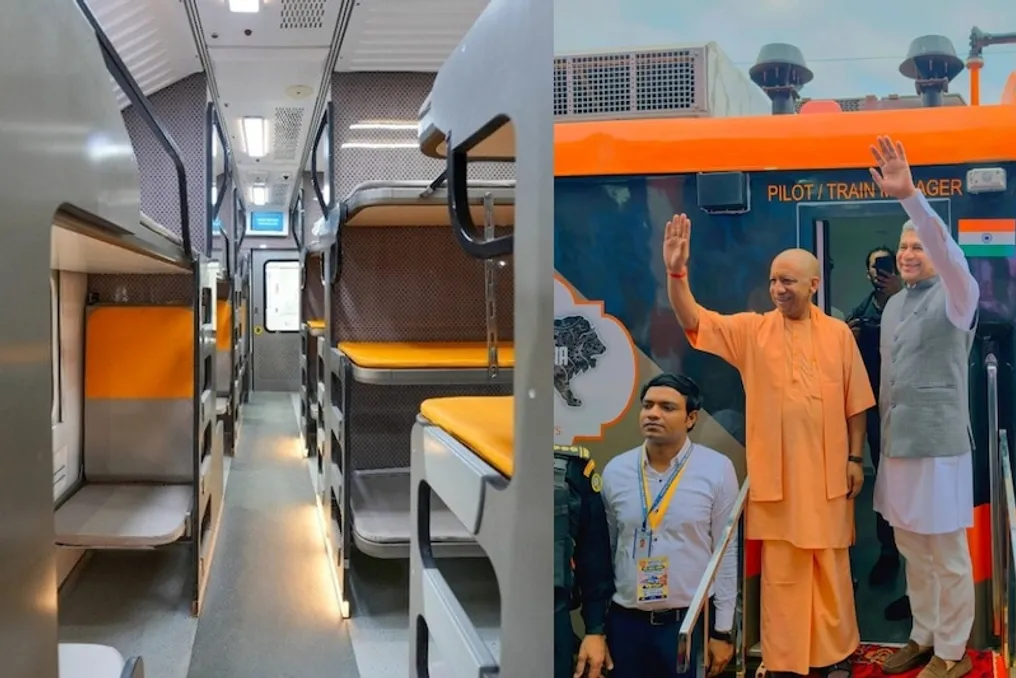
The second most numerous and first Vande Bharat sleeper train in Uttar Pradesh was grandly inaugurated. This train will run between Varanasi and Delhi, covering the distance in just 9 hours and 30 minutes. The train will depart in the evening and arrive in the morning, allowing passengers to spend time traveling while sleeping.

The launch of this train will reduce the travel time between Varanasi and Delhi by 55 minutes, and between Delhi and Varanasi by 35 minutes. The train is equipped with modern amenities, paying special attention to all passenger needs.

The main event was the green light given to the Vande Bharat Sleeper Express between Varanasi and New Delhi by the Minister of Railways Ashwini Vaishnaw and the Chief Minister of Uttar Pradesh Yogi Adityanath on that day.

The new service will connect Varanasi with the nation's capital. Along the way, the train will stop at Prayagraj, Kanpur Central, Aligarh, and Ghaziabad, ensuring connectivity with several important urban centers and surrounding areas. According to the schedule, the train will depart from Varanasi at 20:50 and arrive in New Delhi the following morning at 06:10. The return journey starts from New Delhi at 21:40 and arrives in Varanasi the next day at 07:10.

Compared to the current Shiv Ganga Express, the new service reduces the travel time from Varanasi to New Delhi by 55 minutes, and from New Delhi to Varanasi by 35 minutes.

This train will operate six days a week: it will run daily except for Friday (for the Varanasi route) and Saturday (for the New Delhi route). Thanks to the night schedule, passengers can depart in the evening and arrive at their destination in the morning.

The Vande Bharat Sleeper Express will consist of 16 coaches and offer three classes of service: Third AC, Second AC, and First AC. The train will cover a distance of 760 km between the two cities in nine and a half hours.

According to the schedule, train number 27421 will depart from Varanasi at 20:50 and arrive in Delhi at 05:55 the next day. The return, train number 27422, will depart from New Delhi at 21:40 and arrive in Varanasi at 06:45 the next day.

Information on ticket prices has not yet been published, but according to media reports, fares on this route will be slightly higher than on all other trains and may even exceed the cost of tickets in Vande Bharat Chair Car.

After the service launch, Railway Minister Ashwini Vaishnaw shared details about the benefits passengers will receive and showed the train's interior, discussing the measures taken for traveler comfort.

Speaking about Kashi station, he noted that it is designed with great facilities on both the north and south sides. Among these facilities is a very large waiting area, approximately the size of a football field, where more than 50,000 passengers can be present simultaneously. Furthermore, the southern part of the station is only two kilometers from the Kashi Vishwanath temple, which will allow pilgrims and visitors from around the world to easily reach the temple and the famous Ghats of Kashi. This location is intended to become a major transport hub.

Small train in Darjeeling earned 1.41 crore rupees in 21 days at a speed of 15 km/h
Read more
www.aajtak.in

Small train in Darjeeling earned 1.41 crore rupees in 21 days at a speed of 15 km/h

A small train operating in Darjeeling demonstrated impressive results, bringing significant revenue to the state and allowing thousands of passengers to enjoy picturesque landscapes. This success was achieved between October 1 and October 21, 2026.

The famous Darjeeling tourist train has once again attracted public attention. During the Durga Puja festival, there was a huge influx of tourists, and between October 1 and October 21, 2026, about 12 thousand passengers traveled on this historic transport. As a result of this period, the Darjeeling Himalayan Railway earned revenue exceeding 1.41 crore rupees.

The famous Darjeeling tourist train has turned its historical appeal into significant tourism revenue. According to railway officials, this railway, which is a UNESCO World Heritage site, earned 1.41 crore rupees for the period from October 1 to October 21. In three weeks, approximately 12,000 passengers used this historic railway, proving that slow-paced travel can also attract tourists.

People visiting Darjeeling for vacation feel their trip is incomplete if they do not take a ride on this train. Although the train's speed is only between 10 and 15 kilometers per hour, its specialty is that it passes through magnificent valleys. It is popular among tourists precisely because of its low speed, as it allows them to enjoy the beautiful hills.

There are several ways to experience a ride on this famous tourist train. Given the growing number of visitors, the Darjeeling Himalayan Railway has started offering special tourist train trips between Darjeeling and Ghoom. Additionally, two-way services are available between Kurseong and Mahanadi.

This route makes the journey special due to the natural beauty, misty hills, and the whistle of the steam engine. The Darjeeling Himalayan Railway is included in the UNESCO World Heritage list.

Special 'Joy Ride' trips have also been organized between Kurseong and Mahanadi, in addition to Darjeeling. On this route, one service operated on a steam engine, and the other on a diesel engine. This allowed passengers to experience two types of historic railway journeys in one mountain region.

Popular