Virtual Studio Project at the A Coruña Arms Factory by Diaz y Diaz Architects
Read more
ArchDaily Brasil
archdaily.com.br

Virtual Studio Project at the A Coruña Arms Factory by Diaz y Diaz Architects

The design team provided a detailed description of the Virtual Studio located in the former A Coruña Arms Factory. This project translates into architectural terms a fundamental duality at the site.

This duality manifests through two contrasting elements: a hermetic structure, intended for creating digital environments, and an open body that establishes a direct dialogue with the natural surroundings and the industrial history of the site.

Similar stories

ACE Robotics and NTU S-Lab introduce Mundo—a world model for creating robot training scenes from photographs
Read more
pandaily.com

ACE Robotics and NTU S-Lab introduce Mundo—a world model for creating robot training scenes from photographs

ACE Robotics, in collaboration with S-Lab from Nanyang Technological University, has released Mundo—a world model capable of generating an interactive and explorable environment based on a small number of real-world images. This was reported by the Chinese news outlet Robot Pro on October 31.

The team asserts that Mundo can reconstruct a scene, display it from various angles, and simulate it over time, which allows for testing and training robots within a digital copy of a specific space.

According to the GitHub repository, the code and model weights will be available by the end of November.

How Mundo Works

Mundo accepts one to twelve contextual images and generates new views along a specified camera path. When using only a single image, the system extrapolates the visible style and structure to unseen areas, while increasing the number of images reduces uncertainty in unphotographed zones.

For large spaces, the model can generate camera movements lasting from tens of seconds to several minutes, selecting the most appropriate photographs for each segment and overlaying them to ensure consistency.

Technical Details of the Model

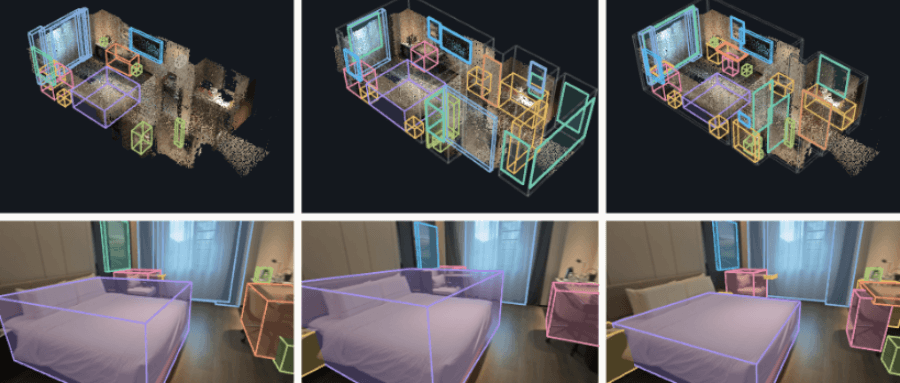
The core functionality relies on a three-dimensional fundamental model that reconstructs camera poses and dense geometry. Simultaneously, a 3D detector creates an initial bounding box for every major object. Since detectors may miss objects or inaccurately estimate their sizes, a vision-and-language-based agent edits the scene program, renders it from each input viewpoint, compares the result with the original photographs, and determines what needs correction. Concurrently, numerical optimization fine-tunes the position, size, and orientation of the boxes.

A separate verification agent monitors consistency without interfering with scene editing. The scene program records the name, pose, size, mass, and friction coefficient of each object. Scripts apply forces and actions, and the physics engine, currently MuJoCo, calculates motion, contact, and collisions. Finally, a video diffusion model visualizes the simulation in the style of the original shots.

The team refined the MiniMax reference-to-video model using approximately 40,000 paired videos of size 640x480, generating clips of 124 frames and reusing the last 34 frames from each clip to maintain continuity in long videos.

Use Cases and Limitations

Demonstrations include scenarios where robots navigate a recreated hotel floor, open a washing machine in a laundry room, place an apple in a bowl, and stack blocks, utilizing views from head and wrist cameras, as well as recorded trajectories.

The team clearly outlined the system's limitations: the reconstruction process takes between 10 and 20 minutes, rendering is performed at approximately 1.5 frames per second on eight A800 GPUs with 20 inference steps. It was also noted that small objects might appear to float, and there is no long-term memory for scenes that change over extended periods.

Kuaishou implements AI-based digital employees for store diagnostics and video content management
Read more
pandaily.com

Kuaishou implements AI-based digital employees for store diagnostics and video content management

Kuaishou has integrated artificial intelligence-powered digital assistants into the workspace of sellers on its e-commerce platform, Kuaishou Shop. These tools are designed for small sellers who manage their stores independently or part-time. The assistants are available 24/7 and can be accessed via the PC workspace, a dedicated AI mode in the app, or an AI operations widget on the computer, according to information published by IT Home.

Sellers can ask questions in plain language, such as about reasons for declining traffic over the past week or the current status of returns. The central AI operations hub interprets the seller's request, gathers store data, platform tools, and rules, and then passes the task to the appropriate agent.

Functionality of Digital Employees

The system includes eight different roles. A virtual store manager conducts a full diagnosis of the entire store and suggests strategies to increase new customer conversion, encourage repeat purchases, campaign registration, and adjust product names. A data specialist answers questions regarding sales, traffic, and returns, and identifies the root causes of any deviations.

A video specialist handles the diagnosis of short videos, product selection, one-step generation of finished clips, automatic publishing, and content promotion. A live streaming specialist assists with planning, product selection, scriptwriting, and post-broadcast reviews and critiques.

On the customer service side, a returns specialist examines inquiries, clarifies platform rules regarding disputes, and proposes solutions to reduce high return rates. A customer service specialist analyzes feedback and satisfaction metrics, as well as complaint chats. Additionally, there is an order fulfillment specialist who monitors logistics issues, and a compliance specialist who explains violation risks and reasons for drops in store experience ratings.

Kuaishou describes this system as a closed loop: first, a problem is diagnosed; then, a strategy is proposed and executed on behalf of the seller; finally, the resulting data is analyzed. Another article from IT Home lists a broader set of tools supporting this system. These include a bulk catalog addition feature, automatic video publishing, a script and video generation platform, one-click AI live stream setup, a live chat assistant, automated affiliate program management, natural language ad campaign setup, AI customer service, return recovery, and automatic order printing and shipping.

In coverage of this topic, one part-time clothing seller mentioned that they check exposure, click, and return metrics compared to the previous day every evening, and it allows the agent to automatically publish videos while they are at their main job. A tea company representative noted that these tools have significantly reduced their need to hire video editors.

Uzbek language and the digital world
Read more
uza.uz

Uzbek language and the digital world

Today, the internet and social networks have become an inseparable part of our lives. Millions of people communicate, exchange ideas, and disseminate information in the virtual space.

Popular