Mayor of Tashkent met with management and players of Pakhtakor football club
Read more
UzDaily
uzdaily.uz

Mayor of Tashkent met with management and players of Pakhtakor football club

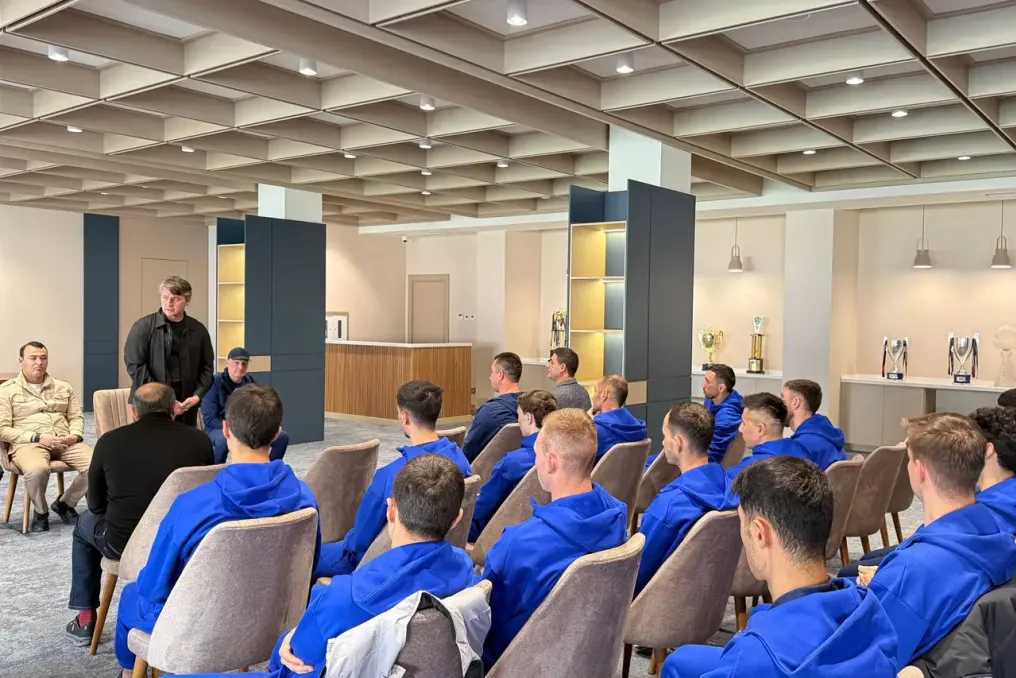
The Mayor of Tashkent, Shavkat Umurzakov, held a meeting with the management of the Pakhtakor football club, its coaching staff, physical training specialists, captain, and players. The discussion covered the development of the club, improvement of infrastructure, and training conditions, according to the press service of the Tashkent city administration.

During the meeting, methods for preserving Pakhtakor's traditions, increasing the efficiency of club management, and further developing its football academy were reviewed. Special attention was paid to the team's image and creating suitable conditions for player growth.

According to data presented at the meeting, the Pakhtakor football academy ranks 46th in the CIES Football Observatory world ranking. This indicator was discussed in the context of the academy's work and the progress of young athletes.

Participants also discussed the need to modernize the club's sports base, including training grounds, equipment, and recovery conditions for players after physical exertion. Umurzakov spoke with club representatives about the next steps for team development and improving the club's organizational activities.

Furthermore, the meeting addressed issues of improving the quality of the training process and strengthening Pakhtakor's material and technical base.

Similar stories

Association of Chinese Manufacturers from Hong Kong Studied Development Opportunities in New Tashkent
Read more
podrobno.uz

Association of Chinese Manufacturers from Hong Kong Studied Development Opportunities in New Tashkent

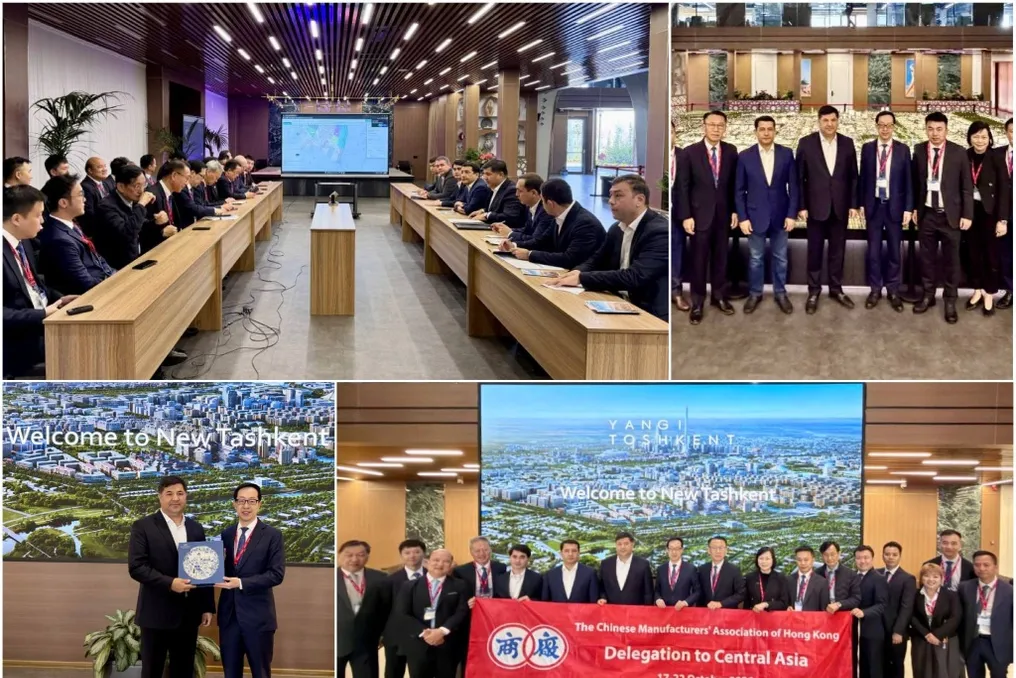
During a visit to Uzbekistan, negotiations took place at the 'New Tashkent' Directorate between Saidkakhor Kholkhozhayev, the First Deputy Minister of Investment, Industry and Trade of Uzbekistan, and a delegation from the China Manufacturers Association of Hong Kong (CMA).

The CMA delegation was headed by President Winko Lo. The meeting gathered representatives from several major Hong Kong companies and financial institutions operating in the sectors of industry, trade, finance, and modern technologies.

During the discussion, the foreign side presented the republic's investment potential, as well as existing tax and customs benefits, and methods of state assistance for foreign investors.

Significant attention was paid to the plans for building New Tashkent, creating modern infrastructure, erecting commercial buildings and service enterprises, as well as opportunities for relocating production to free economic zones.

Participants in the dialogue reviewed prospects for strengthening industrial cooperation, organizing the production of high value-added products, implementing advanced technologies, and establishing joint ventures. Based on the results of the meeting, specific areas for further detailed elaboration of joint investment projects were determined.

International Russian Theatre Festival 'Hearts of Four - Bridge of Friendship' Held in Tashkent
Read more
uzdaily.uz

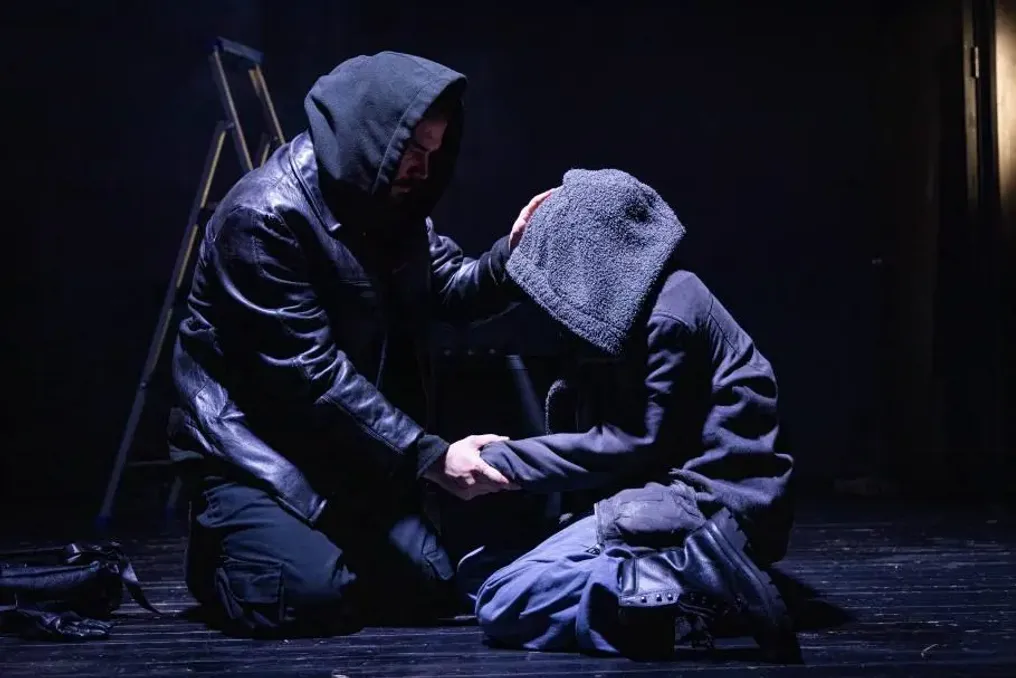
International Russian Theatre Festival 'Hearts of Four - Bridge of Friendship' Held in Tashkent

The international Russian language theatre festival titled 'Hearts of Four - Bridge of Friendship' took place in Tashkent from October 14 to 18. The event gathered representatives of the theatre community from Russia, Uzbekistan, Kazakhstan, Kyrgyzstan, and Tajikistan.

Over five days, audiences were able to see five performances, while participants took part in professional discussions, master classes, and creative meetings. The festival served as a platform for cultural exchange, experience sharing, and strengthening humanitarian ties between the participating countries.

Performances were held in various locations across Tashkent, showcasing productions in a wide range of genres—from classical drama to experimental theatre. The State Academic Russian Drama Theatre of Uzbekistan presented the plays 'Hamlet,' based on William Shakespeare's tragedy, and 'The Lonely Boat.' The Regional Russian Drama Theatre of Kostanay, Kazakhstan, staged 'Puppy,' based on Leonid Andreev's work.

The program also featured the Perm Theatre 'At the Bridge,' which brought two productions to Tashkent: 'Marriage,' described as a Gogolian phantasmagoria, and 'Stepmother Samanishvili.' Audiences had the opportunity to get acquainted with the theatre's characteristic directorial style, which combines mysticism, subtle humor, and psychological depth.

The festival's educational program ran for all five days. Irina Avtushenko, a professor at the G. Eisenstein Institute of Cinematography (VGIK) and an associate professor at the Russian Institute of Theatre Arts (GITIS), conducted master classes on oratory art for actors and other theatre specialists. Sergey Fedotov, artistic director of the Perm Theatre 'At the Bridge' and a recipient of the 'Golden Mask' award, organized practical seminars on Mikhail Chekhov's acting technique.

The festival also hosted a panel discussion titled 'Bridge of Friendship of Russian Theatres,' which included theatre directors, set designers, and cultural figures from the five countries. Participants discussed the prospects for the development of Russian-language theatres abroad, expanding touring activities, organizing joint festivals, and new cultural initiatives.

The project was curated by Irina Khilkova, an independent theatre producer, a board member of the Association of Russian Theatre Professionals Abroad, and the author of the international projects 'Hearts of Four' and 'Mission of Russian Theatre Abroad.' The festival was organized by the representation of Rossotrudnichestvo in Uzbekistan.

The event provided the public with the opportunity to view theatrical productions from different countries, and professionals with a forum to strengthen existing ties and seek new directions for cooperation.
Mural showcasing the ornaments and traditions of Uzbekistan's pottery schools opened in Tashkent
Read more
podrobno.uz

Mural showcasing the ornaments and traditions of Uzbekistan's pottery schools opened in Tashkent

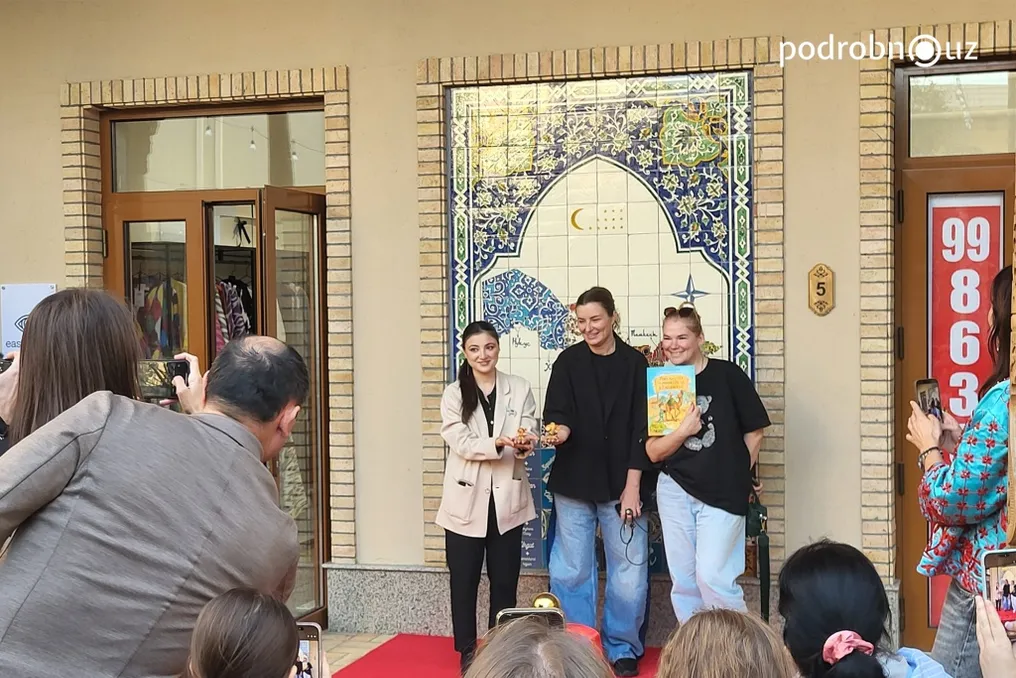
The mural titled 'Uzbekistan and the Symbols of the Silk Road and Pottery Schools' was unveiled in the city of Tashkent. This work combines various ornaments from different regions of the country, as well as images related to the history of national ceramics.

The painting was placed opposite the Center for Islamic Civilization. The author of this piece is master Diyor Nazirov, who gathered artistic motifs and ornaments characteristic of many local pottery schools in the mural.

The opening ceremony included a lecture-tour led by art historian Takhmina Mahmudova. She explained that in Uzbek applied arts, ornaments are not merely decorative but also carry deep meaning. For instance, pitchers and amphorae symbolize fertility, prosperity, and water as a vital resource, while the pomegranate is often associated with abundance, although in some interpretations it may signify temptation or trial. Almond is also a common element in national ornamentation.

The mural includes not only historical and artistic elements; it depicts characters from the story of the mouse Nedo and Etya Opy, taken from the works of Kristina Kretova and Zilola Khamidova.

Discussion on the preservation of regional pottery schools

A separate topic of the meeting concerned the history of regional pottery schools. Participants discussed how this craft managed to survive in places such as Shahrisabz, Gizhduvan, Rishtan, and Fergana, despite changes in lifestyle and production processes. One reason was the remote location of these centers relative to large urban settlements. During the era of industrialization, factory production increased competition for local artisans' products, but in less developed and remote settlements, traditional production proved less vulnerable to this pressure.

Historical factors, such as the region's position at the crossroads of the Great Silk Road, the settled lifestyle of the population, and the military campaigns of Amir Timur, also influenced the development of pottery schools. Diyor Nazirov managed to bring together symbols and ornaments belonging to different eras and local characteristics in his mural, thus turning the wall into a kind of visual chronicle of Uzbek ceramics.

It is worth noting that a mural dedicated to space was previously installed in Tashkent. According to information from the Uzcosmos agency, this painting reflects humanity's interest in the Universe and everything beyond Earth.

Popular