Nvidia's AI Investment Strategy: Prudent Approach or Bubble Risk?
Read more
IOL
iol.co.za

Nvidia's AI Investment Strategy: Prudent Approach or Bubble Risk?

Nvidia, having invested $3 billion in Meta stock sales, continued to expand its portfolio, which includes equity stakes, loans, and guarantees. Through these actions, the semiconductor giant has acquired a status that some analysts call the central bank of artificial intelligence stocks.

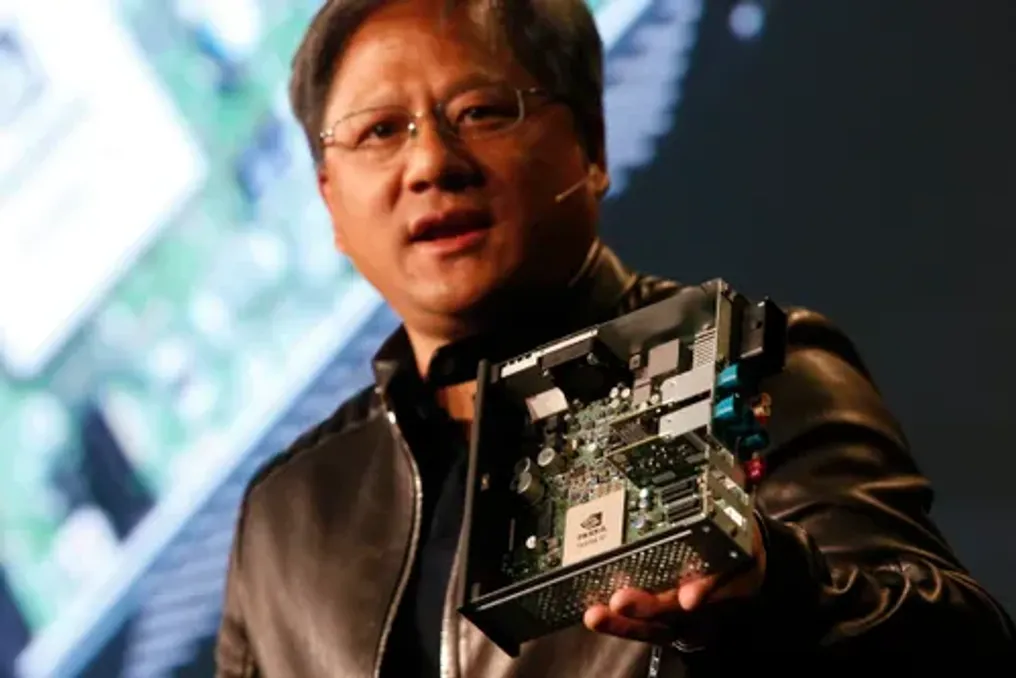
This complex set of deals helped maintain high demand for Nvidia processors, which are a key component of the AI revolution and power vast data centers worldwide. This high demand has made Nvidia the most valuable company in the world by market capitalization, and CEO Jensen Huang—a major player in the AI sector.

However, these investments have raised concerns among some Wall Street skeptics regarding whether Nvidia is contributing to an AI bubble.

In What Projects Is Nvidia Investing?

Nvidia has acquired stakes in leading AI developers such as OpenAI, Anthropic, and Elon Musk's xAI, which is now part of SpaceX. The company has also invested in so-called 'neo-cloud' companies, including CoreWeave and Nebius, which provide computing power built on Nvidia chips.

Nvidia's investments extend beyond the United States. In Europe, the company supported the French AI developer Mistral and the British autonomous driving startup Wayve. In Asia, Nvidia is collaborating with the South Korean group SK Group to build data centers.

Beyond equity investments, the company has provided financial guarantees, acting as a backstop buyer. In the case of CoreWeave, Nvidia committed to purchasing up to $6.3 billion of unused computing power if another client did not take it. Furthermore, according to US media, Nvidia holds about $36 billion in cloud service guarantees and a guarantee of up to $105 billion related to the OpenAI data center.

Why Is Nvidia Taking These Steps?

Experts suggest that Nvidia's massive profits leave it with no other attractive options. Michael Kusuman, a professor at MIT Sloan School of Management, noted that the company is 'essentially becoming a bank,' and directing these funds toward infrastructure investments tied to purchasing Nvidia hardware is a sensible decision because alternatives are less appealing.

Kusuman added that building its own data centers would put Nvidia in competition with its largest customers, which could trigger numerous antitrust complaints. Gil Luria, head of technology research at D.A. Davidson, believes that Nvidia is identifying underserved segments of the AI ecosystem and channeling funds there to fill gaps. He stated that this is 'unprecedented, but it seems to be working.'

Huang defended this approach, arguing that cutting-edge AI labs represent a first generation of startups that require not millions, but tens of billions of dollars to get started. Nvidia's investments effectively give these companies more time to succeed.

Is This 'Circular' Financing?

Critics compare these deals to the dot-com era, when companies artificially inflated growth by investing in startups that subsequently purchased their products. Paulo Carvalho, a senior fellow at Harvard Kennedy School, noted that 'there is nothing inherently wrong with Nvidia helping its customers,' but he stressed that the closer these relationships, the harder it is to assess true sustainable demand.

Luria countered that not all demand is equal. He explained that 'if Nvidia gives CoreWeave money so it can turn around and buy Nvidia chips, it is not as good as if Microsoft buys Nvidia chips, because they have a customer in OpenAI who has a customer in enterprise technology ready to pay for it.'

What Are the Risks?

The main issue is concentration. According to the company's annual report, two direct customers accounted for 22% and 14% of Nvidia's revenue in its 2026 fiscal year. Carvalho warned that a network of overlapping investments increases contagion risk if a weak company, such as CoreWeave, encounters difficulties.

He suggested: 'If AI demand disappoints, cost reductions could simultaneously affect chip manufacturers, data center builders, and their financiers.'

These concerns intensified this month when shares of several Nvidia-related neo-cloud companies, including CoreWeave, Nebius, and IREN, dropped by at least 30% in October amid fears of tightening credit for AI projects.

Carvalho noted that the AI chip market remains supply-constrained. He predicted that demand will continue to grow for another 12–18 months before stabilizing. Kusuman expects high demand for Nvidia chips to persist for three to five years.

Similar stories

Artificial Intelligence Costs Generate Financial Alerts for Meta and Anthropic
Read more
olhardigital.com.br

Artificial Intelligence Costs Generate Financial Alerts for Meta and Anthropic

The intense competition to expand artificial intelligence (AI) infrastructure has begun to impact the risk assessment of major industry players. Meta's credit outlook was downgraded by S&P Global Ratings, while Anthropic faces the risk of receiving a speculative rating following a potential IPO.

Both cases share a central concern: the ability of these companies to convert their massive AI investments into sufficient revenue to cover ever-increasing costs.

In Meta's case, S&P maintained the credit rating at AA-, but changed the outlook from stable to negative. The agency pointed to uncertainties related to the large volume of infrastructure investments and the company's negative free cash flow.

Regarding financing, Meta announced on the 26th its intention to raise US$95 billion (equivalent to about R$522.5 billion) to sustain its AI initiatives. This strategy includes an initial fundraising of US$35 billion (approximately R$192.5 billion) through subscribed public stock offerings, followed by the intention to raise another US$60 billion (about R$330 billion) through a secondary market share sale program.

Investors reacted negatively to the quarterly results; even with revenue exceeding expectations, Meta's shares plummeted 7% after the earnings report. October saw a 15% decline in the stock, marking the company's worst monthly performance in four years. S&P projects that the increase in capital expenditures will begin to decrease starting in 2028, but expressed less conviction that the company will reduce spending at the previously established pace.

Anthropic's situation presents a distinct evaluation. The company, responsible for developing the Claude model family, could receive a BB-rated note if it conducts an initial public offering. This projection, attributed to Blackstone and reported by the Financial Times, is less favorable than the previous estimate, which predicted the company would reach investment grade before 2027.

According to the credit rating scale, ratings below BBB- are considered speculative. Companies in this category may face higher costs to raise funds, as investors perceive a greater risk of default. A rating at this level could complicate Anthropic's financing plans for expansion, especially considering the need to increase its computational capacity to develop and operate AI models. However, this forecast does not constitute an official rating already granted to the company, nor does it imply that Anthropic is in default, but rather that its credit profile may be viewed as riskier by creditors and investors.

Tech Giants' AI Investments Face Hurdles Due to Slowdown in Core Business Growth
Read more
business-standard.com

Tech Giants' AI Investments Face Hurdles Due to Slowdown in Core Business Growth

The core business segments of American tech giants—advertising, consumer, and retail services, which support total AI spending of $750 billion this year—are beginning to show signs of deceleration. In some cases, the technology itself, on which companies are placing large bets, is starting to displace their traditional business models.

Earlier this week, Alphabet Inc., the owner of Google, reported that advertising sales through search and other channels—a segment accounting for about half of total revenue—grew the slowest in the last five quarters. Nevertheless, the company maintained its capital expenditure forecast at up to $205 billion for the current year.

Amazon.com Inc. stated on Thursday that growth in both its main online store and advertising business slowed in the last quarter, but the company confirmed its plan for capital expenditures of approximately $220 billion for this year. Microsoft Corp. and Meta Platforms Inc. also maintained their spending forecasts, presenting results that ultimately failed to meet investor expectations.

Earnings reports and subsequent stock sell-offs reveal growing tension surrounding the transition of major tech companies to new artificial intelligence-based products and associated costs. Companies are taking on unprecedented levels of debt, selling equity, entering into multi-billion dollar data center deals, and assuming trillions in future obligations to build global AI infrastructure. Meanwhile, new products are reducing profitability and diverting attention from some legacy offerings.

Investor patience is wearing thin. Alphabet shares plummeted by a record amount on Thursday, losing nearly $500 billion in market value. Amazon shares fell by 7% during trading, and Meta dropped 10% after publishing last week's earnings, when the company warned investors that its new AI agent application, Muse, requires enormous computational power despite plans to invest more aggressively in AI.

Dan Morgan, Senior Portfolio Manager at Synovus Trust, commented on the situation following Alphabet's report: 'The market is perplexed: how will all this pay off?'

Even Microsoft, which demonstrated strong growth in its cloud business and controlled costs, did not escape negative consequences. Initially, the company's stock rose after news that sales in Azure, its closely watched cloud computing division, increased by 48%, reaching $33.2 billion in the quarter ending in September. However, by the close of trading on Thursday, the stock erased all gains and fell by 0.2%.

Amazon's results were more mixed. The company postponed its annual Prime Day from the third quarter of last year to the second quarter of this year, which accounted for some of the slowdown. But analysts had already adjusted their estimates to account for this, and the results were still below expectations. The e-commerce giant's advertising services division showed an 11% growth, the slowest pace since Amazon first separated this category in 2022. Online store business grew by only 2%, a level not seen in over three years as people resumed pre-pandemic consumption habits and online commerce slowed down.

These results overshadowed the growth of Amazon's cloud computing segment and intensified investor doubts regarding its aggressive AI investments. Cloud computing was also a bright spot for Google: sales in this division more than doubled compared to the previous year, and operating income tripled. The division's CEO, Thomas Kurian, joined the earnings call for the first time, emphasizing the importance of this business for Google's future.

However, investors focused more on the problems arising in Google Search, which remains the company's lifeblood. To stay relevant amid the popularity of chatbots like ChatGPT, Google has integrated more AI into its search engine, including a dedicated tab called AI Mode. But the growing popularity of this feature has negatively impacted the profitability of Google Search. Philip Schindler, Chief Business Development Officer, admitted on Wednesday that the firm is seeing a 'decrease in monetization' of queries using AI Mode, leading to further stock decline. Schindler stated that the company is working to attract more advertising in AI Mode and views the product's trajectory optimistically.

This year, Google is struggling in the AI race against startups Anthropic and OpenAI. Bloomberg Intelligence analyst Mandip Singh believes that if the company can regain its footing in AI model development, it will likely resume delivering the expected investor revenues. Singh noted: 'With all these transitions, sometimes we focus too much on the donor business. Given the margin expansion in the cloud business, I believe the combination of cloud and search, once they reach parity, will return their profitability to previous levels.'

Jean Munster, Managing Partner at Deepwater Asset Management, commented on the decrease in AI Mode monetization at Google, noting that launching new ad formats often occurs with low margins that gradually increase over time. A more complex challenge for the firm is creating agents capable of making purchases on behalf of users and earning a commission from these transactions—a business model many in Silicon Valley consider achievable following the success of Meta's personal assistant Muse. Munster concluded: 'The old way of doing business was using blue links or display ads to influence consumer behavior. The new way is how to influence a bot.'

IMF warns that the correction of AI-related assets poses a serious market risk
Read more
uzdaily.uz

IMF warns that the correction of AI-related assets poses a serious market risk

The International Monetary Fund (IMF), in its latest Global Financial Stability Report, has identified a potential correction in artificial intelligence-related assets as a primary risk to financial markets. The Fund forecasts that a sharp downturn in the AI boom could lead to a 0.4% reduction in global economic output and a 1.3% decrease in global investment by 2028. The IMF specifically links particular vulnerability to developed Asian economies.

This IMF risk is prioritized above rising bond yields and cyberattacks. In an accompanying blog post, IMF economists Atanasios Vamvakidis and Jason Wu warned against complacency.

Current Market Conditions and Risks

Currently, AI supports the global economy and financial markets through investments in data centers, chips, and infrastructure, as well as strong profits from companies driving this boom. Markets have shown resilience due to solid business results related to AI. However, if investments prove weaker or less sustainable than expected, or if profits fail to meet forecasts, AI-related stocks and other assets could lose value. The IMF notes that growing debt burdens and concentration of risks could intensify such a correction.

The report shows that the AI boom is increasingly financed through borrowing. The share of major global cloud providers, known as hyperscalers, in issuing investment-grade bonds has risen from 1% in 2024 to 10%. Simultaneously, their free cash flow is shrinking amid increased AI-related expenditures.

Investors are also actively using leverage. The proportion of individual stocks in leveraged Exchange Traded Funds (ETFs) has increased from 16% to 28%. The share of hedge fund equity, combined with borrowed funds, has grown from approximately 10% to 15% of GDP in developed countries.

Circular Financing and Dependency

The IMF is particularly concerned about so-called circular financing within the AI industry. The Fund examined 14 publicly disclosed deals since 2023. Under these agreements, hyperscalers invested about $300 billion in AI developer equity and provided approximately $650 billion in debt financing. In return, recipients committed to spending $1.4 trillion together with their investors in the future, including funds for data centers, computing power, and cloud services.

According to the report, the financed companies have about $320 billion in debt on their balance sheets, part of which is partially guaranteed by investors or off-balance sheet. The IMF explains the problem of mutual dependence created by these agreements. Companies receiving funding are typically in a significantly weaker financial position than the hyperscalers. If one party encounters difficulties, expected investor returns will decline, reducing the value of their stakes and weakening the reliability of loans associated with these deals.

The Fund characterizes this as 'wrong-way risk': investments lose value precisely when the associated income ceases.

Recommendations and Forecasts

To mitigate these risks, the IMF recommends that regulators strengthen oversight of borrowing used to purchase stocks, as well as leveraged ETFs, as they can amplify both market rallies and declines. Where risks are significant, the Fund suggests introducing industry-specific capital requirements and limiting banks' exposure to the AI industry. According to IMF stress tests, global banks will maintain sufficient capital even in a scenario combining an AI market correction with a sharp rise in bond yields. Nevertheless, financial stability risks remain high.

The Fund also warned that governments and central banks have fewer options to respond to a major shock than in most periods over the last two decades, as the space for fiscal and monetary policy has narrowed. IMF Director Kristalina Georgieva also noted in a blog that corporate market valuations are outpacing actual productivity growth.

In addition to market risks, the Fund pointed to the threat of cyberattacks on critical infrastructure and the potential impact of AI on employment. According to the IMF, 40% of jobs worldwide and 60% of jobs in developed countries are susceptible to AI influence. Georgieva called on regulators to enhance supervision and cybersecurity while reforming tax policy to finance worker retraining without restricting innovation.

The report emphasizes, however, that hyperscalers remain highly profitable in their core operations, generate stable cash flow, and possess high credit ratings, while their investors are generally financially sound. Since AI-related profits have repeatedly exceeded forecasts, the price-to-earnings ratio has even decreased.

According to Tech Times, analysts at Goldman Sachs and Morgan Stanley consider concerns about an AI bubble premature, and the JPMorgan indicator system showed that the current AI boom does not yet meet bubble criteria.

Popular