China has officially announced plans to land humans on the lunar surface and build a scientific base there. At the seventh Human Space Symposium, held on October 31, 2026, it was stated that the first mission with astronauts, referred to as 'Taikonauts,' will take place before 2030.
Two Long March-10 carriers are planned for this task. One will deliver the landing module to lunar orbit, and the second will carry the Mengzhou spacecraft, which will transport three Taikonauts. Both craft will rendezvous in orbit, after which two cosmonauts will descend to the surface using the landing module.
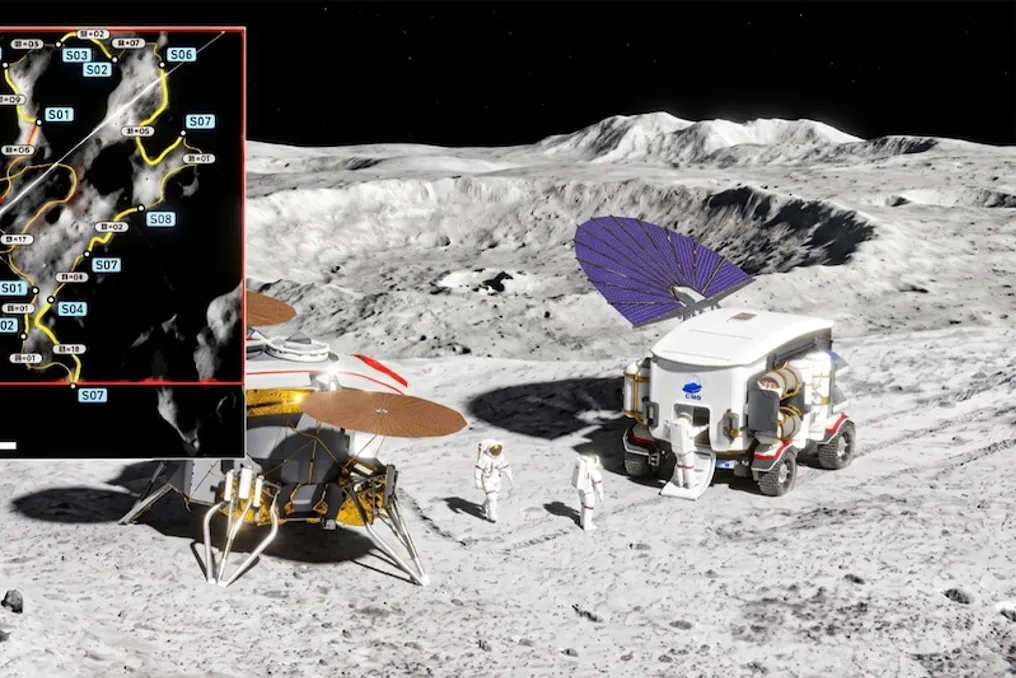
The crew is scheduled to spend three days on the surface, conducting daily spacewalks. These excursions will be used for sample collection or equipment installation. This plan has been developed to minimize risks.
China is conducting a series of uncrewed tests, including a full mission rehearsal simulating the actual flight. Only after the successful completion of these tests will the final mission be launched. China's ambitions are not limited to a single landing; the future includes the construction of a research station on the Moon.
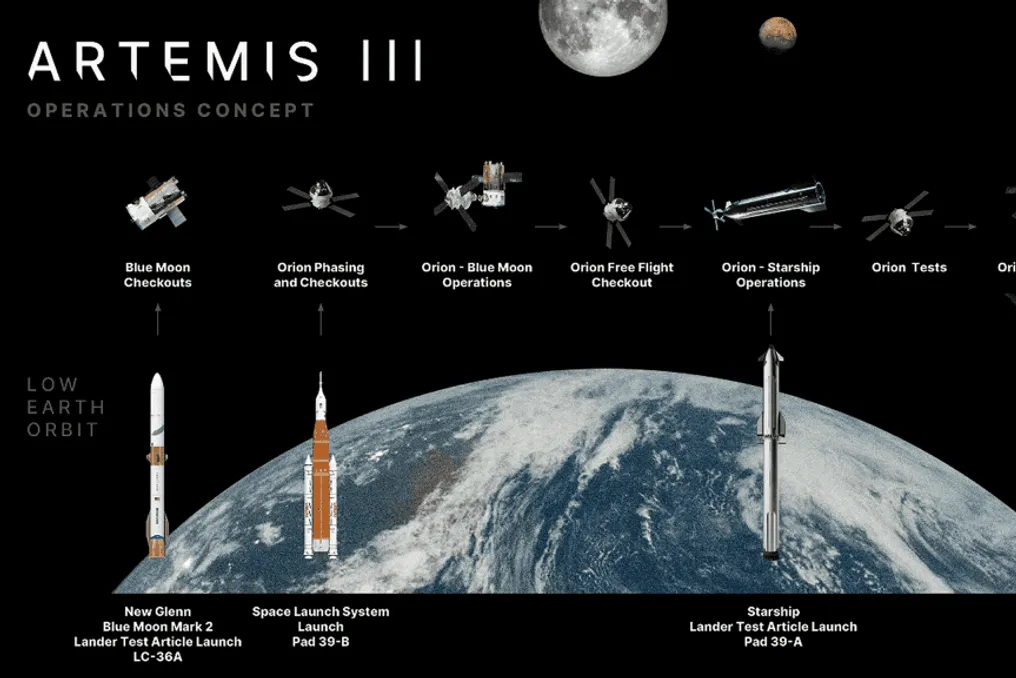
This strategy echoes NASA's Artemis program. The US is also aiming to return to the Moon in the near future. China is accelerating its development pace, moving toward the common goal of lunar expansion, but utilizing its own technological path. All key components—the Long March-10, the Lanyu landing module, and the Mengzhou spacecraft—are products of domestic development.
Landing humans on the Moon holds not only symbolic significance but also contributes to the development of new technologies. Furthermore, it lays the foundation for future resource extraction on the Moon or preparation for missions to Mars. China has already accumulated significant experience through its space station and rover missions and is now preparing to take the next major step.
Simply put, China states that three of its astronauts will go to the Moon by 2030 using two rockets. They will stay on the surface for three days, carrying out work, provided current tests are successfully passed, allowing China to secure a place alongside the US on the Moon.