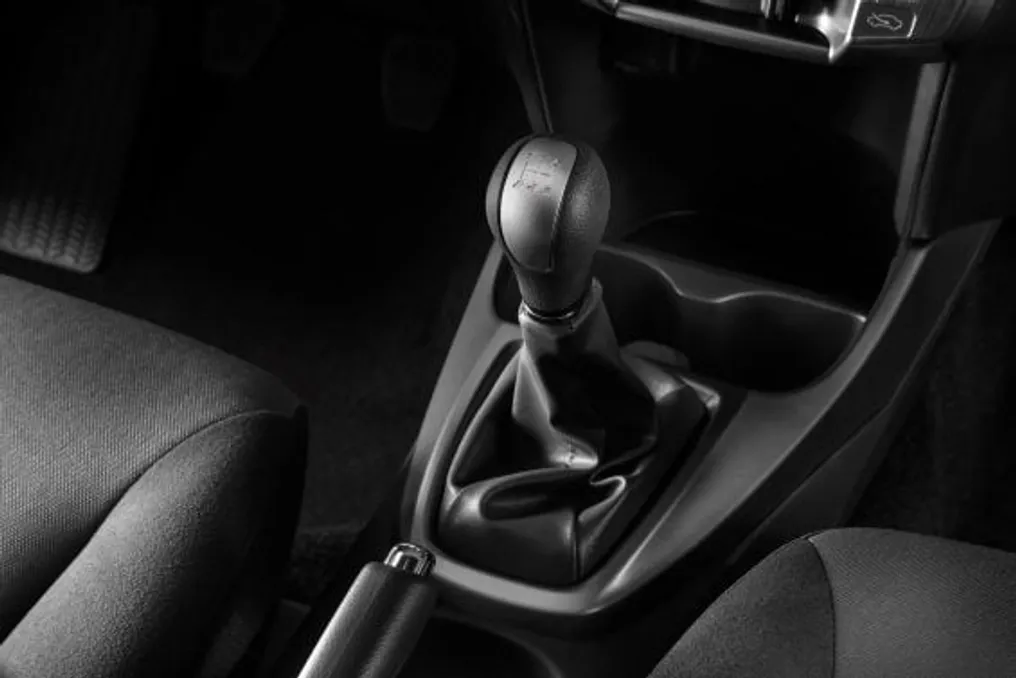
With the growing popularity of automatic transmissions, the lubricant for these systems has become a major concern for those buying used cars, especially due to the high cost of replacement. However, vehicles with manual gearboxes also rely on oil, and the owner must take precautions to ensure the lifespan of this component.
Transmission mechanisms function through a set of gears and other elements, such as synchronizers, all immersed in oil. Normal use generates heat, and certain extreme conditions intensify this heating, which accelerates the wear of the lubricant.
Different opinions on oil changes
The issue of changing gearbox oil is frequently debated. Just as with automatic transmissions, some manufacturers claim that the lubricants used in manual models possess 'long life' technology and therefore do not require changing. However, there are specific scenarios where replacement becomes necessary.
To know which procedure to follow, the owner's manual is the correct reference, as each manufacturer establishes its own guidelines. For example, Fiat suggests changing every 120 thousand kilometers; Honda recommends 120 thousand km for newer models and 80 thousand km for older ones; Toyota adopts a more cautious stance, indicating maintenance every 40 thousand km; Chevrolet advises changing only in cases of leakage; and Nissan only lists inspection procedures in its manual.
Warning signs and maintenance costs
The vehicle itself can indicate the need to change the gearbox oil. According to mechanic Ludovico Ballesteros, owner of Pitucha Centro Automotivo, signs such as harder shifting and noises coming from the component are important indicators.
The same mechanic informs that the cost of this change varies between R$ 150 and R$ 600, depending on both the car model and the type of lubricant used. Driving for long periods with old oil accelerates the deterioration of the component, which, according to Ludovico Ballesteros, can damage the synchronizers and gears.
If leaks occur and the vehicle runs with little or no oil, the gearbox risks melting due to excessive friction. The mechanic points out that in these situations, the parts may have a bluish coloration. Furthermore, periodic changes help prevent larger future losses; the presence of filings indicates internal wear in the parts.
Ludovico Ballesteros adds that an experienced professional can diagnose gearbox problems by analyzing the oil's odor.
Types of lubricants: Conventional versus Long Life
In the market, there are vehicles that use oils requiring more frequent changes and other models equipped with the 'long life' type, which offers greater durability. Leandro Grizzo, a global lubricant specialist at Eaton and a member of the SAE Powertrain and AEA Lubricants and Fluids technical committees, clarifies that the fundamental distinction lies in their bases.
Fluids intended for traditional manual gearboxes use mineral or semi-synthetic base oils, supplemented by appropriate additives for the application and change interval. In contrast, 'long life' oils use synthetic base and a set of additives designed to provide greater stability, allowing for a longer service life.
The specialist details that 'long life' oil can have a durability ranging from 100 to 150 thousand kilometers in automobiles, compared to 40 to 80 thousand kilometers for conventional ones. In heavy vehicles, such as trucks and buses, this durability can reach between 150 and 300 thousand kilometers. Leandro Grizzo exemplifies this special formulation of 'long life' oil by citing the higher concentration of antioxidants, corrosion inhibitors, anti-foaming agents, viscosity modifiers, anti-wear, and extreme pressure (EP) additives.