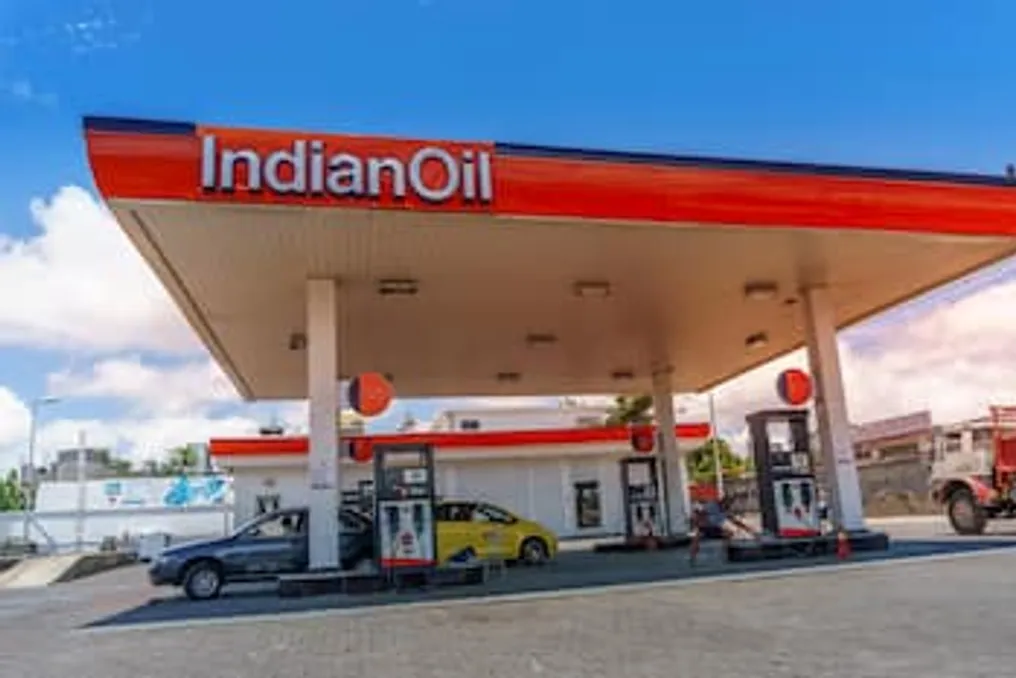
Indian Oil Corporation (IOC) reached 37 percent of the planned capital expenditure (capex) volume of ₹32,700 crore for the current fiscal year during the first half ending in September 2026. The company's spending pace is significant as it relates to India's ability to stably meet the growing demand for petrol, diesel, and LPG.
During the period from April to September 2026, the company spent ₹12,162 crore. Most of these funds, about ₹9,300 crore, were directed to the refining and marketing segments, while ₹1,300 crore was spent on petrochemical projects.
Furthermore, over the six-month period, Indian Oil invested ₹1,306 crore in petrochemical projects, ₹582 crore in the construction of new pipelines, ₹133 crore in natural gas projects, ₹109 crore in research and development, and only ₹121 crore was allocated to the Exploration and Production (E&P) segment.
This level of capital expenditure differs from the previous fiscal year, when the largest state-owned company in India's refining and marketing sector spent nearly half, over 47 percent, of its annual target capex by the end of September.
Overview of Strategic Projects
Nitin Kumar, Executive Director of Corporate Finance and Treasury at the company, informed investors during a conference call that these investments align with the long-term strategic roadmap and national energy priorities. He added that the company is phasing in technological units and non-unit capacities in a structured manner to ensure gradual capacity build-up and integration.
Overall, Indian Oil is currently implementing projects requiring investments of ₹1.04 trillion. Among these are two major projects: a paraxylene-polymethylphthalate (PX-PTA) complex worth ₹13,805 crore at the Paradeep refinery and a new Mundra-Panipat crude oil pipeline worth ₹3,220 crore. Both projects were mechanically completed in July 2026 and are in the commissioning phase.
The company also expects to complete three major refinery expansion projects by the end of next month. These include the Panipat refinery expansion, which aims to increase capacity from the current 15 million tonnes per annum (MTPA) to 25 MTPA at an approved cost of ₹38,231 crore.
Two other projects involve the Gujarat refinery expansion worth ₹18,936 crore, aiming to increase capacity from 13.7 MTPA to 18 MTPA, and the Barauni refinery expansion worth ₹18,113 crore, intended to increase capacity from 6 MTPA to 9 MTPA by December 2026.
Additionally, the company is allocating ₹3,220 crore for establishing a new Research and Development (R&D) campus in Faridabad, Haryana, and ₹2,949 crore for building a polybutadiene rubber plant in Panipat in the same state. Company management also announced during the conference call plans to expand renewable energy generation capacity from the existing 259 gigawatts (GW) to 31 GW over the next five years. For this, IOC plans to invest between ₹5,000 crore and ₹10,000 crore in the form of equity contribution to joint ventures created for clean energy projects.