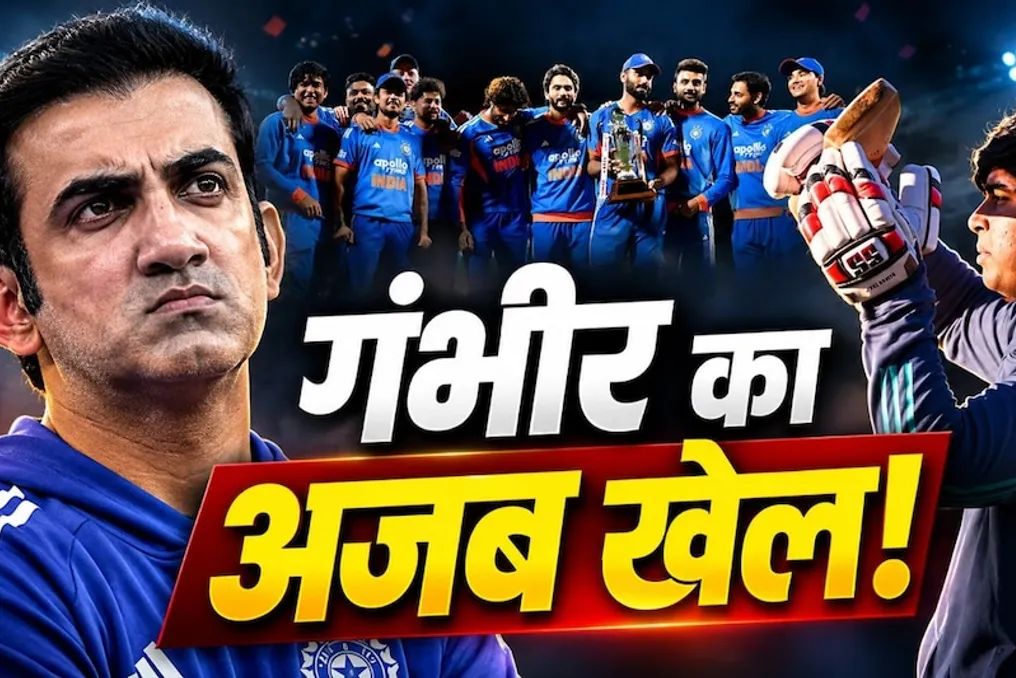
Despite India's 3-2 victory in the T20 series against New Zealand, many questions remain that cannot be ignored. Although India dominated at the start of the series, winning the first three matches, two subsequent defeats exposed the team's weaknesses.
In the fifth T20 match, held in Hamilton on Sunday, New Zealand defeated India by seven wickets. The Indian batsmen scored 191 runs, but the bowlers failed to defend this total. The question arises whether India can remain world champions solely on the strength of its batsmen, especially when the team's tactical decisions, including the constant exclusion of Vaibhav Suryavanshi, are being questioned.
The attacking power of the Indian team was its main advantage in this series. Abhishek Sharma's aggressive play, in particular, put pressure on the opponents. However, in the last two matches, another side of the game emerged: when Abhishek couldn't score runs, the team struggled.
Nevertheless, in the fifth match, Ishan Kishan and captain Shreyas Iyer showed brilliant half-centuries. Ishan scored 61 runs off 32 balls, and Shreyas scored 50 runs off just 23 balls. Together they added 93 runs off 43 balls for the third wicket, taking India to a comfortable score of 112/2 in 10.1 overs.
It seemed from there that the Indian team was heading towards a large score, but the New Zealand bowlers managed to turn the game around. Edam Milne took four wickets for only 19 runs. Nathan Smith and Blair Tickner also succeeded at critical moments. In the end, the Indian team managed to reach 191/8.
India's main problem is its bowling. After scoring 191 runs in Hamilton, the Indian team created a difficult total to defend in T20 cricket, but New Zealand achieved it in only 18 overs. The hosts won the match by seven wickets, and the Indian bowlers looked as if they were craving wickets.
Tim Seifert was the main hero of New Zealand's victory, showing explosive play by scoring 93 runs off 50 balls. Glenn Phillips also helped create problems for the Indian bowling attack by scoring a half-century. Together they made the achievement very easy.
Another issue for the Indian team is fielding. Naman Dir dropped an easy catch by Seifert in the fourth over when he was scoring 13 runs. If this chance had been utilized, the picture of the New Zealand innings could have been different. Interestingly, New Zealand's fielding was not perfect either, and they missed several catches, but India's error proved decisive.
India's ability to score big in T20 cricket is undoubtedly a strength. However, to remain world champions, offense alone will not be enough. India needs bowlers capable of defending large totals and taking wickets at crucial moments.
The last two matches of this series showed that when opponents attack openly, the Indian bowling comes under pressure. Bowlers must have a clear plan not only to contain the run-scorers but also to take wickets. Furthermore, it is crucial to utilize the opportunities provided in fielding.
In the fifth match against New Zealand, the Indian team lacked ideal bowling resources, and the pitch became more favorable to batsmen at night. Nevertheless, one cannot ignore how easily New Zealand reached its target despite these conditions.
One reason for the questions regarding the Indian team's strategy is the constant exclusion of Vaibhav Suryavanshi from the starting lineup. The question of why a young explosive batsman like Vaibhav is not given a chance remains a subject of discussion.
The team management has several options in the upper order: Abhishek Sharma, Sanju Samson, Ishan Kishan, and other batsmen. The question arises as to who will give way to Vaibhav. However, naturally, questions arise about the strategy of constant experimentation and player exclusion.
It is not necessary for the decision to be to play Vaibhav at all costs, but if he is considered part of future plans, he should also be given opportunities to demonstrate his talent. Simply being in the squad does not allow a young player to prepare at the international level. The team management needs to clarify its plans regarding Vaibhav.
The T20 series against New Zealand is over, and now both teams will meet in ODI format matches. In this regard, the Indian team management has the opportunity to review its strategy and squad.
Gautam Gambhir and the team management must find a balance between attack and bowling. In addition to the ability to score big runs, they need to develop the ability to defend them. Player selection should also be based on the team's needs and current form.