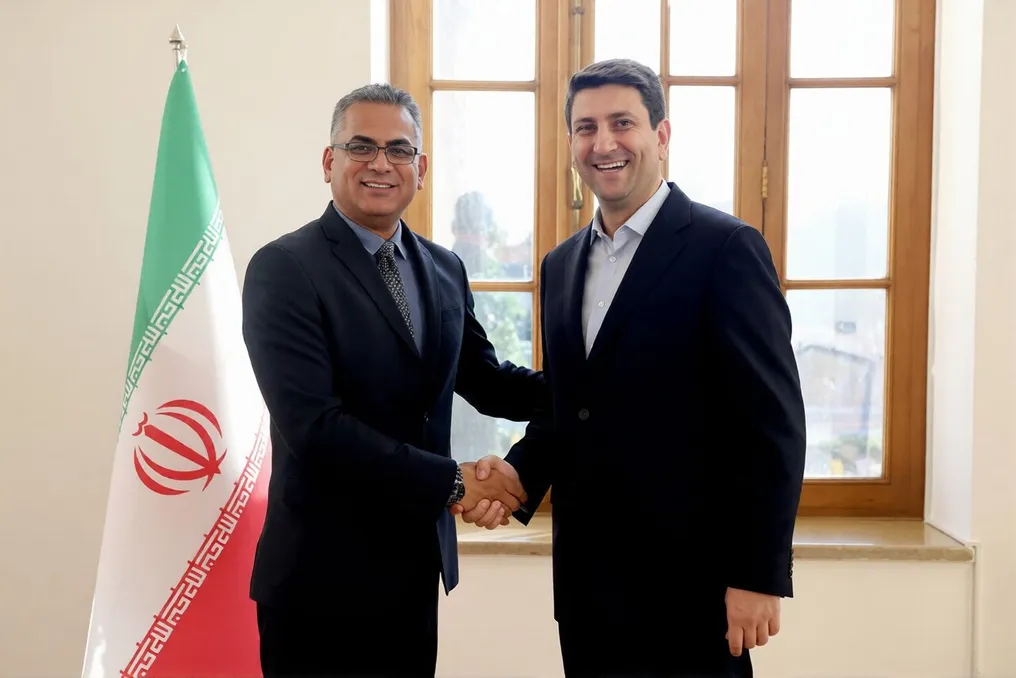
Tehran and New Delhi hold talks on deepening technological cooperation
Read more
Tehran Times
www.tehrantimes.com

Tehran and New Delhi hold talks on deepening technological cooperation

Iran and India discussed opportunities to expand interaction in the field of information and communication technologies (ICT), promote specialized exchanges, and strengthen coordination in international forums.

The Minister of ICT, Sattar Hashemi, and the Indian Ambassador to Iran, Vishvesh Negi, met on Saturday to explore the potential of the two countries for joint projects in this area, according to Mehr News Agency.

Discussions focused on identifying opportunities for cooperation between state structures and private ICT actors, improving professional interaction, and more actively utilizing the scientific, technical, and technological potential of both countries.

Given the regional and international status of Iran and India, both sides emphasized the need to develop cooperation and coordination in specialized international forums and organizations, especially concerning the ICT sector.

Officials also noted the importance of aligning views, participating in current consultations, and strengthening joint initiatives to ensure a more effective presence on the world stage. Ultimately, the parties agreed to continue the dialogue, monitor the implementation of discussed issues, and strengthen ties in areas of mutual interest.

In February, Hashemi, meeting with the Indian Minister of Electronics and Information Technology, Jitendra Prasad, stated his country's readiness to expand scientific and technical ties with India in crucial areas, including artificial intelligence (AI), cybersecurity, and the digital economy.

The meeting took place on the sidelines of the AI Influence Summit in India 2026, which was held in person at Bharat Mandapam, New Delhi, from February 16 to 20, according to IRIB.

During this meeting, Hashemi highlighted the capabilities of both sides in new technologies. He noted Iran's strong scientific and human infrastructure, stating that the country has made significant progress in developing modern technologies.

Furthermore, he emphasized that India is one of the world's software development hubs, a powerful nation with high potential in IT, cybersecurity, and AI development and export. Thus, developing technological ties between the two states will lead to the formation of a digital superpower.

According to Hashemi, enhancing interaction with the private sector is one of the main priorities. He expressed interest in developing operational cooperation in large language models (LLMs), creating a joint AI platform for agriculture, and establishing innovation centers for applying AI in various fields.

Highlighting the importance of protecting critical infrastructure in the coming years and India's capacity in training qualified personnel, Hashemi announced Iran's readiness to share expertise on cyber threats, combating new malware, and strengthening financial security.

The ICT Minister also proposed creating a joint fund to support Iranian and Indian startups, holding joint technological events, talent exchange programs, allocating special zones in both countries' tech parks, and simplifying the issuance of 'tehviz' for IT specialists as practical ways to stimulate cooperation.

For his part, Prasad emphasized the need to expand partnership, noting that India is ready to deepen relations with Iran through knowledge sharing in AI and cybersecurity, conducting specialist training seminars, and initiating operational cooperation in joint technological projects.

Prasad added that establishing joint innovation centers and exchanging experts would help accelerate technological development in both countries, strengthen digital infrastructure, and enhance data security.
Similar stories

Iran and Kyrgyzstan aim to expand cooperation in science and technology
Read more
www.tehrantimes.com

Iran and Kyrgyzstan aim to expand cooperation in science and technology

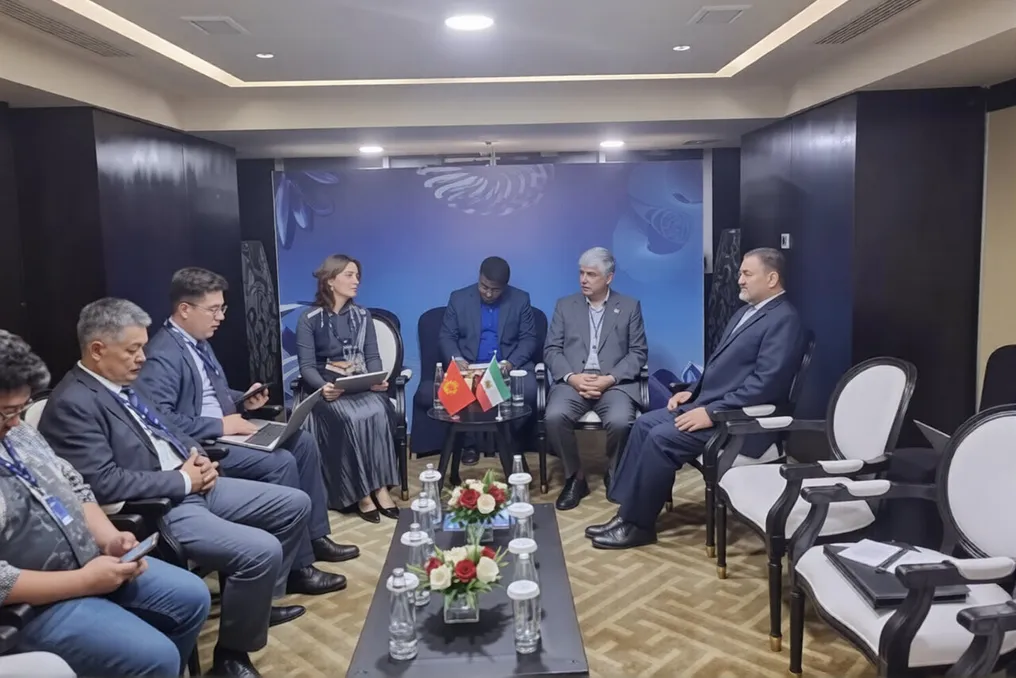
At a meeting held on the sidelines of the 5th World Conference on Creative Economy in Jakarta, official representatives of Iran and Kyrgyzstan called for deepening interaction in the field of science and technology.

The meeting gathered delegates from the Vice Presidency of Iran for Science, Technology, and Economy, as well as a group of high-ranking officials from Kyrgyzstan, including representatives from the ministries of economy and finance, and heads of creative industry parks.

Emphasizing both countries' membership in BRICS, the Iranian side stated its readiness for knowledge-based Iranian companies to export their products to Kyrgyzstan. For its part, the Kyrgyz delegation highly appreciated Iran's significant technological progress and advocated for strengthening bilateral partnership in this area.

In April, Iran's Minister of Science, Research, and Technology, Hossein Simai-Sarraf, and Kyrgyzstan's Minister of Science, Higher Education, and Innovation, Gulzat Isamatova, studied opportunities to activate scientific and technological ties between the two states.

A Kyrgyz official invited the Iranian minister to visit universities and scientific centers in Kyrgyzstan and participate in upcoming scientific conferences, according to the IRNA agency. Simai-Sarraf welcomed the idea of strengthening scientific collaborations and emphasized the need to utilize the potential of science and technology parks for experience exchange and strengthening innovation ecosystems, noting that such steps would form the basis for improving technological interaction between Iran and Kyrgyzstan.

The sides also discussed developing cultural contacts among students from both countries through educational centers where Persian and Kyrgyz language courses will be held.

In September 2024, the Minister of Information and Communications Technology (ICT), Sattar Hashemi, met with his Kyrgyz counterpart to discuss ways to develop cooperation in the ICT sector. This meeting took place on the sidelines of the Asia-Pacific Ministerial Conference on Digital Inclusivity and Transformation in Astana, Kazakhstan, according to the Mehr agency.

Kyrgyz Republic's Minister of Digital Development Nuria Kutnaeva expressed interest in defining joint projects and developing scientific cooperation, stressing the importance of cooperation in the ICT sphere alongside economic and cultural interaction.

During this meeting, the sides also approved cooperation in local platforms and postal matters and decided to prepare a draft memorandum of understanding on this issue.

Furthermore, in April 2025, Iran and Kyrgyzstan held the 14th meeting of their Joint Economic Committee in Tehran to expand bilateral ties in economic, scientific, cultural, and technical fields.

High-ranking officials from both countries attended this meeting, including Iran's Minister of Agriculture, Golamreza Nouri Ghezelj, and Kyrgyzstan's Minister of Economy and Trade, Sakyt Bakyt Tolomushevich. During the meeting, the importance of increasing trade and investment cooperation was emphasized.

At the opening ceremony, Nouri highlighted agriculture, industry, energy, and technology as key areas for joint work. He expressed hope that this event would lay the foundation for substantial growth in trade turnover between the two nations.

Sakyt supported these sentiments, noting the long-standing ties between Iran and Kyrgyzstan dating back to 1992, and stressed the importance of multilateral cooperation through organizations such as the Shanghai Cooperation Organisation and the Eurasian Economic Union.

Uzbekistan and Iran Discuss Expansion of Trade Cooperation and Transport Links
Read more
uzdaily.uz

Uzbekistan and Iran Discuss Expansion of Trade Cooperation and Transport Links

Uzbekistan and Iran held discussions aimed at expanding economic and trade interaction, strengthening investment ties, and seeking alternative transportation routes, according to the Uzbek news agency Dunyo.

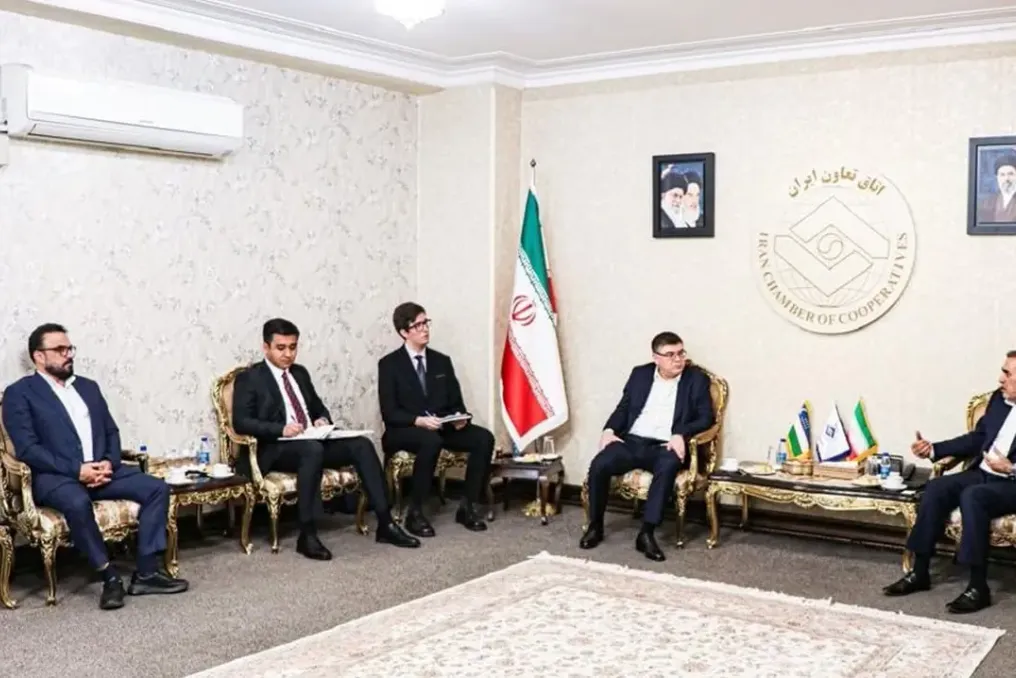
The issues were discussed during a meeting between Uzbekistan's ambassador Fariddin Nasriev and Bahman Abdollahi, chairman of the Iranian Chamber of Cooperatives. The parties reviewed opportunities to increase bilateral trade, promote investment partnership between enterprises, and exchange professional experience.

Furthermore, the topic of organizing a visit by representatives of Iranian business to Uzbekistan to study potential joint projects was raised. The Iranian side noted that the conditions created by Uzbekistan to support business activity contribute to the development of economic and trade relations between the two countries.

A key aspect was cooperation in the field of transport and logistics. The potential for establishing air connections, developing alternative transport corridors, and establishing direct contacts between relevant state structures was discussed.

Nasriev confirmed Uzbekistan's interest in further strengthening bilateral relations and its readiness to facilitate the implementation of the planned initiatives. The Iranian Chamber of Cooperatives (ICC), founded in 1994, is the country's highest non-governmental representative body in the cooperative sector. According to available data, there are about 104,000 cooperatives operating in Iran with over 18 million members, providing employment for 1.8 million people.

Ultimately, the parties agreed to continue cooperation in the areas addressed, paying special attention to achieving practical results in trade, investment, transport, and logistics.

Popular