Sarda Energy & Minerals net profit decreased by 2.2% to 320 crore rupees in the second quarter
Read more
Business Standard
business-standard.com

Sarda Energy & Minerals net profit decreased by 2.2% to 320 crore rupees in the second quarter

Sarda Energy & Minerals Limited (SEML), an integrated energy and mineral company involved in power generation, mining, steel and ferroalloy production, reported a decline in consolidated net profit.

According to the company's statement, net profit fell by 2.2 percent to 320 crore rupees. Previously, in the second quarter of the fiscal year 2025-26, the company recorded a Profit After Tax (PAT) of 328 crore rupees.

During the period from July to September, the company's total revenue decreased by 5.7 percent, reaching 1,505 crore rupees compared to 1,596 crore rupees the previous year.

Furthermore, the company's EBITDA in the second quarter of the fiscal year declined by 2.7 percent year-on-year, amounting to 564 crore rupees versus 580 crore rupees in July-September of fiscal year '26.

Nevertheless, over a longer period, from April to September, the Profit After Tax increased by 4.5 percent, reaching 799 crore rupees compared to 764 crore rupees for the same period last year.

Similar stories

Reliance Industries' profit grew by 41% to 25,548 crore rupees; Jio demonstrated revenue growth
Read more
www.aajtak.in

Reliance Industries' profit grew by 41% to 25,548 crore rupees; Jio demonstrated revenue growth

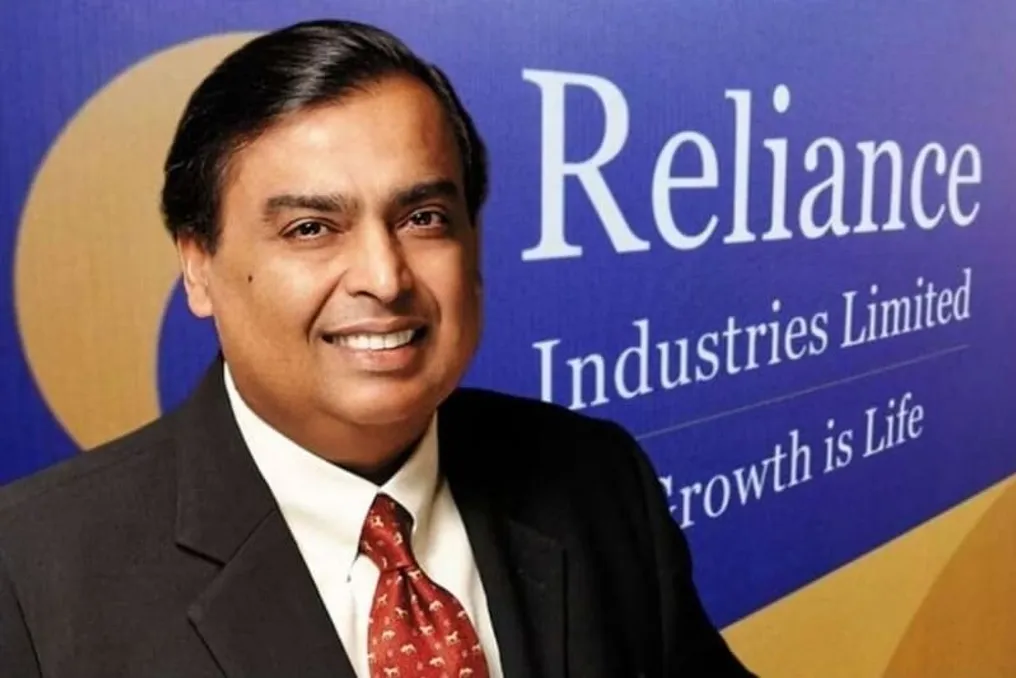
Reliance Industries, led by Mukesh Ambani, presented impressive financial results for the second quarter of the 2026-27 fiscal year (Q2 FY27). For the period from July to September 2026, the company's profit increased by 40.64% compared to the same period last year, reaching 25,548 crore rupees. Last year, the profit for the same period was 18,165 crore rupees.

Furthermore, the digital and telecommunications company Reliance, Jio Platforms, also released its quarterly reports. Jio's revenue grew by 11.3%, amounting to 47,485 crore rupees. As part of its operations, Reliance also began preparations to raise funds of up to 15,000 crore rupees.

Reliance Industries' operating income in the second quarter increased by 28.57%, reaching 332,861 crore rupees. In the same quarter last year, this figure was 258,898 crore rupees. Thus, the income increased by 73,963 crore rupees over the year. Operating income represents the total revenue received by the company from its core, day-to-day business operations. The company reported its quarterly results to the shareholders' market on Friday, and the growth in both profit and revenue indicates business stability.

Alongside the quarterly results, Reliance announced a capital raising plan. The company's board of directors approved the proposal to raise funds of up to 15,000 crore rupees. Unsecured debt obligations (NCDs) will be issued for this purpose. Simply put, NCDs are a type of loan that a company issues to investors to raise money, paying interest according to the agreement. These debt obligations cannot be converted into shares. Reliance plans to issue these bonds through private placements in one or more tranches. These bonds can be secured or unsecured.

Reliance's digital and telecommunications arm, Jio Platforms, also showed strong growth in the second quarter. The company's consolidated revenue increased by 11.3% compared to last year, reaching 47,485 crore rupees. This is significant growth compared to the same period last year. Jio's EBITDA also grew by 16.6%, reaching 21,879 crore rupees. EBITDA is a metric used to assess a company's earnings, reflecting profit before interest, taxes, and certain other expenses, helping to understand the income and operational status of the core business.

Jio's telecom services revenue, including mobile and internet, increased by 11%. Revenue from digital services grew by 16%. According to the company, the growth in operating profit and more efficient cost management contributed to an approximate 17% increase in EBITDA. Meanwhile, the company's margin improved by 250 basis points, or 2.5 percentage points, compared to last year.

For the first half of the 2026-27 fiscal year, i.e., from April to September 2026, Jio registered a Free Cash Flow of 32,130 crore rupees. This figure is 98% higher than the same period last year. Free Cash Flow shows how much money the company has left after covering operating expenses and necessary investments. It is calculated by subtracting Capital Expenditure from EBITDA.

In the second quarter, Jio also achieved two major milestones regarding its customer base. The company's 5G mobile customer base exceeded 300 million people. Additionally, the number of customers using fixed broadband internet for home and office exceeded 3 million. The company's total subscriber base reached 54.24 crore. Over the last 12 months, 3.6 crore new customers joined Jio. Jio's Average Revenue Per User (ARPU) grew to 218.8 rupees. The growth in this indicator signifies an improvement in the company's revenue per customer.

Mukesh Ambani, Chairman and Managing Director of Reliance Industries, called the listing of Jio Platforms on the stock market a historic achievement for the company. He noted that Jio's IPO attracted over 22 times subscription, and the shares showed significant growth during the listing. This demonstrates investor confidence in Jio's business and its future prospects. Ambani stated that Jio has become the second-largest company in India. He also emphasized that this is an important stage in the journey of increasing Reliance's value. Furthermore, he noted that Jio's listing gave new momentum to the beginning that the company's founder, Dhirubhai Ambani, started in 1977 through Reliance's IPO, connecting retail investors to the stock market. Jio Platforms' IPO worth 30,188 crore rupees was completed on October 28, 2026, becoming the largest IPO in India to date.

Ather achieves profitability after a loss of 154 crore rupees; Meta plans to raise $35 billion for AI expansion
Read more
yourstory.com

Ather achieves profitability after a loss of 154 crore rupees; Meta plans to raise $35 billion for AI expansion

MakeMyTrip demonstrated a shift into positive territory, reporting a net profit of $1.8 million in the second quarter of fiscal year 27, compared to a loss of $5.7 million the previous year. The company's revenue increased by 2.5% year-over-year, reaching $235.2 million, or 11.2% in constant currency terms, driven by growth in bookings across all categories.

Meanwhile, Anthropic, one of the leading artificial intelligence (AI) companies and developer of the large language model Claude, has filed for an Initial Public Offering (IPO), approaching public trading status. The company intends to list on the Nasdaq exchange under the ticker ANT.

In the medical technology sector, the startup BioStack secured $9.5 million in seed funding led by Peak XV with participation from Afore Capital, DCVC, and other investors. This startup aggregates disparate clinical records to support healthcare research and clinical decision-making. The funds are planned to be used for international expansion, technology strengthening, and growth of engineering and research teams.

The boom in AI infrastructure continues to accelerate. Tata Communications plans to invest $450 million in building a high-speed fiber-optic network connecting AI data centers to meet the growing demand for AI infrastructure and cloud computing. This investment will increase network capacity and ensure faster and more reliable data transmission between data centers, which is critical for large-scale AI workloads.

In a similar effort to support AI expansion, Meta Platforms launched offerings of common stock and convertible preferred stock totaling approximately $35 billion to finance its expanding AI infrastructure, including data centers and computing power. The parent company of Facebook and Instagram also plans a separate stock sale program of up to $60 billion in 2027, which could potentially increase its planned capital raise to $95 billion.

Electric two-wheeler manufacturer Ather Energy reported consolidated net profit of 1.26 crore rupees in the second quarter of fiscal year 27, compared to a net loss of 154 crore rupees in the quarter a year prior. The company's total revenue grew by 62% year-over-year (YoY) to 1,527 crore rupees, supported by increased vehicle sales and operational activities. Ather's results reflect increased scale and operational efficiency as the company works towards achieving sustainable profitability.

At the TechSparks 2026 conference, founder, CEO, and Chairman of QpiAI, Nagendra Nagaraja, stated that the future of artificial intelligence lies beyond language models and traditional computing. He advocated for 'intelligence modeling' to discover new knowledge, rather than just automating tasks. He argued that quantum computing can help overcome the limitations of silicon chips and large language models by processing complex data found in nature.

Mahindra Finance's net profit grew by 55% to 882 crore rupees due to lending growth
Read more
business-standard.com

Mahindra Finance's net profit grew by 55% to 882 crore rupees due to lending growth

Mahindra & Mahindra Financial Services (Mahindra Finance) reported a 55% year-on-year growth in its net profit, reaching 882 crore rupees for the quarter from July to September of fiscal year 27 (Q2FY27).

During this quarter, total income increased by 15% year-over-year to 5,175 crore rupees, and the volume of loans disbursed grew by 22% to 16,499 crore rupees. Meanwhile, the Net Interest Margin (NIM) remained unchanged at 7% in Q2FY27 compared to the same quarter last year.

Assets under management (AUM) increased by 15% year-over-year, reaching 1.46 trillion rupees. The cost of credit losses decreased to 1.6% of average assets in Q2FY27, compared to 2.2% a year earlier.

The asset quality of this Non-Banking Financial Company (NBFC) improved during the reporting period. The proportion of Stage 3 assets decreased from 3.9% to 3.4%, and the proportion of Stage 2 assets fell from 5.8% to 4.7%. Collection efficiency improved to 97% from 96% in Q2FY26.

The company's capital adequacy ratio stood at 18%, with Tier-I capital reaching 16.2%. Diversification beyond vehicle financing continued to gain momentum: the volume of loans disbursed in non-transport segments grew by 52% year-on-year. These areas include MSME lending, personal loans, and other segments, including Mahindra Rural Housing Finance (MRHFL).

Rahul Rebelo, Managing Director and CEO of Mahindra Finance, noted that the second-quarter results provide confidence that the ongoing changes are leading to stronger and more stable business performance. He added that the company is encouraged by the growth rate driven by a 22% increase in disbursements, credit cost control at 1.6%, and 55% profit growth, and maintains focus on disciplined execution of plans until fiscal year 31.

Popular