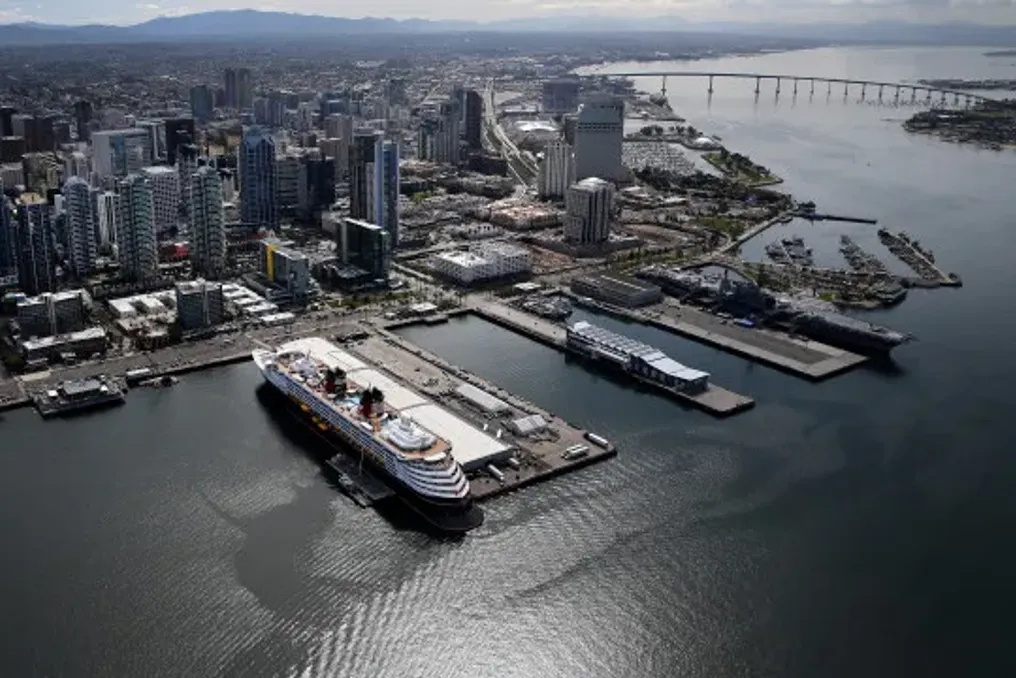
Portuguese Club in the USA Preserves Cultural Heritage Thanks to New Generation
Read more
Noticias ao Minuto
noticiasaominuto.com

Portuguese Club in the USA Preserves Cultural Heritage Thanks to New Generation

The Portuguese club in the USA maintains its living cultural heritage through the involvement of the new generation and its ability to encompass all traditions. This dynamic center is located in San Diego, southern California, where a Portuguese-Spanish community of about 20 thousand people resides.

Located on Avenida de Portugal in Point Loma, the hall of the Union of the Portuguese Society of the Holy Spirit (U.P.S.E.S) serves as a meeting place for Portuguese-Americans and descendants of Portuguese immigrants who arrived in the region since the late 19th century, primarily associated with fishing.

Annette Balele, the union's president, reported that the main event is the Feast of the Holy Spirit, but they also hold fundraising events and organize numerous community activities. These include the Lapa Festival and Halloween celebrations. Balele emphasized that events are held year-round so the community can participate in the hall's life.

A very popular bingo night takes place at the hall every Thursday, attended even by people not affiliated with the Portuguese community. The hall was nearly full. Balele assured that in Point Loma, one can visit almost any place, and people ask what event is happening at the hall that week. These visitors either grew up here or came from other communities outside San Diego and became acquainted with the Portuguese community.

The leader also noted that many people come to the Feast of the Holy Spirit and the Portuguese goods market located in the same space, and this market is popular. 'We have a good community,' she described.

Kenny Alameda, a grandson of Portuguese immigrants and founder of Clipper Oil, attributed a significant part of the cohesion to religious festivities. He stated, 'We have strong faith. Everyone in Portugal has faith, family, and friends, and that is necessary for success.'

His son Kevin Alameda, who handles the company's daily operations, is not as actively involved in the community as his father, but he tries to take his children to the annual festival. He considers it extremely important to preserve roots and introduce his children to the same traditions he grew up with.

Idalmir da Rosa, who lives in Point Loma and is the honorary consul of Portugal in San Diego, explained that the community is strong because 'all its associations work under one roof,' which led to the name União Portuguesa/United Portuguese.

This Portuguese-American expressed confidence in the future of the community, recalling youthful concerns that subsequent generations might not take over the leadership of traditions. However, he noted, 'There is always interest, there always is. As we get older, it is important to follow our old ways. Portuguese people strongly associate themselves with Portugal.'

Annette Balele, who is in her second year leading U.P.S.E.S, also expressed great confidence in the continuation of the hall and its traditions. She stated that she is very proud that the hall's leadership is very young, as is the audience participating in the events, including royalty and staff.

Balele stressed, 'I am very confident that our community here in San Diego will continue, and our traditions, our heritage, will endure. Our culture is preserved here in Point Loma among a younger audience. I feel honest and proud to be a part of it.'

The Union of the Portuguese Society first established its first hall, chapel, in 1922. Their current premises on Avenida de Portugal were opened in 1948.
Similar stories

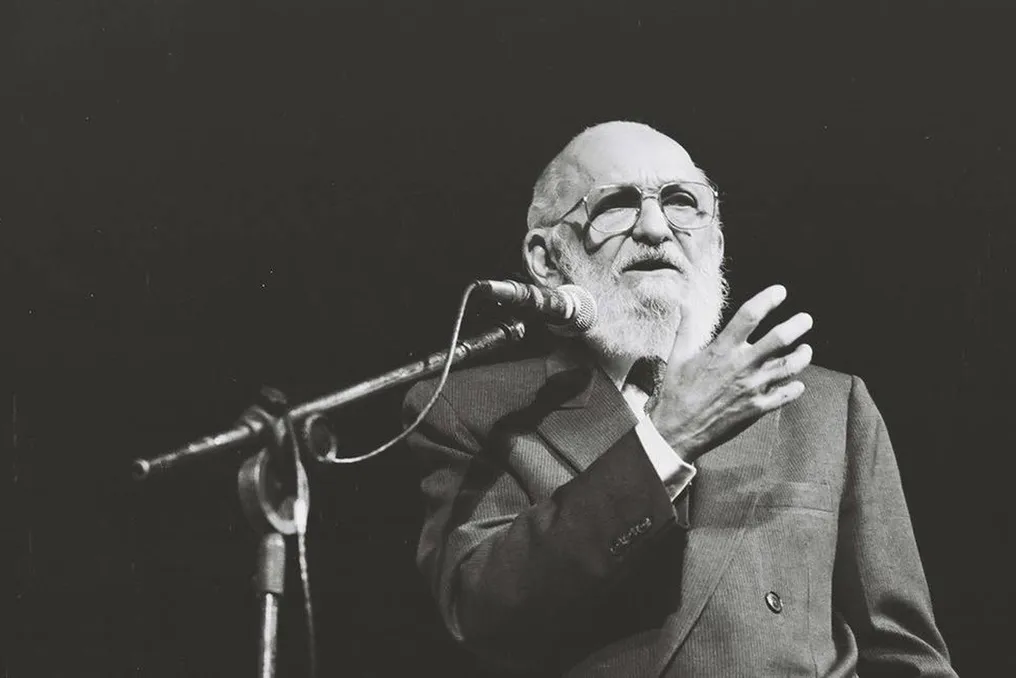
Paulo Freire's experience in Angicos recognized as intangible cultural heritage of Rio Grande do Norte
Read more
g1.globo.com

Paulo Freire's experience in Angicos recognized as intangible cultural heritage of Rio Grande do Norte

The initiative known as "40 Hours of Angicos," coordinated by educator Paulo Freire in 1963 in the city of Angicos, has been officially recognized as Intangible Cultural Heritage of Rio Grande do Norte. This decision was formalized in this Tuesday's (27th) Official Gazette.

This literacy project was implemented in the municipality of Angicos, located in the interior of the state. The recognition covers all aspects related to the experience, including oral accounts, knowledge, pedagogical practices, and the memories of the communities and individuals who participated.

As established by legislation, the purpose of this recognition is twofold: to preserve the collective memory of those involved and to stimulate research, in addition to promoting the dissemination of historical and cultural references linked to the project. Furthermore, it aims to transmit this legacy to future generations and highlight the relevance of Angicos to the trajectory of Brazilian education.

The official text clarifies that such recognition does not annul the administrative procedures for inventory and registration provided for in cultural heritage protection standards. Nor does it impose on the state education network the adoption of a specific pedagogical method or promote changes in school curricula.

The 40 Hours of Angicos

In 1963, Freire introduced an innovative model of popular education in the city of Angicos, located in the West of Rio Grande do Norte, which at the time had approximately 9.5 thousand inhabitants. The educator set an ambitious goal: to teach adults to read and write in just 40 hours. The first class had 380 registered participants, about 300 of whom completed the course, which took place between January 28 and April 2.

The Paulo Freire method focuses on adult literacy through the discussion of their mutual experiences, using words extracted from the reality of the students themselves, which are later decoded to aid in acquiring writing and understanding the world.

Freire structured his literacy method based on people's life experiences. Instead of using standardized teaching materials, such as teaching phrases like "the bull baba" or "grandma saw the grape," he worked with so-called "generating words" that came from the reality of the common citizen.

A practical example shows that a factory worker could learn terms like "brick" or "cement," while a farmer would learn vocabulary such as "sugarcane," "hoe," "earth," and "harvest." The formation of new vocabulary occurred through the phonetic decoding of these words.

The coordination of Paulo Freire's arrival in Rio Grande do Norte began in 1962, under the management of the then governor Aluízio Alves, a native of Angicos, and was facilitated by the Secretary of Education Calazans Fernandes. The intention was to extend the Paulo Freire program throughout the state to reduce illiteracy rates; however, the educator was exiled in 1964 after the military coup, accused of subversion.

Macao promotes Spanish-speaking business development in China due to cultural proximity
Read more
noticiasaominuto.com

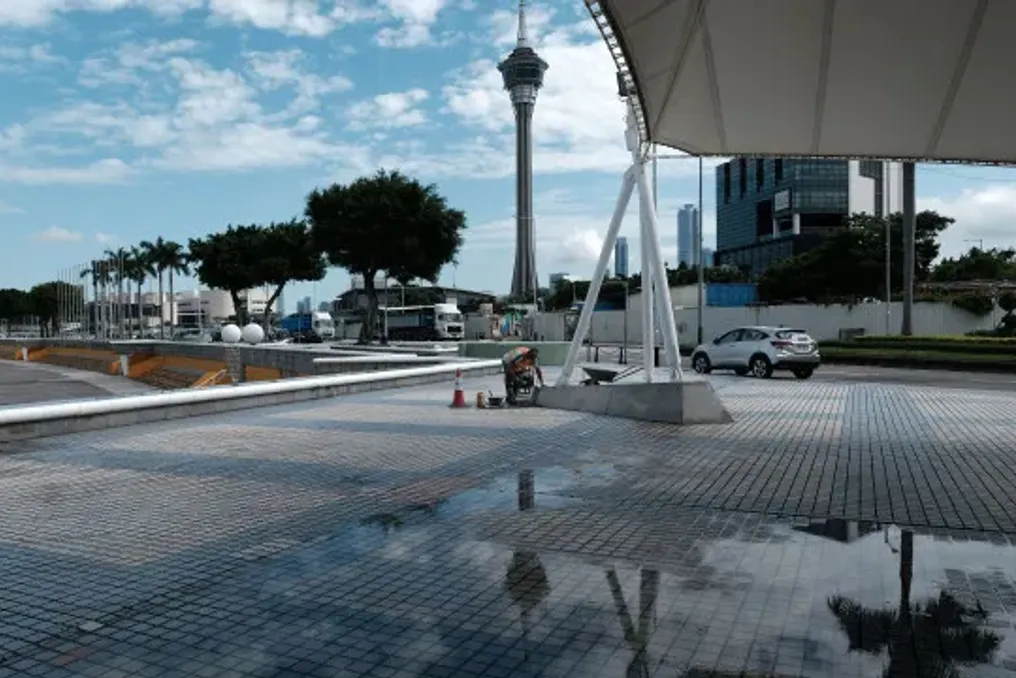
Macao promotes Spanish-speaking business development in China due to cultural proximity

Entrepreneurs and representatives assert that Macao's cultural closeness to Spanish-speaking countries facilitates entry into the Chinese market, especially given the expansion of the semi-autonomous region's strategy towards the Spanish-speaking world.

Borja Sanchez, an entrepreneur who has monitored events in Macao for about twenty years, arrived in Hong Kong in 2006. He was born in Barcelona but has roots in Galicia. Initially, he came to promote Spanish cuisine in two semi-autonomous regions of China, and seven years later, he founded Los Ibericos, a company involved in importing and distributing Spanish food products.

From the Pearl River side, this entrepreneur has observed Macao's consistent policy of economic diversification and believes that the decision to act as a bridge between China and Spanish-speaking countries 'is a logical evolution.'

In an interview with Lusa on the first day of the 31st Macau International Fair (MIF), he noted: 'The Chinese government understood that we are a separate cultural bloc. I think they understand the world of Portuguese-speaking countries very well thanks to Macao. And this is a logical and natural consequence.'

China designated Macao as a platform to strengthen economic and trade cooperation with the Portuguese-speaking world in 2003, establishing the Forum for Economic and Trade Cooperation between China and Portuguese-Speaking Countries. More than two decades later, this goal was expanded to include Spanish-speaking countries.

Despite whether Macao's new vision will be realized, Sanchez asserts that 'it depends on the will.' He added: 'What often happens with Macao government initiatives, in my opinion, is that they are very interesting in theory, but nothing is achieved.'

He emphasized that Macao possesses all the necessary resources to implement these plans: 'It has infrastructure, budget, there is a need to diversify the economy, and I think it can do it if it wants,' mentioning the hotel sector, restaurant business, and the strong presence of Portuguese culture in the territory.

The idea of cultural proximity is shared by the Spanish Consul General in Hong Kong and Macao, who views this strategy as an opportunity for Madrid to 'expand trade and investment both in Macao and from Macao to other geographical regions.'

The diplomat, Jesus Garcia Aldas, observed: 'Macao is also a place close to the history, language, and culture of Spain, Portugal, and Iberia. Therefore, it is always a very welcoming place for doing business.'

He also highlighted the 'growing closeness between Spain and China in recent years.' Spanish Prime Minister Pedro Sanchez visited China four times in the last four years, and the Kings of Spain visited the Asian country at the end of 2025.

Currently, about 4,500 Spaniards reside in China, and according to the diplomat, two thousand are in Hong Kong and about 500 in Macao.

Miguel Latorre, one of the directors of the Spanish Chamber of Commerce in Hong Kong, arrived in the region in 2023 and believes that the expansion offers Spanish entrepreneurs something hard to find in other cities of the region. He stated: 'Spaniards, Portuguese, we are brothers,' recalling how he felt in a 'familiar landscape' when he first visited Macao. He argues that this proximity generates trust and comfort for Spanish-speaking entrepreneurs.

'We see this as the ideal bridge between China, Hong Kong, and the ecosystem that has formed in Victoria Harbour (...) we consider this expansion a very positive sign,' he noted.

Victoria Harbour is a Beijing project aimed at creating a global metropolis based on China's Special Administrative Regions of Macao and Hong Kong, as well as nine other cities in the neighboring Guangdong province, where more than 86 million people live.

For Victor Herrera, manager of the consulting firm CW CPA—a Hong Kong firm specializing in supporting Latin American companies interested in entering Asia—the inclusion of Spanish-speaking countries in Macao is 'very important.'

He reported that upon arriving in Hong Kong, where Cantonese and English are spoken, there is a lack of 'muscle' to promote business specifically oriented towards the Spanish-speaking region, so Macao's intention to promote such activities 'would be ideal.'

The Mexican specialist listed two main difficulties for entrepreneurs from Spanish-speaking countries entering China in Lusa: language, although this is being mitigated by the development of new translation technologies, and lack of legal knowledge.

He concluded: 'These companies, when they come to do business, have usually already conducted import and export operations and faced problems because communication was unclear, because they did not read contract terms, because there was no contract, there was no solid basis for business development. There was hope, trust, and 'whatever God wills.'

Popular