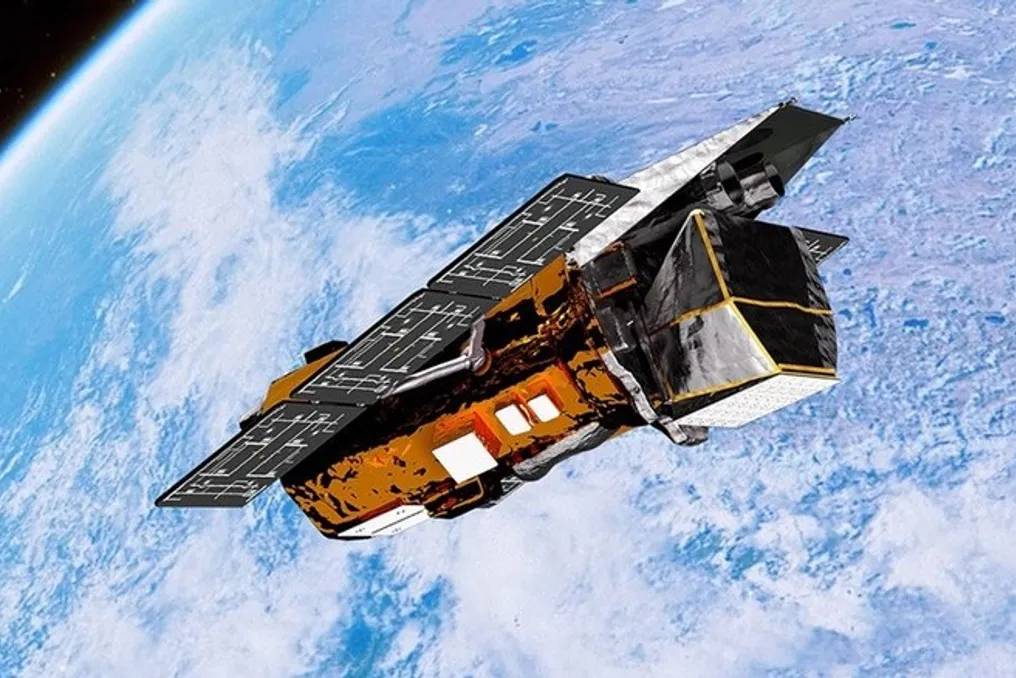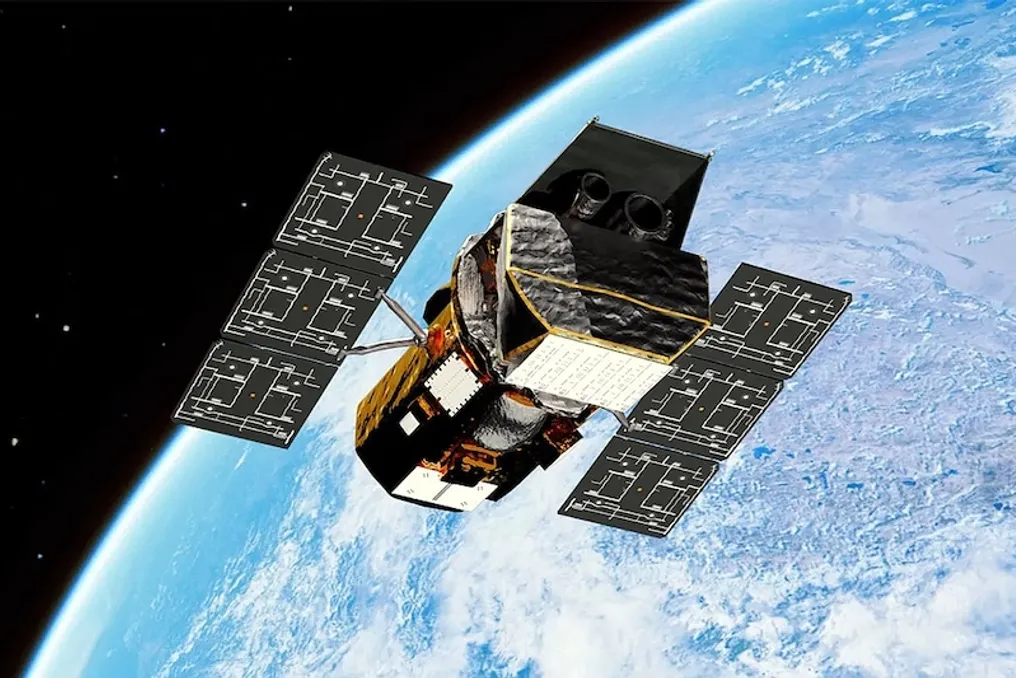
NASA's Swift space observatory is concluding its mission as its final journey will result in atmospheric entry into Earth. According to the US Military Space Forces, the observatory may enter the planet's atmosphere on November 6, marking the end of its 22-year service life. This scientific instrument, weighing 1.5 tons, was launched in 2004 and successfully recorded the most powerful events in the universe.
After the completion of scientific experiments, the satellite's orbit began to gradually decay. NASA attempted to save Swift, but this effort proved unsuccessful due to technical issues. Most of the spacecraft is expected to burn up in the atmosphere, with remaining fragments falling into the sea.
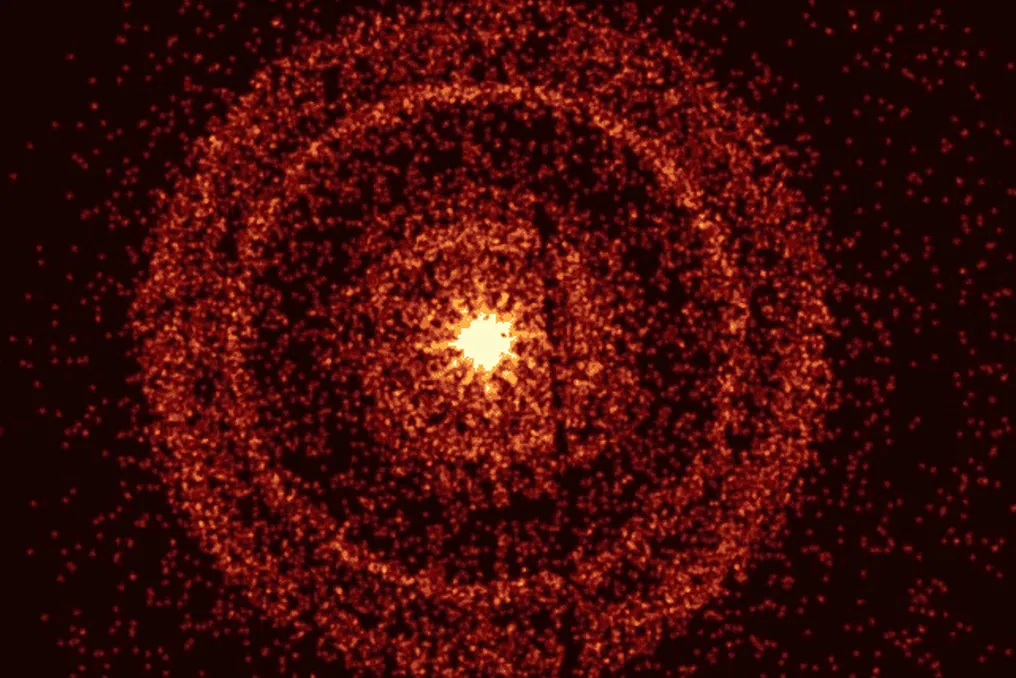
Swift was specifically designed to study gamma-ray bursts—the fastest and most powerful energy releases in the universe. In such bursts, energy equivalent to the entire energy output of the Sun over its lifespan is released in mere seconds. The observatory detected over two thousand gamma-ray bursts and approximately fourteen hundred supernovae.
These discoveries have helped scientists gain new insights into the origin of the universe, the death of stars, and black holes, as well as record numerous other astronomical phenomena. Such prolonged activity is considered a major success for any scientific project. Even after the observatory's return, the vast amount of data it collected will assist astronomers for many years.
The orbits of satellites in space for long periods gradually decrease due to weak atmospheric drag. Swift faced a similar situation. NASA initiated a unique commercial mission to raise its orbit by striking a deal with Catalyst Space Technologies worth thirty million dollars. It was planned that a spacecraft named Robotic Link would approach Swift, capture it, and lift it into a higher orbit. This was the first attempt at commercially rescuing a scientific observational instrument in this manner.
However, technical malfunctions occurred in August. The robotic spacecraft could not approach Swift closely enough, forcing NASA to cancel the operation. US Military Space Forces continue to monitor Swift. It is anticipated that it will enter the atmosphere around Friday, November 6. The exact time and location remain uncertain due to changing atmospheric conditions. Most of the spacecraft should burn up at altitude due to intense heating caused by high speed and friction.
Some sturdy parts might survive, but the probability is low, and they are expected to fall into the ocean. There is no expectation of major damage. Nevertheless, space agencies closely track such re-entries to rule out risk to Earth. This incident demonstrates how complex the task of rescuing old satellites is. The experience of commercial companies in conducting complex robotic operations in space is still limited. If the Swift rescue mission had succeeded, it would have allowed many other satellites to be used for extended periods, which would also help reduce the problem of space debris. Since this attempt failed, it has served as a lesson for the scientific community and space agencies about the need for better preparation for similar challenges in future missions, as well as the necessity of planning the end-of-life for new satellites in advance.
Even if Swift physically ceases to exist, its scientific contribution will not disappear. The data it collected remains accessible, and researchers will use it for new discoveries. The foundations laid in the study of gamma-ray bursts and supernovae will be useful for coming generations. NASA and other agencies are developing new missions in this direction that will help deepen the understanding of mysterious universal phenomena, similar to those studied by Swift. Overall, the return of Swift marks the end of an era. This observatory has become not only a symbol of scientific discovery but also demonstrated the limits of commercial space efforts. Now, it is necessary to allow its final journey to conclude peacefully so that its contribution can be preserved and the way paved for future missions.