Thomas van Tonder achieves world breakthrough by crossing the Bloukrans Bridge on monkey bars
Read more
IOL
iol.co.za

Thomas van Tonder achieves world breakthrough by crossing the Bloukrans Bridge on monkey bars

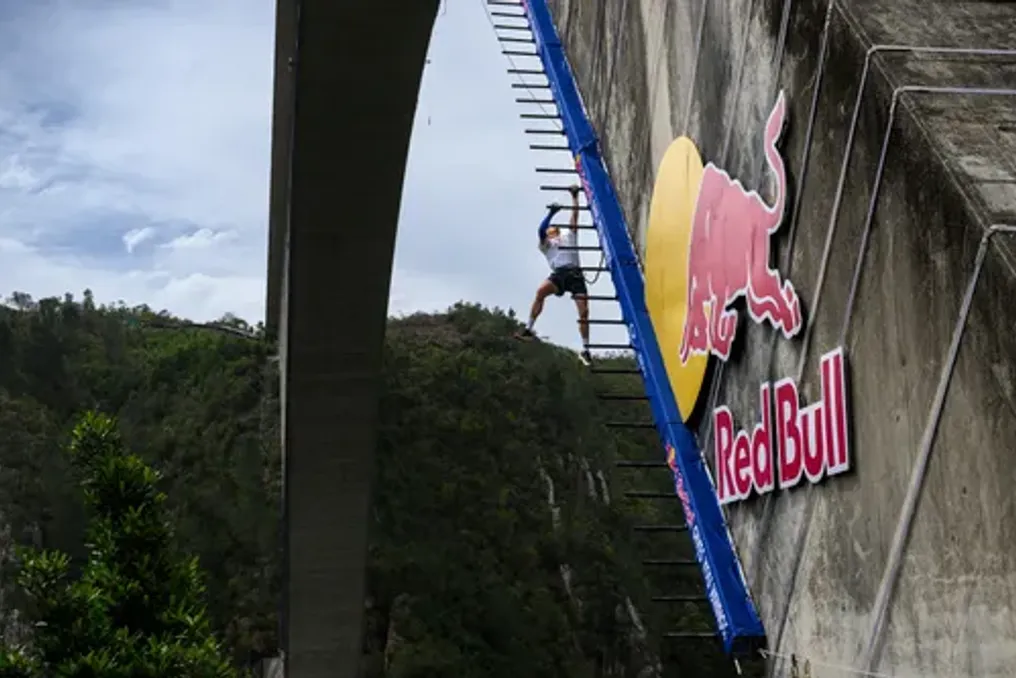
South African obstacle course champion Thomas van Tonder took on one of the most challenging endeavors of his career: crossing the Bloukrans Bridge near Plettenberg Bay in the Western Cape using monkey bars.

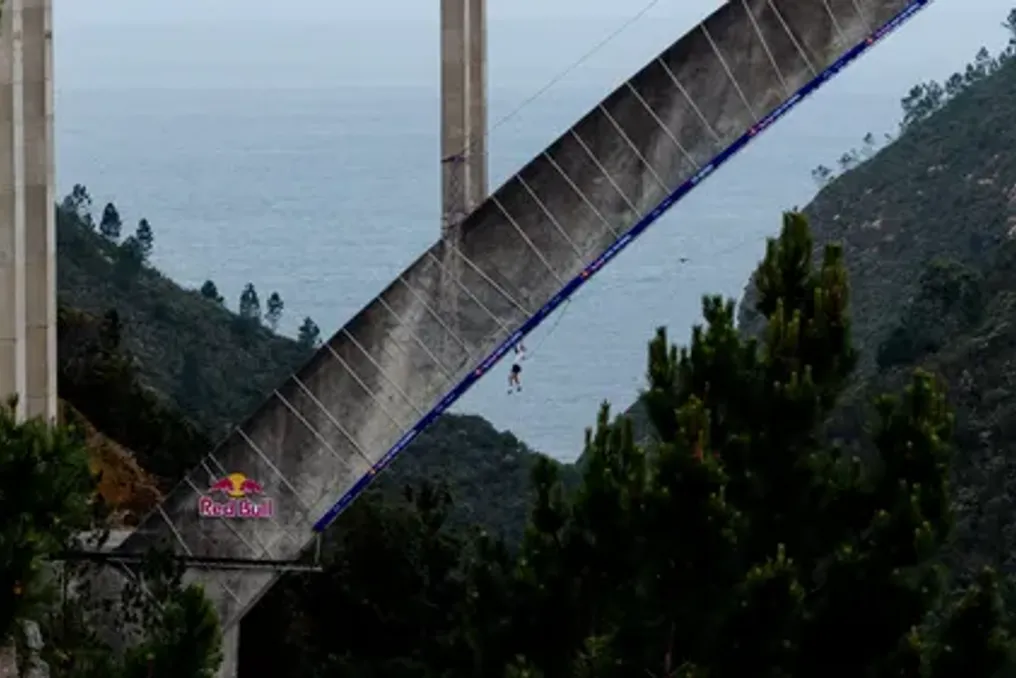
Last month in Tsitsikamma, Van Tonder accomplished this feat—the first-ever crossing of the bridge using monkey bars. He completed the challenge on the first attempt under favorable weather conditions, covering a 280-meter section of 600 bars in 47 minutes and 37 seconds, at an altitude of approximately 216 meters above the river below.

The start of the challenge proved to be the hardest for Van Tonder. Due to a 45-degree incline, he had to climb backward, raising his arms over his head to reach the next bar. This quickly drained his energy, and within just five minutes of starting, his arms began to ache. It was then that he realized the magnitude of the challenge before him.

He approached the attempt with confidence, but as soon as he was on the bars, the water below roared, and cars rumbled overhead, he grasped the reality of the challenge. Van Tonder noted that 'there is no guide, no instructions, and no YouTube video showing how to handle the longest, highest, and most exposed monkey bar in the world.' He added, 'You cannot find this on Google; there are no answers. So we created our own action plan. It was tough. We prepared for this for over a year, with six months dedicated to focused, targeted training.'

Nevertheless, on the day of the test, everything turned out to be more difficult than he anticipated. There were moments on the bridge when he doubted whether he could reach the end. He believes he truly believed in his success only when about 20 meters remained until the finish line. Van Tonder emphasized that the incline was definitely the most difficult part, and he underestimated how much his upper body would tire by the middle of the course. In his view, he would execute smooth swings, jump between bars, and pass the middle quickly, but this did not happen.

Van Tonder stated that the goal was always to accept a challenge that would push him beyond his own perceptions of possibility, without a guarantee of success. The fact that the test turned out to be even harder than expected made reaching the opposite bank even more valuable, as the challenge ultimately justified the ambitious vision he set for himself.

With support from the Red Bull team at the sports training center in Salzburg, Austria, Van Tonder adapted his preparation, focusing on building strength while simultaneously losing weight. His training regimen underwent significant changes: running took a backseat for the last four months, and the focus shifted almost entirely to strengthening his upper body. The main priorities became developing strength and endurance to support his own weight, as well as improving grip endurance.

He described the initial strategy: 'I had a strategy and a plan, with different techniques for different sized bars along the bridge. My intention was to cover the central section using smooth swings, jumping between bars, and maintaining a fast pace to cover as much ground as possible before descending.' However, when he reached the middle section, he could not swing as planned. After several attempts, he was on the verge of losing his grip and did not want to risk repeating the difficult sections. He had to change his technique and switch to a more traversing style, using both hands and making smaller jumps. This slowed him down and significantly complicated the task, as large bars are better suited for swinging than for comfortable hanging.

This moment made the middle section particularly difficult and led to greater fatigue by the time he reached the final stretch, which caught him off guard. Furthermore, his safety trolley got stuck on some branding, forcing him to stop and deal with the issue. He noted that at this scale, even one detached cable tie from a hook on one of the branding sections can cause a problem. Nevertheless, Van Tonder believes the entire safety system went very smoothly, and no serious issues arose.

Van Tonder reported that the only change he would make to the course is to reduce the size of the bars in the middle section to match the sizes on the ascent. Otherwise, he believes every aspect of the preparation was meticulously planned and executed, including rigging, emergency rescue plans, nutrition, weight management, and physical conditioning. He feels nothing more could have been done to prepare for this challenge.

He urged people to draw inspiration from this experience, wishing that his children would one day see that their father did not give up. He concluded: 'This was my big dream, my big vision, and I hope that other people with crazy, unusual dreams, visions, and plans will find something in this. Make your dreams big enough to scare you; otherwise, they are not big enough.'
Similar stories

Thomas van Tonder overcomes Bloukrans bridge challenge by crossing 600 rungs
Read more
iol.co.za

Thomas van Tonder overcomes Bloukrans bridge challenge by crossing 600 rungs

Thomas van Tonder, the South African world champion in obstacle racing, completed the crossing under the Bloukrans bridge, achieving a goal he considered extremely difficult. He stated: 'I finished what I started. I set a big, crazy goal, and we achieved it.'

This took place as part of the Red Bull Bridge Bars event on Monday, near the Nature Valley, between the Western and Eastern Cape. Van Tonder successfully crossed 600 suspended monkey bars, spanning over 280 meters along the bridge arch, completing the specially built course in 47 minutes and 37 seconds. This represented an outstanding test of his strength, endurance, and psychological resilience.

Since these were the longest monkey bars ever installed under a bridge, this challenge was entirely new for the Red Bull athlete. Van Tonder admitted that during the process, there were many moments when he doubted his ability to handle the task.

He noted that simulations before the attempt usually took about 30 minutes, and he anticipated a time frame of 30–35 minutes. However, upon reaching the middle of the bridge and checking his watch, he realized he had spent much more time than expected, which caused concern about whether his hands could last until the end.

The athlete also acknowledged that he underestimated the level of fatigue his body would experience halfway through. Contrary to his expectations of faster and smoother movement in the middle, he felt significant exhaustion.

He started the crossing at 10:21 AM with a heart rate of 150 beats per minute, immediately facing the steepest section of the course—a 45-degree incline. This section required him to move backward relative to the direction of travel and pull himself up from one rung to the next.

By 10:34 AM, the constant ascent had already begun to exhaust his arms. Although Van Tonder expected the climb to be the most difficult part, the continuous strain on the same muscle groups proved more demanding than anything he had experienced in training.

Upon reaching the top of the bridge, the slope changed, but this did not bring much relief. Due to fatigue affecting his grip and rhythm, Van Tonder divided the remaining distance into smaller goals, reporting each one to the rigging and safety manager, Richard Lewart, via radio communication.

He emphasized that despite all the simulations and training, nothing compares to the constant tension of lifting the same muscle group. Mentally, it was the hardest aspect; it was difficult for him to maintain a rhythm, and his hands were not doing what he anticipated. He had to use his wrists to ascend because his palms stopped wanting to grip.

Instead of focusing on the entire remaining distance, he concentrated on reaching the next marker and maintaining pace. During one exercise, while inverted, Van Tonder felt a pulsation in his head and realized he needed to return to an upright position. He leaned on his already tired arms to reposition himself before continuing to move across the bars.

The descent presented another challenge. Gravity increased his speed between rungs, forcing him to control inertia while maintaining his grip and securing each bar. As fatigue intensified, the protective tape on his fingers began to wear down, increasing the physical strain as he approached the finish line.

Despite the growing discomfort, Van Tonder continued moving along the course, completing the crossing in 47 minutes and 37 seconds. This achievement brought to life an ambitious goal, allowing the South African to conquer an unusual obstacle under one of the country's most iconic landmarks.

Kagiso Rabada sets record by taking 200 Test wickets in just 7017 balls
Read more
www.aajtak.in

Kagiso Rabada sets record by taking 200 Test wickets in just 7017 balls

South African fast bowler Kagiso Rabada has achieved significant success in Test matches. He has become the fourth South African player to take 200 Test wickets on home grounds. This milestone was reached during the Keberha match against Australia, where Rabada dismissed Nick Maddinson and Mitchell Starc.

A notable aspect of this achievement is that Rabada reached 200 wickets in only 7017 balls, which is the lowest number of balls among all players to reach this mark.

Currently, in home matches, Kagiso Rabada has taken 202 Test wickets in 38 matches, with an average of 19.99. He has demonstrated outstanding abilities, taking five wickets in one innings 10 times and 10 wickets in a match four times. His best performance is seven wickets for 112 runs.

In the list of South African players with the most wickets in home Tests, Dale Steyn is ranked first with 261 wickets. He is followed by Makhaya Ntini with 249 and Shaun Pollock with 235. Rabada now ranks fourth in this list.

Although Dale Steyn reached the 200 home wicket mark in 37 matches, Rabada required one more match. However, in terms of balls bowled, Rabada surpassed Steyn. Steyn bowled 7751 balls to achieve this figure.

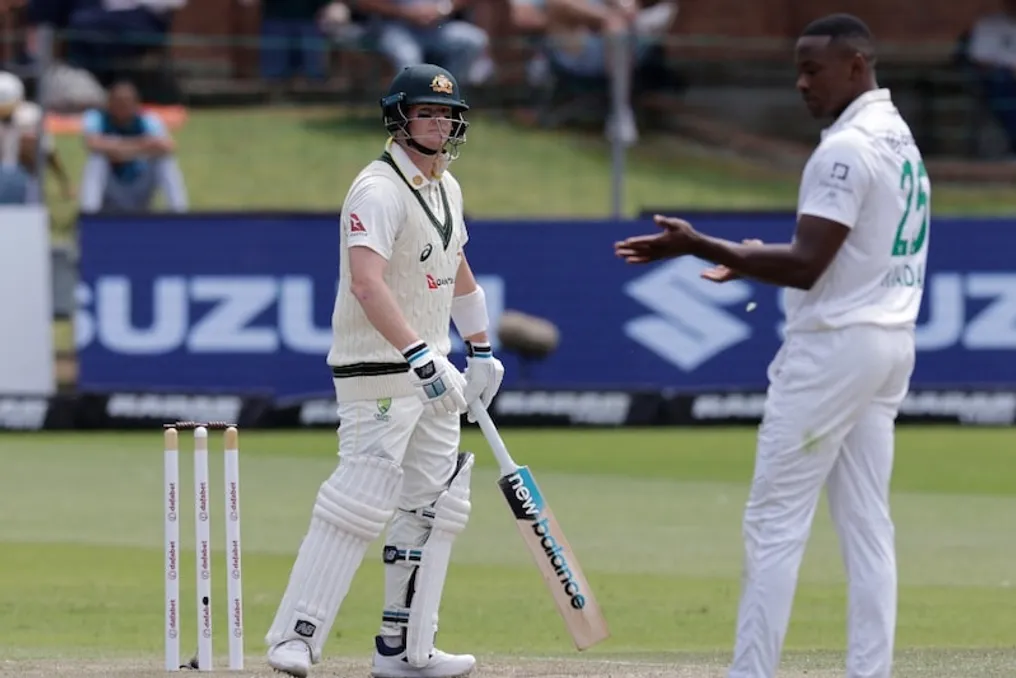
Rabada's achievement occurred during a period when South Africa made an impressive comeback in the second Test match. The hosts forced the opposing team to follow-on, restricting Australia's first innings to only 99 runs. Rabada took two wickets, conceding 33 runs in 12 overs.

In this match, Marco Jansen took five wickets for 33 runs, and Bian Mulder secured two wickets. For Australia, Steve Smith scored the most runs with 28, facing 88 deliveries, but the other batsmen could not cope with the South African bowlers.

Earlier in the match, the South African batting lineup also struggled, losing six batsmen at a score of 110 runs. Captain Temba Bavuma stabilized the game, scoring 179 runs off 334 balls. Marco Jansen added 85 runs, and together with Bavuma, they contributed 132 runs for the seventh wicket.

After Jansen came in, Simon Harmer supported the captain. Their partnership for the eighth wicket brought up 183 runs. Harmer scored 82 runs, playing a key role in South Africa reaching a total of 425/9. For Australia, Scott Boland took five wickets for 81 runs.

The Australian team leads the three-match series 1-0. South Africa has a chance to level the score in the remaining day of the second Test if they manage to win.

Kagiso Rabada's record achievement and the strong bowling performance have boosted the home side's hopes for victory.

Popular