Bosch aims for double-digit market share in Indian air conditioners within two years
Read more
Business Standard
business-standard.com

Bosch aims for double-digit market share in Indian air conditioners within two years

European provider of heating and cooling solutions, Bosch Home Comfort Group, plans to capture a significant share of the Indian air conditioner market, aiming for a double-digit figure within the next two years. The company intends to launch air conditioners under the Bosch brand next year.

According to Managing Director Sanjay Sudhakaran, the company also aims to enter the top five leading brands in the medium term. Bosch Home Comfort Group, part of the German industrial giant Bosch GmbH, is accelerating its expansion in India using a dual branding strategy.

In August 2025, the company acquired the global business for residential and small commercial air conditioners from Johnson Controls and Hitachi. According to the developed strategy, Hitachi will be positioned in mass demand and premium segments, while Bosch will occupy the performance-premium and super-premium niches to cover various consumer groups.

Furthermore, Bosch Home Comfort is strengthening its long-term commitment to India by planning to invest 80 million euros (equivalent to approximately 900 crore rupees) in the coming years. These funds will be directed towards expanding production capacity, increasing localization levels, and strengthening the company's engineering and testing capabilities.

Strategy after acquisition

Following the takeover, Bosch Home Comfort Group took over Hitachi's air conditioning business in India. Here, the company plans to reform its product range to strengthen its presence in the fast-growing mass demand and mass premium segments. Air conditioners under the Bosch brand will target the niche performance-premium segment, competing with brands such as O General and Mitsubishi Electric, with a price range of 45,000 to 50,000 rupees and above.

Sudhakaran emphasized that 'we are positioning Bosch as a super-premium category, and Hitachi as a mass category,' adding that both brands will have differentiated product lines, features, and value propositions. Bosch will rely on its heritage of German engineering and premium positioning, while Hitachi will continue to leverage its expertise in air conditioning and Japanese engineering excellence.

The company aims for 'a strong double-digit market share in India within the next two years' and hopes to become 'one of the top five brands in the country's cooling and comfort sector in the medium term.' He noted that India offers 'huge growth potential' due to low penetration of residential air conditioners (RACs), rising disposable incomes, and the development of the country's economy.

Investment of 80 million euros

These investments will support the company's expansion in small commercial air conditioning, including Variable Refrigerant Flow (VRF) systems under the Hitachi brand, alongside the residential air conditioning business. Currently, the company manufactures the latest line of Hitachi VRF products at its facility in Kadi, Gujarat. Additionally, the global R&D division in Ahmedabad has been expanded to focus on small commercial air conditioning technologies.

The Kadi plant produces over 10 lakh units of air conditioners annually. Sudhakaran stated that they will use capital expenditures in the most sensible way, following the philosophy of 'growing with the market.' The company may also explore establishing a new manufacturing facility in South India, although Sudhakaran neither confirmed nor denied this idea.

Localization and integrated manufacturing

Local manufacturing and backward integration remain central elements of the company's strategy as it seeks to enhance price competitiveness and expand its product range. Sudhakaran reported that about 75 percent of the company's procurement is sourced locally, with imports accounting for approximately 25 percent. He noted that the company is among the highly localized manufacturers in the air conditioning industry, possessing an integrated production complex that manufactures several components in-house.

The Kadi factory manufactures heat exchangers, inner unit molds, condenser units, sheet metal components, tubes, and coils, and also conducts painting operations. He added that only what is unavailable domestically is imported, and the company has always prioritized local production over relying on imports when exchange rates or other macroeconomic conditions made imports more attractive. The company also has access to compressor supplies through a joint venture with a major global compressor manufacturer that has a plant in Ahmedabad.

Distribution synergy

Bosch Home Comfort India will utilize Hitachi's existing distribution and retail network to support the expansion of both brands, while also exploring opportunities through Bosch's home appliance retail network. The company plans to collaborate with the Bosch home appliance sales business to make Bosch-branded air conditioners available in Bosch and BSH stores. Major retail chains, regional dealers, and online platforms will remain important sales channels, with a significant overlap in customers served by both brands.

Sudhakaran stated that the company expects to achieve synergistic effects in sales and service networks, production operations, research and development, new product development, supply chain, and human resource management. He concluded: 'We can synergize all back-end processes. On the front end, we will develop differentiated positioning based on product, features, and channel.'
Similar stories

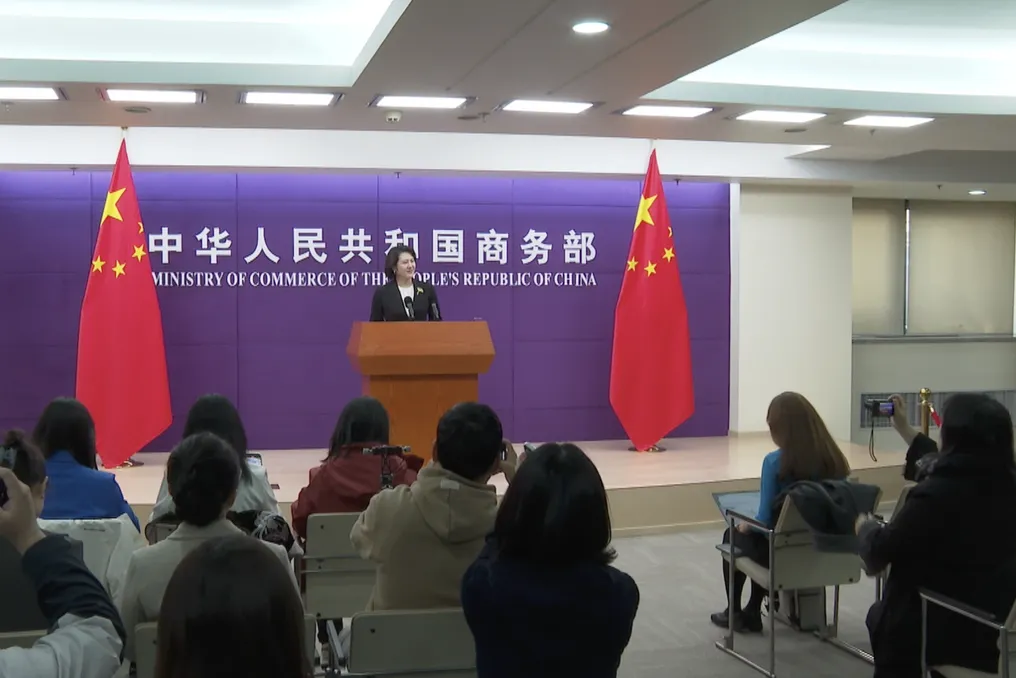
China's Ministry of Commerce comments on potential expansion of trade agreement with the EU into the chemical industry
Read more
cgtn.com

China's Ministry of Commerce comments on potential expansion of trade agreement with the EU into the chemical industry

China's Ministry of Commerce commented on reports that the European Union is considering extending the existing bilateral trade agreement between the parties regarding hybrid vehicles to the chemical industry and other sectors.

During a regular press briefing on Thursday, the ministry stated that any artificial restrictions on ordinary trade could violate World Trade Organization (WTO) rules. Furthermore, such restrictions are capable of increasing costs for downstream industries and jeopardizing the stability of global industrial and raw material supply chains.

Ministry representatives also noted that recent China-EU negotiations on trade and investment have shown positive momentum. This indicates that both sides have the desire and capacity to resolve disagreements through dialogue.

Tata Motors' bid to acquire Iveco exceeds 80% acceptance threshold, reaching 87.81%
Read more
business-standard.com

Tata Motors' bid to acquire Iveco exceeds 80% acceptance threshold, reaching 87.81%

Tata Motors' offer to acquire Iveco has surpassed the key 80% acceptance threshold, removing a significant obstacle for the Indian commercial vehicle giant in acquiring the Italian truck manufacturer.

On Monday, Tata Motors received preliminary approval for 87.81 percent of Iveco Group's share capital as part of its €3.91 billion takeover bid. This will allow Tata Motors' stake in Iveco to grow to 89.42 percent.

This move paves the way for Tata Motors' further expansion into global markets and entry into new product segments. The acquisition was initially announced last July and faced several issues over the past fifteen months.

At the Extraordinary General Meeting (EGM) on October 16, reports indicated that about 53 percent voted in favor of the deal, 12 percent against, and 35 percent abstained. Shareholders approved all board resolutions, including lowering the minimum tender acceptance threshold from 95 percent to 80 percent.

Iveco reported in a stock market report that during the Offer for Public Acquisition (OPA) launched by Tata Motors for Iveco common shares, 97,078,765 applications were submitted by October 26—the final application date. Thus, the total number of acceptance requests reached 238,157,212, which accounts for approximately 87.81 percent of the total offered instruments.

Final results will be disclosed before the market opens on October 29. Furthermore, Iveco announced that the offer will be renewed between November 2 and 6.

The tender offer, which concluded on Monday, began on September 7. The offer was made by TML CV Holdings, an indirect wholly-owned subsidiary of Tata Motors. The price per ordinary share accepted under the offer is the initial offer price of €14.10 with a dividend, increased additionally by €0.30 with a dividend. Consequently, the total offer price is €14.40 per ordinary share.

The deal, originally planned for completion in June this year, was postponed due to delays in obtaining regulatory approvals. For Tata Motors, whose commercial vehicle division currently derives nearly 90 percent of its revenue from India, this acquisition represents a strategic expansion into new territories.

Following the merger, the combined annual sales volume will exceed 540,000 vehicles, and revenue will surpass $25 billion. Iveco has an established presence in Europe, Latin America, and the Asia-Pacific region, with manufacturing facilities in Europe, China, Russia, Australia, and Latin America, and a network covering 160 countries.

Iveco's annual revenue, estimated at around €10 billion, is expected to significantly scale up Tata Motors' commercial transport segment, adding electric buses, light commercial vehicles, and alternative fuel technologies to its portfolio. Experts estimate that this acquisition could almost triple Tata Motors' commercial transport revenue from the current ₹77,000 crore to over ₹2 trillion.

JTL Defence stock increased from 7 to 570 rupees in a year, providing significant profit to investors
Read more
www.aajtak.in

JTL Defence stock increased from 7 to 570 rupees in a year, providing significant profit to investors

There are many stocks in the stock market that bring huge profits to their investors. Some of these multibagger stocks have enriched long-term investors, while others have become real money machines for investors in a very short time.

One such little-known asset is the stock of JTL Defence, which belongs to the defense sector. In one year, the price of this stock has grown from 7 rupees to over 570 rupees.

The price indicators of JTL Defence stock allow for an easy assessment of how profitable this asset has been for investors. Just a year ago, on October 27, 2025, the value of one JTL share traded for only 7.14 rupees. However, on the last working day of last week, despite hitting the lower price level, it closed at 583.10 rupees, and on Monday it opened and dropped to 571 rupees. The maximum price of the stock over the last 52 weeks reached 924 rupees.

Based on the changes in the price of JTL Defence stock over the year, investors achieved an impressive multiple return of 8066 percent. If an investor had invested 100 thousand rupees in the company's shares at a price of 7 rupees and held that position, their funds would have increased to 8,166,000 rupees.

The company belongs to the small-cap segment, and its market capitalization is 613.79 crore rupees. Nevertheless, the stock proved capable of making investors wealthy. In just six months, the price of JTL Defence stock grew by 151 percent, meaning that investors' invested funds more than doubled during this period.

It should be noted that JTL Defence Limited was previously known as RCI Industries & Technologies Limited. The company changed its name in April of this year. JTL Defence Limited is engaged in the production of products made from copper, brass, and other special metals. This product is used in the defense, electrical, automotive, electronic, and industrial sectors.

Popular