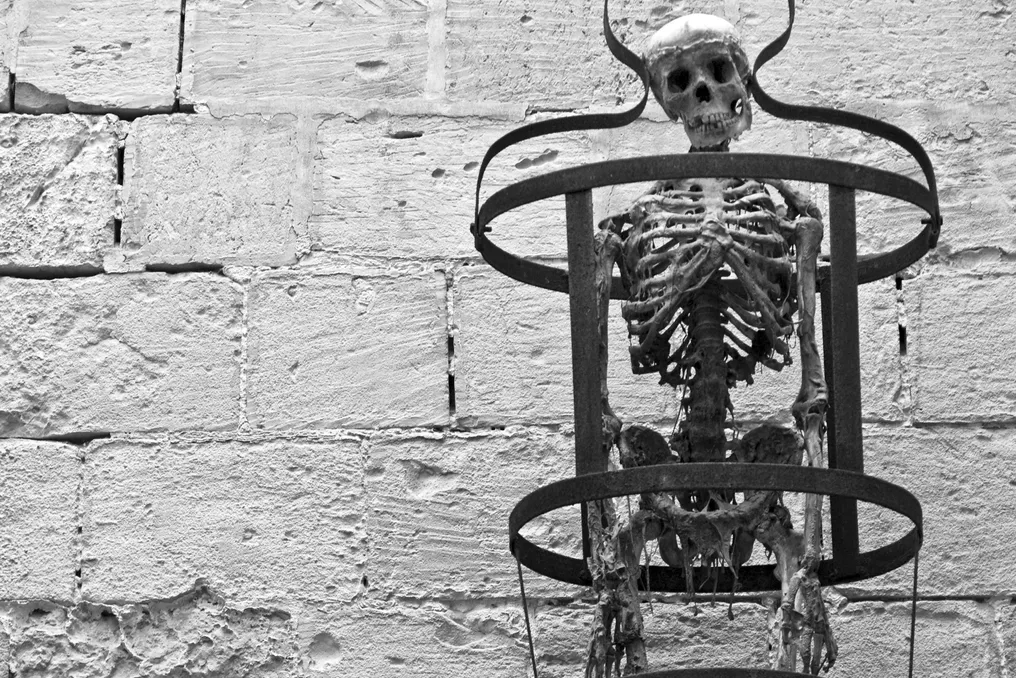
The author raises the issue of the exploitation of religious leaders, referencing the case of Kenyan pastor Paul McKenzie, who was convicted for the starvation death of his followers and the murder of 190 children. The author emphasizes the duty of public intellectuals to discuss critical topics such as faith, culture, and religion that shape society.
Recently, there have been many reports in East Africa about McKenzie's activities in Kenya, as well as disputes between Ugandan pastors, such as Robert Kayanga and Frank Gashumba, regarding the authenticity of miracles performed by new Reformed Christian denominations.
The escalation of conflict surrounding staged fake miracles cannot be ignored, as lives are at stake, and the consequences affect spirituality, morality, and religion. The discussion has reignited after a public figure pointed out claims of giving birth without a womb, curing cancer and HIV without medical help, as well as promises of rapid wealth. These claims are viewed as signs of deception, manipulation, and exploitation of naive peasants and urban elites by businessmen using the church platform.
For the first time, many internet users, despite ethnic, social, and political differences, supported Gashumba and his like-minded individuals in challenging staged healings and other serious human rights violations. However, against this support, the author noted an excessively aggressive reaction from urban pastors, self-proclaimed apostles, and Pentecostal believers to calls for transparency and accountability.
The author believes that the sharp verbal altercations, curses, and threats to life directed against Gashumba were inappropriate and unworthy of so-called servants of God, and they reveal the hidden motives behind the staged miracles. Instead of the expected restrained and intellectual discussion, some pastors cited violations of freedom of religion guaranteed by Articles 29(1)(c) and 37 of the 1995 Constitution of Uganda.
The article points out that Article 29(1)(c) is increasingly being used in ways contrary to the Palermo Protocol—a UN international document designed to protect people from exploitation. By refusing constructive criticism, close attention, transparency, and accountability, these new Reformed leaders, posing as pastors and apostles, are turning freedom of religion into freedom of exploitation.
Most Neo-Pentecostal and independent pastors have used Christianity for personal enrichment and power, tactically extorting money and property from poor peasants who sought work, improved living conditions, healing, travel opportunities, and spouses. Traditionally, donations and tithes were voluntary in Catholic, Anglican, Adventist, Orthodox, and Islamic denominations, until new evangelical denominations (classic Pentecostal, independent, charismatic, and Neo-Pentecostal) began pressuring congregants to make fixed large contributions in exchange for blessings and miracles.
The author notes that the Bible nowhere shows that God or Jesus Christ, whose names they use to attract followers, places a price on miracles, mercy, forgiveness, or blessings. Beyond public quarrels among pastors, it is very sad that self-proclaimed servants of God have turned the pulpit into a stage for emotional and physical exploitation, offering false hope and unrealistic promises.
Citing the words of Jesus Christ in Matthew 21:13, which states, 'My house shall be called a house of prayer, but you have made it a den of thieves,' and in Matthew 7:15, warning, 'Beware of false prophets who come to you in the name of Me,' the author asserts that these warnings are coming true.
An example is given of Ronald Kayanga, a well-known urban pastor, who promised young men they could become billionaires in 90 days through water spraying. Although the miracle with water might resemble the intrigue of the Maji Maji uprising in Tanganyika, it occurred at the Lubaga Miracle Center during the 'Great Correction' event in September 2026. The irony is that this pastor, who has collected tithes in US dollars for over 40 years, is not among Africa's billionaires.
The author wonders how young people without capital or who have just graduated from university can become billionaires in three months, concluding that this only makes them intellectually lazy and prone to delusion. Despite believers saying that faith can move mountains, one must reject the deception of fake miracles offered by some pastors.
Exploitation goes beyond empty financial promises; it is also psychological, when deceptive pastors try to mislead naive peasants and urban elites with modern sorcery. The author believes that this modern sorcery is used to exploit even highly educated people. Victims often start receiving proper treatment too late, leading to the spread of the virus or early death.
Exploitation also takes a physical form when some self-proclaimed servants of God sexually harass young boys and girls, while others fuel violence based on faith and gender, destroying marriages and families.
The author recalls a viral TikTok video where Pastor Paul Sanyangore allegedly called God directly via mobile phone, and Prophet David Ower claimed to communicate with God via WhatsApp during church services. In the author's opinion, this is not merely theatrical staging but pure deception, intellectual insult, and blasphemy.
The author notes that such atrocities and large-scale exploitation schemes occur under the full control of the government and sometimes with its assistance. In Africa, most pastors and apostles play a key role in promoting political patronage that supports the regime and mobilizing voters. Sometimes they dismantle fundamental traditional religions and attribute government failures to Satan.
Anyone who tries to hold them accountable for their misconduct quickly receives the excuse of a quote from Psalm 105:15: 'Do not touch the Lord's anointed.' They do not analyze their misleading actions, which harm morality, faith, and religion.
Liberal states have not only failed to regulate the multi-million dollar Pentecostal sector and its pastors but have also provided them with firearms, snipers, financial support, armored vehicles, and state lands. With the support of state structures, they gain immunity from the law, as well as power and wealth.
Year after year, some pastors and apostles have become routine in deceiving the masses with fake miracles in the name of Jesus Christ and covering up poor governance. Others commit unthinkable crimes with impunity, apart from a few cases, such as the Paul McKenzie case in Kenya, where indictments were obtained.
The author concludes that although there are truly spiritual people in Christianity who perform genuine miracles, the idea that anyone can turn miracles into a trap or bait for followers has led many Reformed Pentecostal pastors to fabricate miracles and turn freedom of religion into freedom of exploitation.
Freedom of religion turns into freedom of exploitation when authorities turn a blind eye to abuses of constitutional religious rights. This happens when the public cannot hold those responsible for sexual exploitation, human trafficking, and human sacrifice accountable, despite constant accusations and cases against known pastors. It also happens when security services and top leadership of the executive, legislative, and judicial branches protect those who defraud citizens and mislead patients with promises of miracles.
When freedom of religion becomes freedom of exploitation, the following occurs: the spiritual covenant is broken, the church turns into a fiefdom of pulpit traders obsessed with accumulating wealth, and followers become slaves. Although not all people are perfect, pastors are no exception, but misleading the masses for personal gain, acting as wolves in sheep's clothing, causes the greatest harm.