Climate change may require a review of South Africa's agricultural regions
Read more
Food For Mzansi
foodformzansi.co.za

Climate change may require a review of South Africa's agricultural regions

Researchers from the Agricultural Research Council (ARC) explained how shifting crop production to new suitable areas can enhance food security and economic returns amid rising climate risks in South Africa.

As temperatures rise and rainfall patterns become less predictable, some traditional agricultural zones in South Africa may become unsuitable for growing current crops. New research suggests that a careful transition to new suitable areas could bring economic, employment, and food benefits, although the optimal solution will depend on the specific crop.

Agricultural lands, such as maize fields, wheat farms, or citrus orchards, cannot simply move due to climate change. Nevertheless, in the coming decades, South African agriculture may need to reconsider not only cultivation methods but also where crops are grown.

Rising temperatures, changing precipitation patterns, water stress, and increased extreme weather events are already increasing uncertainty for farmers. A region that has supported a particular crop for decades may not provide the same growing conditions in 2055 or 2080.

This raises a complex but increasingly pressing question: is it economically viable to gradually shift some agricultural production to areas expected to remain or become more suitable under changing climate conditions?

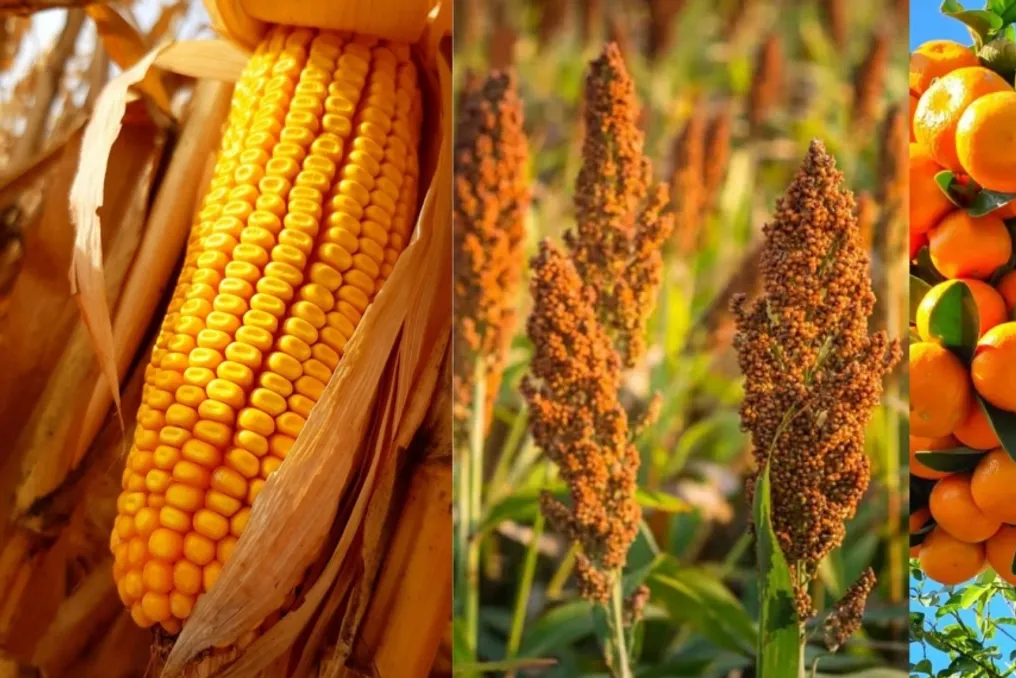
ARC researchers studied this issue for six important South African agricultural products: maize, wheat, sorghum, citrus, avocado, and macadamia. The study combined climate and crop suitability modeling with cost-benefit analysis.

Simply put, scientists compared the long-term value that could be created by relocating some production against the costs of establishing and operating farms in new locations. The results contain both encouragement and caution. Shifting production can be a justifiable strategy for climate change adaptation, but its feasibility depends on the climatic requirements, water needs, production cycle, infrastructural needs, and market prospects of each crop.

Relocating production does not imply an immediate abandonment of established South African agricultural areas. It means planning a gradual transition as climate suitability changes. The study modeled a hypothetical scenario where 10% of the current production area for each crop moves to new suitable agro-ecological zones. This percentage is a modeling assumption to test the potential economics of adaptation, not a recommendation to relocate 10% of national production.

The analysis considered future climate conditions centered on 2030, 2055, and 2080, within moderate and high emission scenarios, assessing the costs and benefits of adaptation over 30 years. Depending on the crop and climate scenario, the modeling identified potential opportunities in cooler and higher altitude areas, including parts of the Eastern Cape, KwaZulu-Natal, Limpopo, and Free State. These areas represent modeled possibilities, not farm-level recommendations.

These broad zones should not be viewed as farm-level planting recommendations. Before making any investment decision, local water availability, soil quality, infrastructure, market access, and land use conditions must be examined. It is also necessary to consider whether the receiving areas possess the necessary infrastructure, water resources, services, and institutional capacity to support additional agricultural production. A shift in production may increase demand for irrigation water, roads, electricity, warehousing, processing facilities, and agricultural services. Therefore, planning must consider not only where crops can grow but also whether the surrounding agricultural system can support production at the required scale.

Researchers used a metric called the Benefit-Cost Ratio (BCR). A ratio above 1 means that the anticipated benefits exceed the costs. For example, a ratio of 1.50 means that for every rand invested, approximately 1.50 is expected in broader economic and social benefits. The study considered not only farmer income but also broader advantages such as food security, employment, and export earnings. According to the study's central estimates, maize and citrus showed some of the strongest return indicators, with a benefit-cost ratio of around 1.50. Sorghum also showed good results, with a ratio of approximately 1.41.

These findings are important because crops play very different roles in the economy. Maize is central to South Africa's food security, livestock feed, and agricultural processing. Citrus is a major source of export revenue and supports numerous jobs in rural communities. Thus, protecting these sectors from future climate risks will benefit far beyond the farm.

However, high-value crops are not automatically the safest investments for adaptation. Avocado and macadamia orchards require significant initial establishment costs and take several years to reach full productivity. This creates a long period between initial investment and expected return. Furthermore, it exposes producers to risks from future changes in water availability, temperatures, resource costs, export prices, and market access. The conclusion is clear: a crop may have high market value but carry significant long-term adaptation risk.

Sorghum represents a much smaller industry than maize or wheat, but its ability to tolerate heat, drought, and unreliable rainfall gives it strategic value in a changing climate. In the study, sorghum remained relatively resilient under harsh climatic conditions, even when prospects for several other crops worsened. However, this does not mean farmers can plant sorghum anywhere and expect easy profits. This crop still faces challenges, including limited markets, low consumer demand, and pressure on farm-level profitability. Climate resilience alone will not create a successful industry. Sorghum requires functioning value chains, meaning investment in seed systems, processing, product development, procurement capabilities, and consumer awareness. Higher demand for sorghum-based foods, beverages, and feed could help translate its climate advantages into real income for farmers. This may be particularly important for small and emerging farmers in water-scarce areas. A more diversified cropping system can reduce dependence on a small number of climate-sensitive commodities.

Modeling shows that economic prospects generally become more complex as climate change intensifies toward the middle and end of the century. Under a high-emission scenario, projected yields drop sharply for several crops. Maize, citrus, avocado, and macadamia are particularly sensitive to the combination of heat and water stress, while perennial orchards face the added risk that conditions may change significantly during the trees' productive lifespan. This is why adaptation decisions cannot be based solely on current growing conditions. An orchard planted today may continue to yield harvests decades later. Infrastructure, such as irrigation systems, packing sheds, roads, and warehouses, also represents a long-term commitment. If these investments are made without considering future climate suitability, producers and governments could push themselves into increasingly risky situations. Conversely, shifting production requires roads, irrigation, electricity, warehousing, processing capacity, expanded services, and market linkages in new areas. Farmers may also require financing during the establishment years when costs are high and income is limited. Therefore, adaptation requires coordinated planning. Individual farmers cannot bear the burden of a national transition.

South Africa needs a practical, regularly updated crop suitability monitoring system that incorporates new information on climate, soil, water, and production. Such a system could help farmers, financiers, and government determine where risks are increasing and where new opportunities may arise. It could also guide land-use planning, infrastructure investment, agricultural financing, insurance, and extension support. The information must be detailed enough to support local decisions yet accessible enough to be useful outside research institutions. For farmers, the question is not just whether the climate is changing; it is how quickly local conditions are changing, what this means for a specific crop, and which adaptation options are financially realistic. For policymakers, the task is to avoid one-size-fits-all solutions. Maize, sorghum, and macadamia have different production cycles, water needs, markets, or investment risks. Support measures must reflect these differences.

South African agriculture has historically adapted to challenging conditions. Farmers have changed varieties, planting times, irrigation methods, production systems, and markets in response to drought, prices, and new technologies. Climate change adds another layer of pressure, but it also strengthens the argument for better information and earlier planning. The study shows that shifting some production to more suitable areas can bring significant economic and social benefits. This can safeguard food supplies, support rural jobs, and help vital export industries remain competitive. However, successful adaptation will depend on choosing the right crop, in the right place, at the right time, and understanding the full cost before planting the first seed or tree. South Africa does not need to move its agricultural sector overnight. It needs to begin preparing for a crop map that may look very different by the middle of this century. The future of South African agriculture will depend not only on how farmers produce, but increasingly on where they produce, and whether those locations remain economically, ecologically, and socially viable as the climate changes.

Similar stories

Climate shocks increase health risks for Africa's most vulnerable populations
Read more
cgtn.com

Climate shocks increase health risks for Africa's most vulnerable populations

Climate change is transforming the healthcare system in Africa: rising temperatures, unpredictable rainfall, droughts, and floods are worsening food insecurity, increasing the threat of infectious diseases, and placing additional strain on already fragile healthcare systems.

These negative consequences are felt most acutely by vulnerable communities, highlighting the critical importance of taking action to combat climate change and build resilient healthcare systems to secure the continent's future.

John Wafuula, a humanitarian specialist at the United Nations Population Fund (UNFPA) in Kenya, notes that the impact of climate change goes beyond mere environmental damage, disproportionately affecting vulnerable groups and limiting their access to essential medical care and support.

In many African countries, households depend on rain-fed agriculture for sustenance and income. When climate shocks lead to crop failure, livestock loss, and other productive asset destruction, families can lose years of hard labor, deepening poverty and leaving them uncertain about their future.

Climate variability also exacerbates existing public health challenges. Floods can contaminate water sources and raise the risk of waterborne diseases, while drought reduces access to safe water and jeopardizes sanitation and hygiene. Furthermore, changes in temperature and precipitation can influence the spread of disease burdens across the continent.

The World Health Organization (WHO) predicts that by 2030–2050, climate change could cause an additional 250,000 deaths annually due to malnutrition, malaria, diarrheal diseases, and heat stress.

Women and vulnerable groups face growing risks

However, the impact of climate change is not distributed evenly. Women and girls, the elderly, people with disabilities, refugees, and other displaced groups may face additional barriers to accessing basic services and support.

Wafuula points out that livelihood destruction can force some women into dangerous survival methods, including sex work, which increases their vulnerability to exploitation, violence, and health risks. He adds: 'Such circumstances can exacerbate psychological distress, especially when protection and health services are unavailable.'

Across Africa, prolonged droughts compel women and girls to travel long distances in search of water, increasing their vulnerability to security threats and potential violence. According to a 2025 World Bank report on women and climate adaptation, women face several barriers to adopting climate-resilient agriculture, including unstable land rights, limited access to climate information, and increased risk aversion due to economic vulnerability.

Limited access to information also contributes to low uptake of weather insurance, while their susceptibility to risks, including fertility and childcare-related health issues, further complicates this situation. Domestic responsibilities also restrict their participation in non-farm activities, narrowing opportunities for income diversification and migration in response to climate shocks.

Climate change is intensifying displacement

Moreover, environmental pressures often intersect with conflict, instability, and poverty, forcing families across Africa to leave their homes in search of safety and livelihoods. This creates another vulnerable group—people displaced by climate shocks and their cumulative effects.

Wafuula asserts that climate change has contributed to the movement of people seeking refuge in Kenya, particularly in the Dadaab and Kakuma refugee camps in northern Kenya. He explains: 'Most of the population arriving in the Dadaab and Kakuma refugee camps over the past five years is a result of climate change in their respective countries. Food insecurity, limited access to healthcare, and heightened protection risks force many to leave their homelands and move to Kenya as climate refugees.'

Wafuula adds that between 2021 and 2025, the number of refugees in the Dadaab and Kakuma camps in northern Kenya significantly increased. According to UNHCR Portal data, there were 879,452 refugees and asylum seekers in Kenya as of September 30, 2026.

These displacement trends reflect broader climate challenges in the region. Climate change has long been viewed primarily as an environmental issue, but its consequences extend to the social, psychological, and economic aspects of people's lives, undermining their sense of security, dignity, and control over their own lives.

Considering climate change solely as an environmental problem risks ignoring its far-reaching consequences for health, protection, and access to basic services across the region. Wafuula insists on a paradigm shift, recognizing climate change as a human rights issue and placing health at the center of climate adaptation planning.

Strengthening health systems through data and climate finance

Effective climate preparedness depends on reliable data to identify vulnerable groups, map health infrastructure, and forecast emerging risks. In the region, governments collaborate with international partners under climate data initiatives.

Nevertheless, insufficient investment in collecting and coordinating domestic data threatens to weaken early warning systems and delay emergency responses. Wafuula emphasizes the importance of data-driven preparedness to strengthen climate risk response. He stated: 'Governments need interoperable information systems that integrate demographic, health, environmental, and population displacement data. Predictive analytics can help authorities identify high-risk groups, pre-position medicines, and allocate resources before climate hazards escalate into disasters.'

In 2023, Kenya hosted the Africa Climate Summit and Africa Climate Week, creating opportunities to advance continental climate action. The Nairobi Declaration called for increased international support and climate finance to address Africa's challenges. While international climate finance, including support through the Green Climate Fund, offers opportunities to strengthen adaptation, Africa has yet to fully translate these commitments into practical health protection measures.

The WHO warns that areas with weak health infrastructure, especially in developing countries, will be least prepared to cope with climate health risks without support for preparing for and responding to these challenges.

Proposal to Reform South Africa's Agricultural Visa System to Protect Seasonal Harvests
Read more
foodformzansi.co.za

Proposal to Reform South Africa's Agricultural Visa System to Protect Seasonal Harvests

Debates about labor resources in South African agriculture are often conducted emotionally rather than based on objective data. Jolanda Andrag, Operations Director of Agri SA, analyzes the discussion about farm labor in the country, focusing on issues related to the corporate visa system, compliance difficulties, and the need for an industry-specific agricultural visa.

The discussion about migrant workers in South Africa has generated more controversy than constructive solutions. A more detailed analysis of the corporate visa system shows that there is no nationwide labor crisis, but the system does not function as smoothly as it should. Reform could be an opportunity to correct both bureaucratic and political aspects.

In mid-2026, the debate on migrant labor suddenly shifted from the political sphere to farm work. Protests demanding stricter adherence to immigration laws were succeeded by reports of foreign worker departures and farmers' difficulties in finding labor.

In sugar-growing regions in KwaZulu-Natal and some fruit zones, individual cases were extremely severe, accompanied by threats. One sugarcane producer reported losing up to 80% of their harvest labor force.

However, the overall national picture is less dramatic. Estimates suggest that in the second quarter of 2026, agriculture provided employment for approximately 944,000 people, which is 39,000 more than the previous year. The decrease in employment was only 15,000 compared to the previous quarter, consistent with seasonal fluctuations. Thus, farming in South Africa is not experiencing a general labor collapse.

Nevertheless, average figures mask local shortages. Agriculture is highly sensitive to delays, as crops cannot wait three months to be harvested. Approximately 400,000 out of 840,407 people registered in agriculture and related services according to the Statistics South Africa survey for 2024 were temporary, casual, or seasonal workers. In labor-intensive sectors like fruit and sugar production, demand can surge sharply for several weeks and then disappear.

Workers who return from season to season acquire skills in pruning, trimming, harvesting, cutting, and packing that cannot be replaced in the short term. Although the unemployment rate in South Africa in the second quarter of 2026 was 33.6%, national unemployment statistics differ from the availability of suitable workers in a specific location, for a specific crop, and at a specific week.

Therefore, the reasonable goal is not to choose between South African and foreign workers. South Africans should be prioritized, and employers must comply with labor laws. But where there is a genuine seasonal need, employers require a predictable legal pathway to attract workers from neighboring countries.

This is the function the corporate visa system should serve.

The corporate visa allows an employer to hire a predetermined number of foreign workers. This is not an exemption from complying with South African labor regulations. Applicants must prove that suitable South African citizens or permanent residents could not be found after thorough searching, and must demonstrate compliance with SARS, the Unemployment Insurance Fund, and the Compensation Fund. Furthermore, at least 60% of the employer's staff must be South African citizens or permanent residents.

Following complaints from agricultural employers, AgriSA began engaging with the Department of Employment and Labour (DEL) last year. The Department subsequently provided detailed information on the applications reviewed, allowing for the examination of individual cases.

The review yielded a useful, albeit uncomfortable, conclusion: some problems perceived as visa processing issues were actually compliance issues.

The reviewed log contained 101 employer entries from 2022 to 2026. The majority of these entries were from Zimbabwe, Lesotho, and Mozambique, demonstrating how agricultural labor functions as a regional market for South Africa.

Failed or delayed applications could be linked to identified deficiencies, including non-compliance with UIF, the Compensation Fund, and occupational health and safety requirements. The 60/40 employment ratio requirement also proved problematic in several instances. Several applications that were reviewed or resubmitted specifically referenced this requirement.

This distinction matters. The visa regime cannot be judged solely by the approval percentage. Some negative recommendations indicate not an administrative failure, but that the regulation is performing its function. Employers requesting permission to hire foreign workers must first comply with South African labor law.

However, compliance alone does not explain everything.

Two administrative problems remain. The first is traceability. Parts of the DEL process still rely on manual movement of documents from provincial structures to the central office in Pretoria. An employer may know that an application was submitted and processed by the provincial office, but neither party can easily ascertain where the file is next.

For an industry regulated by harvest deadlines, this is not a minor inconvenience. The second problem is time. Applications are reviewed within limited timeframes. If an issue is not resolved within the set period, the applicant may need to resubmit. This is justified if the employer delayed the process due to incomplete documentation. It is much harder to justify the expiration of an application due to documents lingering too long in the administrative system.

A small group of cases passed through DEL but encountered difficulties later in the process, managed by the Department of Home Affairs or the visa facilitation service. None of this argues for weakening immigration control. It argues for improving administration. A strict, traceable, and predictable legal migration channel facilitates compliance. An opaque channel risks encouraging precisely the behavior the system is designed to prevent.

Policy is beginning to catch up with practice. A revised white paper on citizenship, immigration, and refugee protection provides for replacing corporate visas with sector-specific work visas for certain industries. Agri SA supported this direction in its proposal during the consultation process, arguing that agriculture is particularly suited to a sectoral approach.

Partly, it is a matter of information. Labor demand in agriculture is unusually uneven: it varies depending on the commodity, region, and season. The national system, based on individual applications, may struggle to distinguish between a real three-month harvest need and a general claim of labor shortage.

A well-designed industry-specific agricultural visa could handle this better. It could more closely link legal migration to documented seasonal demand while maintaining the priority requirement for South African workers. It would also allow the government to plan around known peaks in labor demand instead of constantly discovering them one application at a time.

Therefore, AgriSA proposed accelerating the implementation of an industry-specific agricultural visa as broader legislative reforms progress. The organization offered to support member awareness, improve industry coordination, and help develop a consolidated database of industry and seasonal labor needs. Such data could give the government a clearer picture of where, when, and for how long foreign labor is actually required.

This will not eliminate the need for enforcement. On the contrary. Employers will still have to comply with labor laws, and any industry system must prevent the use of foreign hiring to circumvent domestic labor obligations.

But it could make the deal clearer: agriculture provides better evidence of its labor needs, and the government provides a legal pathway capable of responding to them.

For the existing system, immediate tasks are more routine. Employers must resolve issues related to the 60/40 requirement, UIF, the Compensation Fund, and safety obligations. In turn, the government must ensure the traceability of applications from submission to decision and avoid pressuring applicants to start the process if the delay was caused by administrative, not employer, delays.

There may be cases not covered in the review. Agricultural employers with pending corporate visa applications, unexplained delays, or circumstances that do not fit the already identified problems. These can be addressed constructively.

For a farmer whose harvest window is closing, the question is how the next system can avoid creating another queue.

Popular