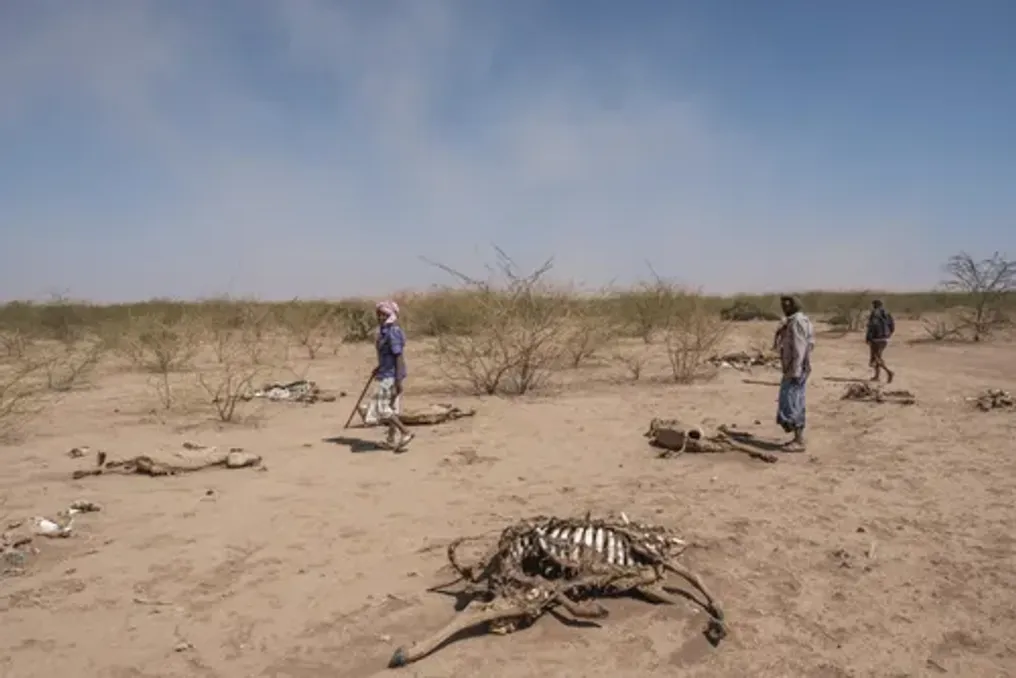
While millions of Africans continue to suffer from hunger, the continent's sovereignty remains meaningless. Africa possesses enormous agricultural potential, yet it has failed to transform it into food security or economic independence. Mass hunger is not an inherent characteristic of the continent or its inevitable fate; rather, it is the result of centuries of exploitation, unequal economic relations, and modern political decisions that ignore the needs of ordinary citizens.
As the African Union marked the 17th anniversary of Africa Day in food and food security in Nairobi this week, the continent was confronted with an unpleasant reality: more people in Africa are suffering from hunger than in any other region of the world.
According to the latest United Nations report on the state of food security in the world, 309 million Africans were hungry in 2025, compared to 292 million in Asia. WHO Director-General Tedros Adhanom Ghebreyesus noted that 'a healthy diet remains inaccessible to one of the three global population categories.' In Africa, this share reaches two out of three. The crisis goes far beyond food production; it is linked to access, distribution, purchasing power, and political priorities.
The food security situation in Africa is exacerbated by ongoing wars and conflicts across various territories of the continent. Agricultural production is severely disrupted in Sudan. Instability and insurgent activity significantly hinder land cultivation in the Democratic Republic of Congo (DRC) and parts of the Sahel.
The serious consequences of this crisis include immediate starvation, long-term malnutrition, disruptions in education, and the slowing of development for an entire generation of African children. South Africa demonstrates that agricultural production alone is insufficient to ensure sustainable food security. Despite South Africa being a major producer and exporter of agricultural products, UNICEF reported in 2024 that 23% of children in South Africa faced severe food poverty.
Furthermore, according to the South African Statistics Agency Household Survey for 2024, about 22% of households in South Africa reported inadequate food access in 2025. Stunting, a form of chronic malnutrition, affected 28.8% of children under five, with the highest rates recorded in the Northern Cape (46.4%) and Western Cape (46.2%).
Food security is viewed as a vital indicator of economic sovereignty and transformation. A country that cannot provide adequate nutrition for its children cannot claim economic independence. While political freedom, territorial integrity, and control over natural resources are valuable, their significance diminishes when ordinary families cannot afford healthy food or when children cannot survive and develop.
Former President of Burkina Faso Thomas Sankara insisted on agricultural self-sufficiency, promoting domestic production and land reform, which allowed him to reduce dependence on imported goods. Four decades later, this principle remains relevant, as Captain Ibrahim Traoré places domestic production and consumption at the center of his political program. The test will be in sustainably increasing agricultural productivity so that ordinary people can afford nutritious food.
When domestic production is ignored or restricted, and regional supply chains remain underdeveloped and underutilized, food security and sovereignty are threatened. The continent does not lack agricultural structures, nor does it have promising policies. The real deficit lies in poor policy prioritization, implementation failures, and weak accountability.
The fifth Biennial Review of the Comprehensive Africa Agriculture Development Programme, conducted by the African Union, recorded a continental average of 5.25 against a target of 9.40. This is not only a serious administrative failure but also a clear indication of the huge gap between agreed commitments and measurable progress. The gap between summit declarations and ensuring food security, access, and availability is a catastrophic political failure.
The long-term commitment to allocate at least 10% of public spending to agriculture dates back to the Maputo Declaration of 2003, yet the continent has failed to consistently or evenly fulfill this promise. Last year, the African Union adopted the Kampala Strategic Action Plan for 2026–2035, aimed at mobilizing $100 billion in investment, increasing agro-food production by 45%, tripling intra-African agricultural trade, and halving post-harvest losses. These goals are commendable, but Kampala will succeed only if there is adequate agricultural financing, sustainable supply chains, competent institutions, transparent monitoring, and the ability to apply measures in case of non-compliance.
Climate change and external shocks make the food problem particularly acute. Unpredictable droughts and floods increasingly destroy farms, especially those without adequate irrigation, insurance, or appropriate technology. Adaptation promises are ineffective if rural communities lack the infrastructure to withstand escalating shocks. Debt pressure and the high cost of seeds, fertilizers, and transportation compound these difficulties.
Regional markets, overall infrastructure, and cross-border trade can reduce dependence on unstable global supply chains. In this regard, the African Continental Free Trade Area is a crucial tool for integration. However, it must be specifically oriented towards benefiting producers and consumers, rather than creating more opportunities for external trade elites.
A crucial element of Pan-African solidarity and sovereignty is the building of productive economies that serve the African people. Historical exploitation and unequal global relations have limited development, but they also constrain modern governments whose budgetary priorities, political decisions, and implementation failures reproduce systemic inequality and vulnerability in the food chain. Affordable food for every citizen is essential for any sovereign state. Malnutrition must become a relic of the past, not a feature of the present or future. Nairobi must be more than just another extravagant event with high declarations. Delegates must identify failures and missed targets and develop a measurable plan of corrective actions with clear deadlines. An empty plate in Africa is not just proof of poverty; it is proof of political failure. Until African agricultural wealth can feed its people, the promise of economic independence will remain unfulfilled.