
Story of Harvard student who scored 171 out of 170 on an exam
Read more
The times of India
timesofindia.indiatimes.com

Story of Harvard student who scored 171 out of 170 on an exam

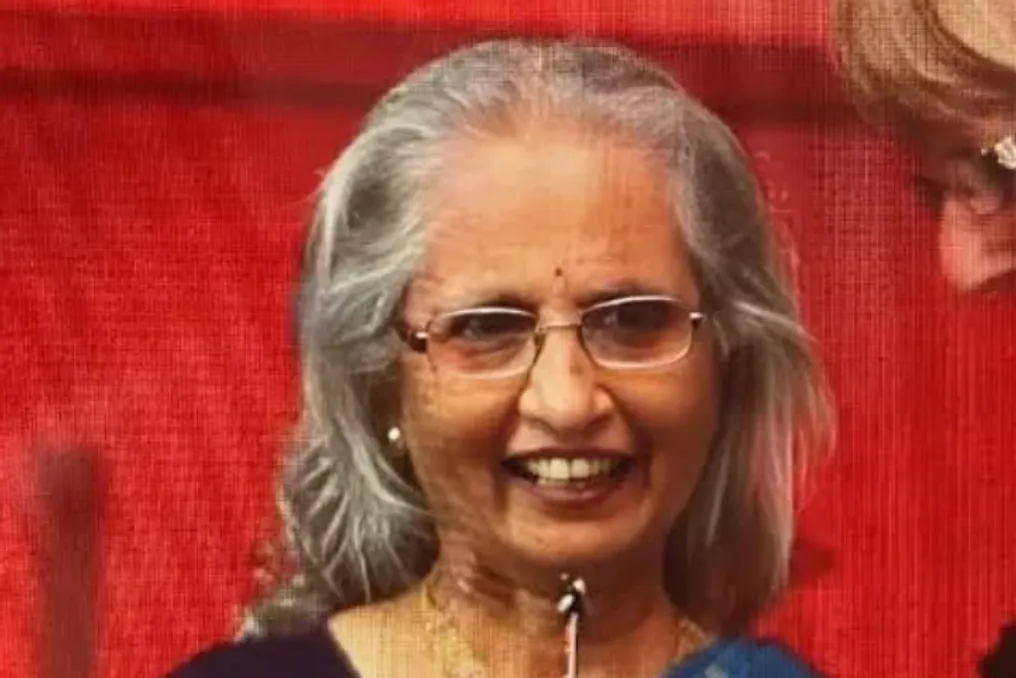
In a recent interview with The Times of India, Impact Catalyst Aruna Lohia Goenka presented her five-pillar concept of YASHA for achieving Viksit Bharat 2047. This concept, shaped by nearly thirty years of involvement in the nation's development, includes the principles of: Yuva (youth), Anna (nutrition), Shiksha (education), Hunar (skills), and Abundance.

As part of a series of articles dedicated to the theme of Viksit Bharat 2047, Sanjeev Kaur, Director of Corporate Social Responsibility at The Times of India, elaborates on the experiences, beliefs, and ideas behind each pillar of the YASHA framework through five interviews.

When it comes to a world where machines might become smarter than humans, Aruna Goenka believes that the greatest threat to children is not the intellectual superiority of machines, but that people will stop thinking and become like robots—programmed to react, but forgetting how to feel, empathize, and connect.

Giving an example of educational intervention, she spoke about her work in the tribal area of Bastar, Chhattisgarh, where children were taught to think, not just memorize, in the 1990s. In her view, the most significant moment is not the child's answer of 'I know the answer,' but the question 'But why?' Today, after 30 years, she is proud of her connection with the AM/NS India Times Critical Thinking Championship, which annually covers one million children across 28 states and 8 union territories in 14 languages.

When asked about the necessity of teachers in the age of AI, Goenka replied that they are needed more than ever. Although AI can explain the laws of Einstein and Newton, a machine cannot recognize a child who has stopped believing in themselves; a great teacher can change a life, whereas a machine merely teaches a lesson. She emphasized that AI should act as a co-pilot, not an autopilot, for children.

Goenka joked that we often confuse intelligence with grades, noting that instead of rewarding children for correct answers, perhaps they should be rewarded more for the questions no one else dared to ask. She also questioned the idea that 100% is the limit.

She provided an interesting example: in December 2018, Ankur Garg, an IIT graduate and IAS officer who studied at Harvard Kennedy School, scored 171 out of 170 on a macroeconomics exam conducted by the renowned economist Professor Jeffrey Frankel. This case, according to her, demonstrates exceptional potential.

Responding to the question of the loss of educational purpose, Goenka agreed with Socrates, asserting that a meaningful life must be analyzed, not just lived. For him, the pursuit of wisdom was inextricably linked to virtue. She named compassion, honesty, courage, self-discipline, and mindfulness as integral elements of education.

She mentioned numerous ancient and modern thinkers, including the Upanishads, Thirukkural, Yoga Sutras, Charaka Samhita, and Panchatantra. She also cited the teachings of Gautama Buddha on compassion and mindfulness, Lord Mahavira's Anekanvada on the multifaceted nature of truth, Kabir's fearless questioning, Guru Nanak's messages on equality and service, Tulsidas' Ramcharitmanas on duty and devotion, and Khalil Gibran's wisdom on love and self-knowledge.

Goenka believes that these great minds explored not only the volume of knowledge but also how to live wisely. She warned that without developing mindfulness, in an environment of information and technology, humanity risks turning into 'intellectual zombies.'

When asked how she combines the blessing of Lakshmi (prosperity) with a deep love for Saraswati (knowledge), Goenka responded that it stems from a family of geniuses and magicians. Her elder brother possesses one of the world's largest collections of manuscripts. She never saw Lakshmi and Saraswati as rivals, but rather as two complementary forces within a person: Lakshmi symbolizes the subconscious where dreams are born, and Saraswati is the consciousness that guides those dreams. She added that wealth without wisdom will never generate sustainable abundance.

Regarding the comparison of the 'silver spoon' and the 'silva mind,' Goenka shared that her elder brother used the 'Silva Mind' visualization technique for decades, which helped him realize an incredible library. However, she agreed with the metaphor, stating that a silver spoon may nourish the body, but a silver mind feeds curiosity. She concluded that knowledge is perhaps the only inheritance that grows richer the more you give away.

In conclusion, Goenka noted that literacy teaches reading, education teaches understanding, and wisdom teaches questioning. Literacy opens the book, education opens the mind, and wisdom opens the heart. She urged people to dream big, not limiting themselves to the night, but realizing their dreams during the day. She addressed the 1.4 billion people who have dreams for Bharat, asserting that when these dreams turn into action, Viksit Bharat 2047 will become a reality.
Similar stories

T. K. Radhakrishnan's Journey: From Mathematical Success to Meeting Oppenheimer
Read more
thebetterindia.com

T. K. Radhakrishnan's Journey: From Mathematical Success to Meeting Oppenheimer

T. K. Radhakrishnan's journey began in the village of Kerala, where there was no electricity, and led her to the elite research halls of Princeton, where she met some of the world's most distinguished minds.

Born in 1938 in Thiruvananthapuram, Radha initially disappointed her family, who had hoped for a son. However, she managed to defy expectations and gain recognition in the male-dominated world of physics.

Without electricity at home, she studied by the light of kerosene lamps and drew water from wells while continuing her education. At Stella Maris College, she achieved 100% in mathematics and 98% in physics. At Presidency College, she ranked first in the university and won a gold medal.

Under the guidance of Alladi Ramakrishnan, she joined India's first modern particle physics research facility, becoming one of the few women there. By the early 1960s, Radha was publishing in international journals, lecturing abroad, and receiving postdoctoral offers from prestigious institutions such as Stanford and Rochester.

In 1965, a letter changed her life: J. Robert Oppenheimer invited Radha to the Institute for Advanced Study in Princeton, an institution previously associated with Albert Einstein. Radha accepted the invitation and became one of the first women of color at the institute. There, she discussed physics with Oppenheimer and worked alongside scientists such as Freeman Dyson and Sergio Rubini.

However, her life took a different path. Marriage brought her to Canada, where limited childcare options and gender inequality in the workplace slowed her career in physics as she dedicated herself to motherhood. Despite this, Radha reinvented herself by mastering computer science and becoming a pioneer in numerical analysis. She continued co-authoring scientific papers for the next fifteen years.

Over time, Radha's name disappeared from textbooks. Her story survived only in scattered archives and forgotten footnotes until an archivist began piecing together her remarkable journey in the 2020s. Now, over 80 years old, Radha lives in Edmonton, Canada. She has watched Nolan's film 'Oppenheimer' three times, recalling her own conversations with the physicist.

T. K. Radhakrishnan's journey, from kerosene lamps in Kerala to the halls of Princeton, raises a question: how many women like her has history forgotten, and isn't it time we remembered them?

After four unsuccessful attempts, Bhikan Jagan Rojekar succeeded in the UPSC exam for the fifth time
Read more
www.aajtak.in

After four unsuccessful attempts, Bhikan Jagan Rojekar succeeded in the UPSC exam for the fifth time

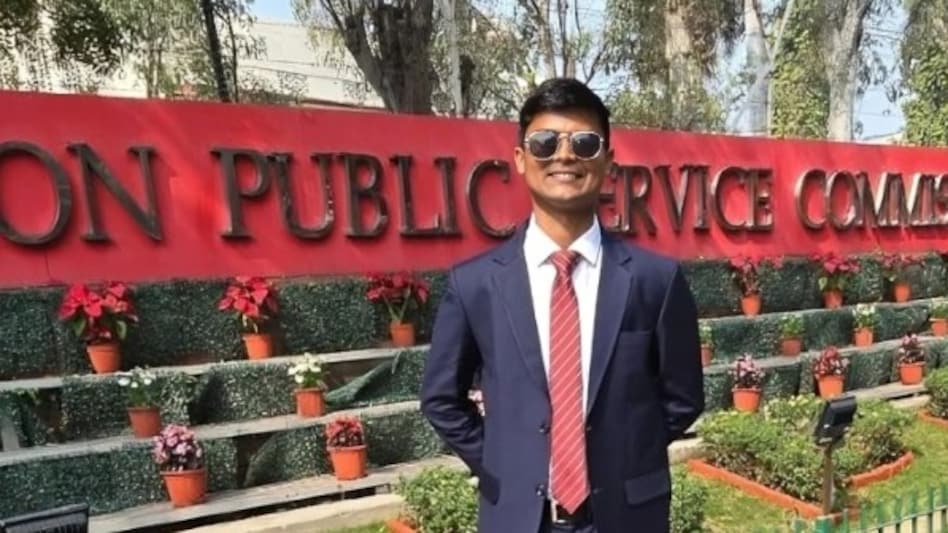
For millions of young people preparing for the UPSC exams, years of unsuccessful attempts, which jeopardize careers and finances, present a serious challenge. However, Bhikan Jagan Rojekar from Maharashtra believes that achieving the dream of civil service does not necessitate permanently abandoning other career opportunities.

Bhikan stated that after four failed attempts, he achieved an All India Rank (AIR) of 812 in the UPSC Civil Services examination in 2025. He shared how his correct academic choice provided him with a backup path while preparing for the country's most difficult exam. His story teaches every aspirant that while hard work and perseverance are important, having a 'Plan B' is even more significant.

Bhikan hails from Sapkal village in the Jalgaon district of Maharashtra. His parents initially worked as field laborers and later returned to their native village to start farming on two acres of land. His mother also worked as a hired laborer to support the family.

Despite all the financial difficulties, Bhikan continued his education. He studied Marathi in school, then pursued natural sciences in grades 11-12, and subsequently earned a Bachelor of Science degree in Agriculture from Vivekananda College in Chhatrapati Sambhajinagar. His brothers advised him to choose a specialization that could secure him employment in case of failure in the exam, and agriculture became his greatest strength—his 'Plan B.'

Bhikan began full-time preparation for UPSC in 2021 and moved to Delhi. In 2023, a scholarship from the Government of Maharashtra significantly aided his enrollment in coaching classes. During this time, he also appeared for several other examinations. He took the main Civil Services exam in 2024 and 2025, passed the Indian Forest Service (IFoS) main exam in 2025, and reached the interview stage for the Assistant Commandant position in the Central Armed Police Forces (CAPF). Ultimately, his fifth attempt bore fruit, and he succeeded in the Civil Services examination.

Bhikan advises new candidates to thoroughly study the syllabus, analyze at least the last 10 years of exam questions, and take mock tests. For the main exam, he emphasized the need to write structured answers using facts and data. He also considers preparation in a suitable supplementary discipline and strong language skills for essay writing to be extremely important.

Bhikan's story proves that one exam cannot define a person's entire life. If you have a solid academic foundation and a backup plan, you can follow a safe path without giving up on your goal.

Popular