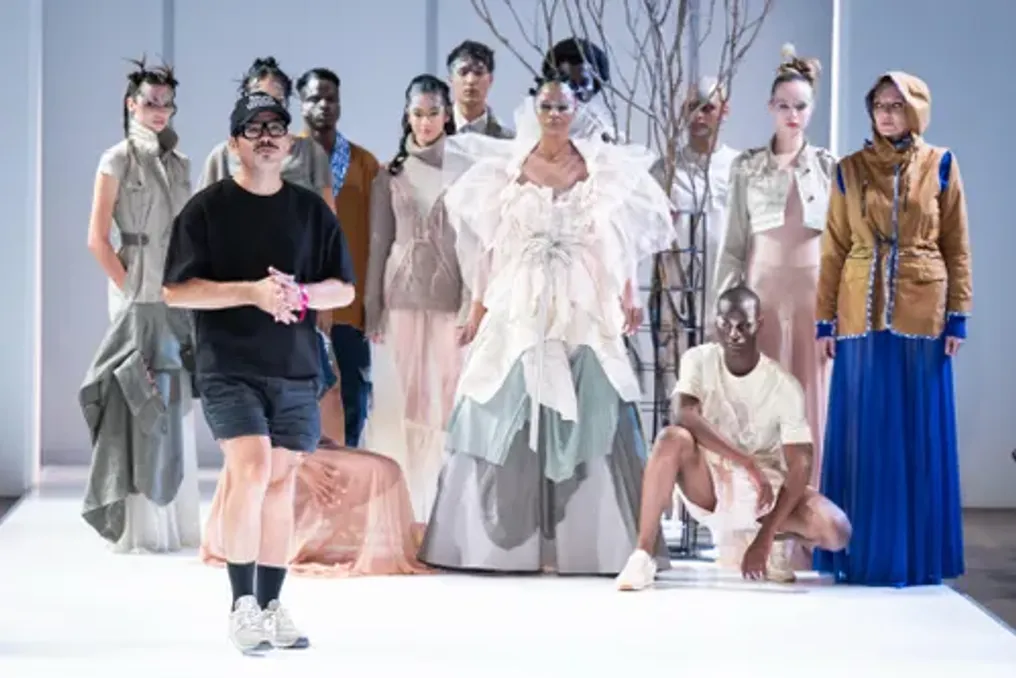
Fashion designer Craig Jacobs challenges the conventional view of unwanted clothing with his The New Earth collection. This collection transforms used and discarded items into contemporary designs while raising complex questions about the fashion industry's excessive appetite for consumption.
For South African designer Craig Jacobs, the answer to the fate of unwanted clothing lies in changing the perspective on it. His latest collection for Fundudzi, titled The New Earth, was presented at South African Fashion Week. Instead of using new fabrics, Jacobs worked with existing, surplus, and discarded wardrobe pieces, dismantling and reassembling them to explore the creative potential of what already exists.
This approach goes beyond the runway. As textile waste continues to put pressure on the environment, the collection questions an industry built on constant production, consumption, and the expectation that there is always something new to buy. Jacobs notes: 'Africa is becoming a dump for what the West no longer wants.'
He points to the scale of second-hand clothing imports to the continent and the issues associated with clothing that cannot be resold or worn. For him, the question is no longer just what happens to unwanted clothing, but what can be done with it.
'As a designer, I thought: what if we stop viewing these garments merely as waste and start exploring what can be taken apart, reassembled, and given a new identity?'
Creating design from what already exists
For Jacobs, upcycling discarded clothing required a completely different approach to design. Traditionally, a designer develops a concept, creates patterns, and then purchases the necessary fabric to realize the collection. However, with The New Earth, the process ran in reverse: the available clothing items dictated the possibilities.
'We sorted them by color, fabric, and purpose, and then spent a lot of time determining how they could be dismantled and reassembled,' he explains. The careful deconstruction of the items was a labor-intensive process, especially when the goal was to preserve as much usable material as possible. Damaged or worn sections created additional difficulties, sometimes forcing the team to use existing parts to create replacement panels.
This process demanded flexibility, as the material itself helped shape the final design. Jacobs emphasizes: 'Instead of imposing a vision onto the material, we allowed the material to dictate what was possible.' This limitation became part of the creative process. Each item carried its own constraints and opportunities, making the reconstruction less like following a predetermined plan and more like searching for new ways to utilize existing material.
Natural hues meet modern style
The visual references for the collection are drawn from the geological landscapes of South Africa, utilizing muted tones inspired by earth, stone, and weathered surfaces. Carefully tailored pieces are paired with denim, knitwear, and sheer layers, creating a blend of casual wear and more expressive runway silhouettes.
However, Jacobs was also interested in taking the idea of recycled fashion beyond a mere statement piece. In his previous collection, he used archival fabrics and items from Fundudzi's own stock to demonstrate the brand's approach. With The New Earth, he wanted to explore how this philosophy could be realized in clothing with broader commercial appeal.
'This meant considering silhouette, versatility, and wearability alongside the creative potential of the salvaged garments,' he says. The team also incorporated carefully selected local textiles, cutting them in a way that minimized waste. This difference is important to Jacobs. Sustainability cannot depend on consumers ignoring the design or quality of an item simply because it has an environmental objective.
'If we want consumers to change their purchasing habits, we must offer clothing that is desirable in itself, without requiring them to compromise on aesthetics or quality,' he asserts. This is a crucial consideration for the fashion industry striving to encourage more mindful consumption. Recycled clothing must be appealing as clothing first, rather than relying on its ecological merits to attract attention.
The significance of local fashion
The New Earth also highlights the role of collaboration in achieving more responsible fashion in South Africa. Key elements of the collection were made at Ananse Studios in the Rosebank Design District with the support of television producer and creative industry patron Alan Ford. Luxity, specializing in pre-owned luxury goods, became Fundudzi's official accessory partner, providing footwear.
Jacobs considers these relationships vital, as environmental issues alone are not enough to influence people's choices. 'Partnerships with like-minded individuals and businesses are crucial,' he states. He sees a natural connection between Fundudzi's approach and Luxity's pre-owned luxury model, which challenges the notion that luxury must always mean buying something new.
Meanwhile, Ananse Studios provides designers with access to facilities and expertise that can help reduce the financial pressure associated with production. Together, these partnerships demonstrate how resource sharing and supporting local creators can make alternative approaches to fashion more viable. For Jacobs, buying local also has an economic dimension. Supporting South African designers supports the entire value chain, from textile producers and sewers to independent enterprises and entrepreneurs. This helps retain skills and economic value within the country while reducing some of the environmental costs associated with production and transportation.
Rethinking consumption
Although The New Earth explores the possibilities of reconstruction, Jacobs makes it clear that recycling discarded clothing is not a complete solution to the textile waste problem. A broader task also requires a shift in how clothing is produced, acquired, and valued. This shift can begin with individual decisions in the wardrobe.
His advice to consumers is simple: 'Be thoughtful and deliberate. Buy for durability, not for one season, and explore local options before automatically choosing imported products.' This message challenges the usual cycle of buying something for a fleeting trend, followed by moving on to the next. Choosing more durable clothing, considering second-hand options, and supporting local designers are all ways consumers can approach their wardrobes more consciously.
Through The New Earth, Jacobs proves that creativity does not always depend on the availability of new materials. Sometimes, more interesting design possibilities arise when working with what already exists. The collection calls on the fashion industry and its consumers to reconsider what gives an item value. In a world where there is no shortage of clothing, perhaps the next big idea does not necessarily have to start with producing more.