In Indian cinema, Diwali rarely serves merely as a backdrop; directors utilize this Festival of Lights as a powerful emotional amplifier, a symbol of moral victory, and a key catalyst for dramatic turns.
The visual splendor created by lit diyas, fireworks fountains, and rich traditional attire provides filmmakers with a vibrant palette to explore themes ranging from family unity and romance to tragedy and moral irony.
Many blockbusters have used Diwali as a theme to showcase family reunions and emphasize the sanctity of home, cultural heritage, and the emotional significance of returning to one's roots.
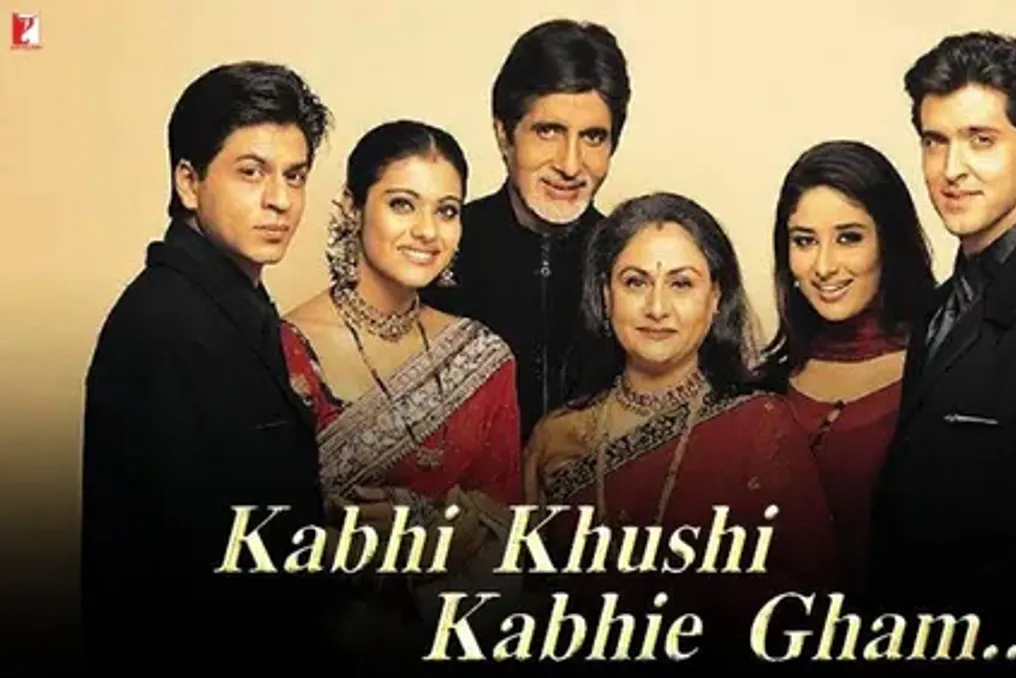
One of the most famous examples is the iconic film 'Kabhi Khushi Kabhie Gham' (2001), where director Karan Johar created a family saga containing perhaps the most recognizable Diwali scene in modern Hindi cinema.
The central conflict of the film begins with a lavish Diwali ceremony at the Raichand family mansion. The visuals of golden lamps, richly decorated traditional clothing, and the grand illuminated multi-story house demonstrate the family's immense wealth and adherence to tradition. The scene culminates at a pivotal moment when the matriarch, Nandini (Jaya Bachchan), intuitively senses the arrival of her son Rahul (Shah Rukh Khan) via helicopter, stepping forward with a 'aarti'. Here, Diwali embodies maternal intuition and the unbreakable bond of family.
However, even before this film, in 'Hum Aapke Hain Koun..!' (1994), Suresh Bardajya used festival scenes as the structural foundation of the narrative. The song 'Dikhtana' plays during the Diwali celebration, where an announcement of pregnancy is made amidst the exchange of gifts and twinkling lights. The festival acts as a unifying factor between two families, strengthening traditional Indian social structures.
But not in all Bollywood films associated with Diwali is the theme reduced to the triumph of light over darkness. Although Diwali traditionally signifies the victory of light over gloom and good over evil, several notable films subvert this trope, using the brightness of the festival to amplify the shadows of character downfall.
In Mahesh Manjrekar's dark crime drama 'Vaastav: The Reality' (1999), Diwali accentuates the tragic transformation of the protagonist, Raghu (Sanjay Dutt). Returning home on Diwali night after immersing himself in Mumbai's criminal underworld, Raghu, gleaming in gold, presents his mother with the famous line about his pachasa tola (over half a kilogram) gold chain. The glittering lights and festive atmosphere sharply contrast with the mother's sorrow over her son's criminal life. This scene transforms a time of spiritual enlightenment into a stark depiction of moral decay.
Prakash Mehra's classic film 'Zanjeer' (1973) also utilized Diwali as the tragic origin of the 'Angry Young Man' persona played by Amitabh Bachchan. As a child, his character, Inspector Vijay, witnesses the murder of his parents on Diwali night, the sound of gunshots muffled by the roar of festive fireworks. This trauma leaves him with a recurring nightmare of a white horse linked to the killer, making Diwali a psychological trigger rather than a joyous celebration.
Filmmakers have also used the freedom of expression that Diwali affords to advance romantic storylines and challenge social constraints.
In the film 'Mohabbatein' (2000), Aditya Chopra uses Diwali as a means of defiance. The action takes place in an authoritarian gurukul (boys' hostel) run by the stern director Narayan Shankar (Amitabh Bachchan). The students secretly organize a joint Diwali celebration with a neighboring girls' school. Through the song 'Pairon Mein Bandhan Hai', the glow of diyas and fireworks becomes a visual metaphor for romantic freedom shattering rigid, dark authoritarian rules.
Kamal Haasan's comedy 'Chachi 420' (1997) used a firework incident during Diwali to drive the main plot. When a faulty firework injures a young girl during Diwali, her estranged father (disguised as an elderly nanny) saves her, securing a job as a governess to stay close to his daughter. The festive chaos serves as a realistic narrative bridge for family reconciliation.
In a sharp departure from commercial gloss, Chetan Anand's war film 'Haqeeqat' (1964) presented the haunting composition 'Kaise Diwali Manayein Hu,' performed by soldiers stationed on frozen borders during the Sino-Indian War of 1962. The film uses Diwali to remind viewers of the human cost of national security, contrasting domestic celebrations with the cold reality of the battlefield.
Thus, Diwali in Indian cinema transcends mere visual spectacle. It represents a universal narrative canvas where light is used not just to illuminate the frame, but to reveal moral choices, emotional bonds, and the internal conflicts of characters. Whether it is a grandiose melodrama of homecoming or the somber silence of a hero confronting his demons, Diwali remains one of the most potent storytelling tools throughout decades of Indian cinema.