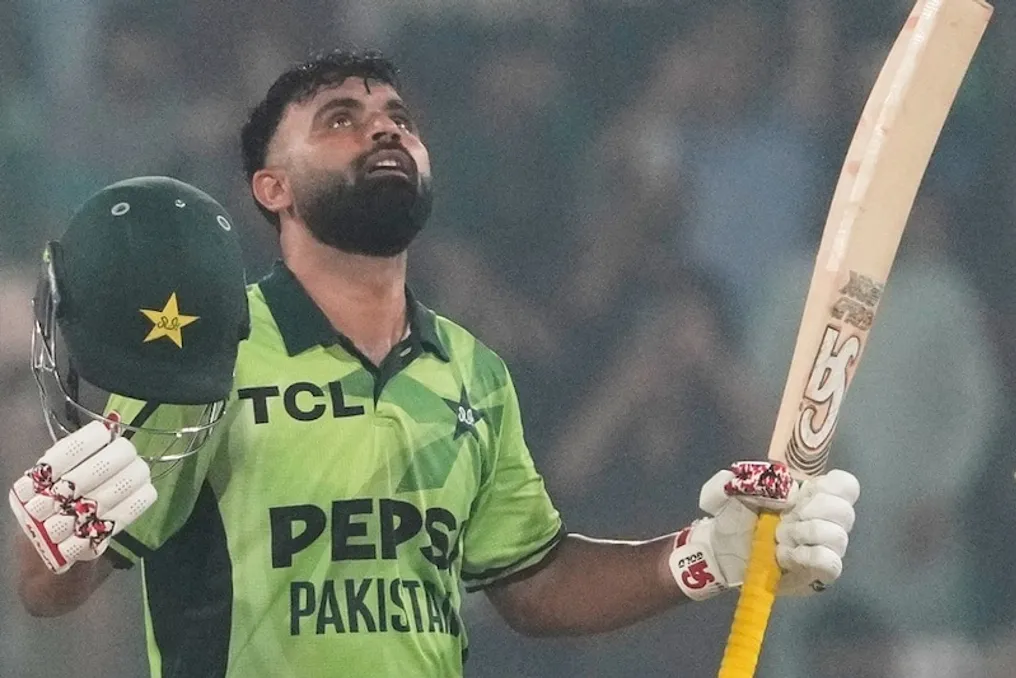
Pakistan team sets historical record by matching India's achievement in the final
Read more
Aaj Tak
www.aajtak.in

Pakistan team sets historical record by matching India's achievement in the final

Pakistan defeated Sri Lanka in the ODI three-match series to win the title, achieving this at Gaddafi Stadium in Lahore with a margin of three runs. Thanks to Fakhar Zaman's brilliant century, Pakistan reached the target of 326 runs in 48.3 overs, which was the largest successful run chase in an ODI final. Thus, Pakistan matched India's historical record.

The Indian team, led by Saurav Ganguly, achieved the target of 326 runs against England at Lord's during the 2002 NatWest Series final. More than two decades later, Pakistan repeated this feat.

In that memorable Lord's final, the Indian team faced difficulties. After losing five batsmen, Jayuraj Singh and Mohammad Kaif managed to stabilize the game. Jayuraj scored 69 runs, and Kaif remained unbeaten, scoring 87 runs. India managed a dramatic victory in the last overs and won the NatWest trophy.

Now, Pakistan, successfully chasing the target of 326 runs against Sri Lanka, has matched this historical achievement. In the match held on October 31st (Saturday), Pakistan won, scoring 331/7 runs. Pakistan's start was unsuccessful as Babar Azam returned to the bench without scoring a single run off five balls.

After this, Fakhar Zaman and Saad Beg formed a partnership of 149 runs for the third wicket, pulling the team out of a difficult situation. Saad Beg scored 74 runs, and Fakhar played a brilliant innings, scoring 127 runs off 99 balls. This marked Fakhar's twelfth century in ODIs.

When Fakhar Zaman was dismissed, Pakistan's score was 220/4, and the match was still open. Subsequently, Arafat Minhaj (61 runs) and Hasan Nawaz (not out, 37 runs) formed a crucial partnership of 94 runs, bringing the team close to the target. Prior to this, Sri Lanka had scored 325/8 runs thanks to contributions from Chaminda Mendis (131 runs) and Pathan Ratnayake (77 runs).
Similar stories

Indian team loses to Pakistan in Hong Kong Sixes match after Crunal Pandya's decisive over
Read more
www.aajtak.in

Indian team loses to Pakistan in Hong Kong Sixes match after Crunal Pandya's decisive over

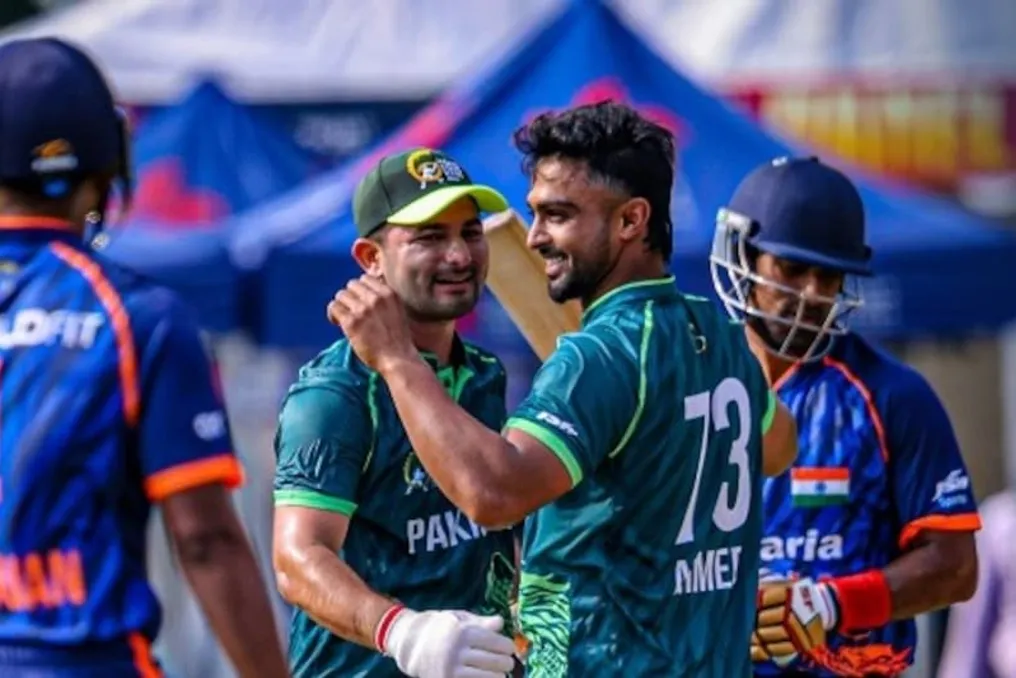
In the Hong Kong Sixes 2026 match between India and Pakistan, the neighboring country secured a convincing victory over the Indian team with a score of 4 wickets. The game, played in Group C at the Mission Road Ground in Hong Kong on Friday, October 30, concluded with Pakistan reaching the target of 89 runs in just 3.5 overs.

India started the game with batting, scoring 88 runs and losing five wickets in six overs. Pakistan decided to start with bowling after winning the toss. India's start was not the most successful: Rahul Tripathi was dismissed after scoring only 9 runs. Then Nitish Rana was forced off the field after scoring 19 runs off 14 balls.

However, Shashank Singh demonstrated an impressive attack, actively countering the Pakistani bowlers. He scored 40 runs off just 11 balls, including five sixes. A key moment was the partnership between Shashank and Nitish Rana, which brought in 57 runs off 18 balls for the second wicket. Ti Natarajan remained on the field without being out, scoring 12 runs. Thus, India finished its innings with a score of 88/5 in 6 overs. From Pakistan's side, Abdul Samad took two wickets, conceding 10 runs in one over.

The Pakistani team, which came onto the field aiming to score 89 runs, showed an aggressive attitude from the beginning. Captain Abbas Afridi changed the course of the match by hitting five sixes in Crunal Pandya's very first over. In the first two overs, Pakistan scored 59 runs. Quaid Nafe also played brightly, scoring 41 runs off just 12 balls, which included two fours and five sixes.

Despite Quaid Nafe's performance, Pakistan's pace did not slow down. Irfan Khan sealed the victory for Pakistan by hitting a magnificent six off Rahul Tewatia, allowing them to reach the winning total in just 3.5 overs. Abbas Afridi was named player of the match for his outstanding performance; he scored 35 runs off 8 balls in the attack, including five sixes and one four, and also conceded 10 runs in one over while bowling.

This victory allows Pakistan to make a strong comeback in the tournament, as they previously lost their opening match against the UAE by a narrow margin. India, in turn, will play its last group match against the UAE on October 31.

It is worth noting that the Indian team is currently participating in a five-match T20 series against New Zealand. Following this, five ODI matches are scheduled, followed by a two-Test match series. On the other hand, Pakistan is hosting a three-match ODI series against England and Sri Lanka and has already secured a spot in the final thanks to its brilliant victories.

India has a chance to overtake Pakistan and become the best team in the world by winning the second T20 match against New Zealand
Read more
www.aajtak.in

India has a chance to overtake Pakistan and become the best team in the world by winning the second T20 match against New Zealand

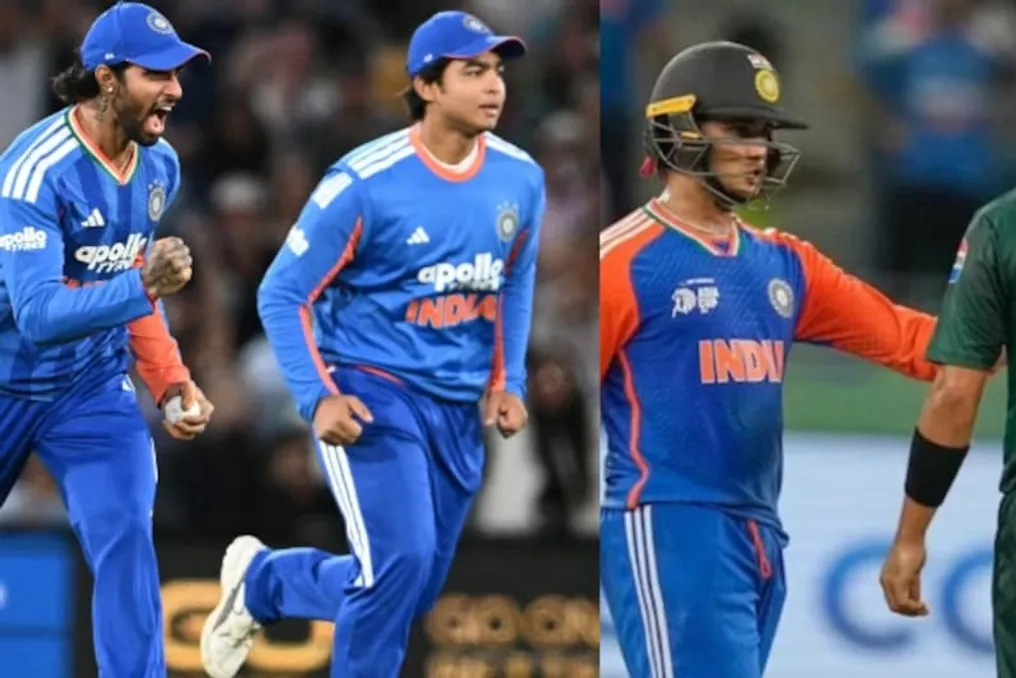
In the second T20 match, taking place at Hagley Oval in Christchurch against New Zealand, Indian bowlers demonstrated strong play. This match is set to go down in Indian cricket history.

This encounter marks the 300th international T20 match for the Indian men's team. Because of this, India has become the second team in the world to have played 300 or more matches in the shortest format of cricket. Currently, Pakistan leads this ranking with 304 matches.

In this match, India's captain Shreyas Iyer decided to start with bowling after the toss. If the young Indian team can defeat the New Zealand side today, it will set a unique record in cricket history that no other team has managed to achieve.

Across all 299 T20 matches played, India has secured 199 victories, excluding super over matches. If India wins the second match, it will become the first team in the world to win 200 T20 international games.

Due to the right thigh injury of Ishan Kishan, who was withdrawn from the squad, the team management made significant changes to the starting lineup. Young talent Vaibhav Suryavanshi earned a spot in the team, although he will have to wait to open, as the team retained its previous starting lineup, and Vaibhav was placed at the third position.

Shoaib Akhtar publicly praised PCB leadership after Pakistan's victory over England
Read more
www.aajtak.in

Shoaib Akhtar publicly praised PCB leadership after Pakistan's victory over England

Pakistan secured a convincing victory over the strong English team in the second match of the trinational one-day series, defeating the opponent by a margin of 87 runs. This win marks the second consecutive major victory for the Pakistani team. Previously, the Pakistani team, which had previously beaten Sri Lanka, batted first and scored an impressive total of 302 runs.

After this, Pakistan demonstrated mastery in bowling, limiting the total score of the entire English team to just 215 runs in 38.4 overs.

Following this impressive triumph, the spirits of former Pakistani stars were lifted again. Recently, on a cricket show on a Pakistani television channel, former fast bowler Shoaib Akhtar highly praised the PCB (Pakistan Cricket Board). Notably, it was this Shoaib Akhtar who had previously criticized the PCB multiple times.

On the show, Akhtar stated that the PCB had decided to move forward with a new mindset. He mentioned meeting many players there, including fast bowlers with speeds of 161.3 km/h. Akhtar advised these young athletes: 'Son, you can break my record, but do not break your body.'

Akhtar also sharply criticized Pakistani players over the last 15 years, stating that they played 'materialistic cricket.' He proudly noted that the PCB has now implemented a policy of 'no nonsense' and 'spirit,' clearly informing players that if they want to play for personal statistics, they should stay home.

Not limiting himself to criticizing his own association, Shoaib Akhtar extended his remarks to world cricket. He stated that for the last 15–20 years, everyone had played selfishly, which led to the current situation. He added that although cricket has existed for 500 years, it is played correctly in only 10–12 countries, unlike football, which involves 200 countries.

Popular