China-Africa Cooperation in Green Mobility Gains Momentum
Read more
CGTN
cgtn.com

China-Africa Cooperation in Green Mobility Gains Momentum

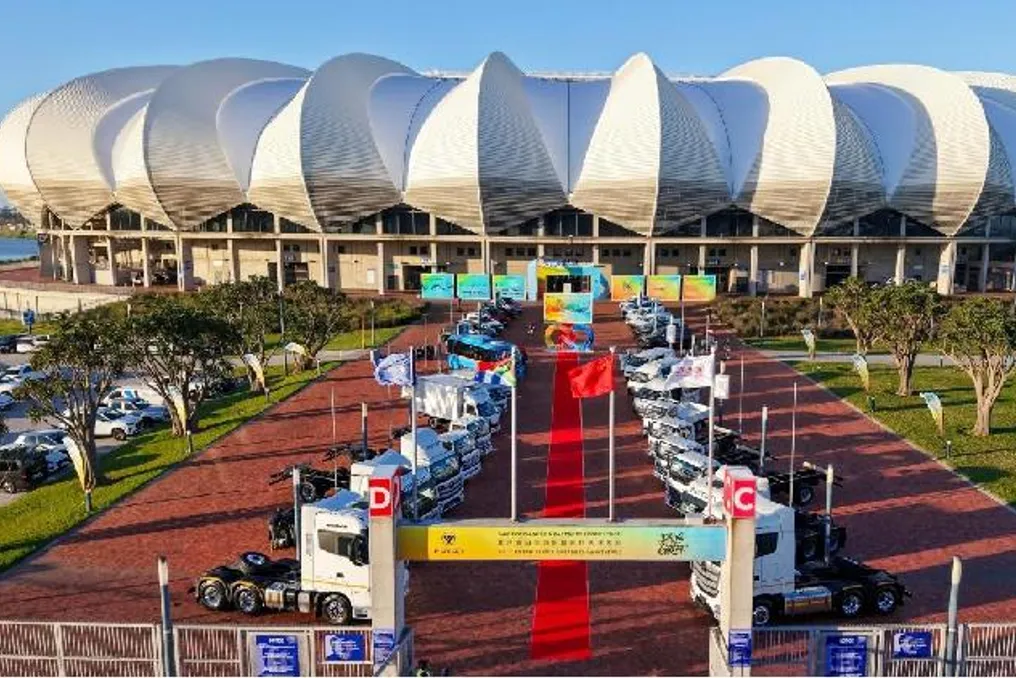
Over 700 delegates from industry, government, and finance sectors representing more than 20 African countries gathered at the Nelson Mandela Stadium in Gqeberha, South Africa. They participated in a major automotive partnership conference to explore joint paths for local production development, transition to green transport, and cross-border connectivity.

The event, held from October 28 to 30 under the slogan 'Drive to Great,' brought together Chinese diplomatic representatives, provincial officials from South Africa, financial institutions, and businessmen to promote industrial cooperation between China and Africa on the continent.

Lulama Sikiti from the South African Industrial Development Corporation noted that Chinese automakers demonstrated outstanding results by presenting powerful and technologically advanced vehicles. She emphasized that advanced technologies are crucial for the African mining industry and long-haul logistics routes, such as from Cape Town to Cairo, given the challenging conditions of the African landscape and roads.

Sikiti added that China has brought immense benefits to the African continent and expressed hope for deepening partnerships, digital upgrades, and technological strengthening across Africa, as improved infrastructure and more modern technologies are necessary for growth.

The conference highlighted the long-term value of automotive cooperation between China and Africa, including adapting vehicles to harsh local climatic conditions and roads, improving after-sales service quality, and reducing operating costs for local businesses and households.

Instead of simply exporting finished cars, Chinese automotive enterprises are employing a localized development strategy focused on the ecosystem for the African market. BAIC FOTON International President Wu Zongtian stated that Africa holds enormous potential for new energy vehicles, as the total cost of ownership of electric vehicles is significantly more favorable than traditional fuel cars, especially against the backdrop of fluctuating global energy prices and rising diesel and gasoline costs.

He specified that the company does not just supply vehicles but collaborates deeply with local partners to create comprehensive ecosystem solutions. These solutions include customized battery configurations, fleet scaling, and appropriate charging and swapping infrastructure to meet local operational scenarios and support Africa's sustainable green transport transformation.

Marius Small, the local General Manager of the automotive division in South Africa, noted that the value proposition of Chinese vehicles is particularly evident in South Africa's current economic climate. These vehicles offer quality comparable to traditional brands while possessing economically efficient performance, which is ideal for local businesses amid high fuel costs and economic pressure.

He also reported that reliable local after-sales service networks have been established across the country, featuring 65 local dealers providing full support throughout the entire lifecycle and reliable service for local users.

Several practical outcomes of cooperation were achieved during the event, covering localization of production lines, automotive financial services, cross-border spare parts supply, and collaboration in new energy vehicle sectors with several African countries, including Mozambique, Ethiopia, Kenya, and Zambia.

Thanks to the landmark joint production project between China and South Africa, located in the Koega Special Economic Zone in Gqeberha, Chinese automakers continue to strengthen localized investments, develop local industrial chains, and create jobs, thereby accelerating the modernization of Africa's automotive industry and contributing to sustainable economic development.
Similar stories

China leads global classification of innovation clusters for the fourth consecutive year
Read more
iol.co.za

China leads global classification of innovation clusters for the fourth consecutive year

The World Intellectual Property Organization (WIPO) has published its ranking of the 100 leading global innovation clusters for 2026. China is represented in 25 such clusters and has become the world leader in this area for the fourth consecutive year. The top 10 include the Shenzhen-Hong Kong-Guangzhou, Beijing, and Shanghai-Suzhou clusters.

This ranking identifies regions with a high concentration of innovative activity, based on indicators such as the number of international patent applications, scientific publications, and venture capital deals. China's consistently high positions across numerous regions demonstrate both the scale and depth of its innovation ecosystem.

This leadership status is the result of years of targeted investments in coordinated regional development. Regional innovation networks have become a crucial pillar of the national innovation structure, providing the foundation for China to become a leading country in science and technology.

Regional Development Coordination

Deeper cooperation has been established in the Beijing-Tianjin-Hebei region: Beijing focuses on research and development, while Tianjin and Hebei concentrate on implementing scientific discoveries into production processes. Concurrently, the integrated development of the Yangtze River Delta has strengthened ties between innovation centers along the G60 Science and Technology Innovation Corridor, creating a cross-regional platform for joint innovation spanning nine cities.

The strengthening of regional interaction has fostered a sustainable model of innovation where multiple centers operate in coordination. Beyond mere quantity, the rankings point to the comprehensive modernization of China's entire innovation system.

Innovation clusters reflect close ties between research institutions, enterprises, talent, and investment. In recent years, China has accelerated the commercialization of scientific and technological achievements while simultaneously developing and expanding new high-productivity forces. Many clusters included in the list are also major industrial hubs.

In Hubei province, central China, Wuhan, ranked 17th, demonstrated an increase in added value of industrial enterprises exceeding the established size in high-tech manufacturing by 65.7 percent compared to the previous year in the first half of the current year, thanks to the revitalization of the optoelectronics and information technology industries. Meanwhile, Nindai city in Fujian province rose 24 places in the ranking, largely due to innovations in the power battery industry.

This positive cycle between development and innovation allows new and future-oriented industries to gain momentum and grow rapidly within these clusters.

China's leadership in the number of global innovation clusters among the top 100 also opens valuable opportunities for international partners. The number of foreign companies choosing China for research and innovation activities is growing, many of which are establishing R&D centers specifically within these clusters. In the first seven months of this year, foreign applicants filed over 42,000 invention applications in China. In 2025, the share of foreign investment actually used in scientific research and technical services accounted for nearly one-fifth of China's total utilized foreign investment.

China is also committed to sharing innovation benefits through openness and cooperation. In the first half of this year, Chinese developers of innovative drugs signed 81 licensing agreements with foreign partners, and Chinese industrial robots were exported to 141 countries and regions.

As noted by WIPO Chief Economist Karsten Fink, Chinese innovations are pushing the boundaries of global science and technology across a wide range of fields, and more and more countries worldwide benefit from this. Today, global innovation resources are increasingly concentrating in China through its innovation clusters.

China expands cooperation among Global South countries through infrastructure and technological projects
Read more
cgtn.com

China expands cooperation among Global South countries through infrastructure and technological projects

The opening of the Batang Lupar 1 bridge in Malaysia on July 9th was a significant event for local residents. This bridge, the largest river crossing in Malaysia, ended the long dependence of communities on ferries, significantly simplifying the transportation of agricultural and fishery products and the movement of people.

Previously, crossing the river was done by ferries, where cars, motorcycles, and trucks often queued. Furthermore, services could be suspended during the rainy season or in bad weather. This 4.84-kilometer-long and over 110-meter-high bridge was built by the China Railway Group despite challenging marine conditions.

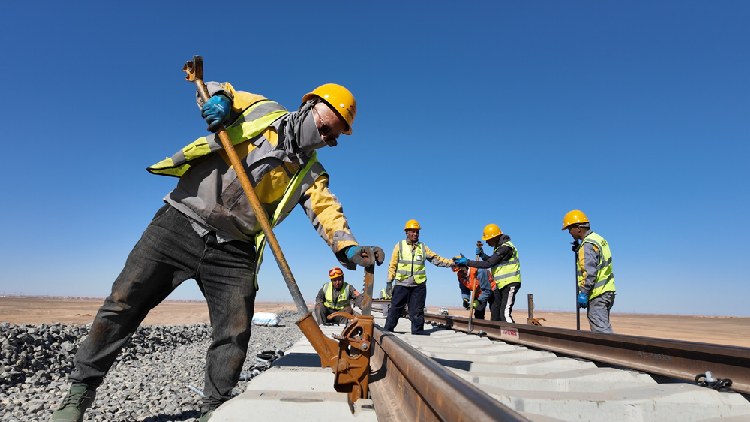
On the other side of the world, in Algeria, a 950-kilometer desert heavy-haul railway began operation in February. It connects the Gara Djebilet iron ore mine in the southwest of the country to the national railway network, facilitating the transport of iron ore and promoting the development of the local mining industry. A section of this railway track, spanning 575 kilometers, was constructed by the China Railway Construction Corporation in partnership with a local state company.

Such initiatives serve as a clear example of infrastructure interaction between China and other Global South countries. China is actively developing cooperation among Global South nations in areas ranging from infrastructure and livelihood projects to scientific and technological innovations, aiming to promote common development and build a more prosperous future.

Livelihood Projects: Stimulating Sustainable Growth

Water scarcity remains a serious obstacle to development in many Global South countries. In the Togo Plateau region, residents have long faced water shortages and problems accessing safe drinking water. In September, a rural water supply project implemented by a Chinese company was completed, providing 305 wells extracting groundwater at a depth of about 70 meters. This project serves over 300 villages and approximately 170,000 people, improving access to water for both daily needs and agricultural production.

In addition to providing water, China is working with other Global South countries to strengthen food security through agricultural cooperation. China's 'Green Super Rice' program has promoted the dissemination of high-yield, stress-resistant rice varieties in Asian and African countries. According to the Chinese Academy of Agricultural Sciences, this program helped 1.6 million farms in 18 countries increase their income.

Besides introducing new varieties, training sessions were conducted for 58 postgraduate students, and over 3051 opportunities for training in rice breeding were provided, strengthening local scientific research potential in agriculture. Through cooperation in agriculture and rural water supply, China is deepening interaction among Global South countries to meet basic needs and create a foundation for sustainable development.

Technological Cooperation: Building Local Capacity

A key aspect of cooperation among Global South countries is strengthening local scientific and technical capabilities and helping countries utilize new opportunities arising from advancements in fields such as artificial intelligence. In 2023, China assisted Egypt in launching a remote sensing satellite using the Jiuquan launch complex in northwestern China. This satellite is designed for land surveys, crop monitoring, water resource management, and urban planning.

The satellite was jointly developed by China and Egypt, with Egyptian technical specialists participating in its design, assembly, and testing. This collaboration enabled Egypt to become the first African country capable of fully assembling, integrating, and testing satellites. As technological cooperation expands into advanced fields, the partnership among Global South countries helps them leverage the benefits of rapid AI advancements and apply them to solve practical problems.

In July 2025, the China Meteorological Administration introduced the AI-based Mazu solution for early warning in developing countries. It has been deployed in seven countries and is accessible via cloud services in over 40. The system can be adapted to local needs. For instance, a specialized version focused on maritime and aviation services has been configured in Sri Lanka. In Djibouti, China and local partners developed an AI-based weather forecasting agency to help ports plan operations and prepare for strong winds and dust storms. Pan Jinjun, chief engineer of the China Meteorological Administration, noted that Mazu is becoming a common, customizable, and resilient international public service for developing countries.

Popular