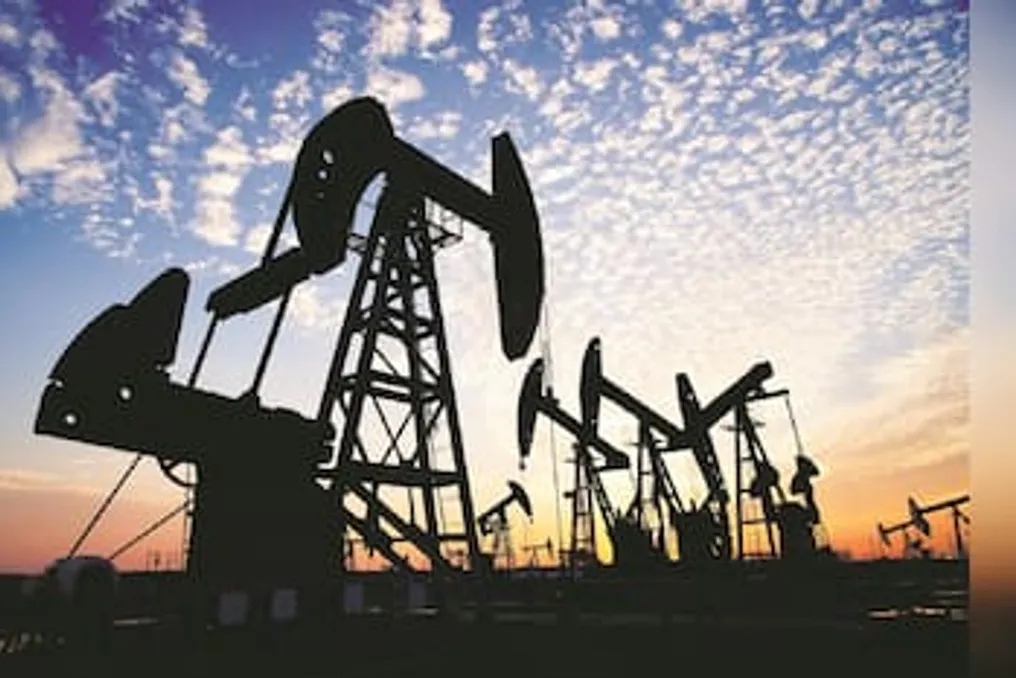
Government increases export duty on diesel and aviation fuel, abolishes gasoline levy
Read more
Business Standard
business-standard.com

Government increases export duty on diesel and aviation fuel, abolishes gasoline levy

The government has made changes to the export duties on petroleum products: the rate for exporting diesel fuel and aviation turbine fuel (ATF) has been increased, while the duty on gasoline exports has been completely abolished.

The export duty on diesel fuel has increased to 11.50 rupees per liter from the previous 8.50 rupees per liter. Additionally, the duty on ATF exports has been raised by 50 pence per liter, reaching 11 rupees per liter from 10.50 rupees per liter. Meanwhile, the government has removed the 2.50 rupees per liter duty on gasoline exports, setting it to zero.

These adjusted rates, announced on October 31, will be effective for the next two weeks. Export duties on gasoline, diesel fuel, and ATF were introduced on March 27, 2026, as part of measures aimed at ensuring domestic availability of petroleum products by curbing exports amid the crisis in West Asia.

The set rates are reviewed every two weeks based on the average international prices of crude oil, gasoline, diesel fuel, and ATF for the period since the last review. The previous adjustment came into effect on October 16.

The government clarified that existing excise duties on gasoline and diesel fuel intended for domestic consumption have not changed. This recent step comes against the backdrop of Indian refiners remaining major exporters of petroleum products, and the government uses export levies as a policy tool to balance foreign sales with domestic supply amidst the volatility of global oil markets.

Similar stories

Government introduces zero export duty on petrol and increases duties on diesel fuel and ATF
Read more
www.aajtak.in

Government introduces zero export duty on petrol and increases duties on diesel fuel and ATF

The Indian government has made a significant decision ahead of the Diwali festival. According to a notification from the Ministry of Finance published on the last day of October, the export duty on petrol was reduced to zero (Petrol Export Duty Zero). Simultaneously, taxes on the export of diesel fuel and aviation turbine fuel (ATF) were increased.

These changes were introduced by the Ministry of Finance via a notification issued on Saturday, October 31. It stated that the Windfall Gain Tax on the export of diesel fuel and aviation turbine fuel would be increased for two weeks. At the same time, a decision was made to cancel the levy on batches of petrol sent for export.

According to the government, these recent adjustments were made against the backdrop of constant fluctuations in the global energy market and geopolitical tensions in the Middle East.

As part of this decision, the export duty on petrol, which previously stood at 2.50 rupees per liter, was reduced to zero. The government clarified that these revised rates come into effect on October 31 and will remain valid for the next two weeks.

Furthermore, according to the official notification, the Special Additional Excise Duty (SAED) on the export of ATF was slightly increased from the previous 10.50 rupees per liter to 11 rupees per liter. The duty on the export of diesel fuel also significantly increased. The amount, including SAED and road and infrastructure levies, was raised from 8.50 rupees per liter to 11.50 rupees per liter, representing a direct tax increase of 3 rupees per liter.

According to PTI, the Ministry of Finance emphasized that despite the change in windfall gain taxes, the existing duty rates for domestic consumption of petrol and diesel fuel have not been altered. These new changes pertain exclusively to the export of petroleum products.

It is worth noting that the windfall gain tax is used by the government to levy tax on additional profits in situations where companies may earn more than usual due to exceptional market conditions. In the case of fuel, rising international prices allow refineries to earn higher profits from selling petrol and diesel fuel abroad. In such moments, the government seeks to capture some of this extra benefit through export taxes.

India first introduced the windfall gain tax on petroleum product exports in July 2022. It was repealed about two years later in December 2024. Then, in March 2026, it was reintroduced by the government amid turmoil in the international energy market and rising crude oil prices. Since then, the rates have been adjusted according to market conditions.

The government reviews these taxes every two weeks, taking into account changes in international fuel prices, as well as the profits generated by local refineries and exporters from overseas sales. By imposing export duties, the government aims to make foreign sales less attractive and encourage refineries to maintain high availability of products in the domestic market.

Government extends diesel subsidy; analysis of agribusiness vulnerability to fuel price hikes
Read more
g1.globo.com

Government extends diesel subsidy; analysis of agribusiness vulnerability to fuel price hikes

The federal government decided to extend the diesel subsidy for another thirty days this Tuesday (27), maintaining the benefit at R$ 2.12 per liter. This action aims to mitigate the impacts caused by rising international oil prices, whose increase is driven by conflicts in the Middle East and the war between Russia and Ukraine.

The price of Brent crude oil, used as a global reference, fluctuated between US$ 100 and US$ 106 in the first half of October and reached US$ 113.17 on the 22nd. For the government, any value above US$ 70 generates considerable pressure on domestic market prices.

In addition to the rise in the commodity, the devaluation of the Brazilian currency, the real, also contributes to the increased cost of diesel production and importation. Although Brazil is a large oil producer, about one-fifth of the diesel consumed is imported, according to data provided by the National Petroleum Agency (ANP).

In August, the volume of imported diesel represented 23.14% of national sales of Diesel A, which does not yet have the mandatory biodiesel blend. The combination of these factors resulted in significant increases: common diesel rose by 6.67% in the first half of October, reaching an average of R$ 7.20 per liter, according to the Edenred Ticket Log Price Index (IPTL). S-10 diesel saw an increase of 5.07% in the same period, reaching R$ 7.46 per liter. Compared to January, common diesel registered a cumulative increase of 15.2%.

Prices also show regional variations. In the North, common diesel cost an average of R$ 7.75 per liter, and S-10 had an average price of R$ 7.80. In Roraima, common diesel reached R$ 8.19, and in Acre, S-10 reached R$ 8.30. In the South and Southeast regions, the average price for common diesel was R$ 6.97 per liter. This increase directly impacts cargo transport carried out mainly by trucks in Brazil. In agribusiness, the most expensive fuel raises freight and production costs, which may be passed on to food prices.

Why does Brazil need to import diesel?

Between January and August, Petrobras's diesel production managed to grow by 18.5%, increasing from 32.7 million to 38.7 million barrels. Even so, domestic production proved insufficient to meet all demand for the fuel.

In the first half of 2026, total diesel consumption in Brazil was 213.2 million barrels. According to ANP, national production reached 154.8 million barrels, while imports totaled 43.5 million barrels, equivalent to 20.4% of consumption during that period.

This dependence on imports is linked to the country's refining capacity. It is important to note that crude oil extraction differs from fuel production, as oil needs to be processed in refineries to be converted into diesel and other derivatives used by vehicles, agricultural machinery, and trucks.

In recent years, Petrobras has sold refineries to private companies as part of an asset divestment program. This movement gained momentum during the mandate of Jair Bolsonaro (PL), when the state-owned company negotiated units in the refining sector.

Paulo Feldmann, a professor at the Faculty of Economics, Administration, Accounting, and Actuarial Science of the University of São Paulo (FEA-USP), raises questions about the production costs of diesel in these refineries, alleging that, under certain circumstances, fuel produced in Brazil may be more expensive than imported fuel.

Francismar Ferreira, from the Institute of Strategic Studies of Oil, Natural Gas, and Biofuels (Ineep), argues that reducing import dependence requires expanding and modernizing Brazilian refineries, in addition to reviewing investments made by Petrobras in this segment.

Why does the diesel hike weigh so heavily on Brazil?

Starting in the second half of the 20th century, Brazil began prioritizing the use of highways for cargo transport, while railways lost relevance. This transition occurred parallel to the growth of the automotive industry and the expansion of road infrastructure.

Currently, the strong reliance on roads implies that the increase in diesel raises freight costs and, consequently, the cost of transporting goods. Paulo Feldmann, from FEA-USP, emphasizes:


India's crude oil import bill rose by 47% to $15.4 billion in September
Read more
business-standard.com

India's crude oil import bill rose by 47% to $15.4 billion in September

India's crude oil import bill increased by 47% in September, reaching $15.4 billion. This growth is attributed to a sharp rise in energy prices caused by intensified attacks in West Asia, according to data from the Petroleum Planning and Analysis Cell (PPAC).

Despite the significant increase in cost, crude oil imports grew by only 7%, amounting to 21.7 million tonnes (MT) for the month, compared to 20.3 million tonnes the previous year.

The sharp increase in the bill occurred against the backdrop of the average price of crude oil in India in September being $116.09 per barrel, which is higher than $69.61 per barrel the previous year. Crude oil remains the largest item of India's imports, accounting for about 20% of the country's total merchandise imports.

India is forced to purchase energy at higher prices to ensure domestic availability amid the ongoing crisis. The rise in energy prices in recent months is linked to supply disruptions triggered by blockades in the Strait of Hormuz and threats in the Bab el-Mandeb Strait—a narrow waterway connecting the Red Sea and the Gulf of Aden—which restricts supplies from West Asia.

According to data from the analytical firm Kpler, Russia remained the largest supplier of crude oil to India in September, providing 35% of the total import volume. The five leading suppliers—Russia, Iraq, Saudi Arabia, United Arab Emirates (UAE), and Kuwait—collectively supplied 70% of India's crude oil needs during the month.

India's net account for oil and gas, which accounts for expenses on petroleum products such as crude oil, liquefied natural gas (LNG), and liquefied petroleum gas (LPG), minus revenues from processed product exports, rose by almost 40% year-on-year (YoY) to $13.4 billion in September. Meanwhile, India's export of petroleum products decreased by 24.6% year-on-year in September.

Of the total bill of $15.4 billion, the import of crude oil accounted for the majority, while LNG imports amounted to $1.2 billion. In September, petroleum product exports generated $4.8 billion for the country.

For the first six months of the current fiscal year (April-September 2026-27), India's crude oil import bill increased by 46.4% to $90.6 billion, and the net account for oil and gas rose by 35% to $81.1 billion during this period.

Popular