
Woman finds 40 dead bedbugs on hotel bed in Britain; has to seek hospital care
Read more
Aaj Tak
www.aajtak.in

Woman finds 40 dead bedbugs on hotel bed in Britain; has to seek hospital care

A guest staying at a hotel for work encountered an unpleasant situation that prompted her to thoroughly check the bed before sleeping. Although people expect cleanliness and comfort in hotels, something happened to this woman that makes one think about carefully inspecting beds.

The first night passed normally, but the next morning the woman noticed red spots on her body. Initially, she did not pay it any mind, but after removing the sheet and duvet from the bed, she was shocked. About 40 dead bedbugs were found on the bed.

This incident occurred in the city of Exeter, Britain. 46-year-old Nicola Jenkins, who lives there, stayed at the Holiday Inn Express Exeter East for work. She booked a four-night stay, arriving at the hotel on October 12. She did not expect her hotel stay to turn into such a negative experience.

According to Nicola, there were no problems on the first night. However, the next morning when she woke up, she felt itchy all over her body. After showering, she saw red marks on her face, neck, arms, back, and abdomen. At first, she assumed they were insect bites, but the number of marks kept increasing. Since Nicola had previously encountered bedbug bites, she suspected there might be bedbugs in the bed.

After this, Nicola decided to check her bed. When she removed the duvet, she saw a crawling bedbug and took a video. A thorough inspection of the sheets and bed revealed about 40 dead bedbugs. Nicola reported that she had over a hundred places on her body affected by bedbug bites, including red marks on her forehead, cheeks, neck, waist, and arms. Seeing such a large number of bedbugs, she panicked.

Following this incident, Nicola complained to the hotel reception desk. In response, the hotel provided her with another room. Nevertheless, Nicola noted that she was informed that since her office made the payment, a direct refund was not possible. During this incident, she was also offered a free cup of coffee.

However, Nicola's problems did not disappear. She decided to leave the hotel and stay elsewhere. Despite this, the itching and redness on her body continued to worsen.

Nicola recounted that after the bedbug bites, her skin began to itch and burn severely, creating a burning sensation. As the situation worsened, she visited a pharmacist who prescribed antihistamines to relieve the itching. But her condition did not significantly improve. On October 19, her left arm became severely swollen and completely red, after which she had to go to the hospital's Accident & Emergency (A&E) department. After examination, doctors prescribed her a course of steroids.

Nicola shared that this incident caused her a lot of inconvenience; she could not attend an event like a children's party on the weekend and had to stay home. After treatment, her condition gradually improved.

Following the incident, Nicola's office also filed a complaint against the hotel. The hotel contacted her office and acknowledged the problem related to bedbugs. The hotel offered Nicola free accommodation for the weekend at another hotel. However, Nicola declined this offer, stating that after such an experience, she would never want to stay in this hotel chain again.

A representative of Holiday Inn Express Exeter East stated that the hotel takes guest cleanliness and safety seriously. He reported that he received a complaint regarding this incident and is conducting an investigation. The hotel also noted that they are in contact with the woman. This case has once again raised questions about room cleanliness and bed inspection in hotels.
Similar stories

Russian man found to have a sprouted plant in his eye; he suffered from headaches for four months
Read more
www.aajtak.in

Russian man found to have a sprouted plant in his eye; he suffered from headaches for four months

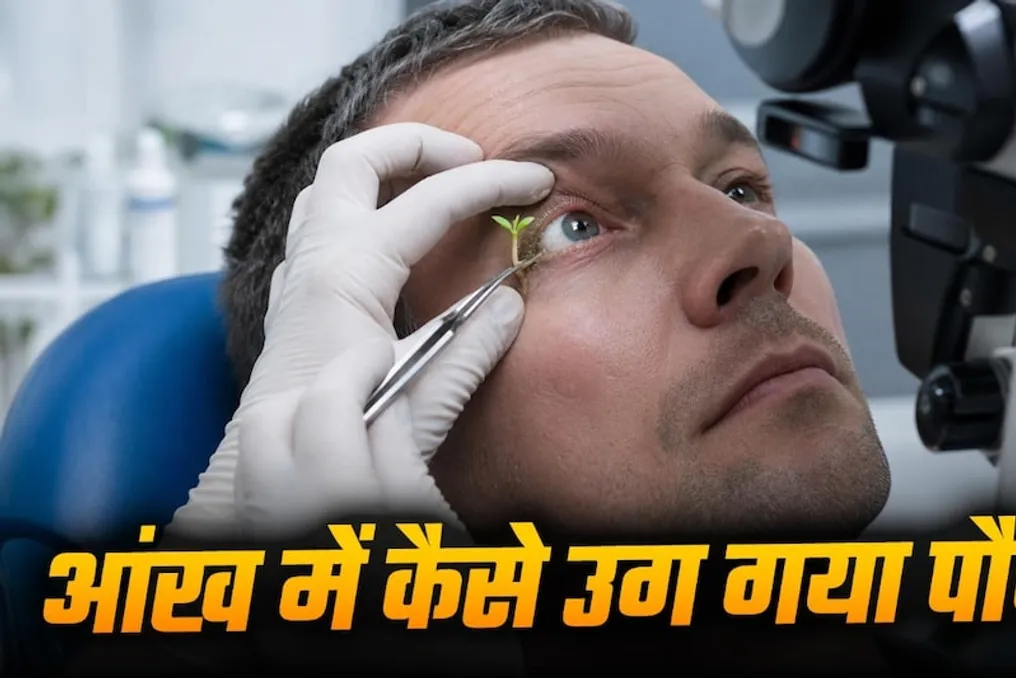
A striking case occurred in Russia where a man suffered for a long time from severe headaches and vision problems. Examinations revealed that a plant seed was inside his eye, which began to sprout and form a small shoot whose roots penetrated the delicate tissue of the eye.

This incident took place in the Siberian region of Russia. A man named Maxim Sleptsov, who was 42 years old at the time of discovery, had been experiencing headaches, eye swelling, and worsening vision for several months. Initially, he assumed it was due to a minor eye injury but was unaware of the seed rooting inside the organ of sight.

Maxim, whose profession is a welder and plumber, had previously visited a friend in the remote area of Abiuski in Siberia. They were planning to go fishing and gather wild berries. During this visit, an accident occurred: a tree branch suddenly hit him in the face and entered his eye. After that, his eye started to hurt, itch, and become red, and tears flowed from it. He rinsed his eye with water, thinking he had removed a small piece of wood, and did not give the incident much importance.

However, the real problems started later. A very small seed, detached from the tree, remained inside his eye. Over time, it began to sprout in his eye, which he did not know about.

Initially, Maxim expected the eye injury to heal on its own. Nevertheless, his condition gradually worsened: his eye constantly swelled, and his vision began to suffer. Simultaneously, he developed severe headaches, resembling migraines, which persisted even after waking up in the morning. He struggled with these unpleasant symptoms for about four months. Due to the remoteness of his residence, it was difficult for him to quickly reach a specialist ophthalmologist.

Finally, when he managed to get to the city of Yakutsk, he went to the emergency department. During the examination, doctors saw something completely unexpected.

The examination established that the seed, having entered the eye, had sprouted. Its root reached a length of about 3 millimeters and penetrated the conjunctiva—the thin membrane covering the white part of the eye. The chief physician of the hospital, Ivan Lutskan, noted that the most surprising thing was that the seed had not just gotten stuck, but had released roots that reached the delicate tissues of the eye.

After the diagnosis, the doctors decided to remove the seed. This procedure was performed by ophthalmologist Elizaveta Karpova using local anesthesia. Local anesthesia ensured numbness in the treatment area so that the patient would not feel pain during the intervention. The doctor carefully extracted the seed from the eye using a syringe. The doctor emphasized that he had never encountered such a case before. According to the medics, if the seed had remained inside and continued to grow, it could have led to serious complications, including loss of vision.

After the seed was removed, Maxim felt immediate relief. He expressed joy that the doctors had timely determined the true cause of his discomfort. This case is surprising because the seed, which entered the eye after a minor branch injury, slowly sprouted and caused problems for many months. The article concludes with a warning: if pain, redness, or blurred vision persists after an eye injury, it should not be ignored, and one should consult an ophthalmologist.

Death toll from Ebola outbreak in DR Congo exceeds 5000
Read more
cgtn.com

Death toll from Ebola outbreak in DR Congo exceeds 5000

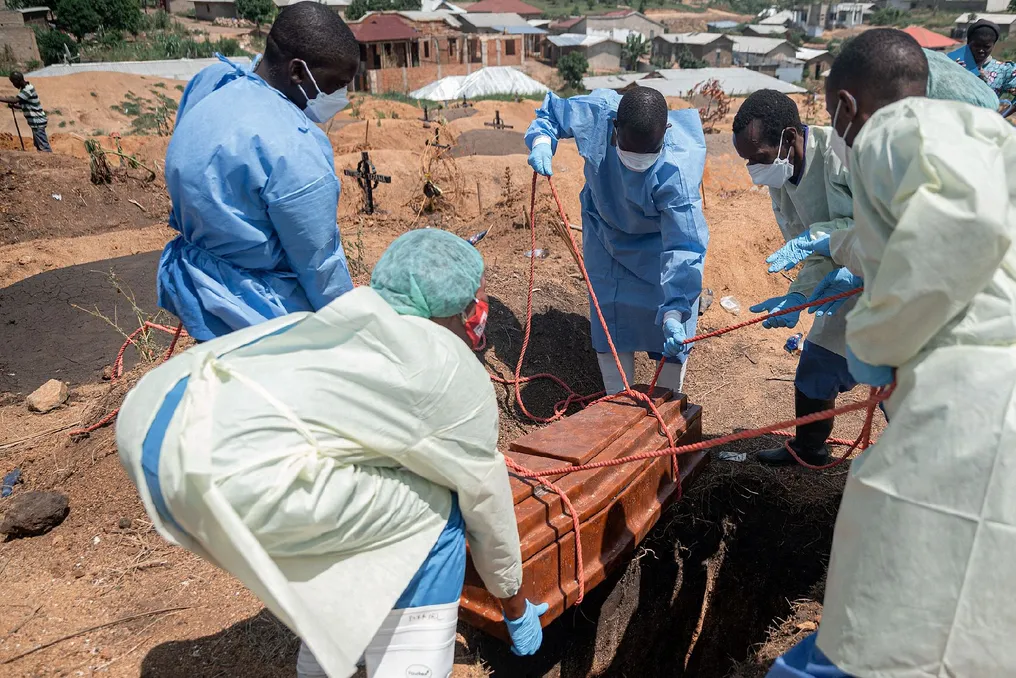
According to government data, the number of victims of the Ebola outbreak in the Democratic Republic of Congo (DRC) has exceeded 5000. More than 10,000 confirmed cases have been registered since the outbreak was declared in May.

The epidemic, caused by the Bundibugyo virus, has spread to eight of the country's twenty-six provinces. This is the deadliest Ebola outbreak ever recorded in the DRC and the second largest globally after the 2014–2016 outbreak in West Africa.

The effectiveness of response measures was hampered by security issues, delays in infection detection, and overloaded medical facilities. A significant number of deaths occurred in communities rather than in treatment centers, highlighting difficulties with early case detection and providing timely patient care.

In September, an independent scientific review organized by the Africa Centres for Disease Control and Prevention (Africa CDC) noted positive trends in some regions, including a decrease in cases and deaths in parts of the Ituri province. However, the review warned that virus transmission is not uniformly controlled across all affected areas; in some health zones, particularly in North Kivu, there is an increase in incidence. Persistent community deaths and gaps in contact tracing were also noted as serious problems.

Africa CDC reported that there are currently no approved vaccines or specific treatments for the Bundibugyo virus, although research in this area continues. Furthermore, the outbreak has spread beyond the DRC: cases have been reported in Uganda, Kenya, and Nigeria. The World Health Organization (WHO) has also registered a case in France, indicating the risk of further international spread.

Popular