The Importance of Joint Worship of Lakshmi and Ganesha During Diwali 2026 According to Religious Beliefs
Read more
Aaj Tak
www.aajtak.in

The Importance of Joint Worship of Lakshmi and Ganesha During Diwali 2026 According to Religious Beliefs

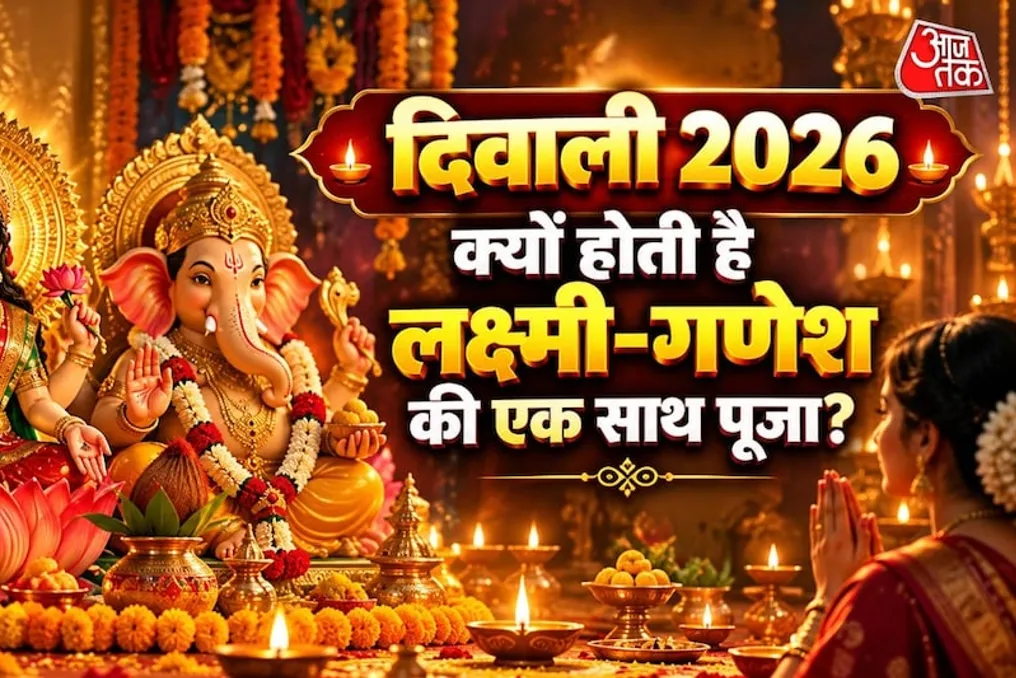
Diwali is one of the most significant festivals in Hinduism. This festival is celebrated every year on the new moon day of the Kartik month. In 2026, Diwali will take place on November 8th on a Sunday. On this day, people light lamps in homes and shops, wishing for prosperity and abundance. There is also a tradition of worshipping the goddess Lakshmi together with the god Ganesha. However, the question arises as to why the worship of the goddess of wealth, Lakshmi, is performed alongside the god Ganesha on this day. In reality, there is a religious belief and a mythological story behind this. The significance of the joint worship of Lakshmi and Ganesha and its special reason are presented below.

About Diwali 2026

In Hinduism, the goddess Lakshmi is revered as the goddess of wealth, splendor, and prosperity, while the god Ganesha is considered the deity of wisdom, prudence, and the beginning of auspicious deeds. Although earning money in life is extremely important, the ability to spend and manage it correctly is equally significant. This requires a good understanding of the situation and the ability to make sound decisions.

According to religious beliefs, merely having wealth is not enough to achieve happiness and prosperity in life; intellect and prudence are also necessary for this. This is why during Diwali, the goddess Lakshmi is worshipped for wealth and prosperity, and the god Ganesha is worshipped for wisdom and prudence. Thus, the joint worship of Lakshmi and Ganesha emphasizes the importance of common sense alongside material well-being.

Mythological Story Related to Mother Lakshmi and Ganesha

According to mythology, once the goddess Lakshmi became arrogant due to her wealth and splendor. Then the god Vishnu explained to her that although everyone in the world desires her blessings, life without motherhood remains incomplete. Hearing Vishnu's words, Lakshmi became sad. Seeing Lakshmi's sorrow, Mother Parvati placed her son, the god Ganesha, on her lap. Lakshmi was very happy about this and accepted Ganesha as her son. It is said that after this, Lakshmi bestowed a blessing: any devotee who worships her must necessarily also worship the god Ganesha. Only then will the devotee receive the blessings of both.

The Significance of Siddhi-Riddhi and Shubh-Labh

Riddhi and Siddhi are considered the consorts of the god Ganesha. Riddhi symbolizes prosperity and abundance, while Siddhi is associated with success and achievements. There is a belief that worshipping the god Ganesha brings the blessings of Riddhi and Siddhi to devotees. Furthermore, Shubh and Labh are considered the sons of Riddhi-Siddhi. Shubh means luck and well-being, and Labh means profit, progress, and growth. This is why many people write 'Shubh-Labh' at the entrances of their homes, shops, and places of worship during Diwali. According to religious beliefs, this helps maintain well-being and prosperity in the home.
Similar stories

Start of Kartik Maas in 2026: Rules for Worshiping Tulsi and Lighting Lamps
Read more
www.aajtak.in

Start of Kartik Maas in 2026: Rules for Worshiping Tulsi and Lighting Lamps

In Hinduism, the month of Kartik Maas is considered an exceptionally sacred period dedicated to worshipping Lord Vishnu, performing charity, and observing religious rituals. Special importance is given during this time to the rituals of honoring Tulsi and lighting lamps. According to religious beliefs, if one lights a lamp near the Tulsi plant, worships Lord Vishnu, and helps those in need during Kartik Maas, prosperity and well-being will come to the home. It is believed that good deeds performed with sincere faith during this month yield special rewards.

According to the lunar calendar, Kartik Maas will begin on October 27, 2026, and end on November 24, 2026. Important festivals such as Dhanteras and Diwali will be celebrated during this month. To learn about the religious significance of Kartik Maas, rules of conduct, and dietary recommendations, astrologer Shailendra Pandey was consulted.

Why is Kartik Maas considered special?

Every month in the Hindu Panchang is associated with a specific constellation. The name Kartik Maas originates from the Kritika constellation. In Hinduism, the months of Shravan, Margashirsha, and Kartik hold great significance. Kartik Maas is the last month of Chaturmas. There is a belief that performing prayers, observing fast days, bathing in the Ganges, and engaging in charity during this month earns merit. Furthermore, many devotees visit holy places for worship and participate in religious ceremonies.

Significance of Worshipping Tulsi and Lighting Lamps

Special attention is paid to the rituals of honoring Tulsi and lighting lamps during Kartik Maas. Religious tradition states that regularly lighting a lamp near Tulsi and worshipping Lord Vishnu during this month maintains peace and tranquility in the home. Therefore, many people light lamps near Tulsi in the morning and evening. Charity is also considered auspicious during this period. Additionally, some people perform circumambulation of Panchkosi or 14 Kosi, as well as the circumambulation of Govardhan.

What to Pay Attention to During Kartik Maas

During Kartik Maas, it is recommended to pay close attention to diet and daily routine. Since the season changes during this period, it is important to consume nutritious food and maintain a regular sleep and wake schedule. According to beliefs, consuming milk, ghee, nuts, and seasonal fruits is beneficial during this month. It is also recommended to spend some time in the morning sunlight and maintain a regular daily routine. At the same time, daytime sleeping should be avoided.

Why is Tulsi Worshipped in Kartik Maas?

In Hinduism, the Tulsi plant is considered very sacred. In religious scriptures, Tulsi is also called Vrinda. According to mythological history, Vrinda was devoted to Lord Vishnu, and her husband was Shankhachud. This legend describes events related to Vrinda's curse and Vishnu's form as Shaligram. Religious beliefs emphasize the special significance of Tulsi leaves in worshipping Lord Vishnu. Therefore, worshipping Tulsi and Tulsi Vivah during Kartik Maas is considered auspicious. There is a tradition of caring for the Tulsi plant, lighting a lamp near it, and offering Tulsi leaves to Lord Vishnu. It is believed that worshipping Tulsi brings peace to the home and the grace of Lord Vishnu.

How to Light Lamps in Kartik Maas?

Lighting lamps holds special significance during Kartik Maas. During this month, after morning ablutions, one should light a lamp at the main entrance of the house and in the prayer corner. A lamp using ghee or sesame oil can be used. While lighting the lamp, one should remember Lord Vishnu and Mother Lakshmi. During this month, it is also necessary to donate grains, clothes, or other necessary items to needy people. According to beliefs, regularly lighting lamps during Kartik Maas promotes peace and prosperity in the home.

How to Worship Lord Vishnu in Kartik Maas?

Worshipping Lord Vishnu during Kartik Maas is considered auspicious. After morning ablutions, one should worship Lord Vishnu by offering him Tulsi leaves. During this time, one can recite mantras of Lord Vishnu or the Vishnu Sahasranama Patha. In the evening, one should worship Mother Lakshmi and light a lamp near Tulsi, while also reciting the Lakshmi Ashtakam. Religious beliefs assert that performing daily rituals during Kartik Maas brings mental peace and well-being to the family.

Date and Time for Ravana Dahan and Puja on Dussehra 2026
Read more
www.aajtak.in

Date and Time for Ravana Dahan and Puja on Dussehra 2026

Vijayadashami is celebrated in honor of Lord Shri Rama's victory over Ravana, symbolizing the end of evil. This festival reminds everyone that even the most powerful manifestations of arrogance and injustice eventually yield to truth and good. On this day, effigies of Ravana are burned across the country, and worship is performed to Lord Rama, Goddess Durga who destroys Mahishasura, and weapons are venerated.

According to the Hindu Panchang, the date Ashvin Shukla Dashami falls on October 20, 2026, starting at 12:51 PM and concluding on October 21 at 2:11 PM. Therefore, celebrating Dussehra is recommended specifically on Tuesday, October 20.

The Hindu Panchang indicates that the date Ashvin Shukla Dashami will be valid from 12:51 PM on October 20, 2026, until 2:11 PM on October 21. Based on the rising date and Panchanga calculations, Vijayadashami is celebrated on October 20, a Tuesday. On this day, people also worship the Shami tree.

On Dussehra, there is a ritual of worshipping Lord Rama, Goddess Durga, and weapons. The best time for performing the puja is considered to be Vijayad Muhurta. On October 20, Vijayad Muhurta is scheduled from 1:59 PM to 2:45 PM. However, it is advised to avoid conducting any auspicious deeds or religious rituals during the Rahu Kaal period, which lasts from 2:56 PM to 4:21 PM.

The auspicious time for burning the Ravana effigy is considered to be Pradosha Kaal. During this time, the triumph of Lord Rama is celebrated by burning the Ravana effigy. According to the Panchang, the muhurta for Ravana Dahan on October 20 will be from 5:47 PM to 8:23 PM. If one wishes to perform a special ritual at night, worship may take place during Nishita Kaal from 11:41 PM to 12:31 AM.

Dussehra has been revered for centuries as a symbol of the triumph of truth over falsehood and Dharma over Adharma. It is believed that in the Treta Yuga, Lord Rama destroyed Ravana, ending evil, and since then, the tradition of burning Ravana has become a symbol of the end of evil and arrogance. Lord Rama's life inspires people to embrace principles of virtue, goodness, and high qualities.

According to religious beliefs, Durga's departure on an elephant in 2026 is considered an inauspicious sign
Read more
www.aajtak.in

According to religious beliefs, Durga's departure on an elephant in 2026 is considered an inauspicious sign

During Sharadiya Navratri, great importance is attached to the procession of Mother Durga's arrival and departure. It is determined on which day the goddess comes to earth and on which day she leaves, and it is based on this that her mode of transport is decided. There are beliefs linking the procession to various signs. This year, Mother Durga's departure will take place on an elephant, which is not considered auspicious in religious views. This is associated with tension and problems in society. The significance of Mother Durga's departure on an elephant and what measures should be taken during this period are discussed further.

How is Mother Durga's procession determined?

According to religious beliefs, the mode of transport for Mother Durga upon her arrival is determined by the day Navratri begins. If Navratri starts on Sunday or Monday, the Mother arrives on an elephant. On Saturday or Tuesday, it is on a horse; on Thursday or Friday, in a carriage; and on Wednesday, on a boat.

Similarly, the mode of transport upon her departure is also considered to be determined by the day Navratri ends.

The procession of Mother Durga's departure and its consequences

According to this verse, the mode of transport and its associated consequences depend on the day of Mother Durga's departure. According to beliefs, if the departure occurs on Sunday or Monday on an ox, diseases and sorrows may increase. Departure on Saturday or Tuesday on an elephant is considered inauspicious. At the same time, departure on Wednesday or Friday on an elephant portends good rain. And departure on Thursday is associated with the well-being and prosperity of a person.

What does Mother Durga's departure on an elephant mean?

According to religious views, Mother Durga's departure on an elephant is not an auspicious sign. It is believed that this could lead to increased tension in the country and the world in the coming period, as well as people facing many difficulties.

Tension in society and politics

According to religious beliefs, Mother Durga's departure on an elephant is linked to rising social tension and increased disagreements among people. There is also a belief that political disputes may intensify during this period.

Beliefs about natural disasters

According to religious views, Mother Durga's departure on an elephant is associated with natural disasters and accidents. Furthermore, there is an opinion that this could cause fluctuations in the economic situation and the market.

What to do to receive Mother Durga's grace?

To earn Mother Durga's grace, it is recommended to read the Durga Saptashati or Siddha Kundika Stotra along with worshipping her. It is also favorable to feed those in need, as well as give them clothes or necessary items. Devotees can recite the Hanuman Chalisa or Sundarkand. In addition, it is important to maintain love in the family and society, help others, and avoid unnecessary quarrels.

Popular