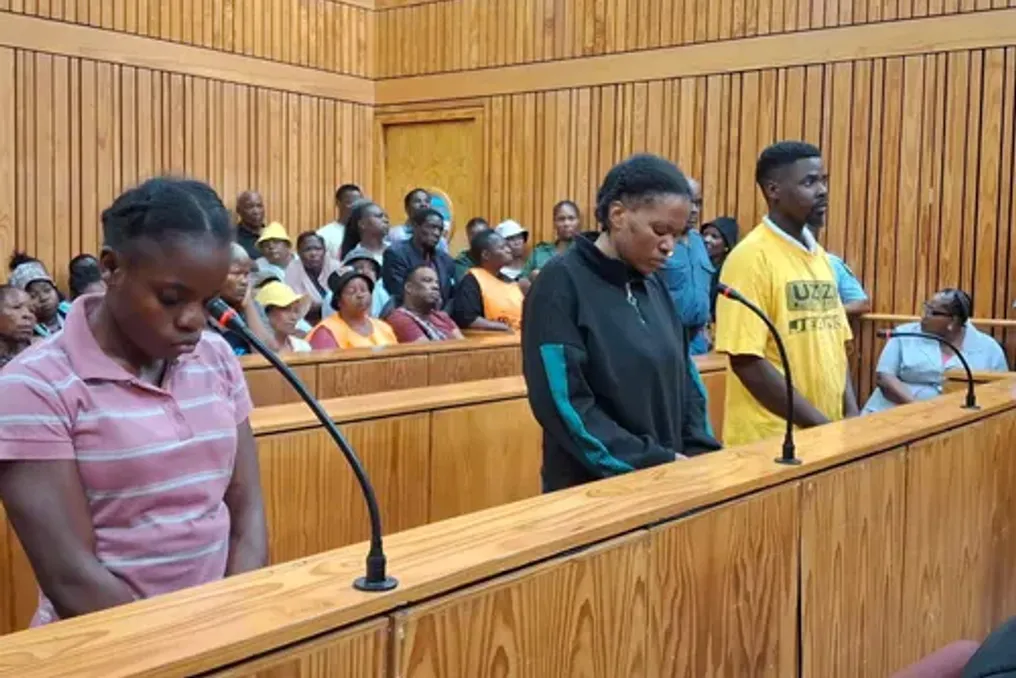
When a child loses their life, all believers mourn. However, when religious figures are found to be responsible, the South African Community of Religious Brotherhoods and Federations (SACOFF) firmly states that anyone who harms a child must bear full legal responsibility. In cases where criminal charges are brought, the police, prosecutors, and courts must be able to operate without fear or favoritism.
Nevertheless, the Chairperson of the CRL, Ms. Thoko Mqwanazi-Haluwa, once again used the horrific crime to advance the argument for regulating the entire religious sector. In a video clip currently circulating on social media, she warns that a pedophile might 'get out of prison, move to another province, and open a church, and no one will know who you are.' She calls religion 'the only profession in this country that is not regulated, self-regulated' and asserts that there should be a 'council.'
The Unique Role of Religious Service
Religious service is a profession unlike many others. Like the free and independent press, the independent Church is a vital voice in a healthy democracy. It must remain free from undue interference and have the ability to speak truth to power, challenge injustice, hold those in authority accountable, and express the faith, beliefs, and conscience of millions of South Africans. This independence is important not only for the Church but also for democracy itself. A Church whose voice is controlled, licensed, or limited by the state cannot fully fulfill its public duty or freely challenge the very authorities responsible for its regulation. This is fundamentally different from professions such as medicine or law, where statutory councils regulate entry into the profession and its practice to protect those receiving specialized professional services. The state cannot simultaneously be the subject of scrutiny by the Church and the body determining who can legally engage in religious service.
The constant pursuit of statutory control over religious institutions thus generates a deeply troubling notion of an increasingly deliberate and coordinated approach to subjecting the Church to regulatory control. The Church must be accountable to the law, but it must also maintain sufficient independence to tell the truth to those who create and enforce that law.
The Law Already Protects Children
The example given by the CRL Chairperson regarding a pedophile moving from one province to another to avoid detection is already addressed by existing legislation. South Africa maintains two national registries specifically for this purpose. The National Register of Sex Offenders under the Children's Sexual Offences Act lists those convicted of sexual offenses against children, and the law prohibits them from working with children. The National Child Protection Register under the Children's Act lists individuals deemed unfit to work with children. These registers are national, so moving from one province to another does not change the situation.
Organizations working with children, including churches, are obliged to check if a person is listed in the register before allowing them to work with children, whether paid employment or volunteering. Failure to comply with this requirement is an offense. These are general laws. They oblige churches just as they oblige schools, early learning centers, and sports clubs. A new ethics council will not stop a criminal who is already prepared to ignore criminal law. What protects children is the effective enforcement of existing laws. It is important to note that the Church is not responsible for ensuring compliance with criminal law. That is the duty of the police, prosecutors, and courts. The Church's duty is to report crimes, cooperate fully with the authorities, properly vet those who work with children, and oppose misconduct within its ranks.
The CRL Already Has Necessary Powers
The CRL Chairperson also claims that 'there is no way for people to appeal.' Such a way exists: the CRL itself. This Chapter 9 institution, established by the Constitution precisely to provide a mechanism for people concerned about religious, cultural, and linguistic communities.
The CRL Act of 2002 grants it broad powers. It can monitor, investigate, and examine any matter concerning the rights of these communities. It can summon people to give sworn testimony and present documents. It can bring any matter to the attention of the relevant or state organ and make recommendations. It can refer matters to the South African Human Rights Commission. Pastors cannot perform the work that Parliament has already assigned and funded to the CRL.
The Chairperson also states that no one can say how many churches or religious leaders exist. Nevertheless, the same Act gives the Commission the power to 'create and maintain databases of cultural, religious, and linguistic community organizations and institutions.' This power has existed for over two decades. If the Commission needs this information, it must use the powers it already possesses. But a database is not a license: no one should require state permission to worship or lead parishioners. It is worrying that the Chairperson seems to overlook the powers granted to the CRL by Parliament and the role it is meant to play.
Do Not Use Tragedy to Push an Agenda:
What the CRL should not do is use the horrific crimes of a small minority to justify state control over tens of thousands of law-abiding congregations. The religious community has consistently condemned abuses. We have repeatedly called on the government to enforce the law and urged the CRL to fulfill its mandate.
The CRL Chairperson is also becoming increasingly isolated in this position. On October 13, 2026, the ANC confirmed that it 'neither called for nor advocated for state regulation or control over churches and their religious affairs,' and that churches 'should be free to manage and regulate their affairs within the Constitution.' DA, ACDP, and ActionSA have also rejected this model. Religious communities across the country have expressed the same position at every hearing, in every province.
Do Not Slander the Church
Criminal behavior of individuals should never be minimized, hidden, or excused. But the actions of a few people should also not be used to slander the Church or cast a shadow over the entire religious community. Thousands of pastors, churches, and religious organizations faithfully serve the residents of South Africa every day. The guilty must bear full legal responsibility, but their crimes should not be presented as representative of the Church as a whole or used to suspect every law-abiding church and religious leader.
Thus, SACOFF reiterates its call, supported by many others: the CRL must listen and change course. Let the police, prosecutors, and courts ensure the rule of law. Let the CRL Commission use the powers it already has to educate and equip religious communities. And let the Church govern the Church. Protect people. Enforce the law. Preserve religious freedom. Many voices. One heart.