PM praises scientists for successful launch of NVS-03 satellite; ISRO chief announces launch of two additional navigation satellites
Read more
The times of India
timesofindia.indiatimes.com

PM praises scientists for successful launch of NVS-03 satellite; ISRO chief announces launch of two additional navigation satellites

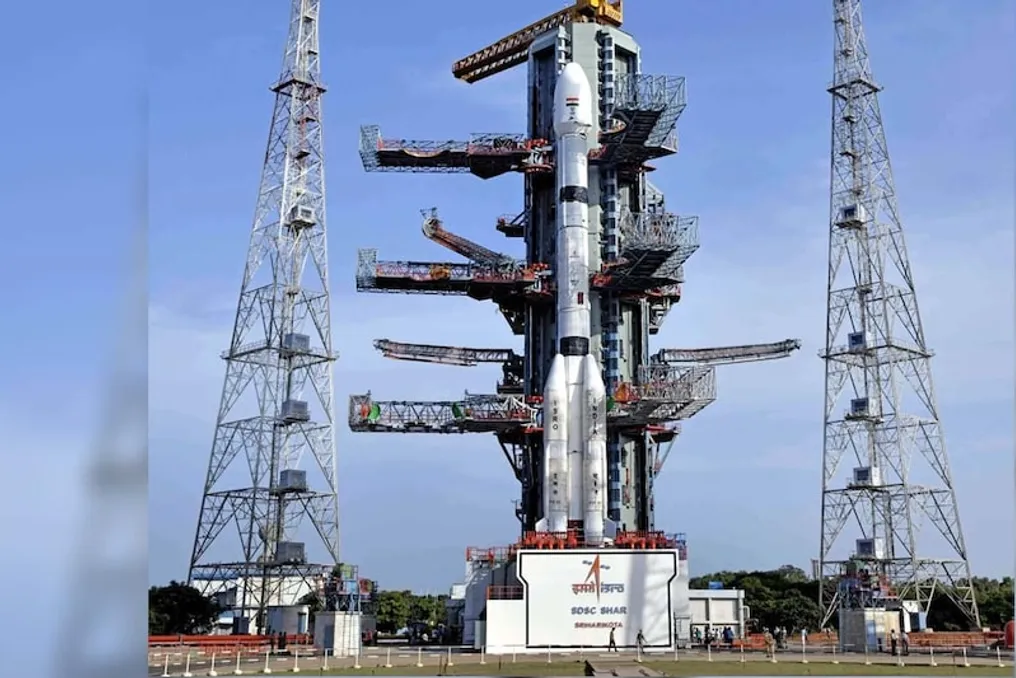
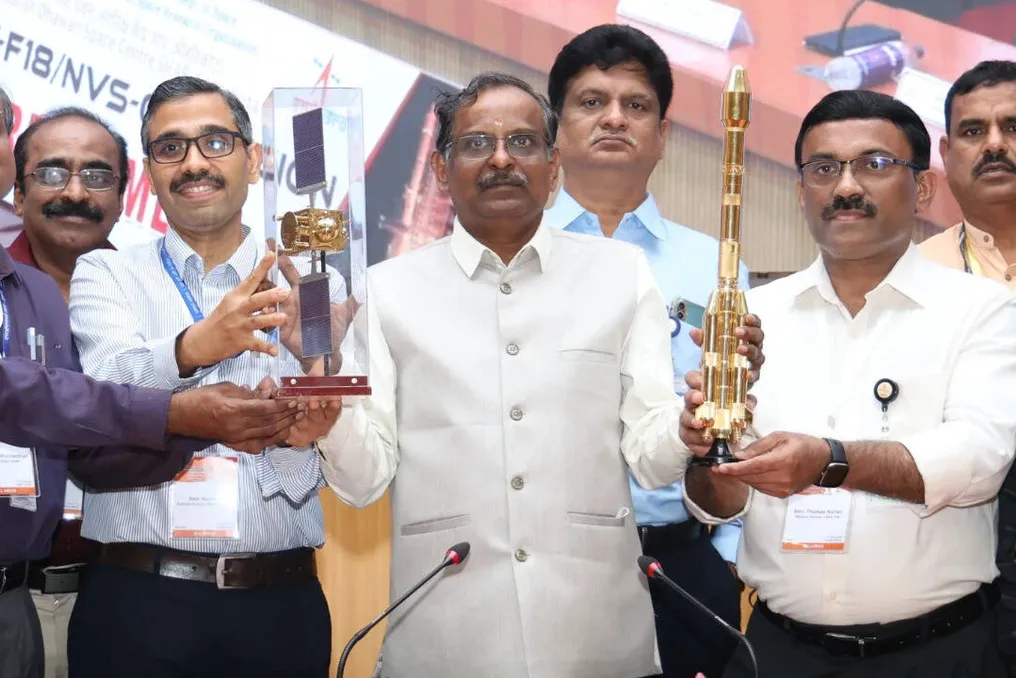
Following the successful launch of the navigation satellite NVS-03, which is equipped with indigenous atomic clocks, Prime Minister Narendra Modi named the GSLV-F18 mission a crucial step in strengthening NavIC, India's national satellite navigation system, on Friday evening from Sriharikota into Saturday.

Modi highly appreciated the work of ISRO and its scientists, noting that 'the dedication and ingenuity of our space scientists continue to bring pride to our nation.' He added that thanks to the enhanced capabilities, NVS-03 will contribute to the country's pursuit of self-reliance in critical technologies and support navigation services for the public.

Minister of Space, Jitendra Singh, stated that this significant achievement demonstrates India's growing potential in space technology and an unwavering commitment to strengthening sovereign national navigation capabilities.

The success of the NVS-03 mission will not only restore India's navigation system but also significantly enhance strategic forces that previously relied on foreign navigation systems, such as American GPS and Russian GLONASS, for weapon and missile navigation.

The new satellite features atomic clocks developed in India, which are the world's most accurate timekeeping devices. India has mastered this complex technology, and indigenous atomic clocks are now operational aboard the NVS-03 satellite in space.

Previously, the Indian armed forces did not utilize NavIC for missile navigation, precise positioning, and coordination of naval vessels, nor for internal troop and aircraft movement support. The reason was that an autonomous positioning system like GPS required four active satellites, forcing strategic forces to depend on foreign navigation systems. However, the successful launch of NVS-03 has changed this situation.

Now, the NavIC system will be operational not only for strategic applications but also for civilian needs across India and within 1500 km beyond the country's geographical borders. India's security forces require a functional NavIC to maintain strategic autonomy and ensure tactical advantage without dependence on networks controlled by foreign powers. A four-satellite constellation will provide secure, uncompromised communication, mobility, and targeting data. Modern military equipment, such as ballistic missiles and high-precision guided munitions, requires highly accurate Position, Navigation, and Timing (PNT) signals for effective operation.

Learning from past mistakes, ISRO made a crucial modification to the satellite system to ensure the launch's success. ISRO Chairman V. Narayanan reported on Saturday that to guarantee mission reliability and overcome previous technical hurdles, the NVS-03 satellite was operated with 'three open pyrovalves.'

Addressing the media in Sriharikota shortly after the launch, Narayanan noted that this bold technical decision was confirmed after thorough vibration and shock testing by the national commission chaired by former ISRO head Kiran Kumar.

Pyrovalves play a critical role in spacecraft propulsion. Nevertheless, the NVS-02 satellite, launched in 2025 and being the second craft in the NVS series, failed due to a pyrovalve issue. A high-level group, after a comprehensive analysis of the 2025 satellite failure, concluded that 'the drive signal did not reach the propellant line pyrovalve intended for orbital insertion.'

The ISRO chief also informed that with four satellites, including NVS-01, which is currently active in India's navigation system, ISRO plans to launch NVS-04 in five months and NVS-05 in 10 months to further strengthen the navigation satellite constellation.
Similar stories

Astronomical images of the week highlight the Orion Nebula and the Tarantula Nebula
Read more
olhardigital.com.br

Astronomical images of the week highlight the Orion Nebula and the Tarantula Nebula

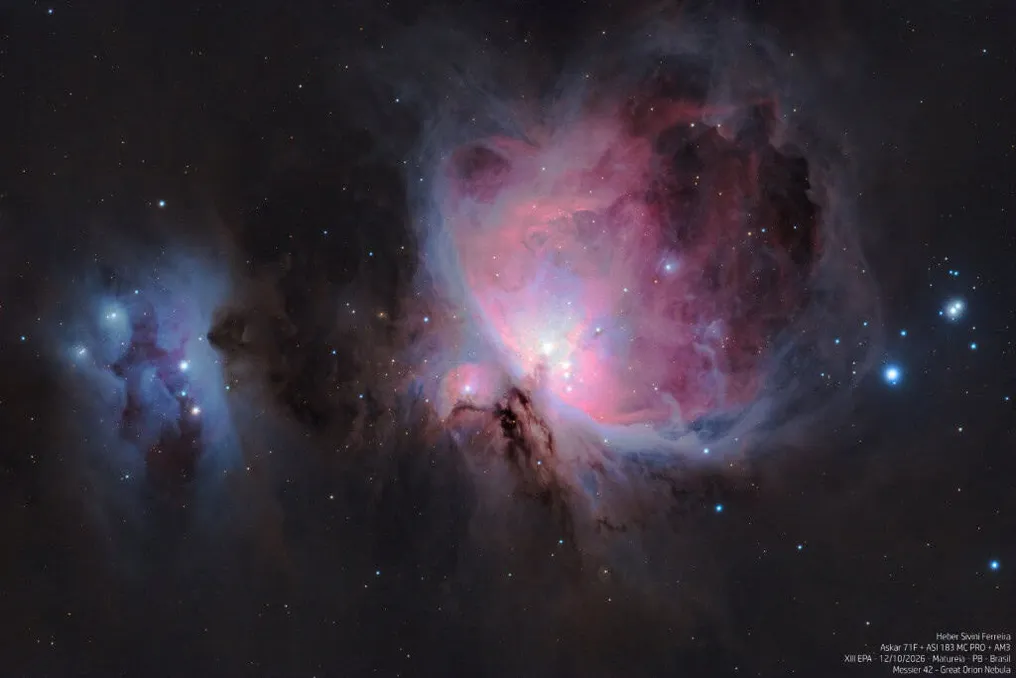
The Olhar Espacial program showcases two notable astronomical images weekly. Last week, two photographs produced during the 13th Paraiban Astrophotography Meeting were presented.

The first image is an impressive record of M42, also known as the Orion Nebula. This nebular formation is located approximately 1600 light-years away, in the direction of the Orion Constellation. Stellar winds played a part in these clouds, ionizing the hydrogen and giving it a reddish hue. The bluish areas around it reflect light, coming mainly from four young and hot stars located in the center, known as the Orion Trapezium. To the left, separated by a thick cloud of stellar dust, there is another nebula with a unique shape, called the Running Man Nebula.

The second image presents a magnificent record of the NGC 2070 nebula, nicknamed the Tarantula Nebula. This is considered the largest and most voluminous area of star formation in the vicinity of the Milky Way. Although it is about 160 thousand light-years away, it ranks among the brightest objects in the night sky. If it were close like the Orion Nebula, its extent would be equivalent to sixty full moons, and its brightness would be enough to cast shadows at night. Most of the energy that illuminates and energizes the gaseous clouds of the Tarantula comes from a central cluster composed of young and extremely hot stars.

ISRO plans launch of NVS-03 satellite on GSLV-F18 rocket on October 30 to strengthen NavIC system
Read more
www.aajtak.in

ISRO plans launch of NVS-03 satellite on GSLV-F18 rocket on October 30 to strengthen NavIC system

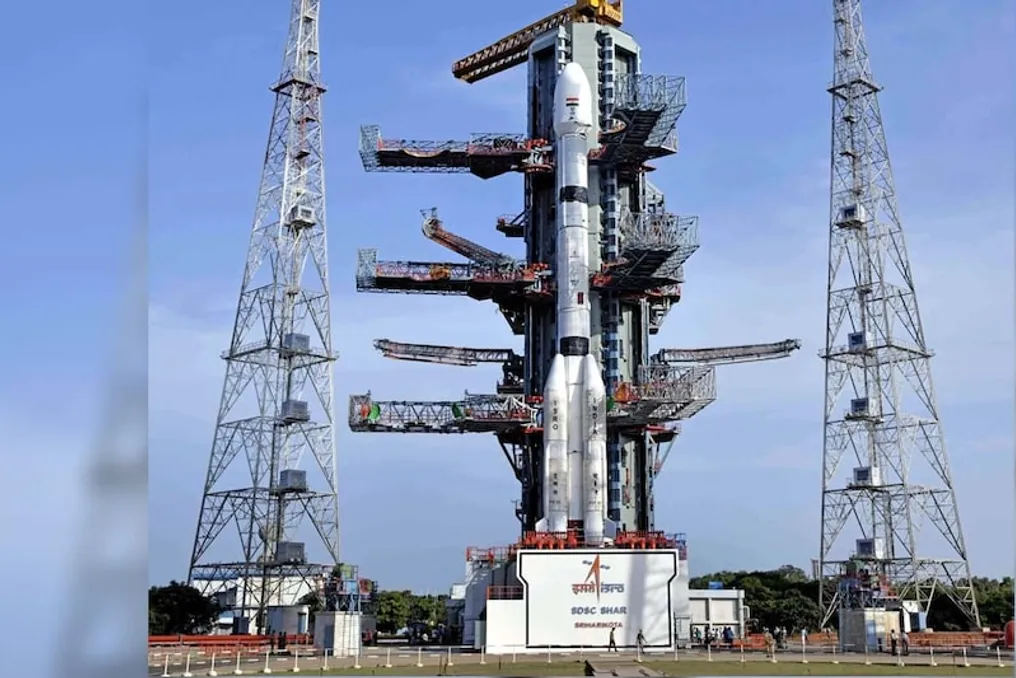
The Indian organization ISRO is preparing to launch the new NVS-03 satellite on October 30, 2026, at 23:51. The launch will be carried out from the Satish Dhawan Space Centre located in Sriharikota, Andhra Pradesh, using the GSLV-F18 launch vehicle. The goal of this mission is to strengthen India's national navigation system—NavIC.

Strengthening NavIC will help improve services such as location determination and navigation across the country. The NavIC system functions similarly to the American GPS, providing location and precise time information via satellites. It is used not only by private individuals but also by transport services, maritime shipping, and military structures.

The full name of NavIC is Navigation with Indian Constellation. This indigenous satellite navigation system of India allows for receiving data on location, routes, and time up to 1500 kilometers from the country's borders. Simply put, the system indicates where a person, vehicle, or vessel is located, simplifying route finding and obtaining accurate time information.

Despite its similarity to GPS, NavIC is a unique Indian system. It provides general services for citizens as well as secure services for the military and other authorized agencies.

The launch of NVS-03 occurs during a period when India aims to strengthen its NavIC system. Previously, in January 2025, ISRO launched the NVS-02 satellite. This satellite reached its initial orbit but could not be placed into the designated orbit due to a technical malfunction.

The issue with NVS-02 was related to the engine system (propulsion system), which is responsible for propelling the satellite and changing its orbit. Because of this failure, the satellite was not placed in the required location, which negatively affected the number of satellites operating for NavIC.

The government had previously reported that only three satellites were operational for providing location, route, and time data through NavIC. Therefore, the launch of NVS-03 is expected to help strengthen this system.

NVS-03 is part of the second-generation NavIC satellite series, which is planned to include a total of five spacecraft. In addition to NVS-03, the satellites NVS-04 and NVS-05 will help strengthen the system.

However, even after the satellite launch, NavIC services will not immediately improve. First and foremost, NVS-03 must be placed into its target orbit, after which checks and necessary tests will follow. Only after the satellite begins to operate correctly can it provide navigation services.

Overall, the launch of NVS-03 using the GSLV-F18 rocket represents an important step towards strengthening India's indigenous navigation system, which could potentially improve location and routing services in the country, and allow India to reinforce its satellite systems for critical tasks.

ISRO plans to use four launch pads for space launches in India
Read more
www.aajtak.in

ISRO plans to use four launch pads for space launches in India

The Indian Space Research Organisation (ISRO) is developing a large-scale plan to strengthen its space capabilities. The head of ISRO, V. Narayanan, announced that four launch pads will begin operating in the country by 2029.

To implement this plan, a new spaceport covering approximately 2000 acres is being created in the Kolsekarpattinam area of Tamil Nadu, where rockets for launching small satellites will be prepared. This step will allow India to meet the growing demand both domestically and globally for satellite launches.

V. Narayanan presented this information on October 25 at a graduation ceremony at a private university in Chennai. He also noted that ISRO is preparing for the first unmanned test as part of the Gaganyaan mission. Furthermore, joint work with the Japanese space agency will be conducted on the Chandrayaan-5 mission.

A launch pad is a location from which a rocket is sent into space. Increasing the number of such pads can facilitate the launch of more satellites, providing ISRO with additional opportunities for various space missions. According to Narayanan, the new spaceport in Kolsekarpattinam (Tamil Nadu) will have buildings for assembling rockets and satellites, as well as systems for monitoring the rocket's flight and collecting relevant data.

ISRO's plans also include the construction of a third launch pad in Sriharikota (Andhra Pradesh). However, full information regarding the location of all four launch pads and their methods of use has not yet been disclosed.

The head of ISRO emphasized that the organization will not be privatized and will remain a government institution. Nevertheless, the assistance of private companies and startups will be sought to meet the increasing demand for satellite launches. ISRO will provide technical support to these companies and assist in their work, which could potentially stimulate the development of the space business in the country and create thousands of new jobs in this sector.

Gaganyaan represents India's first crewed space mission, aimed at sending Indian astronauts into space. Before sending humans, ISRO will conduct three uncrewed tests. Narayanan reported that the first test is scheduled for the next two months, followed by two more. These tests will focus on verifying the systems related to the condition and safety inside the modules intended for astronauts.

These systems will also be tested under changes in temperature, pressure, and humidity. The emergency rescue system for astronauts will also be studied. According to Narayanan, about 8000 ground experiments have already been conducted for the Gaganyaan mission, and four selected astronauts are undergoing special training.

ISRO plans to collaborate with the Japanese space agency on the Chandrayaan-5 mission. During this mission, a rover weighing about 350 kilograms will be sent to the lunar surface to conduct scientific research in situ for 100 days. Full information regarding the launch date and other preparations for this mission has not yet been provided. The main objective of the mission is to conduct scientific research on the lunar surface.

Overall, ISRO is working to expand its rocket launch capabilities in the coming years, complete preparations for the Gaganyaan mission, and send new missions to the Moon, while simultaneously advancing India's space industry through the private sector.

Popular