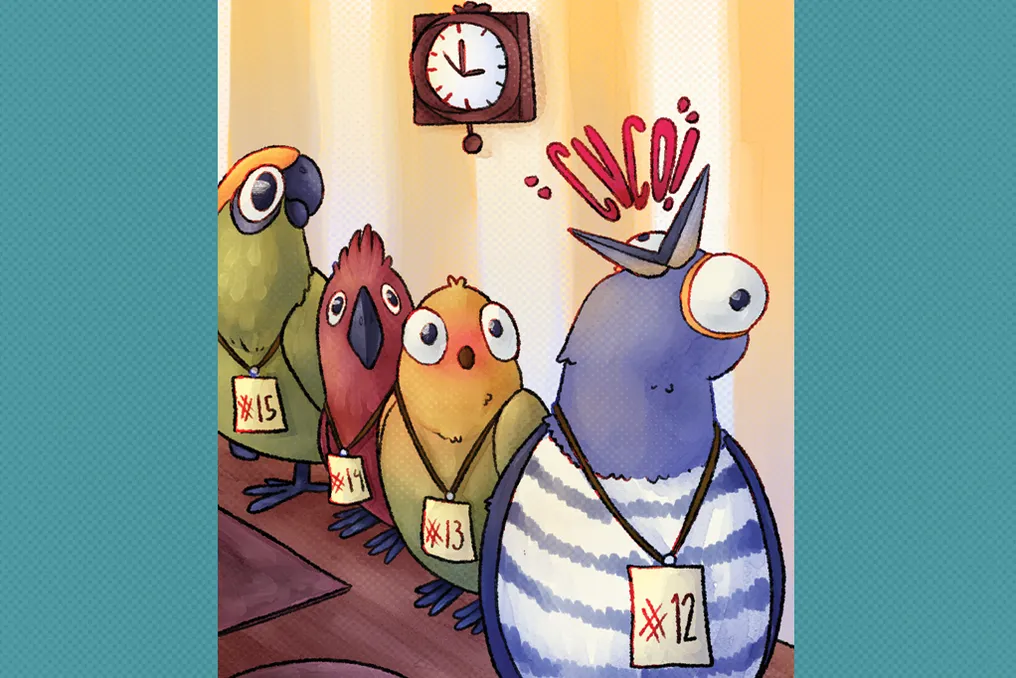
A study conducted by Oxford University, and recently published in the journal Science, demonstrated that birds suffer from a phenomenon analogous to the jet lag experienced by humans.
According to the research, when these birds travel large expanses of the Atlantic Ocean at high speed, their biological clock becomes misaligned with the local solar time. To be able to orient themselves using the sun as a reference, birds require an accurate internal clock, which must be adjusted daily to sunrise to correctly interpret the star's position throughout the day.
When traveling east or west, crossing lines of longitude—which correspond to time zones—the animal's internal time becomes out of sync with the solar time of its arrival point, potentially suffering a delay of up to one hour.
This discovery was made through the analysis of twenty years of GPS tracking data collected from 1,045 individuals of the Little Pied Bat (Puffinus puffinus), a species that nests on islands in the United Kingdom and Ireland. The team of biologists monitored 3,688 foraging journeys, during which the birds frequently travel up to a thousand kilometers west before returning to their nesting sites.
The researchers observed that upon returning eastward, where the sun rises earlier, the birds exhibited a systematic clockwise deviation compared to the predicted route. This dependence on the sun-based navigation system was so prominent that the animals maintained these deviations even when flying parallel to the coastline, where there would be visible geographical landmarks to guide them.
In the examined adults, the practical impact of this deviation was relatively small; an average deviation of seven degrees resulted in an increase of approximately five kilometers over a thousand-kilometer journey. However, scientists warn that this effect can be extremely serious for young birds during their first migration, as uncorrected navigational errors can cause them to deviate from their final destination by hundreds of kilometers.
Patrick Lewin, the study's principal investigator, stated in a release that the findings indicate that the animals experience the same internal clock mismatch that occurs during human jet lag. He added that the next focus of investigation will be to understand how this affects them, questioning whether they exhibit critical behaviors at inappropriate times, if they have physiological side effects similar to humans, and if this misalignment is as detrimental to health as jet lag is for us.
Tim Guilford, co-author of the article, emphasized that the ability to accurately measure the natural movements of animals allows for the revelation of deep cognitive and behavioral mechanisms that were previously considered difficult to study in the natural environment. Scientists believe that understanding how these birds manage long-distance travel may assist medicine in developing treatments to mitigate the negative effects of jet lag on human health.