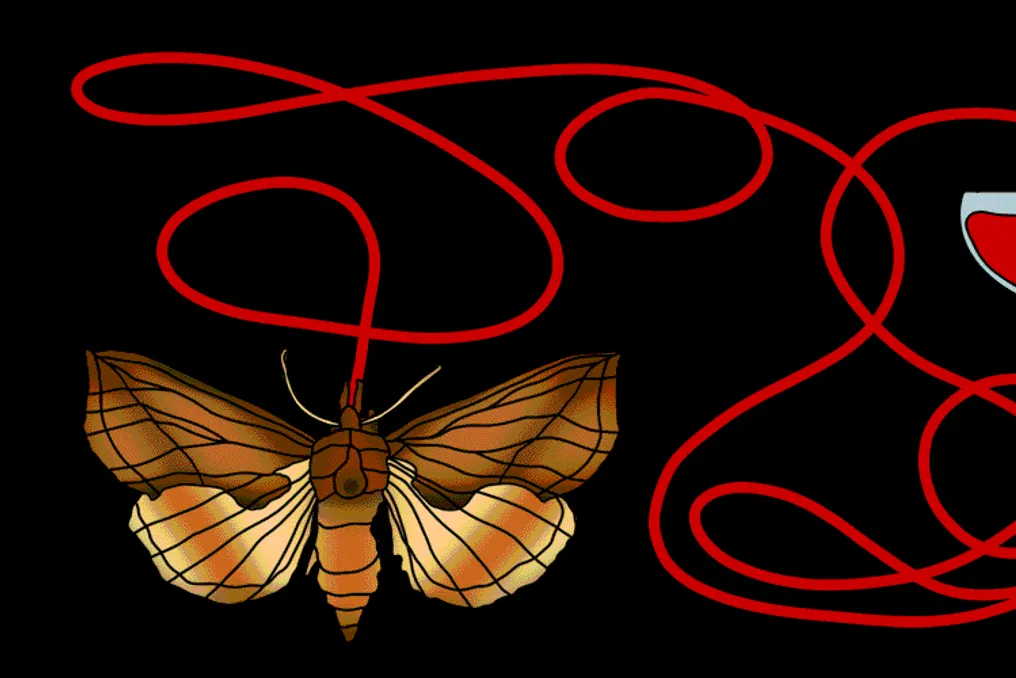
Scientific study on the evolution of blood-sucking in different animal groups
Read more
N+1
nplus1.ru

Scientific study on the evolution of blood-sucking in different animal groups

In mass culture, it is often portrayed that a vampire's bite inevitably transforms a person into a vampire, although descriptions of more complex rituals also exist. However, in European folklore, vampires are most often depicted as restless dead, such as sorcerers.

To determine which methods of becoming a vampire are real, scientists turned to zoology. Zoologists were able to reconstruct the evolutionary path of many groups of animals that began to feed on blood. It is noteworthy that various species, including mosquitoes, bats, spiders, snails, and butterflies, independently switched to consuming vertebrate blood more than thirty times during evolution.

Each group of these species began its journey toward hematophagy under different initial conditions and adapted to the new way of life in its own way. Based on the research conducted, the authors suggest that readers imagine themselves as an animal striving to evolve into a blood-sucker and detail the changes required for this.
Similar stories

How the eyes of vertebrates evolved: A hypothesis on their origin
Read more
super.abril.com.br

How the eyes of vertebrates evolved: A hypothesis on their origin

The eyes of insects, octopuses, and vertebrates (including mammals, birds, reptiles, fish, and amphibians) perform the same function—detecting light and forming images—but their structures differ significantly. In humans, they develop during embryogenesis as an outgrowth of brain tissue, whereas in flies and octopuses, they form from the skin of the head.

A new study proposes the following hypothesis: approximately 600 million years ago, one of the ancestors of vertebrates—a worm-like creature—began a sedentary lifestyle, filtering food from the water. In conditions where sharp vision was not required, this animal lost its pair of eyes, which resembled octopus eyes. As a result, it retained only a simple detector on the top of its head, capable of distinguishing day from night or up from down (with less light below).

When the descendants of this worm resumed active swimming, vision once again became critically important. The central detector, which was part of the nervous system, branched out, giving rise to a new pair of eyes—eyes like ours, which project from the brain rather than appearing as skin structures. Furthermore, this central node gave rise to the pineal gland, which produces melatonin—a molecule signaling to the body the onset of night and the need for rest.

Popular