Karnataka designates 2500 acres of land for Mekedatu project on River Kaveri, planning to store 66 TMC of water and generate 400 MW of electricity
Read more
Aaj Tak
www.aajtak.in

Karnataka designates 2500 acres of land for Mekedatu project on River Kaveri, planning to store 66 TMC of water and generate 400 MW of electricity

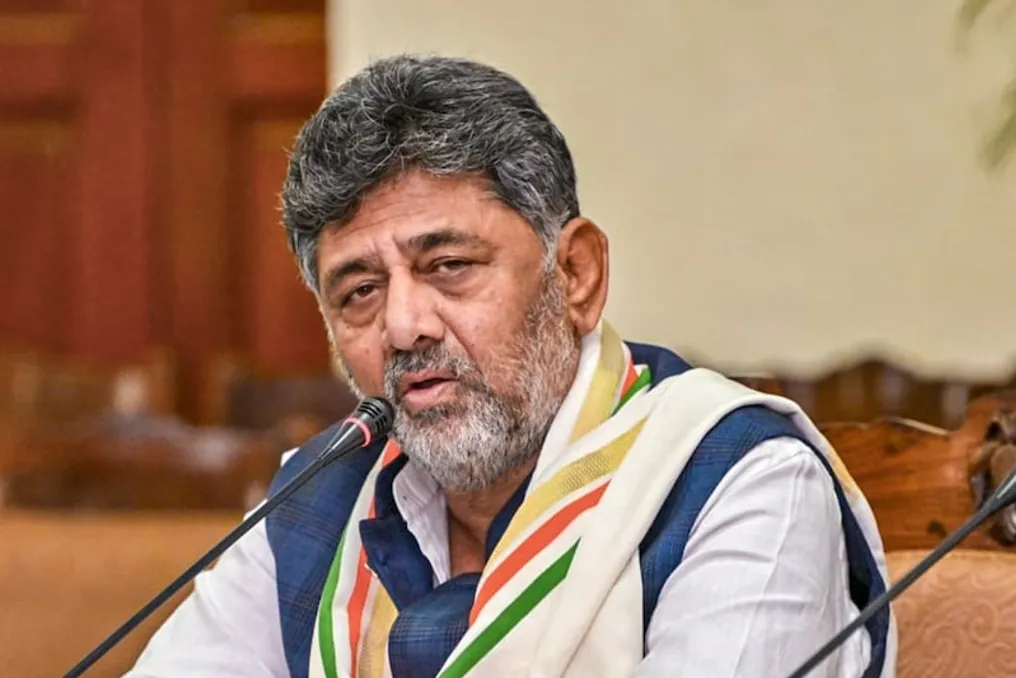
The Government of Karnataka has intensified preparations for the implementation of the proposed Mekedatu balancing reservoir project on the River Kaveri. State Minister DK Shivakumar announced that alternative land measuring 2500 acres, including forest areas, has been identified for this project, and the search for the remaining territory is ongoing.

According to DK Shivakumar, upon completion, the project will enable Karnataka to accumulate 66 TMC of water, which will help regulate water discharge during periods of high demand. This is expected to benefit farmers in Mandya and other regions of the Kaveri basin.

During a press conference in Mandya, Shivakumar stated that the process of securing land parcels for the project is underway. A committee has been formed to oversee this process, chaired by the Deputy Commissioner of Mandya district. He clarified that officials have held meetings with the Forest Department regarding the provision of alternative lands. The decision was made to provide land other than forest areas in exchange for the required plots. Currently, 2500 acres of land have been identified.

DK Shivakumar stated that the government will post complete information about the alternative lands on the forest approval portal, after which the necessary permissions are expected to be obtained.

Mekedatu is a multi-purpose project for Karnataka. It involves the construction of a balancing reservoir on the River Kaveri near Talka in Kankakapura, South Bangalore district. The project aims to ensure both drinking water supply and power generation.

According to officials, the project will help provide 4.75 TMC of drinking water for Bangalore and surrounding areas. Additionally, 400 megawatts of electricity generation is planned. Shivakumar noted that Karnataka is obligated to release 177 TMC of water into the lower reaches of the river. The state constantly receives directives regarding the volume and timing of water releases. The proposed reservoir will help regulate water flow, which will also benefit farmers in Mandya and residents of other Kaveri basin areas.

The Mekedatu project is causing disagreements between Karnataka and Tamil Nadu. Tamil Nadu fears that the project's implementation could affect its water share, leading the state to oppose the initiative. Shivakumar reported that during his tenure, he fought for this project for the people of Mandya and filed a petition in the Supreme Court. According to him, permission to advance the project was granted by the Supreme Court.

He also mentioned that about 500 acres of land will be acquired from farmers for the project, and the acquisition process will commence. The government hopes to make some progress in this regard by the next budget.

Shivakumar refuted allegations that the government is unwilling to provide land for the Indian Automobile Research Association (ARAI) test bench in Mandya. These accusations were made by JD(S) leader and Union Minister HD Kumaraswamy. Shivakumar responded that the state government initially offered 100 acres of land. However, if the Heavy Industries Department requires more land, the government is prepared to provide additional plots. He added that the relevant department can specify the desired plots, and if necessary, the government will proceed with their acquisition.
Similar stories

Bengaluru residents clean up the city, turning plastic into road debris
Read more
thebetterindia.com

Bengaluru residents clean up the city, turning plastic into road debris

In Bengaluru, residents, students, volunteers, and officials regularly participate in initiatives to improve urban spaces. For instance, on October 11, 2026, the 75th "#IamBengaluru – Volunteer for Parks" event was held on the banks of Jakkur Lake in North Bengaluru. This event brought together families, environmental organizations, and members of the public, with support from Multigen, and aimed to raise environmental awareness.

Participants included Professor Sadagopan, former director of IIIT-B, and Commissioner of the North City Council of Bengaluru, Pommala Sunil Kumar. Professor Sadagopan urged citizens to move beyond complaints and actively participate in long-term efforts to improve their surroundings. This raises an important question about how communities can contribute when government bodies fail to fulfill their duties.

Cleanup in Jakkur combines with phone consultations

The issue of official responsibility was also discussed during the event. As reported by Mirror Now on October 12, Commissioner Sunil Kumar acknowledged the difficulties municipal services face in waste management and the problem of illegal dumping. He emphasized that the infrastructure is insufficient to solve the problem without changing public behavior.

He announced weekly telephone sessions on solid waste management every Tuesday, in addition to existing Friday meetings. Furthermore, he invited residents to monitor micro-waste management plans at local collection points where sanitation workers operate. The event also included activities such as weed removal, plogging, and workshops for children, including students from Greenfield Public School in Sampigehall.

When a daily walk becomes tree watering

In East Bengaluru, near Venugaya Lake, residents are using their regular walks to sustain young trees instead of holding large-scale cleanup drives. According to a report by Bangalore Mirror on May 15, an initiative called Bhagiratha involves walking enthusiasts bringing water in bottles and cans to nourish hundreds of saplings during the summer months.

Participants in this drive included T. S. Palya K. N. Guruprasad and Navin A. B. Guruprasad, who brought cans and organized a private water supplier, while Navin also participated by using water and collecting wastewater from his home's reverse osmosis purifier for the saplings. Volunteers also help maintain cleanliness around the lake.

Forty residents, one road, three hours of work

In January, the issue concerned not lake debris but dust accumulating along a road in East Bengaluru. According to The Times of India, about 30–40 residents from Balagere, Panathur, and Varthur, many of whom are IT professionals, gathered on January 17 to clean a 100-meter stretch between the Balagere intersection and the Varthur police station.

Using funds raised through crowdfunding, they rented equipment and removed a ton of silt in three hours. Residents noted that mechanical sweepers are not used regularly, leading to road dust accumulation and dispersal by traffic. They also expressed concerns about respiratory problems, allergies, road surface damage, and risks to passengers and schoolchildren.

Return of the pavement: cleaning wall by wall

In March, over 70 volunteers from CGI India, including children, participated in a cleanup and beautification campaign along Old Madras Road in Indiranagar, as reported by Bangalore Mirror on March 10. The section between Halasuru Lake and the SV Road metro station was covered in trash and posters, and broken pavement slabs made it unattractive for pedestrians.

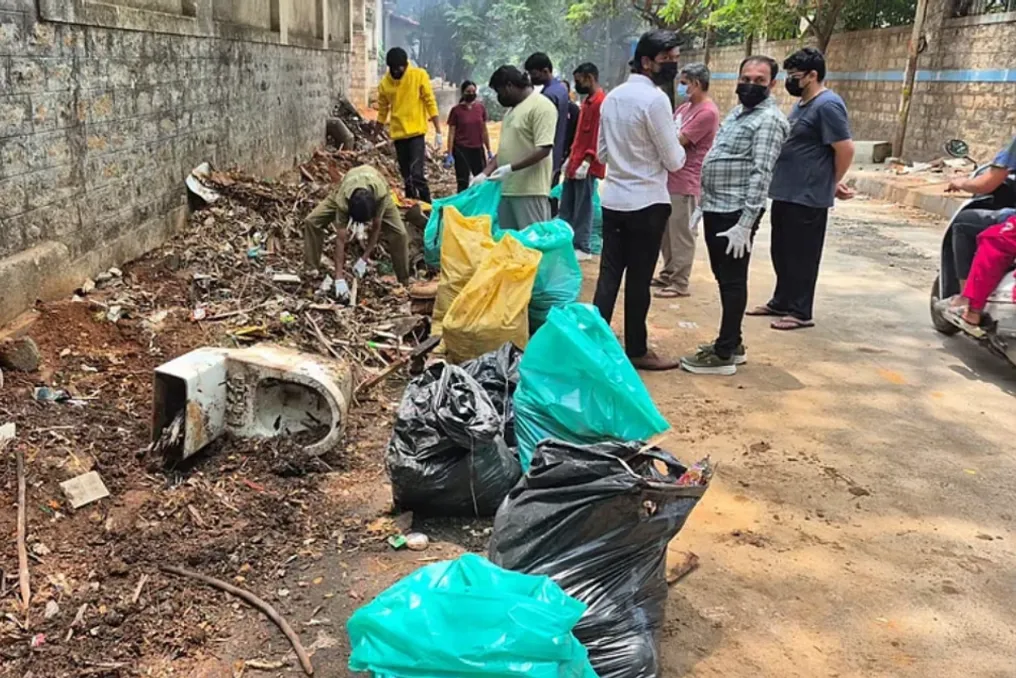
In collaboration with the Greater Bengaluru Authority and the civic group The Ugly Indians, volunteers removed trash, took down posters, and repainted walls. A similar partnership emerged in Basavanagudi in May. On May 17, residents, college students, volunteers, and municipal workers spent over four hours cleaning Mallikarjuna Temple Street in NR Colony. Deccan Herald reported on May 27 that this action followed complaints about piles of garbage, foul odors, and public urination in the area used by students, hospital visitors, and temple pilgrims.

Members of the Basavanagudi Ward 154 Residents Association, APS College, and BMS College sorted waste, while municipal staff and engineers helped remove it using tractors and tankers. Organizers stated their intention to conduct similar events in other parts of the neighborhood.

What 75 minutes can teach us

On September 12, students from Christ University campus in Bannerghatta joined the Indian Ploggers Army and the South Bengaluru City Council to clean around Madivala Lake. New Indian Express reported on September 13 that the 75-minute plogging session managed to collect 110 kg of plastic waste. This waste, consisting of bottles, milk sachets, wrappers, and straws, filled 15 bags within a 100-meter radius of the lake. This was the 1032nd event of the Indian Ploggers Army under the leadership of its founder, Nagaraj, known as Plog Raja.

This collection demonstrates what can be achieved with short, organized work and shows how much plastic initially ends up on the shores of water bodies.

Care as part of civic life

A common thread in all these initiatives is that people are integrating care for public spaces into their daily civic lives. A student collecting wrappers, a walker watering a sapling, or a resident reporting illegal waste dumping—all of this can help foster a culture where public spaces are not seen as someone else's problem.

However, volunteer work cannot replace government services. Bengaluru still requires reliable waste collection, street sweeping, sewage treatment, combating illegal dumping, and continuous maintenance of parks and lakes. Municipal authorities must remain responsible for providing these services. The value of citizen-led efforts lies not in demonstrating that residents can do the government's job, but in how communities can change daily behavior, draw attention to neglected issues, and collaborate with state institutions to protect shared spaces.

Popular