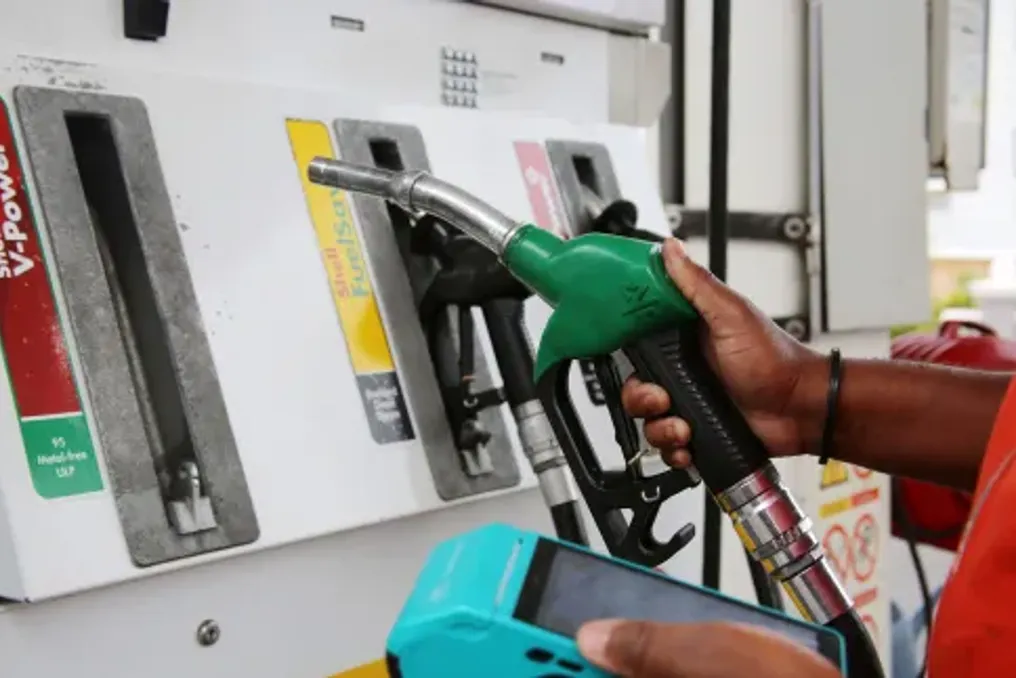
Автомобильная ассоциация поддержала план отмены топливных сборов и предложила пересмотреть модель финансирования
Read more
IOL
iol.co.za

Автомобильная ассоциация поддержала план отмены топливных сборов и предложила пересмотреть модель финансирования

The Automobile Association (AA) has expressed support for the proposal put forward by Finance Minister Enoch Godongwana regarding the phasing out of fuel levies. Concurrently, the AA advocates for a public examination of the fundamental fuel price calculation method and the establishment of a new financial structure for the Road Accident Fund (RAF).

These recommendations come after Godongwana commented during a recent appearance on 702, noting that the standard fuel levy generates roughly R80 billion in income and that the administration must devise a strategy to eliminate it. He also suggested implementing a novel insurance framework for the RAF that would no longer depend on the levy.

Bobby Ramagwede, the CEO of the AA, stated that this was a "long overdue and welcome call." He emphasized that fuel taxes impact all individuals who travel, including taxi commuters, businesses utilizing fleets, and workers traveling to their jobs.

The AA detailed that the total charge per litre of petrol amounts to R6.58, comprising the general fuel levy of R4.29, the RAF levy of R2.25, and two supplementary duties. At the high inland price of R30.25 per litre for 95-octane unleaded petrol in October, these specific charges constituted over a fifth of the pump price. For instance, a driver filling a 50-litre tank incurs approximately R329 in levies, while a company managing 100 petrol vehicles, each refueling weekly, could face annual costs nearing R1.7 million.

The association contended that this tax burden negatively affects both households and businesses, asserting that fuel pricing requires scrutiny beyond short-term governmental measures. This latest proposed relief follows a second series of temporary fuel levy reductions announced within the Medium-Term Budget Policy Statement on October 21.

Effective from November 4, the general fuel levy will see a reduction of R1.50 per litre for petrol and R3 per litre for diesel until December 1. These decreases will subsequently be lowered to R1 per litre for petrol and R1.50 for diesel until January 5, 2027. The government plans to finance this relief by reallocating R10 billion that was previously moved to the Central Energy Fund.

Despite this, the AA cautioned that these temporary cuts offer limited predictability for both consumers and companies, especially since the reductions are scheduled to be scaled back during the December holidays before expiring in January. Furthermore, the AA urged for a public review of the basic fuel price formula, which dictates the largest element of the price paid at gas stations. This formula accounts for the estimated cost of acquiring fuel on global markets and transporting it into South Africa, and it is managed by the Department of Mineral and Petroleum Resources.

Ramagwede insisted that "the government should remove the levies the minister has named, and review the basic fuel price formula in public," adding, "I still think there is room for efficiency at the basic fuel price level. A public review is how we find it."

Godongwana has recognized that eliminating the general fuel levy would create an estimated revenue deficit of R80 billion, prompting discussion about how this gap will be covered. Ramagwede countered that the government's focus should be on how public money is spent and distributed, rather than primarily on collecting revenue. He stated, "I have long held the view that the problem is not revenue collection. It is expense management and budget allocation," concluding that "Our fiscus is porous. That needs to be fixed if we want interventions like this one to succeed."

Moreover, the AA called for a fundamental shift in the RAF funding mechanism, proposing that enhancements in road safety and mandatory third-party motor insurance could offer a more durable substitute for the current levy system. The RAF levy currently covers compensation for individuals injured in traffic accidents and the families of those who perish. While Godongwana noted that removing the levy alone would significantly lower fuel prices, Ramagwede argued that the government must tackle the root causes of road incidents—including poor driver conduct, declining infrastructure, and unsafe vehicles—to lessen the number of claims the fund must process.

He asserted, "We do not need a central fund to cater for road injuries. We need to deal with the root causes: poor road user behaviour, decaying infrastructure and questionable vehicles." He further suggested that compulsory third-party motor insurance, common in many advanced economies, ought to replace the present levy-based funding model for the RAF.

In summary, the AA is urging the government to abolish the general and RAF levies, conduct a public review of the basic fuel price formula, enhance public expenditure and allocation, bolster road upkeep and vehicle safety, and implement compulsory third-party motor insurance. Ramagwede concluded by stating, "Every levy on a litre of fuel is a choice somebody made, and the cost lands on the person who can least carry it. I am not asking the government to be generous. I am asking it to be accurate about who is paying."
Similar stories

Government considers abolishing fuel taxes but faces serious financial obstacles
Read more
iol.co.za

Government considers abolishing fuel taxes but faces serious financial obstacles

Despite an initial statement that there would be no immediate reduction in fuel prices for drivers, the government announced a temporary postponement of price increases for November and December. The complete abolition of fuel taxes is also being discussed, but it is expected not to happen anytime soon.

Finance Minister Enoch Godongwana, responding to questions in a recent radio interview on station 702, stated that the government intends to eventually phase out the General Fuel Levy (GFL). However, he warned that the resulting huge revenue deficit would have to be compensated by other sources of income.

Godongwana noted: 'We must find a way to phase it out. But by doing so, we will lose about 80 billion rand.' He added that the issue of closing this gap would be subject to discussion.

The Minister also stated that the funding mechanism for the Road Accident Fund (RAF) would need to be reviewed. He emphasized that simply excluding the RAF would lead to a significant reduction in fuel costs, as it includes a charge of 2 rand per liter.

Godongwana did not provide timelines for the possible abolition of fuel levies. In the long term, it may become more difficult for the government if electric vehicle sales begin to grow rapidly, as these vehicles are not subject to fuel taxes.

Fuel Price Overview

Minister of Mineral Resources and Energy Gwede Mantashe previously stated that his department is reviewing the Regulatory Accounting System used to determine the margin included in fuel prices. This process is expected to be completed by March 2027.

In total, the two main levies add more than 6 rand to the cost of every liter of petrol. Currently, the GFL is 4.10 rand per liter of petrol and 3.93 rand per liter of diesel, while the RAF levy is 2.25 rand per liter of both fuels.

During his speech announcing the medium-term budget policy last week, Godongwana announced temporary measures to reduce fuel prices for the next two months. From November 4 to December 1, the GFL will be reduced by 1.50 rand per liter of petrol and by 3.00 rand per liter of diesel. Then, from December 2 to January 5, 2027, the reduction will be 1.00 and 1.50 rand respectively.

However, this reduction will be offset by the upcoming price increase, as the latest data from the Central Energy Fund (CEF) indicates a rise of 1.16 rand per liter of petrol and 1.40 rand per liter of diesel.

Fiscal Implications

Economists had previously warned that cutting fuel taxes could have other negative consequences. Hannah Marais, South Africa's chief economist at Deloitte Africa, recently told IOL that reducing fuel taxes entails huge fiscal costs.

Marais stated: 'Such relief will likely require additional borrowing or spending cuts somewhere, while maintaining fiscal credibility and supporting sustainable public finances remains particularly important for South Africa.'

Sanisha Packirisamy, group economist at Momentum, added that covering high fuel prices through additional government borrowing risks increasing the yield on government bonds and weakening the rand, while cutting public spending in other areas carries its own socio-economic costs of growth.

Packirisamy noted: 'It is politically difficult to argue against providing assistance to burdened consumers, but repeated extensions create an unrealistic expectation that the government will absorb every external energy shock.'

Ministry of Transport introduces changes to rules for running vehicles on E100 fuel
Read more
timesofindia.indiatimes.com

Ministry of Transport introduces changes to rules for running vehicles on E100 fuel

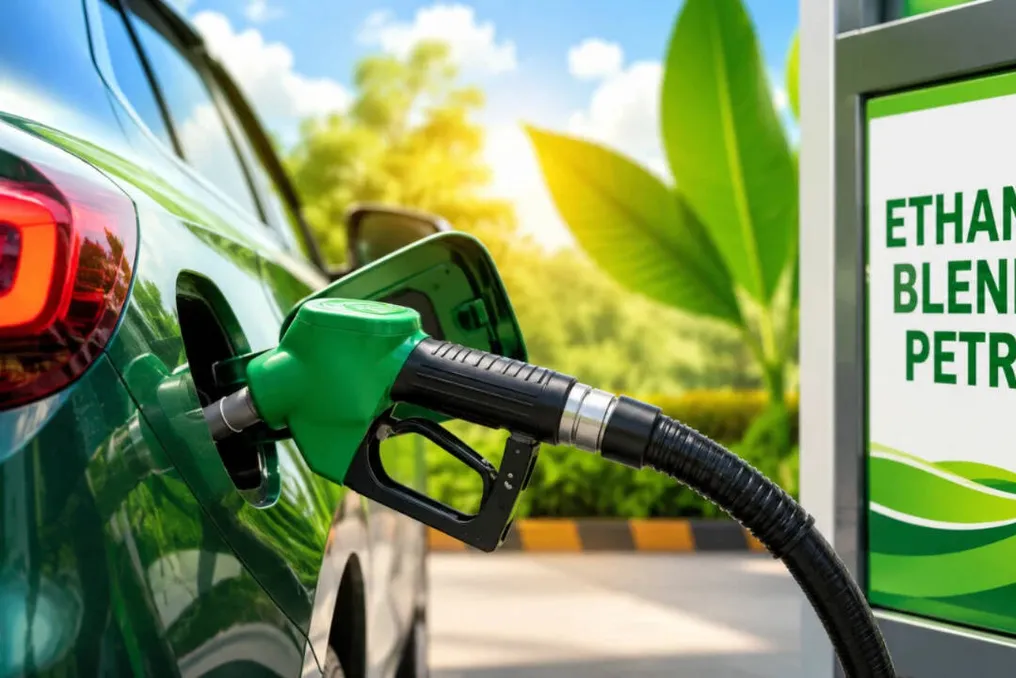
The Ministry of Road Transport has introduced amendments to the Central Automotive Transport Regulations to pave the way for the release of Flexible Fuel Vehicles (FFV) capable of operating on E100 fuel. E100 fuel is nearly pure ethanol, consisting of about 93–95% ethanol mixed with gasoline.

These changes occurred just a few months before some automakers plan to introduce their E100-based models. Internal combustion engine vehicles equipped with flexible fuel capability can use gasoline, biofuels such as methanol or ethanol, or any mixture thereof stored in a single fuel tank.

Officials emphasized that E100 fuel is intended exclusively for vehicles designed and certified for its use. A representative from the Ministry of Transport clarified that this restriction does not apply to other modes of transport, stating that cars using E20 or regular fuel cannot switch to E85 or E100, and therefore the notification does not oblige owners of existing vehicles to change fuel categories or modify their cars now or in the future.

According to TOI, the rule adjustment was necessary to obtain type approval and registration for FFV on E100 fuel, given manufacturers' readiness to release their products. Depending on the vehicle's design and certification, the blending range can reach E85 or E100, where ethanol predominates.

Flexible fuel technology is used in countries such as Brazil and the USA. The use of ethanol has a lower carbon footprint compared to traditional gasoline, and higher concentrations of ethanol help reduce emissions of carbon monoxide (CO) and certain hydrocarbons from the exhaust pipe. Furthermore, increasing the proportion of ethanol helps reduce dependence on crude oil imports.

Experts note that while the government notification will allow OEMs to produce FFVs, this will not be enough to stimulate their adoption. This is evidenced by the fact that only 17 such vehicles were registered even after almost seven months since the launch of E85 vehicles.

Industry representatives have called for the Goods and Services Tax (GST) for FFVs to be reduced from 28% to 5% (the level of electric vehicles) to make vehicles more affordable for buyers and to compensate for the range loss, which is about 27% when using E100 fuel. They also sought a reduction in fuel cost to approximately 75 rupees per liter. However, a more serious issue is the availability of E100, as there are very few gas stations stocking this fuel, although the vehicle can run on other grades of ethanol-blended fuel.

Popular