Brazil prepares transportation of new Inpe Amazônia 1B satellite
Read more
Olhar Digital
olhardigital.com.br

Brazil prepares transportation of new Inpe Amazônia 1B satellite

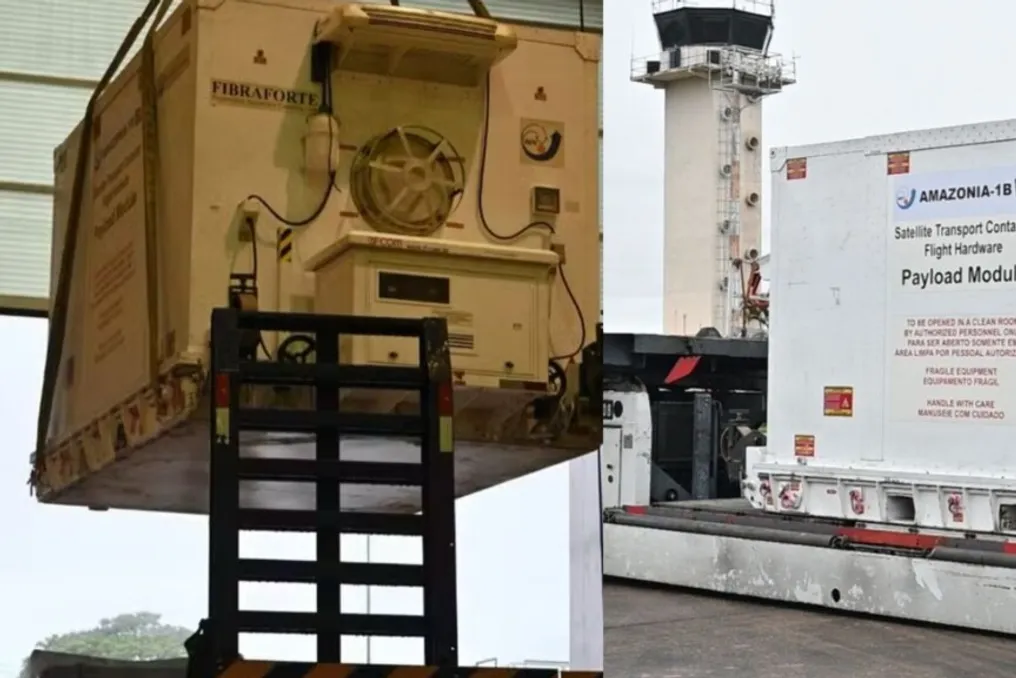
Preparations for the launch of the Amazônia 1B satellite are continuing. Simulations conducted at San José dos Campos Airport (São Paulo state) confirmed that the KC-390 aircraft is capable of transporting the container in which the satellite will be placed.

The next step is to deliver the satellite and equipment for testing into the container. Then, this entire cargo shipment, which is expected to weigh 13 tons, will be sent from the city in São Paulo state to French Guiana, where the launch is scheduled for September 2027.

The Amazônia 1B satellite, developed by the National Institute for Space Research (Inpe), is intended for Earth monitoring. It is the second spacecraft in the Amazônia series created by this institute; the first spacecraft was launched from India in February 2021.

In addition to obtaining Earth images, this new model is equipped with Global Navigation Satellite System (GNSS) Reflectometry technology. This technology uses signals from navigation systems reflected by the Earth's surface to collect environmental information.

The satellite itself weighs approximately 638 kilograms, and the container it will be placed in exceeds seven tons. The KC-390 aircraft was also developed in Brazil by Embraer. According to the company, this aircraft, operated by the Brazilian Air Force (FAB), can carry up to 26 tons of cargo.

This aircraft is used for missions involving troop transport, in-flight refueling, and humanitarian operations. The equipment must be delivered to the launch base in French Guiana in 2027.

Similar stories

Isro GSLV-F18/NVS-03 Mission Successful: Next-Generation Navigation Satellite Launched into Orbit, Strengthening NavIC Constellation
Read more
timesofindia.indiatimes.com

Isro GSLV-F18/NVS-03 Mission Successful: Next-Generation Navigation Satellite Launched into Orbit, Strengthening NavIC Constellation

India's regional satellite navigation system, NavIC, has received a significant boost following the successful launch of the NVS-03 satellite. This launch was conducted by the Indian Space Research Organisation (Isro) on the night from Friday to Saturday.

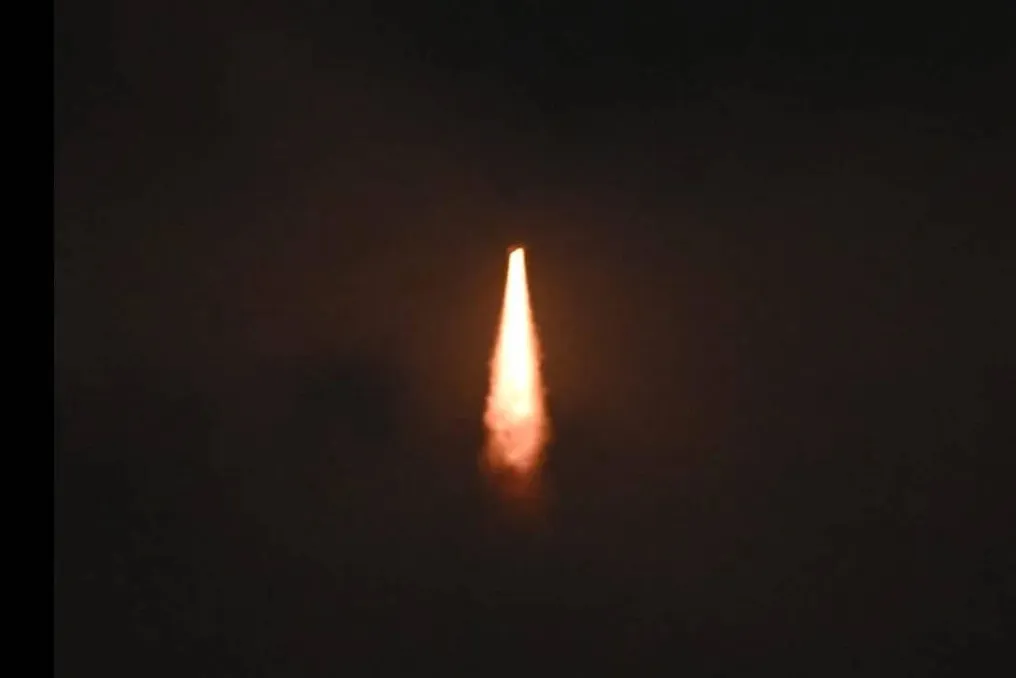
The GSLV-F18 rocket, which carried the 2250 kg NVS-03 satellite, took off from the second launch pad of the Satish Dhawan Space Centre (SDSC-SHAR) in Sriharikota at 23:51 on Friday as scheduled. This marked the twentieth flight of the Geosynchronous Satellite Launch Vehicle (GSLV). Approximately 18 minutes after liftoff, the NVS-03 satellite was placed into a Geostationary Transfer Orbit (GTO) with an apogee of 37,023 km and a perigee of 170 km.

NVS-03 is the third satellite in Isro's next-generation navigation system, designed to ensure continuous services within the Indian Regional Navigation Satellite System (IRNSS), known as NavIC. The satellite is equipped with both domestic and acquired atomic clocks. Furthermore, it transmits an L1 frequency signal in addition to the existing L5 and S-band signals.

NavIC is India's independent regional satellite navigation system, intended to provide Positioning, Navigation, and Timing (PNT) services across the country and in a zone extending approximately 1500 km beyond the Indian subcontinent. The addition of the L1 signal, alongside existing signals, is expected to enhance compatibility with other satellite navigation systems and expand NavIC's civil applications.

The NVS-03 mission aligns with Isro's plan to deploy five second-generation navigation satellites—NVS-01 through NVS-05—to augment the existing NavIC constellation and improve the reliability and continuity of navigation services. The launch is crucial because NavIC previously could not provide autonomous positioning services due to a shortage of operational satellites.

Previously, on July 29, Minister of State for Space Affairs Jitendra Singh stated in a written reply to the Lok Sabha that the constellation had only three satellites providing PNT services, whereas a minimum of four is required for basic services. Although the timing service remained operational, the commissioning of NVS-03 could help restore autonomous positioning capability. The Minister noted at the time: 'Since NavIC is used in an environment with multiple constellations for most use cases, users are not vulnerable. The next NavIC satellite, NVS-03, is ready for launch, and two more satellites, NVS-04 and NVS-05, are in advanced stages of development.'

The constellation issue arose after the failure of NVS-02, which was launched on January 29, 2025, but failed to execute orbital insertion maneuvers. The Isro committee found that the electrical signal did not reach the pyrotechnic valve in the satellite's oxidizer line, preventing the ignition of the propulsion system and the achievement of the planned orbit. This failure prompted Isro to implement corrective measures for subsequent missions.

The first satellite of the second generation series, NVS-01, was launched aboard GSLV-F12 on May 29, 2023, and was the first in this series to be equipped with domestic atomic clocks.
Chinese Land Rover with a 1.2-meter screen may appear in Brazil in 2028
Read more
autopapo.com.br

Chinese Land Rover with a 1.2-meter screen may appear in Brazil in 2028

The model, previously known as the Freelander and discontinued by Land Rover in 2014, has returned under a Chinese brand and could potentially arrive in Brazil in 2028.

Chery organized a visit for Brazilian dealers to China to present the Freelander, developed in collaboration with Jaguar Land Rover (JLR), as well as its first model—the Freelander 8 SUV. This information was published by the magazine Autoesporte.

Last week, the international version of this SUV was tested for the first time by foreign journalists and dealers at the Chery International User Summit 2026, held in Wuhan, China.

If this information is confirmed, the Freelander will join the Omoda and Jaecoo models already on the market, as well as the iCaur and Lepas expected in 2027. In China, the Freelander 8 is priced from 233,000 to 301,000 Brazilian reais (equivalent to 309,900 to 399,900 yuan).

The Chinese version is an electric vehicle with an extended range (REEV): one 1.5-liter turbocharged engine functions solely as a generator, while two electric motors provide propulsion. The total power output is 829 horsepower and 82.9 kgm of torque, with acceleration from 0 to 100 km/h taking 4.6 seconds, and the battery range reaching 310 km according to the Chinese CLTC cycle.

The left-hand drive international version is a plug-in hybrid that can be charged from the grid. It combines a 2.0-liter turbocharged engine and two electric motors, collectively producing 625 horsepower and 67.5 kgm of torque. Acceleration to 100 km/h takes 5.8 seconds, and the vehicle covers 110 km on pure electric power.

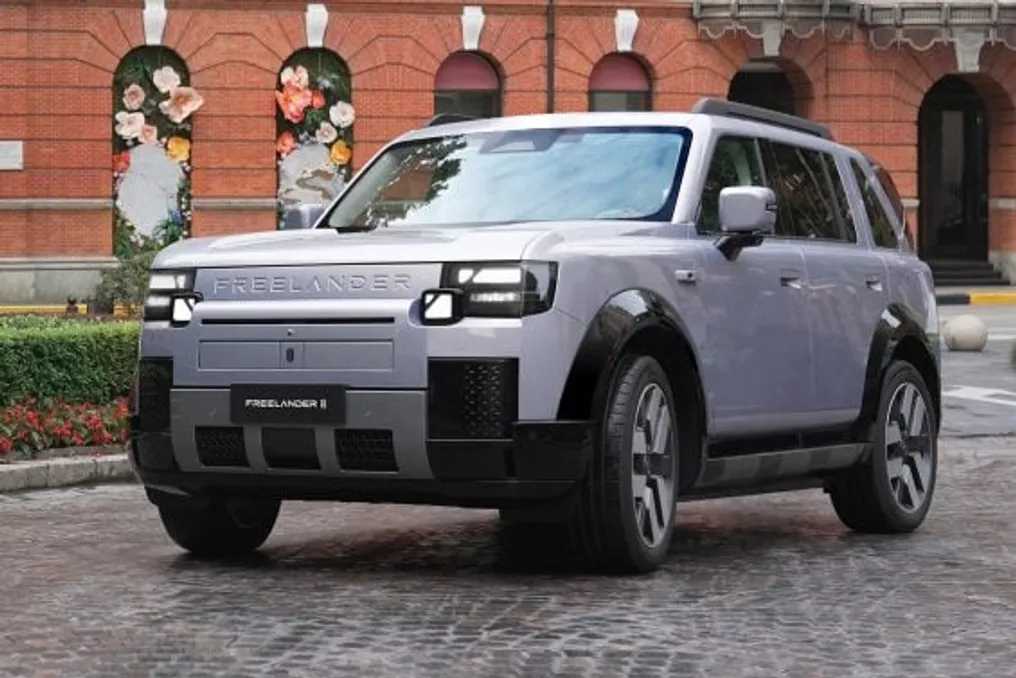
This SUV, featuring square lines inspired by the original Freelander, has a length of 5.12 m and a wheelbase of 3.04 m, which is 36 cm longer than the Land Rover Defender 110. It is equipped with air suspension and is capable of traversing flooded areas up to 90 cm deep.

The cabin, designed for five or six passengers, features a main 46.3-inch 8K screen covering 1.2 meters at the base of the windshield instead of a traditional dashboard. It also includes a 15.6-inch multimedia system, Harman Kardon acoustics with up to 23 speakers, and, in the most equipped trims, a 10-liter refrigerator.

The international version is planned to debut in the United Arab Emirates in the first quarter of 2027.

Popular