A conference of educators from Russia and Uzbekistan was held in Tashkent, dedicated to new teaching methods, teacher training, and inclusive education. The event took place at the Tashkent Branch of Herzen State Pedagogical University of Russia.
Participants discussed practical experience of cooperation between the two countries, as well as the development of teacher training and the implementation of modern approaches in the educational process. The program includes over one hundred presentations at plenary sessions and thematic sections on various scientific fields. Special attention is paid to the 'Zor, Klass' project, which has been implemented since 2020.
Initially, the project was aimed at teaching Russian as a foreign language, but it subsequently covered subjects such as mathematics, physics, chemistry, biology, computer science, primary and special education.
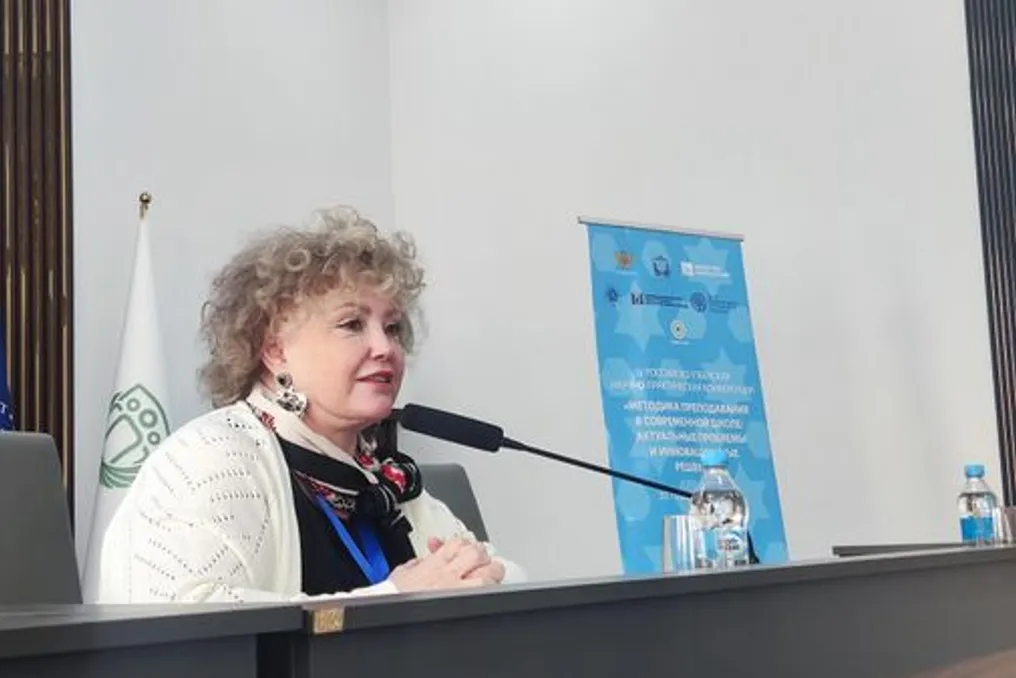
Yulia Komarova, Doctor of Pedagogical Sciences and advisor to the rector of Herzen State Pedagogical University, emphasized that the project is developing thanks to new initiatives and expanding spheres of cooperation. She noted that the project is useful because, despite a long-term perspective of ten years, it is updated annually.
Currently, methodologists are working on the project in 13 regions of Uzbekistan, helping local teachers improve their qualifications, master new methods, and develop educational materials that meet the country's needs. Additionally, Russian specialists are collaborating with Uzbek colleagues on creating educational films in Russian to supplement school textbooks.
Guliston Kozhapaeva, Director of the Center for Pedagogical Improvement of the Karakalpakstan Republic, spoke about the regional results of the project. According to her, the 'Russian as a Foreign Language' curriculum developed by joint author groups is already used in 700 schools in the region. These materials are designed for different levels of language proficiency—from A1 to B2—and include audio tasks, QR codes, and group projects.
Kozhapaeva also stressed that modern education should develop not only knowledge but also practical communication skills. She emphasized the importance of creating conditions where students can not only understand rules and test knowledge but also comprehend spoken Russian, read, ask questions, communicate, and express their thoughts.
Another important area of cooperation is the development of inclusive education. Yulia Komarova presented plans to expand experience exchange in this field, including the work of Herzen University in the field of special education. Cooperation also involves developing professional development programs for teachers and school administrators.
A separate section of the conference was dedicated to bilingual education and the 'Russian Teacher in Another Country' project. Furthermore, the practice of holding a pedagogical Olympiad for schoolchildren of Uzbekistan was presented for the first time. The conference was organized with the participation of the Ministry of Education of Russia and the Ministry of Education and Science of Uzbekistan, as well as the 'Art, Science and Sport' charitable foundation named after Alisher Usmanov and the International Center for International Cooperation of the Ministry of Education of Russia.