Representative of the Uzbekistan Chamber of Commerce in Georgia calls for concrete business deals
Read more
UzDaily
uzdaily.uz

Representative of the Uzbekistan Chamber of Commerce in Georgia calls for concrete business deals

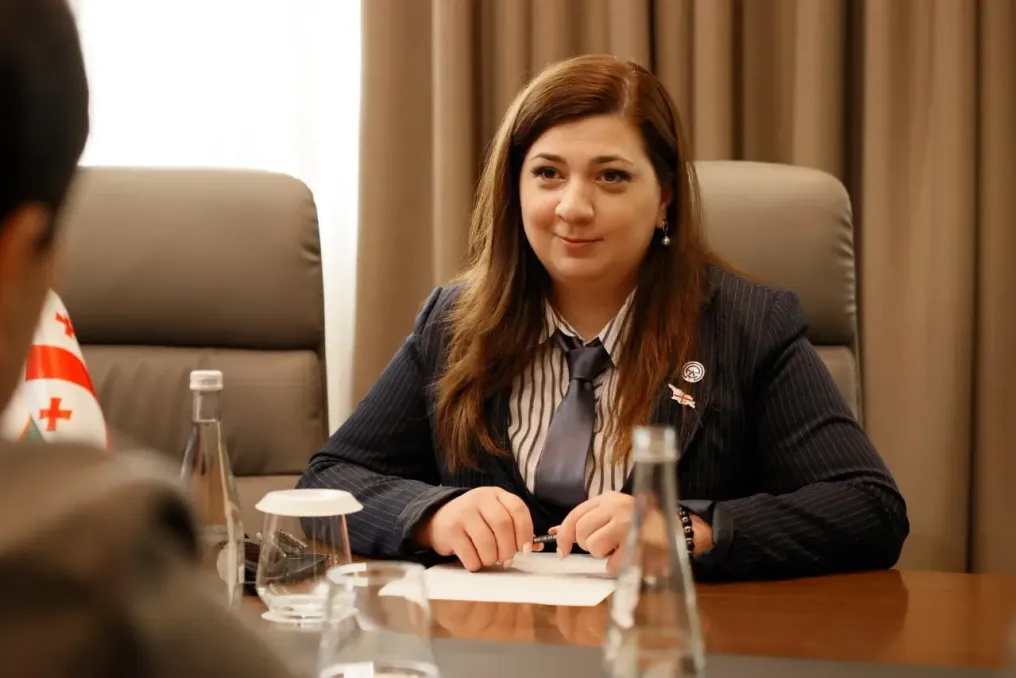
Maka Natsvilashvili, the representative of the Uzbekistan Chamber of Commerce and Industry in Georgia, considers the goal of increasing trade turnover between the two countries to 1 billion US dollars ambitious but achievable. She noted that bilateral trade turnover in 2025 was about 267.6 million US dollars, meaning this goal would require an almost fourfold increase.

Natsvilashvili received her appointment certificate on October 27, 2026, from Davron Vakhabov, Chairman of the Chamber. Additionally, she is the founder and managing director of Business Shop LLC and General Manager of EurAsia Gulf in Georgia. Her experience in business development, international trade, and investment promotion exceeds 14 years.

In an interview, she detailed her professional journey, the tasks of her new position, the state of economic relations between the countries, priority sectors, and the steps she believes are necessary to achieve the target turnover figure.

She emphasized that her career path is shaped by over fourteen years of experience in business development, international trade, investment promotion, procurement, strategic management, and the implementation of international projects. Working in various industries and business environments, she has gained practical understanding of company operations and turning business opportunities into sustainable commercial results.

Natsvilashvili also mentioned that she is the founder and managing director of Business Shop LLC, a platform for business services and consulting that provides comprehensive support to companies regarding business development, market entry, investment projects, international trade, and strategic partnerships. Furthermore, she serves as the General Manager of EurAsia Gulf in Georgia, an international business platform connecting entrepreneurs, investors, and institutions in the Caucasus, Central Asia, and the Persian Gulf region.

Her participation in the Georgian Investment Chamber and other international initiatives has strengthened her experience in institutional cooperation, investment promotion, and cross-border business relations. Her professional background also includes managerial experience in industrial production, procurement, corporate sales, and operational activities, including positions at CaucasEnergo, Embawood Georgia, and ABD & Co.

A significant part of her professional growth has been her increasing involvement in international economic cooperation, especially in establishing business ties between Georgia, Central Asia, Europe, and the Persian Gulf countries. Cooperation with Uzbekistan has been a particularly significant element of this path for her, as she has focused on identifying opportunities for practical economic interaction through institutional participation and direct communication.

She is convinced that international business is not just about making contacts, but about understanding the interests of different markets, identifying complementary opportunities, and creating conditions for long-term cooperation. Her appointment as a representative of the Uzbekistan Chamber of Commerce in Georgia is a natural continuation of this professional path.

Regarding her appointment, Natsvilashvili noted the active support of the Embassy of the Republic of Uzbekistan accredited in Georgia and Azerbaijan. She expressed gratitude to the Embassy for assisting in strengthening economic ties, institutional dialogue, and promoting practical cooperation between Uzbekistan and Georgia.

She sees her main task as serving as an effective institutional and business bridge between Uzbekistan and Georgia, closely coordinating work with the Embassy, the Uzbekistan Chamber of Commerce, Georgian institutions, and the private sector.

Her responsibilities will cover several key areas: trade development, supporting Uzbek exporters in Georgia; facilitating investment by connecting investors with projects; representing businesses to help Uzbek companies enter the Georgian market and vice versa; strengthening institutional cooperation; organizing business missions and B2B/B2G meetings; and developing industrial and commercial partnerships, including joint ventures and technology exchange.

Natsvilashvili is particularly interested in establishing a permanent and structured dialogue, including setting up a bilateral business council. The principle of her work will be moving from networking to concluding deals, where success is measured not by the number of meetings, but by signed contracts and attracted investments.

Describing the current state of Uzbek-Georgian relations, she described them as entering a particularly promising stage of strategic economic development. While political dialogue and mutual respect are a strong foundation, she believes the economic potential has not yet been fully realized. The growth in trade turnover by approximately three times from 2017 to 2025 is encouraging, but the next stage must focus on practical implementation, strengthening industrial cooperation, and increasing investment activity.

She sees the opportunity to build a broader economic connection between the Caucasus, Central Asia, Europe, and the Persian Gulf, utilizing Georgia's advantages as a logistics platform and Uzbekistan's as a dynamically developing market.

Priority Areas of Cooperation

Natsvilashvili has identified several strategic sectors for achieving tangible economic results. In the field of trade, manufacturing, and textiles, Uzbekistan possesses a strong production base, while Georgia can act as a commercial and logistical platform for expanding Uzbek producers into the markets of the Caucasus and Europe. Cooperation should include not only the export of finished products but also joint production and technology exchange.

In the field of transport, logistics, and regional connectivity, Georgia's geographical location plays a key role in connecting Central Asia with the Black Sea and European markets. Developing an Uzbek logistics hub in Georgia, for example, around the Port of Poti, could be an important tool for expanding Uzbek exports.

Significant potential exists in agriculture and the food industry, including product processing, cold storage, and agricultural technologies. Joint projects in viticulture, fruit and vegetable processing, and animal husbandry require special attention.

Another important area is energy and infrastructure, where both countries can benefit from exchanging technical expertise and attracting investment in engineering projects.
Similar stories

Uzbekistan and Georgia Discuss Trade and Logistics in Batumi
Read more
uzdaily.uz

Uzbekistan and Georgia Discuss Trade and Logistics in Batumi

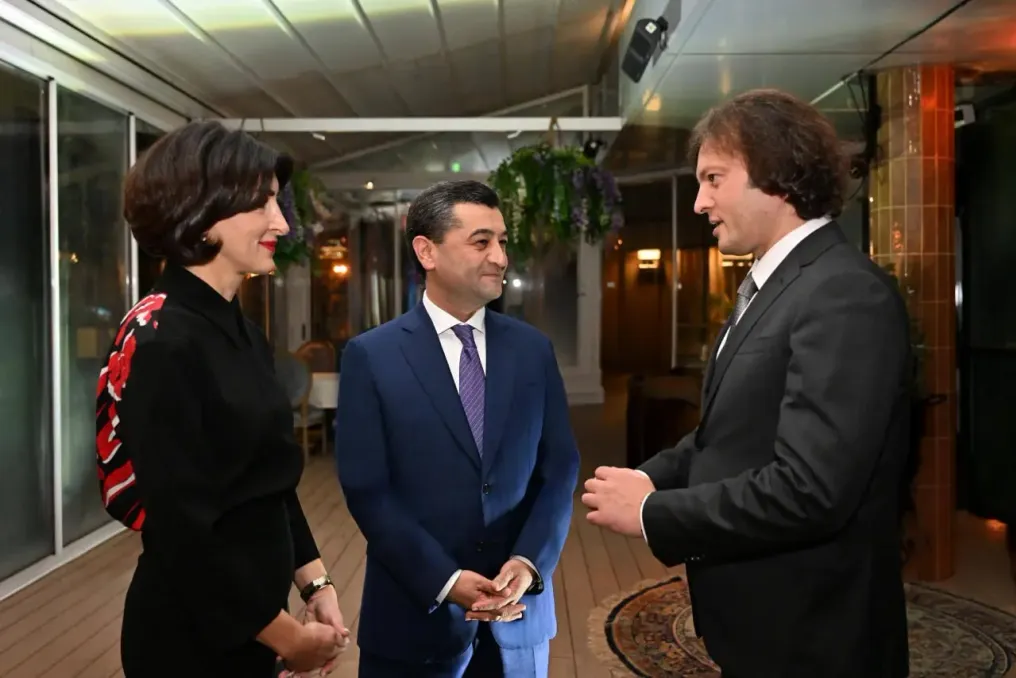
The Foreign Minister of Uzbekistan, Bakhtiyor Saidov, met with the Prime Minister of Georgia, Irakli Kobakhidze, in Batumi to discuss expanding trade, economic, and investment cooperation, increasing bilateral trade, and promoting joint transport and logistics projects.

Saidov himself reported on the progress of the negotiations. At the beginning of the meetings, the Foreign Minister of Uzbekistan conveyed greetings and best wishes from President Shavkat Mirziyoyev to Kobakhidze.

Both sides noted that bilateral relations have reached a new level following two visits. In March 2025, the Prime Minister of Georgia visited Uzbekistan on an official trip. And in July 2026, Mirziyoyev made a state visit to Georgia.

The signing of the Declaration on Strategic Partnership was characterized by both sides as a significant stage in the development of bilateral interaction. Participants also exchanged views on regional and international issues.

During his stay in Batumi, Saidov also held a meeting with Zurab Pataradze, the head of the government of the Autonomous Republic of Adjara. Saidov stated that Uzbekistan will continue to work on strengthening strategic partnership with Georgia and developing new practical initiatives within this partnership.

Mirziyoyev discussed expanding Uzbekistan's cooperation with the Eurasian Economic Commission
Read more
uzdaily.uz

Mirziyoyev discussed expanding Uzbekistan's cooperation with the Eurasian Economic Commission

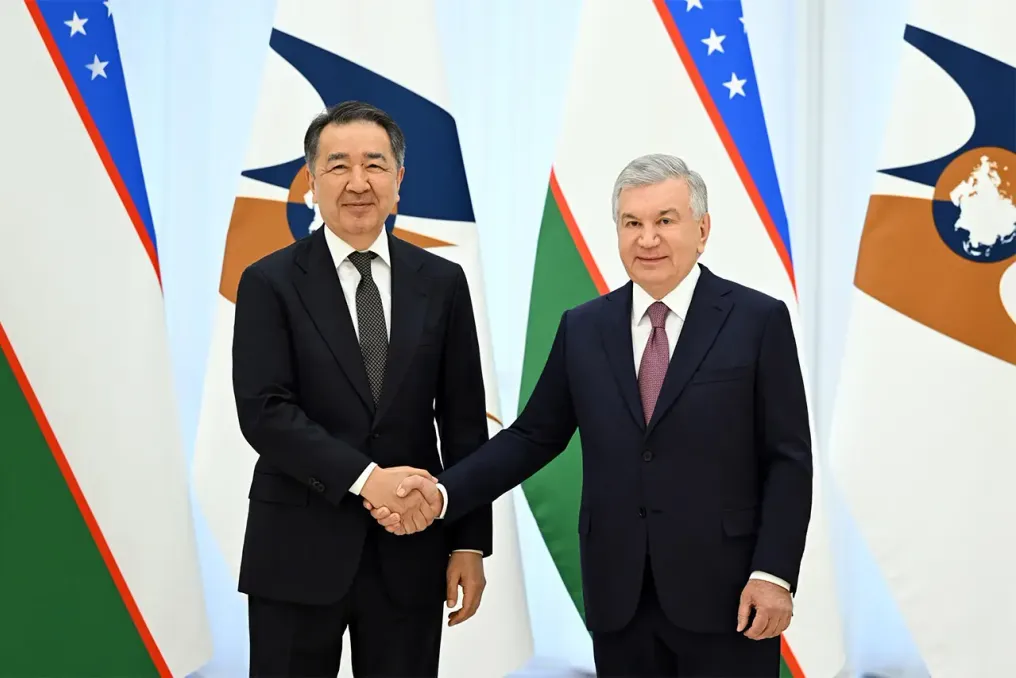
President of Uzbekistan Shavkat Mirziyoyev held a meeting with Bakhtzhan Sagintayev, Chairman of the Council of the Eurasian Economic Commission (EEC), on October 22. The goal of the negotiations was to discuss deepening the country's interaction with the Eurasian Economic Union (EAEU), in which Uzbekistan holds observer status.

During the meeting, a steady increase in trade turnover and investments with EAEU member states, as well as the strengthening of logistical links, was noted. Uzbekistan actively participates in key sectoral programs of the union, including initiatives for the digitalization of trade and cargo transportation, the development of e-commerce, and the promotion of the climate agenda.

Previously, four meetings of the joint working group with the Eurasian Economic Commission took place. Furthermore, an action plan aimed at harmonizing technical regulation systems was approved.

Special attention was paid to cooperation with the Eurasian Development Bank, of which Uzbekistan has become a full member. A portfolio of joint projects has been developed with this bank. The parties agreed to hold the next meeting of the joint working group before the end of 2026. They also emphasized the need to adopt a new cooperation plan focused on reducing trade barriers, deepening industrial partnership, and digitizing customs and transport procedures.

Mirziyoyev proposed an economic cooperation program between the USA and Uzbekistan until 2035
Read more
uzdaily.uz

Mirziyoyev proposed an economic cooperation program between the USA and Uzbekistan until 2035

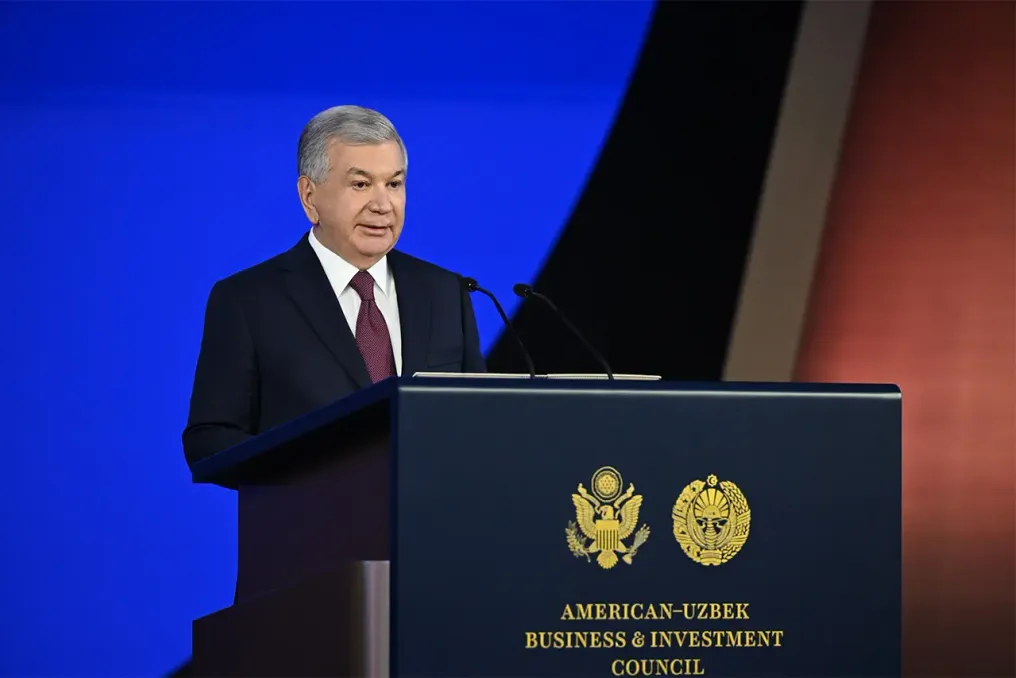
Uzbekistan President Shavkat Mirziyoyev participated in the opening of the second meeting of the US-Uzbekistan Business Investment Council, which took place in Samarkand on October 19. Preparatory work for this event led to the creation of a package of 54 agreements and promising initiatives, the total value of which is estimated at approximately 12 billion US dollars. A comprehensive action plan is planned to ensure the implementation of these projects.

The meeting was attended by US Secretary of State Marco Rubio, Special Envoy of the US President Sergio Gor, as well as representatives of leading American banks and companies. Speaking at the meeting, Mirziyoyev stated that relations between Uzbekistan and the United States have reached a qualitatively new level. He emphasized that the further development of economic ties must be based on a strong political alliance.

The President also highlighted the importance of personal attention and support from US President Donald Trump to strengthen bilateral relations. Mirziyoyev instructed the US-Uzbekistan Business Investment Council to play a key role in promoting joint projects. It is expected that this council will become a platform for developing new initiatives, eliminating systemic obstacles, and implementing major joint undertakings.

Promising areas of cooperation include the development and processing of critically important minerals for the production of high-tech products, modernization of the energy system, and the creation of data processing centers. Other priorities include the introduction of artificial intelligence and digital solutions in industry, agriculture, education, and public administration, as well as the development of personnel training and educational programs.

Mirziyoyev noted that the Uzbek economy is showing growth, new enterprises are opening, jobs are being created, and young people have better access to educational opportunities. He added that attracting investments for the development of modern infrastructure and industry must be accompanied by the introduction of advanced technologies and knowledge transfer.

Currently, hundreds of companies with American capital operate in Uzbekistan, participating in projects in energy, transport, agriculture, education, and new technologies. At the same time, Uzbek companies are also beginning to invest in the US economy.

The President outlined three main tasks for the council's future activities. The first is to create clear and predictable conditions for American businesses, which will accelerate project launches and reduce administrative procedures. To achieve this goal, it was proposed to adopt a 'plug and play' model, according to which projects will be ready to start even before the investor arrives. This implies providing ready-made sites, connected infrastructure, necessary permits, and documentation.

Uzbek businesses can participate in such projects as partners and share investment risks. An Investment Fund for direct investments has been established to support relevant initiatives. The second task is the joint development of new economic sectors and large centers of industrial and technological growth. The third priority is to transform the council into a strategic mechanism for long-term economic partnership. In this regard, Mirziyoyev proposed developing a Program of Trade, Investment, and Technological Cooperation between Uzbekistan and the United States until 2035.

During the opening of the second council meeting, there was also a ceremony for exchanging signed documents, in which President Shavkat Mirziyoyev participated.

Popular