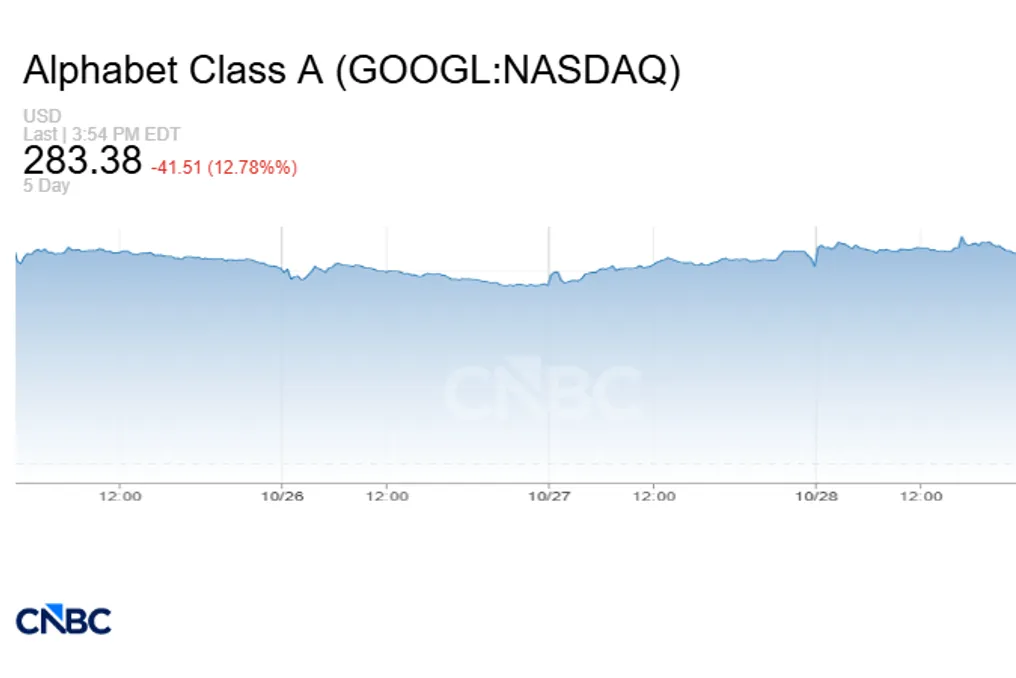
The stock market is showing detachment from large technology companies. For instance, Google experienced its worst day in history, and Intel's shares fell more sharply than during the Nixon administration. A noticeable decline was also recorded by Amazon and Meta this week, leading to a drop in the Nasdaq index, which is only one percentage point away from a correction (a 10% drop from its historical high).
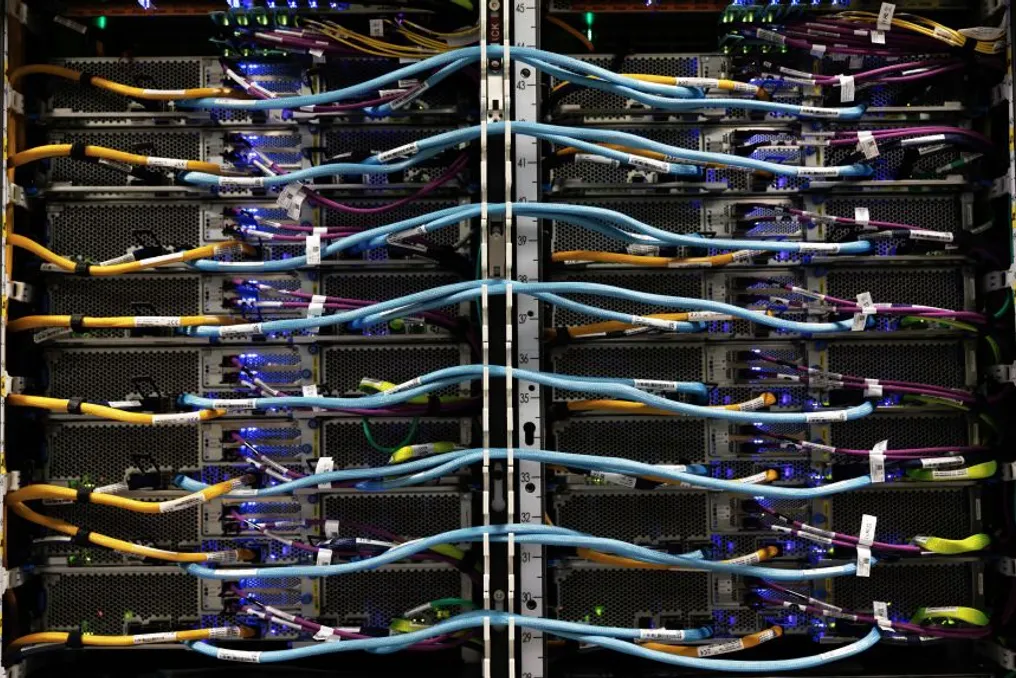
The general reason for this downturn is that creating infrastructure to support artificial intelligence requires extremely high costs, and the current profits of Big Tech giants do not yet justify such colossal expenses. AI companies are increasingly directing more funds to data centers than their own business operations can generate.
However, if the stock market is trying to send a message, the large technology companies are ignoring it. According to JPMorgan data, AI spending reached $1.6 trillion since 2023 and is projected to be $1 trillion annually over the next decade. No changes in these figures were observed this week.
The reason lies in the fact that the market financing these expenditures—the bond market—remains largely passive, while the stock market experiences moderate panic. Lenders are willing to provide debt to large technology companies to pay for technologies that are transforming the global economy.
Thus, the questions the market seems to be asking about AI—whether Big Tech will continue to increase spending (which will certainly happen) and whether AI will pay off in the near future (it seems not)—are misguided. The real question to ask about AI is: how long can the bond market sustain this continuous surge in spending?
This will ultimately determine whether AI becomes a success or a failure.
The Mechanism of AI Calculations
The principle of AI operation is as follows: significant funds are first invested in the necessary infrastructure (servers, chips, data centers, electricity, workforce, and building materials). Then, after launching the data center, AI companies can monetize these investments—approximately three months or within two years, according to Goldman Sachs.
Since profit realization is delayed for such a long period, hyperscalers (large tech players like Google, Amazon, Microsoft, and Meta) have to raise enormous amounts of money in advance and repay it to investors later. 'Enormous' is a very modest description. These four hyperscalers alone account for over a third of all capital expenditures from the S&P 500 over the last 12 months, notes John Higgins, Chief Economic Advisor at Capital Economics.
Therefore, it is expected that one-third of Big Tech's capital expenditures this year will be financed through debt—for example, around $250 billion in bonds from hyperscalers alone, according to Goldman Sachs estimates. This figure is expected to peak next year, reaching about 35 percent of hyperscalers' spending.
However, bond market investors do not have infinite funds, and there is currently intense competition for lending, especially from US Treasury bonds, as the government simultaneously tries to fund social security, healthcare, and an expensive war.
This raises an obvious question: exactly how much money are investors willing to provide to AI companies? Moreover, what can be assumed?
The hypothetical maximum volume of debt the market can absorb is unknown, but Goldman Sachs has calculated the availability of 510 billion in top-tier investment bonds for the largest hyperscalers. This is more than double what they are expected to borrow by the end of the year.
In other words, the largest AI companies still have a significant capacity to raise borrowed funds. The question is not how much, but how long.
The answer depends on two factors: who pays and who receives.
Amanda Linam, Chief Credit Strategist at Goldman Sachs, stated on a recent company podcast: 'We are not concerned about access to capital. We are simply expecting a more nuanced discussion about where and at what price to issue bonds.'
Linam added that private investment funds, venture capital funds, and private equity are ready to take on the main burden of supporting AI development, possessing trillions of additional 'dry powder' funds for financing.
But hyperscalers are not the only market participants. Other companies operate in this space, including non-cloud services. These are highly leveraged firms that rent out computing power to other businesses, and their credit situation is starting to look questionable. Their low-investment-grade bonds offer high yields, which investors are willing to bet on, accepting greater risk for a potentially huge reward.
CoreWeave operates in this market, whose bond yield rose to 15 percent this month amid accumulating losses. Elon Musk stated that the non-cloud services industry, which includes CoreWeave, must undergo a serious cleansing (he called it a 'guppy level death').
Every new technology has winners and losers, and Musk may be right about non-cloud services. It remains to be seen.
Hyperscalers, conversely, appear to be the winners. Revenue from cloud services (a metric Wall Street uses to measure demand for AI) grew by 50 percent in the second quarter. They possess vast contract portfolios and the ability to absorb higher borrowing costs.
These bottlenecks contribute to maintaining high prices, which helped hyperscalers' revenue grow by 19 percent over the last 12 months, according to Higgins. The emergence of agentic AI led to an explosive growth in demand: agent requests consume 15 times more tokens than human-initiated requests, according to OpenRouter.
Higgins noted: 'The prospects for these things do not look overtly bleak, given that AI is gradually being used more widely in the economy.'
The concern is that the cost of borrowing could become insurmountable. And this could change the economy that is currently supporting AI.
Negative sentiment prevalent in the stock market could begin to seep into the bond market, causing bond yields to rise and increasing borrowing costs for AI companies.
Lyman noted that the bond market functions best when the end of the road is visible. Every AI investor believes there is light at the end of the tunnel. We just don't know how long that tunnel is.
Uncertainty about when companies will start generating profits and earning from their massive AI investments could cause the bond market to slow down, she said. Meanwhile, the outlook for the technology itself and the financial health of large companies looks quite strong, noted Stephanie Ariaga, Global Market Strategist at JPMorgan, in a recent investor note.
Warning signs could include a decrease in AI usage by businesses, a reduction in pricing, or a decrease in customer commitments. Such signs have not yet been observed.