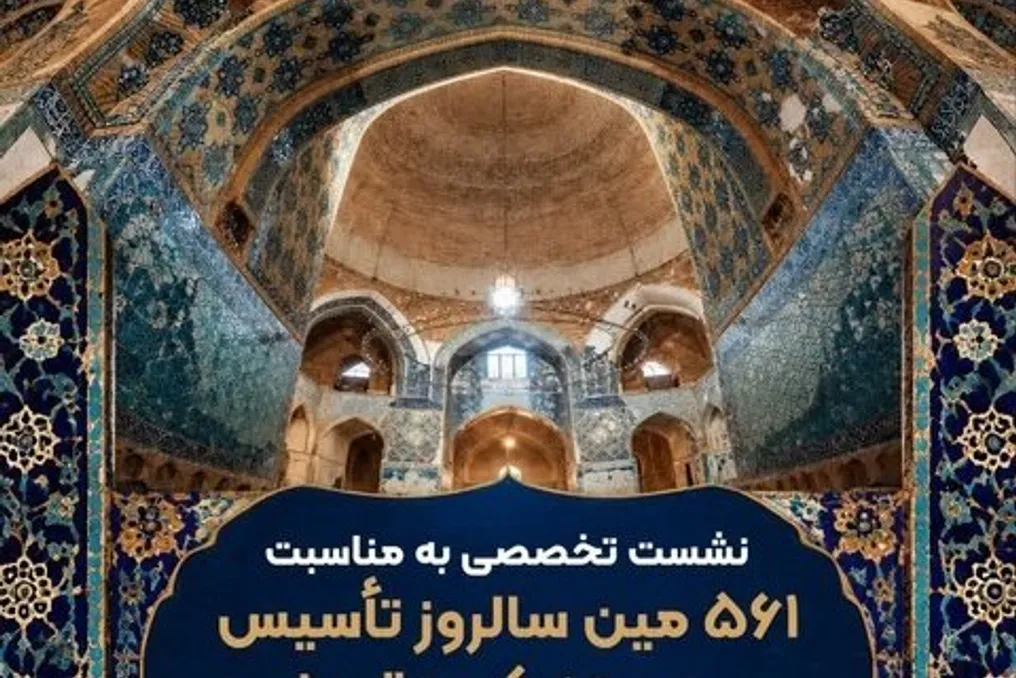
A specialized conference will be held in Tabriz dedicated to the 561st anniversary of the construction of the Blue Mosque. The meeting will examine the history of the Kara Koyunlu dynasty and the unique mosaic tiles characteristic of its reign.
According to a report by Miras Aria agency, the event is scheduled for Tuesday, November 3, 2026, and will take place in the Azarbaijan Museum conference hall in Tabriz. Masumeh Karehdaghi, an associate professor and head of the history department, and Ali Nemati, an associate professor specializing in the conservation and restoration of cultural and historical objects, will speak at the event.
Two key issues will be covered: the political and administrative structure of the Kara Koyunlu dynasty, and the evolution of mosaic art during its rule. Karehdaghi will present information on the dynasty's governance system and the historical circumstances of the monuments from that period. Nemati will focus on the artistic features and decorative methods of the Kara Koyunlu tiles, paying special attention to the craftsmanship details and ornamental elements of the preserved works.
The Blue Mosque, also known as Jahan Shah Mosque and Mozaffarieh, is one of the outstanding architectural monuments of 15th-century Iran. Its construction is closely linked to the reign of Jahan Shah, the ruler of the Kara Koyunlu, who controlled significant territories in Iran and neighboring lands in the 15th century.
The Kara Koyunlu, also known as the Blackbeard Turks, were a Turkman Muslim dynasty that ruled parts of modern Azerbaijan, Armenia, northwestern Iran, eastern Turkey, and northeastern Iraq approximately from 1374 to 1468. Their period of rule was marked by significant support for art and architecture, especially in northwestern Iran.
An inscription with the date 870 AH (1465–66 AD) is located above the entrance to the Blue Mosque, serving as an important historical reference to this structure. The mosque is famous for its intricate mosaic tiles, predominantly in shades of blue and turquoise, which earned it the nickname 'Turquoise of Islam.' However, its architectural significance goes beyond richly decorated surfaces; the spatial composition of the building and the combination of the mosque with the mausoleum make it an important example of Kara Koyunlu architecture, providing valuable material for studying the religious and funerary traditions of that era.
The monument suffered damage from a severe earthquake in 1193 AH (1779–80 AD), after which parts of the structure were restored during conservation work. Therefore, understanding its architectural history requires considering the original design, the preserved decorative elements, and subsequent conservation interventions. The Blue Mosque has also been included in Iran's UNESCO heritage list, underscoring its artistic and architectural importance. Its unique tiling remains one of the most brilliant expressions of decorative mastery in the architectural heritage of northwestern Iran.