Brazilian wins scientific award; record greenhouse gas levels and fireball forecast for Halloween
Read more
Olhar Digital
olhardigital.com.br

Brazilian wins scientific award; record greenhouse gas levels and fireball forecast for Halloween

The week featured several scientific and news highlights. Politically, Luiz Inácio Lula da Silva was re-elected as President of Brazil, and Olhar Digital analyzed his government plan focused on science and technology.

On another front, the United States Department of Defense granted SpaceX access to confidential data tracking orbital objects. This agreement, signed between Elon Musk's company and the US Space Force, allowed a private entity enhanced access to the US Space Command's High Precision Catalog, which monitors bodies in orbit, sparking discussions about national security and the company's role in commercial space traffic.

In the field of scientific communication, biomedical engineer Daniel Dahis was honored with the Eric and Wendy Schmidt Awards for Excellence in Science Communication. He is the first Brazilian to receive this award, granted by the National Academies of Sciences, Engineering, and Medicine of the United States (NASEM), with the announcement made on Monday (26).

This award aims to value professionals who make science accessible to the public. In the 2026 edition, 24 individuals were honored across eight distinct categories, encompassing researchers, journalists, and content creators. Each category has a main winner, who receives US$ 40 thousand (approximately R$ 216 thousand), in addition to two recognized recipients each receiving US$ 20 thousand (about R$ 108 thousand).

Dahis received the award in the 'Research Scientist: Early Career' category, designated for scientists in the early stages of their careers. His recognition highlights the science outreach work he conducts on social media, where he has over 750 thousand followers, sharing videos on topics such as vaccines, diseases, treatments, and recent discoveries.

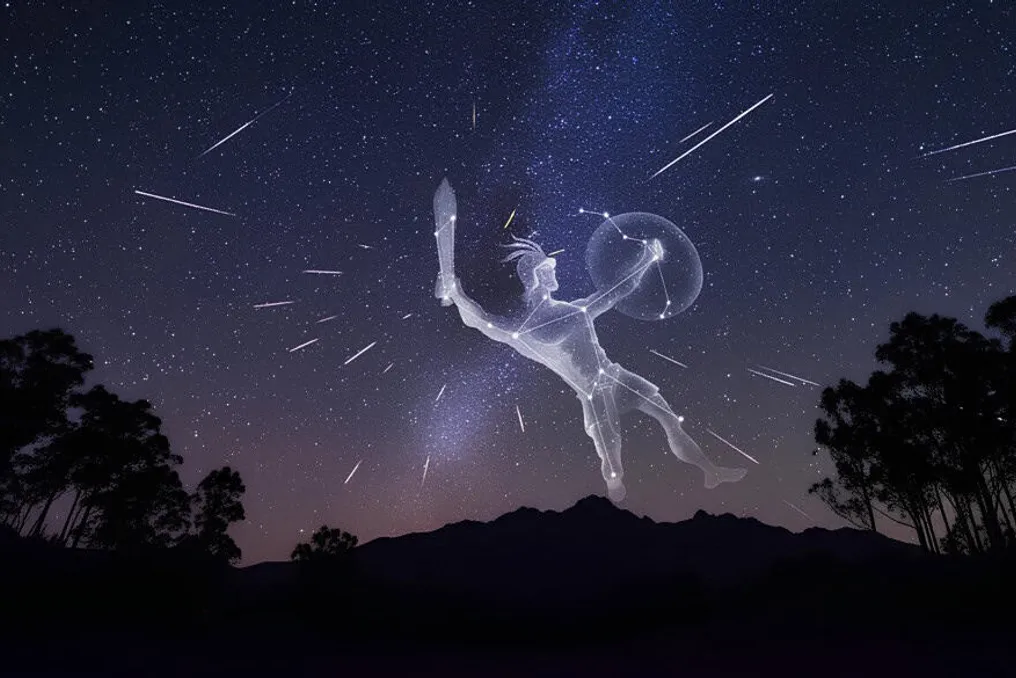
Regarding astronomical phenomena, intensely bright fireballs can be observed during Halloween. This event is linked to the Taurids, an annual meteor shower that attracts astronomers due to its visual spectacle and the potential presence of larger fragments.

The Taurids are segmented into two streams: the Southern Taurids and the Northern Taurids. The first occurs between September and November in the Southern Hemisphere, characterized by continuous activity and a low hourly rate of meteors. Its peak is predicted for Thursday (5), although observation depends on weather conditions, darkness, and the apparent position of the meteors. The second stream takes place between October and December, peaking in November, also showing a low hourly frequency but potentially surprising with very luminous fireballs.

The distinguishing feature of this shower is the fireballs, which are exceptionally bright meteors capable of surpassing the brightness of Venus and remaining visible longer than other light trails. Coinciding with the Halloween period, on October 31st, these flashes are known as Halloween fireballs.

Additionally, a report from the World Meteorological Organization (WMO), released on Tuesday (27), indicated that the concentration of greenhouse gases in the atmosphere reached record levels in 2025. This accumulation of gases intensifies heat retention on the planet, contributing to global warming.

Carbon dioxide (CO2) reached 426.8 parts per million, while methane and nitrous oxide also registered historical highs. The WMO projects that CO2 concentration will continue to rise throughout 2026.
Similar stories

Astronomical images resembling horror movie scenes presented for Halloween
Read more
olhardigital.com.br

Astronomical images resembling horror movie scenes presented for Halloween

This Saturday (the 31st) is Halloween—a holiday characteristic of Anglo-Saxon countries, especially the USA, Canada, Ireland, and Great Britain. While celebrations on Earth inspire themed decorations, recordings show dark images of the Universe collected over decades, demonstrating that cosmic reality can often be more frightening than fiction.

In honor of this date, impressive pictures have been gathered, ranging from a monstrous zombie hand sculpted by the winds of a dying star to a skull-shaped asteroid that passed near Earth. These images offer a visual journey through ghostly nebulae and cosmic structures worthy of a true night of horrors.

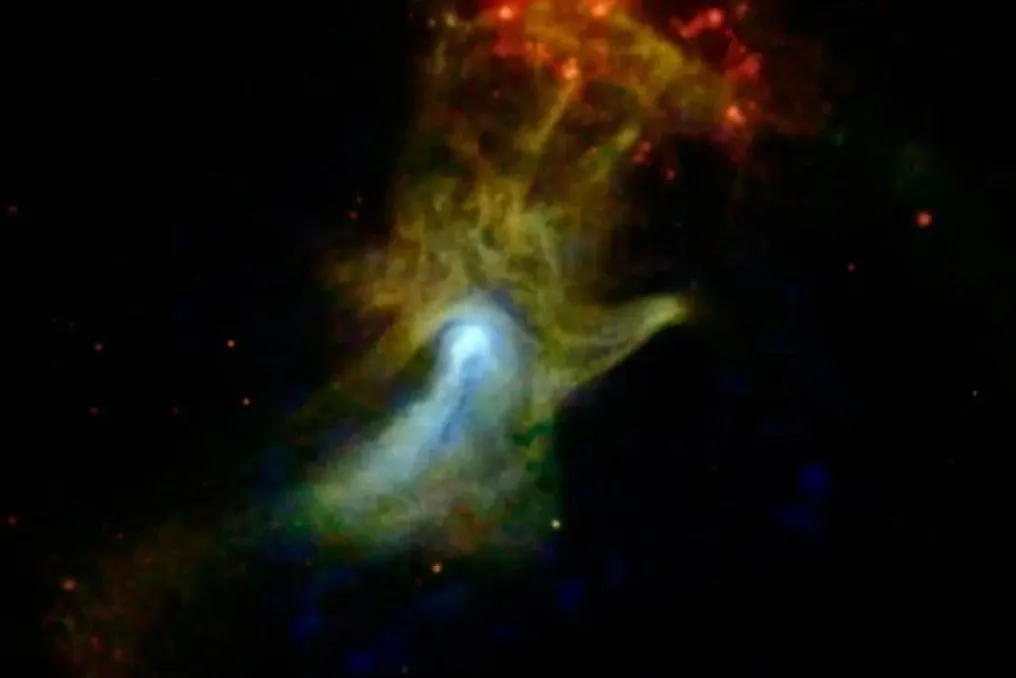
The area shown in an X-ray image, called the 'Hand of God,' looks too terrifying to bear that name; it more closely resembles a monstrous zombie hand ready to grab prey in space. However, it is actually a pulsating stellar wind nebula formed by dense remnants of a supernova. A supernova is a transient astronomical event occurring at the final stages of massive star evolution or when a white dwarf begins uncontrolled nuclear fusion, signifying the death of a star.

What about this horrifying face that seems to be screaming during a painful and fiery death? This is a scene very suitable for Halloween. Despite its frightening appearance, this scene does not include a real skull. It is an X-ray image of a galaxy cluster known as the Perseus Cluster, taken by NASA's Chandra Observatory.

This image, obtained by the Kitt Peak National Observatory in Arizona, USA, could look like a scene from a horror film where evil spirits try to escape the crucible of darkness. Nevertheless, it actually shows an interstellar cloud of gas and dust called SH2-136, located approximately 1200 light-years from Earth in the constellation Cepheus.

In this ominous picture, taken by NASA's Wide-field Infrared Survey Explorer (WISE), a green witch gazes into space. In reality, it is the IC 2118 nebula, which received the nickname 'Witch' due to its appearance. Fomalhaut is the brightest star in the constellation Pisces Australis. Located approximately 25 light-years from Earth, it is about 440 million years old, during which a dust belt has accumulated around it.

In this image, the Fomalhaut star system bears a strange resemblance to the terrifying Eye of Sauron from J.R.R. Tolkien's 'Lord of the Rings.' Tolkien described the eye as 'adorned with watchful and deliberate fire, and the black slit of its pupil opened into a pit, a window into nothingness.'

Eight years ago, a human skull-shaped asteroid passed near Earth. At its closest approach, the celestial body was about 480 thousand kilometers from the planet, or 1.3 times farther than the average distance between the Earth and the Moon, posing no threat to our planet. Approximately three weeks before reaching this distance, the asteroid was discovered by astronomers from the Pan-STARRS observatory in Hawaii and was officially designated '2015 TB145.' On October 30, 2015, the 400-meter wide object was photographed by the Arecibo Observatory in Puerto Rico, and to everyone's surprise, it looked like a skull face, earning the nickname 'Halloween Asteroid.'

Start of the last retrograde Mercury of 2026 and the scientific meaning of the phenomenon
Read more
olhardigital.com.br

Start of the last retrograde Mercury of 2026 and the scientific meaning of the phenomenon

Next Saturday, the 24th, the last period of retrograde Mercury predicted for 2026 begins. Although some people associate this event with astrology, fearing turbulent energetic influences in various areas of life, science offers a different explanation about what it really means for the planet to be in retrograde motion.

According to the Old Farmer’s Almanac, a traditional American publication focused on rural astronomy, in 2026 Mercury will exhibit apparent retrograde motion during certain intervals. Scientifically, this phenomenon is an optical illusion resulting from Earth's position relative to the planet, since every planet in orbit follows a defined trajectory and does not abruptly reverse its course.

Because it is a planet with a short orbit, completing a year in about 88 Earth days, Mercury executes this dynamic more frequently than other celestial bodies. This makes it appear to move backward in the sky, entering a retrograde motion that typically lasts about three weeks, occurring three or four times annually.

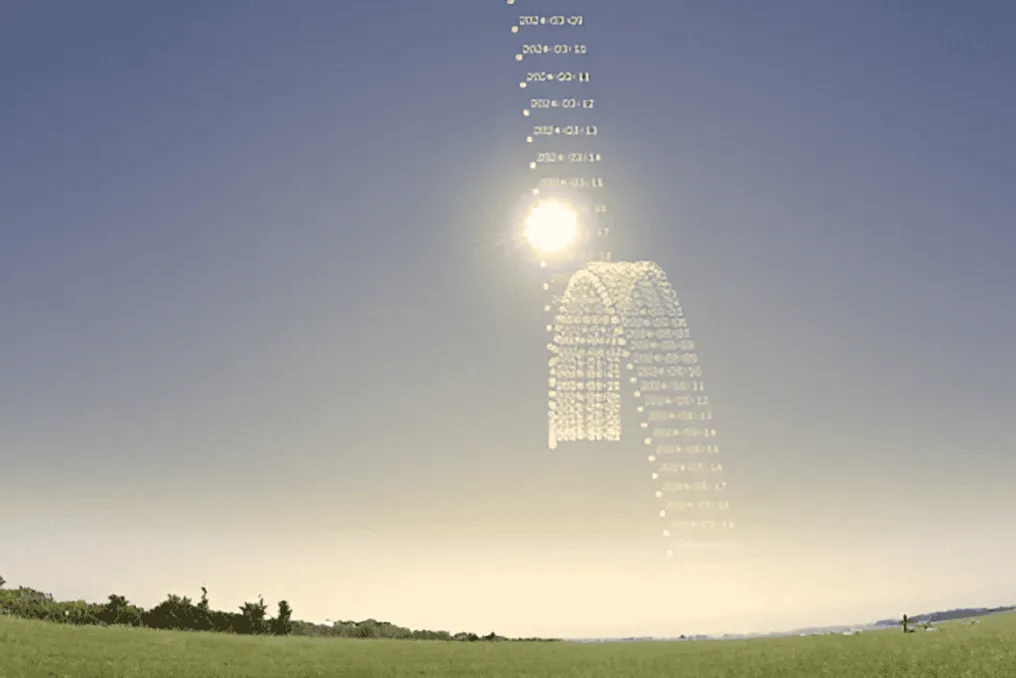
Marcelo Zurita, columnist for Olhar Digital and president of the Paraíba Astronomy Association (APA), also a member of the Brazilian Astronomical Society (SAB) and technical director of the Brazilian Meteor Observation Network (BRAMON), clarifies the correct nomenclature. He points out that for planets outside Earth's orbit (like Mars and beyond), the most precise term is 'retrograde loop,' as these planets form a loop in the sky when overtaken by Earth.

Zurita explains that in the case of inner planets, the opposite occurs: they overtake Earth in their orbit. It is in this scenario that apparently retrograde motion is observed when these planets pass behind or in front of the Sun, usually forming a parabola instead of a loop.

Mercury, being the planet closest to the Sun, is characterized by extreme temperatures, ranging from 430°C on the illuminated side to -180°C on the night side. It has characteristics similar to the Moon: it is rocky, devoid of atmosphere, and covered with numerous impact craters, being slightly larger than the Moon.

Although the shrinkage of Mercury has been a fact known to science for years, specialists are still debating the true dimension of this process. Researchers at the University of Georgia recently published a new method aimed at measuring this shrinkage with greater accuracy.

Orionids meteor shower, formed by remnants of Comet Halley, will be visible in Brazil this week
Read more
olhardigital.com.br

Orionids meteor shower, formed by remnants of Comet Halley, will be visible in Brazil this week

Astronomy enthusiasts have an excellent reason to observe the sky this week, as the Orionid meteor shower is at its peak period. This event occurs annually between October 2nd and November 7th, with the day of maximum activity falling between October 21st and 23rd each year. Near the apex, it is possible to record the passage of 10 to 20 meteors per hour.

The phenomenon occurs when the Earth crosses the debris trail left by Comet Halley, which travels through the inner Solar System every 76 years. Upon entering the Earth's atmosphere, these particles combust, generating luminous trails known as meteors. The name Orionids derives from the constellation Orion, the celestial point from which these trails appear to emanate, near the star Betelgeuse.

Although the radiant is located in the northern celestial hemisphere, the shower is easily observable in Brazil. The fragments reach the atmosphere at remarkable speeds of 67 kilometers per second, equivalent to 241 thousand km/h. Even at such high speed, they leave bright trails that can last for a few seconds, providing a visually impressive spectacle.

On certain occasions, the meteors intensify, transforming into fireballs visible to the naked eye, surpassing any star in brightness. Besides the Orionids, Comet Halley is also responsible for the Eta Aquariids shower, which occurs annually in May.

Marcelo Zurita, president of the Paraíba Astronomy Association (APA), member of the Brazilian Astronomical Society (SAB), technical director of the Brazilian Meteor Observation Network (BRAMON), and columnist for Olhar Digital, states that the official date of the peak of the Orionid meteor shower is October 21st. He emphasizes that, although it is a fixed date, in practice, it can show small variations from one year to another due to various factors.

Zurita explains that some meteor showers occur when the Earth passes through a very narrow debris trail, allowing for a more precise determination of the peak. Older and established showers, like the Orionids, have more dispersed and less uniform trails, which prevents the peak date from always falling on the same day.

According to the astronomer, there are fundamentally two elements influencing this pattern. The first is that the peak can only be measured by calculating the number of meteors seen per hour, usually through radio detection, a method that ignores regional climatic conditions. Since the trail is not homogeneous, the highest rate of meteors may occur on different days. The second factor is the occurrence of leap years; when there is an extra day in February, subsequent showers tend to occur one day earlier. In the case of the Orionids, this can cause the peak date to vary between the 20th and 23rd, depending on the study.

Another agent can cause changes in the peak dates over the years: gravitational interactions with other planets, especially the gas giants, can modify the geometry of the debris trail. However, Zurita points out that this is not the case for this year's Orionids, suggesting that the divergence between sources is probably due to different studies.

Additionally, because the Earth year has 365 days and a quarter, there is a compensation of approximately six hours between one year and the next. Therefore, in astronomy, dates are not used as references for meteor shower calculations; the solar longitude parameter is used, which defines the Earth's position in its orbit, regardless of the date.

The best approach recommended by the specialist is to monitor the meteor shower over several days, without focusing on a single date. Zurita clarifies that between Tuesday (20th) and Friday (23rd), there may not be a large difference in the hourly rate of meteors, making it valuable to observe the Orionids on any of these days, regardless of which is the peak day.

The Orionids shower is visible in both the Northern and Southern Hemispheres. According to the astronomical observation guide InTheSky.org, for an observer in São Paulo, the peak of activity begins around 10:50 PM on Wednesday (21st), remaining visible until 5 AM on Thursday (22nd), shortly before dawn.

The ideal time for observation is during the early morning hours, when the radiant is highest in the sky. In the São Paulo area, it reaches about 50° above the eastern horizon. At this time, the forecast indicates the possibility of seeing up to 11 meteors per hour at the peak. In locations with low light pollution and clear skies, the number can vary between 15 and 20 per hour. In large urban centers, light pollution reduces this count to about 5 to 10 meteors per hour, although the phenomenon remains perceptible.

To locate the meteors, one should look towards the east, in the direction of sunrise and the constellation Orion. Around 3 AM, the radiant will be at an altitude of 30°, rising to 50° near 5 AM. The longest and brightest meteors appear between 45° and 90° away from this point. Sophisticated equipment is not necessary; one just needs to find a dark place, far from city lights, and allow the eyes to adapt to the darkness for about 20 minutes. Apps like Stellarium, Star Walk, or SkyView help in locating Orion.

Popular