Porsche uses concept similar to Fiat Mobi in its new Mission S supercar project
Read more
AutoPapo
autopapo.com.br

Porsche uses concept similar to Fiat Mobi in its new Mission S supercar project

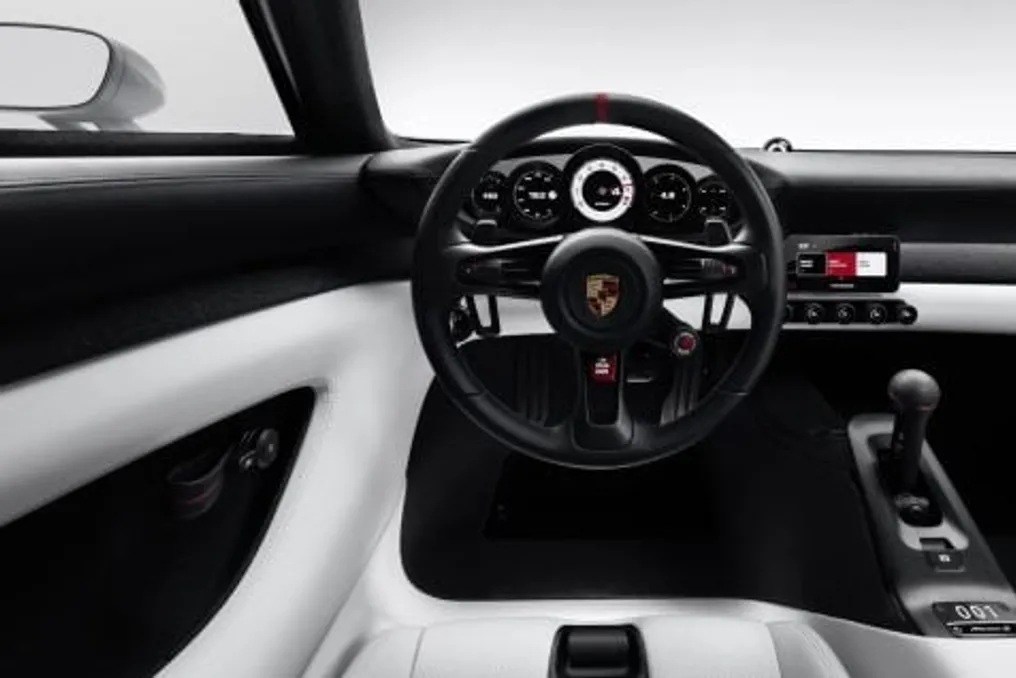
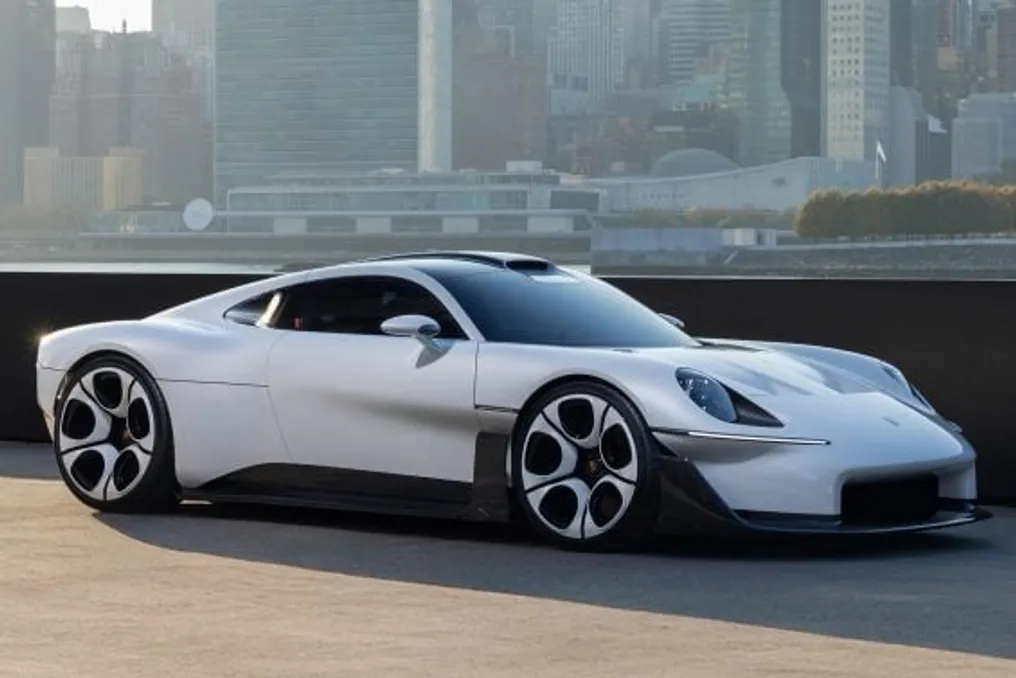
Porsche revealed the Mission S concept, aiming to introduce a new line of supercars positioned above the 911 model. This project focuses on creating a vehicle that is more appealing to enthusiasts and less dependent on digital screens.

The solution adopted in the Mission S to replace the traditional multimedia center is a holder designed for a mobile phone. The driver can connect their device to the car through an application, allowing the smartphone to control functions such as navigation, music playback, and other operations.

Previous Fiat Idea

Although the proposal seems modern, it recalls a functionality implemented by Fiat ten years ago during the launch of the Mobi. The subcompact hatchback could be equipped with the Live On system, serving as a more accessible option compared to traditional radios that had USB and Bluetooth inputs.

Vehicles equipped with Live On included speakers, steering wheel controls, and a centralized holder for a mobile phone with a USB port for charging. To operate, a specific application needed to be installed on the smartphone. With this system, drivers could manage functions via steering wheel buttons, tune radio stations, access navigation apps, listen to music streams, and check tips for more economical driving.

In the context of the Mission S, Porsche suggests an analogous approach, using its connected services application, My Porsche. However, it remains uncertain whether this solution will be incorporated into a production model.

Fiat's Live On system did not achieve commercial success because it presented unstable performance. The Italian manufacturer quickly discontinued this feature, opting to integrate a complete multimedia center, a technology already present in the Renault Kwid.

European Examples of Similar Systems

In Europe, a similar system emerged with the third generation of the Dacia Sandero. Some versions of this compact came with a smartphone holder positioned on top of the dashboard, turning the device into a multimedia center via the Media Control app.

Those who drive current Renault models in Brazil will notice the similarity between the Media Control layout and the multimedia centers used by the brand. This application allows the use of web browsers and music players, in addition to functioning as an onboard computer.

This contemporary version has been well received in Europe; Dacia started offering it in 2020 and keeps the application active. Although Fiat Mobi's Live On is little remembered today, it may have served as inspiration for what Porsche plans to implement in its future supercars.
Similar stories

Porsche focuses on high-value exclusive cars to increase profitability despite sales drop
Read more
autopapo.com.br

Porsche focuses on high-value exclusive cars to increase profitability despite sales drop

Porsche has adopted a strategy to reduce sales volume, aiming to maximize the profit obtained from each vehicle sold. The German automaker is developing 15 unique, bespoke automobiles, with values potentially reaching R$ 81 million.

Furthermore, the company offers restoration services for classic models, such as the Carrera GT, produced between 2003 and 2006. For this supercar, refurbishment costs can reach R$ 4.3 million.

These details were disclosed by Alexander Fabig, who holds the position of Vice President of Personalization and Classics at Porsche, during an interview given to Automotive News magazine.

This strategic shift occurs amid declining profits, pressure from import tariffs, intense competition in the Chinese market, and high expenses related to the brand's electrification. In the first nine months of 2026, Porsche deliveries registered a 16% drop, totaling 178,532 vehicles.

Given this scenario, the company's goal is to lower its break-even point—that is, the minimum sales volume required to avoid losses—to below 200,000 cars annually.

The unique vehicles, termed 'one-offs', are managed by the Sonderwunsch division, which means 'special wish' in German. The prices of these cars range from just under R$ 10.8 million (equivalent to US$ 2 million) up to approximately R$ 81 million (about US$ 15 million).

The maximum value mentioned would be enough to purchase over 80 units of the 911 Carrera, which is the entry-level version of the sports model in Brazil and has an initial price of R$ 980 thousand. The service offered goes beyond simple aesthetic modifications, such as different paint jobs or optional packages; the projects require the use of new parts and an extensive development process.

Another area of focus is the classics segment. Within the factory revitalization program, Porsche dismantles the Carrera GT, which features a V10 engine. The mechanical components are meticulously inspected and restored, returning the car in near-new condition, with cabin and body customizations according to the owner's request.

Each restoration in this program costs between R$ 2.7 million and R$ 4.3 million (between US$ 500 thousand and US$ 800 thousand), excluding the original cost of the vehicle. Demand for these services is considerable: 11 cars have already been delivered, 16 are currently in the workshop, and 21 are waiting in the queue. These 48 examples represent almost 4% of the total 1,270 units produced.

One of the restored cars received a paint job inspired by the Porsche 917 number 23, a vehicle that secured the brand its first overall victory at the 24 Hours of Le Mans in 1970. Additionally, the odometer of this example was reset to zero.

Hyundai introduced its new compact SUV Bayon with various trims
Read more
www.aajtak.in

Hyundai introduced its new compact SUV Bayon with various trims

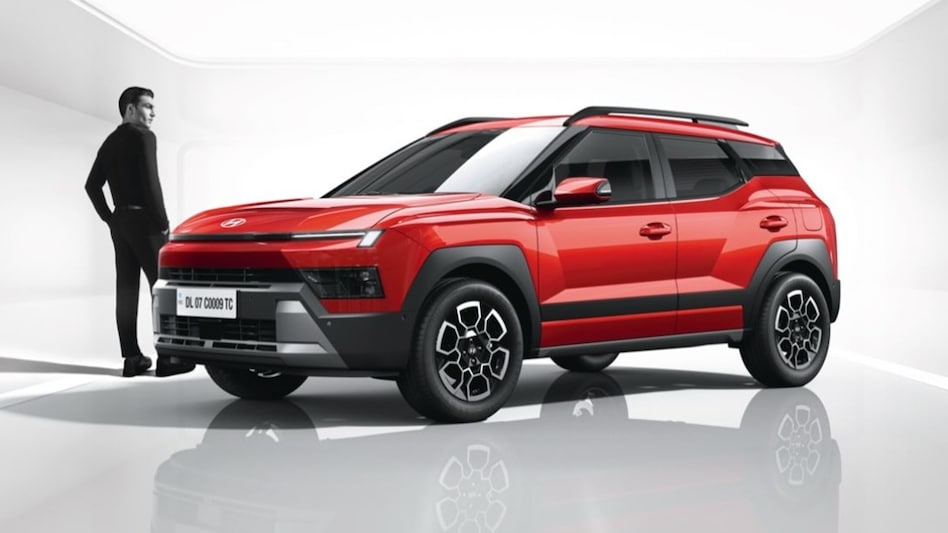
Hyundai has released its new mid-size crossover model, the Bayon. This new SUV is available in several trim levels: HX 2, HX 3, HX 3 Plus, HX 5, HX 6, HX 8, and HX 10. In the most basic configurations, the manufacturer offers a manual transmission.

The Bayon is equipped with a 1.5-liter four-cylinder gasoline engine that generates 115 horsepower and 143.8 Nm of torque. Additionally, the company offers a six-speed manual and a CVT transmission. The trunk capacity of this SUV is 505 liters. Vehicle dimensions are: length 4245 mm, width 1810 mm, and height 1605 mm, with a wheelbase reaching 2600 mm. The starting price for this vehicle is 9.99 lakh rupees, including export duties.

Let's look at the features of the most affordable, base version of the Hyundai Bayon. Primarily, this concerns safety and protection features. Six airbags are standard, even in the base variant. Furthermore, the car is equipped with driving assistance systems such as hill start assist, electronic stability control, vehicle stability control, ABS, and electronic brake force distribution.

Additional safety features include an emergency stop signal, rear parking sensors, Highline tire pressure monitoring system, day/night IR cameras, headlight beam assist function, central locking, automatic door unlocking upon collision detection, automatic door locking upon speed detection, keyless entry, seatbelt reminders, immobilizer, Isofix child seat mounts, and front disc brakes.

Regarding the exterior appearance, this version features LED projector headlights, H-shaped LED daytime running lights and turn signals, as well as H-shaped LED taillights and an LED top stop light. The car also has a rear spoiler, a shark fin antenna, and 16-inch steel wheels supplied with covers.

The interior features a color scheme of black and olive-gray tones. It includes fabric upholstery, a D-shaped steering wheel, manual adjustment of the driver's seat height, a fixed center console armrest, height-adjustable front seat headrests, and a digital instrument cluster.

In terms of comfort and convenience, the vehicle is equipped with front and rear electric windows, manual air conditioning, rear air vents for climate control, tilt and telescopic steering wheel adjustment, as well as front and rear Type C USB charging ports, a power outlet, and electrically adjustable side mirrors.

Fiat plans to launch Koala, an entry-level electric car priced lower than the cheapest in Brazil
Read more
autopapo.com.br

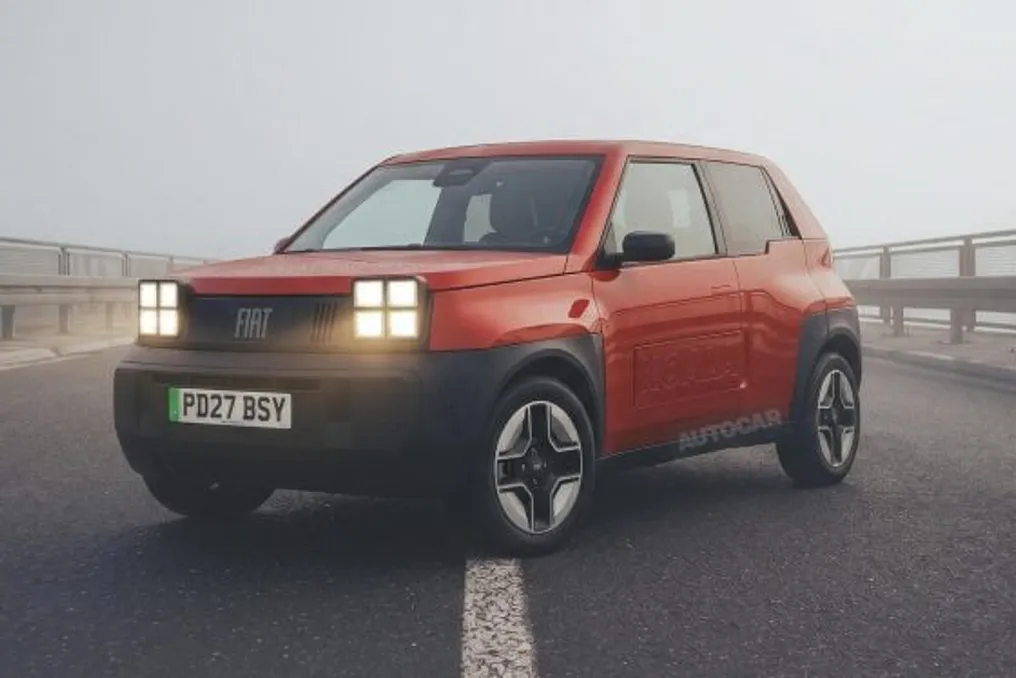
Fiat plans to launch Koala, an entry-level electric car priced lower than the cheapest in Brazil

Fiat is developing a new entry-level electric vehicle, which may be named Koala. This model will be built using the E-car platform, developed by Stellantis specifically for compact and economical electric vehicles. This same structure serves as the basis for the future Citroën 2CV, expected to reach European markets in 2028.

According to information released by the European press, the projected cost for this car would be 15 thousand euros, equivalent to approximately R$ 90 thousand. This price is below the R$ 119,990 of the BYD Dolphin Mini, which currently holds the title of the most affordable electric car available in Brazil.

During the Paris Motor Show, Arnauld Belloni, Fiat's current leader, confirmed to the British publication Autocar that the automaker is working on several models based on this new platform, including a compact car derived from the 2CV.

François Leboine, Fiat's design head, stated that the first electric in this line already has considerable progress, comparable to the 2CV project. Despite this, the company opted to postpone its public presentation.

Initial production of these platform vehicles is scheduled to begin in 2028 at the Pomigliano d’Arco factory in Italy, a location known for manufacturing the Panda.

The vehicle's name has not yet been finalized. Belloni announced that Fiat has already registered the Koala brand, following a strategy of naming the line with bear references, such as Panda and Grizzly. It is noteworthy that the koala, popularly referred to as a bear, is classified as a marsupial.

The executive ruled out the possibility of a retro look, similar to the 2CV. Instead, the design may incorporate conceptual elements from the Ippo project, created by Italian students during a competition promoted by Fiat and presented at Milan Design Week in April.

Belloni also clarified that the new model will be a traditional automobile, not an ATV, unlike the Topolino.

The project aims to meet a new segmentation of electric cars with dimensions under 4.2 meters, a topic currently under debate in the European Union. This category is inspired by Japanese kei cars, characterized by being small and having reduced taxes, although this regulation still requires approval.

Additionally, Fiat plans to maintain a combustion engine alternative. The Panda remains the brand's best-selling model in Italy.

Popular