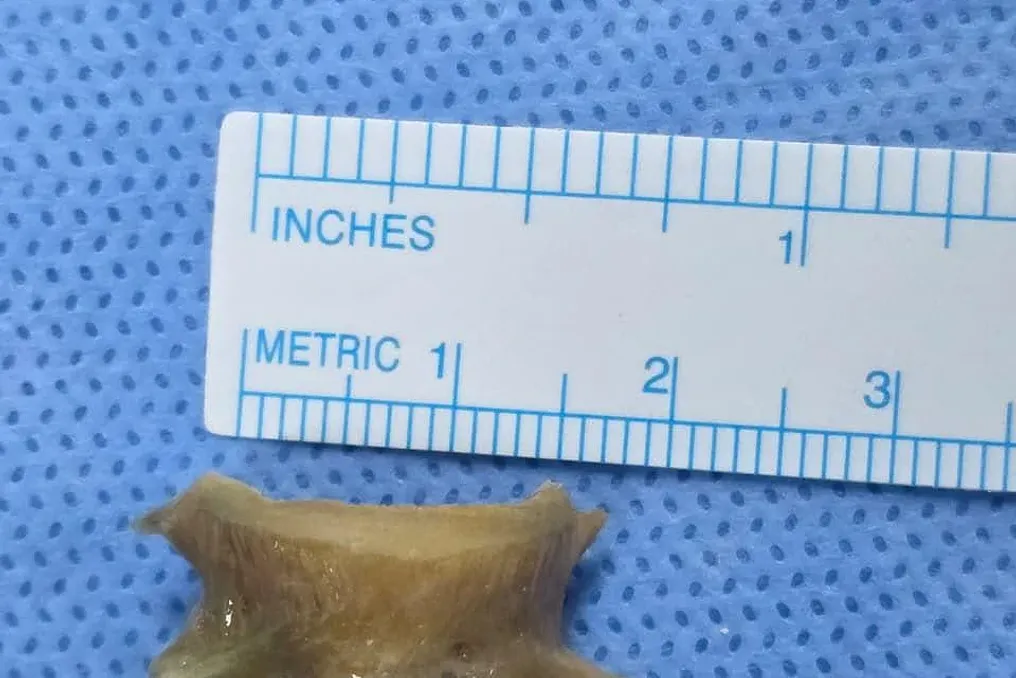
Doctors remove fish bone from resident's airways in Sharjah after two months of lodging
Read more
Khaleej Times
www.khaleejtimes.com

Doctors remove fish bone from resident's airways in Sharjah after two months of lodging

A resident of Sharjah who accidentally inhaled a fish bone while eating experienced breathing problems for almost two months before doctors discovered it lodged in his airways in the right lung.

Unnikrishnan Sivaraman, 60, reported swallowing a milkfish bone on July 1. Shortly after, he felt unwell, experienced nausea, and began coughing up blood. He sought care at Aster Hospital in Al Qusais.

However, the problem did not disappear. Sivaraman continued to cough and experience chest congestion, and his breathing became increasingly difficult. He decided to seek further medical attention.

A CT scan at another hospital revealed that the bone was stuck in the lower respiratory tract. He was referred back to Aster Hospital in Al Qusais, and subsequently to Aster Hospital Mankhur for treatment.

Doctors confirmed that the nearly 2 cm bone was located in the right main bronchus—the airway leading to the right lung. It remained there for almost two months. During this time, inflammation and granulation tissue formed around it.

Due to its position and sharp edges, removal posed a risk. Doctors warned of the possibility of injuring the airway wall or adjacent structures, which could cause bleeding, airway obstruction during the procedure, or difficulty maintaining a stable oxygen level for the patient.

The procedure was planned by pulmonologist Dr. Jolsana Augustine, ENT specialist Dr. Bharat Neranki Satish Rao, and anesthesiologists Dr. Abhishek Jayaprakash Narayan and Dr. Siraj Madayi Mithel.

On September 11, Augustine used a bronchoscope to move the bone from the right main bronchus towards the upper airways. Then, Dr. Rao used forceps to extract the bone, carefully monitoring the protection of the vocal cords. The doctors performed another bronchoscopy to check the airways and clear secretions.

Augustine noted: 'When a foreign body remains in the airways for a long time, inflammation and granulation tissue can complicate removal.' She added that the size, sharp edges, and location of the bone required controlled movements.

Dr. Rao emphasized that the final stage was delicate because the bone was close to the vocal cords. He stated that their goal was to remove it while ensuring the protection of these structures.

Sivaraman was discharged a few hours later in stable condition. During a follow-up examination, he reported that his breathing had improved and no further treatment was necessary.

He expressed gratitude to the doctors: 'I am very grateful to the doctors for the care and support I received. I am very satisfied with my recovery and significant improvement in breathing and overall condition.'
Similar stories

Macaw opens lock and escapes with another in Juína (MT); one bird rescued after six days
Read more
g1.globo.com

Macaw opens lock and escapes with another in Juína (MT); one bird rescued after six days

A macaw managed to open the lock of its enclosure and escaped accompanied by another bird in the city of Juína, located 735 km from Cuiabá. This Saturday (24), one of the birds was rescued and returned home, while the other remains missing.

The two birds, named Lara and Larinha, have been cared for for approximately eight years by veterinarian Gabriela Souza and her husband, Fernando Bergamin. According to Gabriela, the escape occurred just a few hours after she performed the routine of feeding the birds, changing the water, and checking the enclosure's closure.

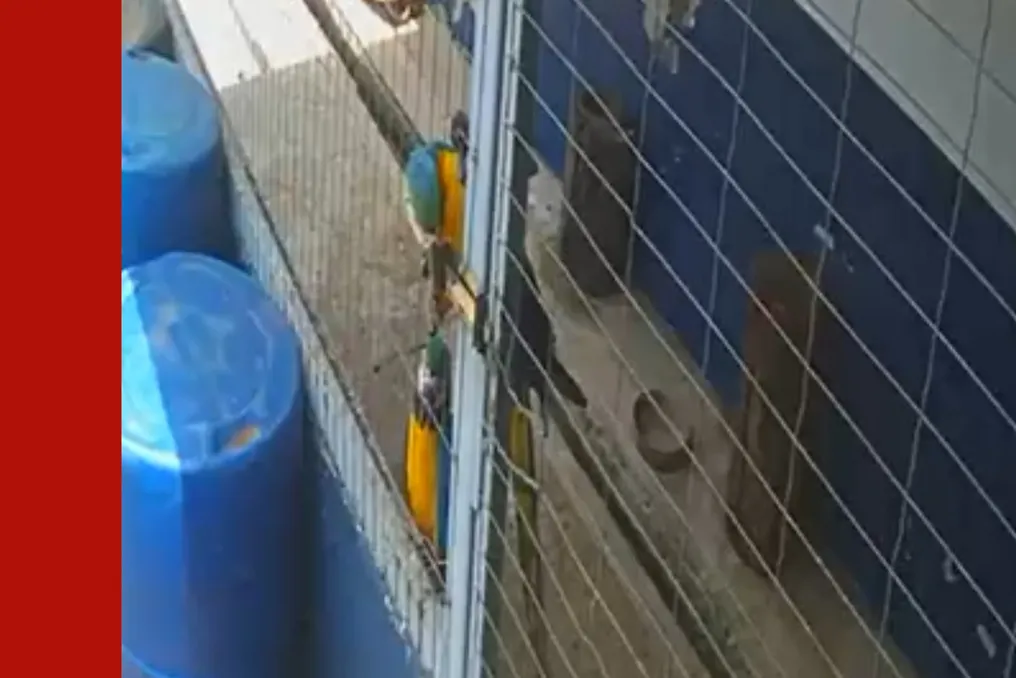
Images captured by a security camera recorded the moment one of the macaws manipulated the lock until it managed to unlock it. After the object came loose, both birds waited a short period before taking flight.

Gabriela was notified by a resident who spotted a macaw in a tree in the Module 4 area. Due to the height at which the bird was, the veterinarian requested support from the Fire Department. Through persistence and dialogue, she managed to follow the macaw's flights between progressively lower trees until finally attracting it with its usual feed to a transport cage.

The team managed to place the bird in a transport cage, and according to Gabriela, it showed signs of health, although it was visibly thinner and exhausted after the days away from home. She reported that the bird arrived very hungry, being fed the usual ration and drinking water desperately.

Searches continue to locate the second macaw

Efforts are ongoing to find the second bird. Gabriela speculates that it may be in the central area of Juína, particularly in the Módulo 1 and Módulo 4 neighborhoods, areas where residents reported seeing macaws flying at low altitude and landing on trees.

The veterinarian clarifies that the birds do not have amputated wings, but they are not accustomed to long flights. For this reason, she presumes that the lost macaw is moving short distances and landing on nearby trees. The greatest concern is the possibility that it may have difficulty finding water and food on its own, given that the birds lived under the family's care for eight years and had an established routine of feeding and access to water.

The family asks residents that if they see a lone macaw, they should contact the guardian or call the Fire Department, providing the exact location. Gabriela adds that the birds are curious and show attention when someone interacts with them, but they are not used to landing on strangers' arms.

Popular