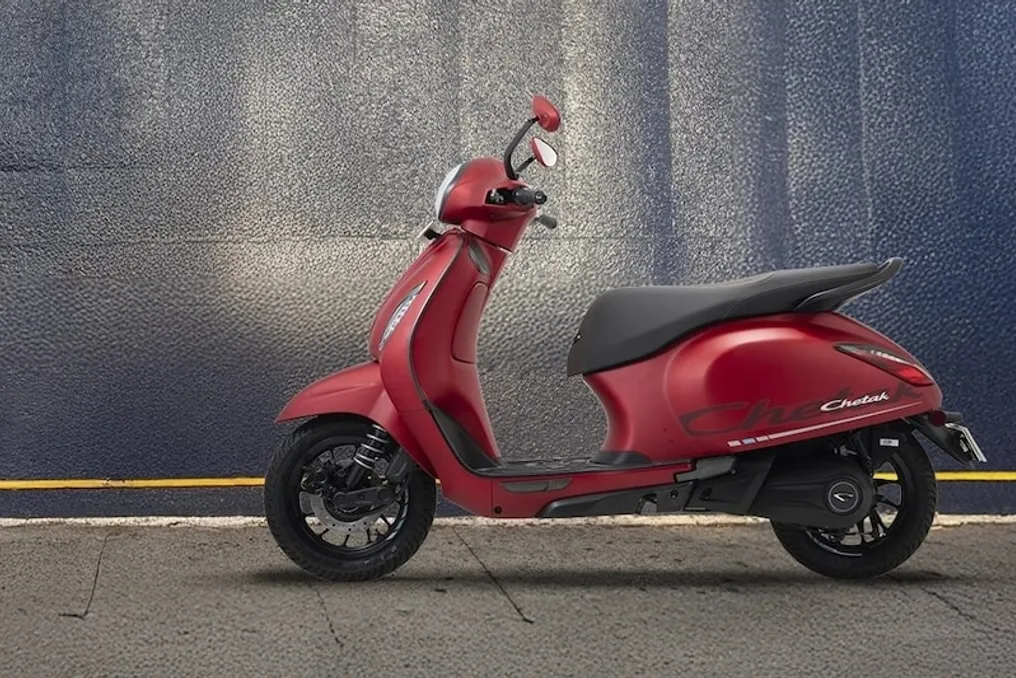
Amazon sales of two-wheeled vehicles increased sixfold during the sale
Read more
Aaj Tak
www.aajtak.in

Amazon sales of two-wheeled vehicles increased sixfold during the sale

Online shopping popularity is growing significantly in the Indian market. Previously, consumers purchased household goods, then phones, and now they have started buying two-wheeled vehicles online. According to a recent report from Amazon India, people in India are actively purchasing two-wheeled transport online, although the company did not disclose exact figures.

According to Amazon, after the start of the Great Indian Festival 2026 sale, the growth in the two-wheeled transport category on the platform was six times higher than the average for normal days. This means that if the platform sold one two-wheeled vehicle on a normal day, this figure reached six during the sale.

The company noted that demand increased for both electric scooters and traditional motorcycles for daily commuting, and buyers also began purchasing premium motorcycles online. In the company's opinion, the share of small towns in online purchases is growing rapidly; over 60 percent of the total volume of two-wheeled transport sales on the platform comes from cities that are not metropolises.

Among the brands popular with buyers on Amazon, Chetak and Ampere stand out in the electric segment. As for traditional Indian manufacturers, Hero MotoCorp and Bajaj Auto models are most in demand. Additionally, international brands such as Triumph and KTM attract attention in the premium motorcycle segment, indicating that users are interested not only in affordable models but also in expensive transport.

The trend of online purchase of two-wheeled transport is not limited to large cities. Over 60% of sales come from non-metropolitan areas, including cities such as Surat, Kota, Bhubaneswar, Prayagraj, Nellore, Warangal, Amritsar, Ludhiana, Belagavi, Kanpur, and Bilwara.

Good growth was also observed in the electric vehicle segment. According to Amazon, during the Great Indian Festival sale, the demand for electric vehicles increased eightfold compared to average figures. Consumers in the automotive market have moved from buying only bikes and scooters to purchasing other items such as helmets, dashcams, riding gear, car air fresheners, car vacuum cleaners, as well as spare parts and car care products.

The company also reported that its auto store saw a 2.2 times increase compared to average days, indicating that consumers are purchasing not only the vehicles themselves but also accessories for their maintenance and care online.

Similar stories

Amazon discloses Q3 2026 results with lower-than-expected profit and negative cash flow due to AI investments
Read more
olhardigital.com.br

Amazon discloses Q3 2026 results with lower-than-expected profit and negative cash flow due to AI investments

Amazon presented its financial results for the third quarter of 2026, which fell short of Wall Street projections in terms of both earnings per share and total revenue. Despite the rapid advancement of the cloud computing division, Amazon Web Services (AWS), the company maintained its goal to invest US$ 220 billion (approximately R$ 1.19 trillion) during 2026. However, the accumulated free cash flow over the last twelve months registered a negative balance of US$ 42.4 billion (equivalent to R$ 229 billion).

Following the disclosure of this data on Thursday (29), the company's shares dropped by more than 7% in after-hours trading. Revenue reached US$ 201.9 billion (R$ 1.09 trillion), representing a 12% increase compared to the same period in 2025, although it was slightly below the US$ 202.31 billion (R$ 1.09 trillion) predicted by analysts consulted by LSEG.

Earnings per share were reported at US$ 1.89, falling below the expectation of US$ 1.96. Net income totaled US$ 20.7 billion (R$ 111.8 billion), a figure lower than the US$ 21.2 billion (R$ 114.5 billion) achieved in the previous year. Amazon attributed this reduction mainly to gains of US$ 9.5 billion from investments in Anthropic, which were accounted for in the third quarter of 2025, raising the comparison base.

The company reaffirmed its commitment to capital expenditures, maintaining the forecast of US$ 220 billion (R$ 1.19 trillion) for 2026. These resources are allocated to various initiatives, including expanding the essential infrastructure for artificial intelligence (AI) services.

This high level of investment directly impacted free cash flow. In the twelve months ending in September, Amazon recorded an outflow of US$ 42.4 billion (R$ 229 billion), contrasting with the positive inflow of US$ 14.8 billion (R$ 79.9 billion) observed in the same period last year. According to the company itself, this change was primarily driven by an increase of US$ 94.8 billion (R$ 511.9 billion) in property and equipment acquisitions, after deducting amounts obtained from sales and incentives. Amazon associated this increase in expenses, above all, with the investments made in AI.

In parallel, the accumulated operating cash flow over twelve months showed a growth of 29%, reaching US$ 168.3 billion (R$ 908.8 billion). The disparity between this indicator and free cash flow reflects the significant weight of infrastructure investments.

Looking ahead to the fourth quarter of 2026, Amazon projects revenue ranging between US$ 240 billion and US$ 247 billion (corresponding to about R$ 1.30 trillion to R$ 1.33 trillion), indicating a projected annual growth between 12% and 16%. The average value of this range was slightly below market expectations. The expected operating profit is between US$ 28.5 billion and US$ 33.5 billion (between R$ 153.9 billion and R$ 180.9 billion), compared to the US$ 25 billion (R$ 135 billion) recorded in the fourth quarter of 2025. Furthermore, Amazon forecasts that advertising revenue will return to grow annually by around 18% in the last quarter of the year.

The current results place the company before a dilemma: how to maintain the expansion of AWS and AI services without investments continuing to harm cash generation capacity. Although the cloud division exceeded forecasts, the unsatisfactory performance in profit and advertising, combined with revenue outlooks for the holiday period, contributed to pressure on shares.

India's online commerce market to exceed $90 billion in 2026, surpassing mobile phones in the food segment
Read more
yourstory.com

India's online commerce market to exceed $90 billion in 2026, surpassing mobile phones in the food segment

According to a report by Redseer Strategy Consultants, India's online commerce market is projected to reach over $90 billion in 2026, demonstrating an annual growth rate of 22–24%. This growth rate is the fastest in the last five years and is driven by daily consumption categories such as food, rather than mobile phones.

The analysis showed that the Gross Merchandise Value (GMV) of e-commerce increased by approximately 25% year-on-year, reaching about $38 billion in the first half of 2026. This marked the strongest performance for the first half in four years.

Despite the acceleration in online retail, mobile device sales remained flat, showing zero growth in the first half. It is projected that the growth for the entire year will be only 2–3% due to sharp price increases curbing sales volume.

Consequently, the food segment is poised to overtake mobile phones, becoming the second-largest category in Indian e-commerce, trailing only fashion.

Kushal Bhatnagar, a partner at Redseer, noted that the fastest online commerce growth in India this year is observed where demand remains most stable.

The report also highlighted that in 2026, Food, Beauty and Personal Care (BPC), as well as Home Goods and Furniture will account for about 40% of the total online commerce GMV and roughly three-fifths of the annual GMV increase.

Only the food segment is predicted to contribute nearly a third of the GMV increase, growing by 50–53% over the full year. This will allow it to increase its market share from 16% in 2025 to 19% in 2026. Mobile devices, which accounted for about 19% of total sales last year, are expected to see their share drop to approximately 16%.

It is forecasted that BPC will grow by 36–39%, and the Home Goods and Furniture segment will increase by 31–34% in 2026.

In contrast, electronics showed a recovery of 22% in the first half of 2026 after falling by 5% in the same period of 2025. Redseer attributes this surge to several factors: increased demand that was 'pre-loaded' due to the reduction of the Goods and Services Tax (GST) on major home appliances from 28% to 18% in September 2025; significant discounts on air conditioners due to changes in Bureau of Energy Efficiency star ratings; a shortage of liquefied gas, which caused an increase in induction cooktop sales by 200–300%; and early purchases of laptops ahead of anticipated component price hikes.

Popular