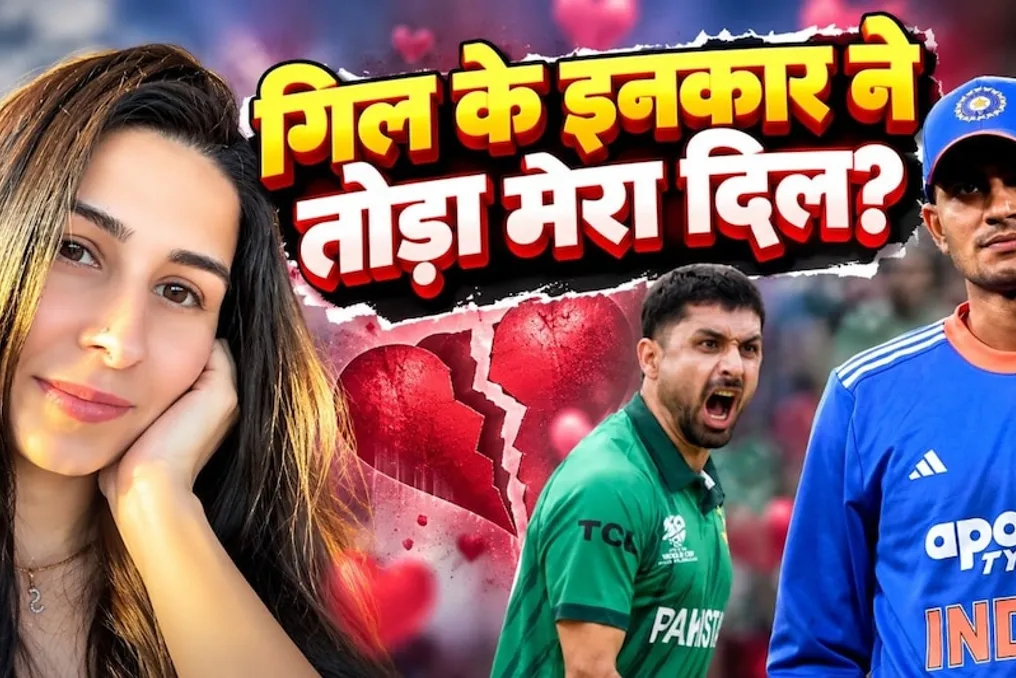
Female fan argues with Pakistani player over Shubman Gill, then expresses disappointment after captain refuses photo
Read more
Aaj Tak
www.aajtak.in

Female fan argues with Pakistani player over Shubman Gill, then expresses disappointment after captain refuses photo

India's captain Shubman Gill is preparing for a series of matches in New Zealand, where the team will play five ODIs following T20s. This series is highly significant for both teams ahead of the 2027 ODI World Cup.

However, before the ODI series begins, a video of a female fan is circulating widely on social media, in which she voices complaints against Shubman Gill regarding his refusal to take a photograph with her.

The most notable point is that this female fan had previously engaged in a heated discussion with Pakistani spinner Abrar Ahmed during the 2025 Champions Trophy, defending Shubman Gill's interests.

In the viral video, the fan recounts her story in detail and with emotion. She claims that in New Zealand, she clashed with Pakistani bowler Abrar Ahmed for the sake of Shubman Gill. However, when she recently approached Shubman Gill in New Zealand asking for a joint picture, the Indian captain categorically refused, responding only with the word 'excuse me.' The fan expressed her dissatisfaction with Gill's behavior.

According to information from the viral video, during the match between India and Pakistan at the 2025 Champions Trophy, Pakistani spinner Abrar Ahmed made a very aggressive gesture after dismissing Shubman Gill. A major scandal erupted in social media regarding Abrar Ahmed's celebration style. It was at that moment that this female fan spoke out against Abrar Ahmed, supporting Gill, and became viral online.

Now, the same fan has once again become the center of attention, but this time the reason is not the Pakistani players, but Shubman Gill himself, the captain of the Indian team. Nevertheless, this assertion is entirely based on the statement of this female fan, and there is no official confirmed information about the circumstances under which Gill refused the photo.

Similar stories

Pakistani cricket personality Basit Ali highly praised India's performance after the match against New Zealand
Read more
www.aajtak.in

Pakistani cricket personality Basit Ali highly praised India's performance after the match against New Zealand

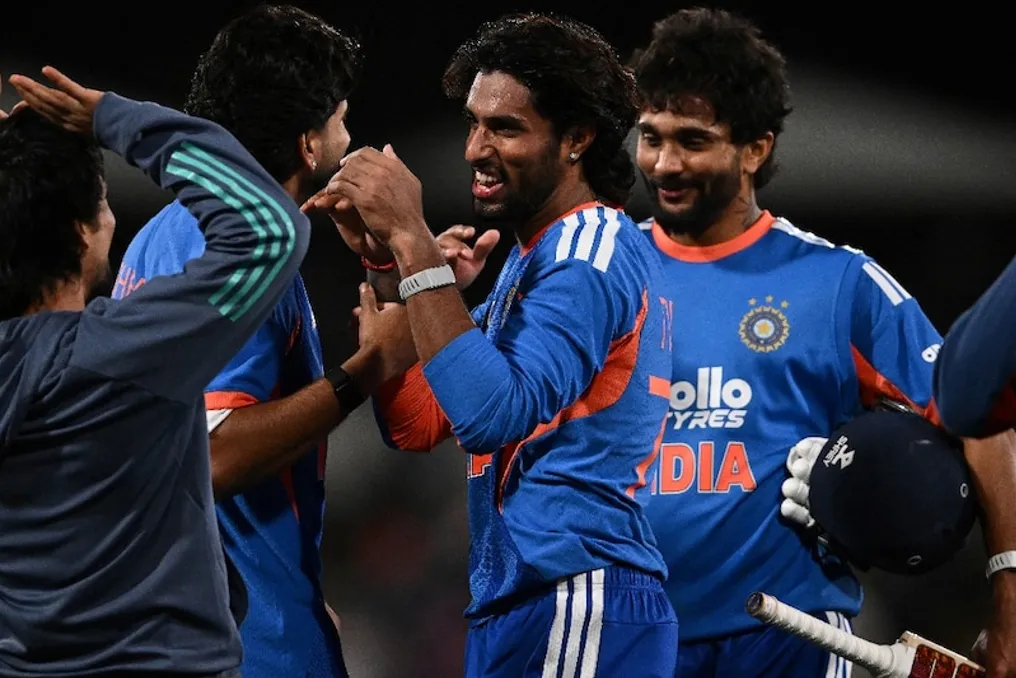
Following a tense T20 match between India and New Zealand in Christchurch, Pakistani former cricketer Basit Ali expressed high praise for the Indian team's performance on his YouTube channel. Analyzing the game, Basit Ali named young batsman Tilak Verma as the true hero of this victory, noting that thanks to him, India managed to win a match that seemed lost.

In his show, Basit Ali stated that when India's early wickets fell quickly, there was a feeling that the game had completely gotten out of control. It was at this moment that Tilak Verma demonstrated great skill by stabilizing the course of the match. He noted that Tilak did not take risks trying to hit the ball for big boundaries, but instead effectively used singles, doubles, and small boundaries.

He also positively commented on Captain Shreyas Iyer's decision to send Vaibhav Suryawanshi to the third position. Nevertheless, Basit Ali believes that the team composition could change if Ishan Kishan is able to return to fitness. Furthermore, Basit Ali highly praised the contribution of young Pakistani players to the sport, commending Naman Dhir and Nitish Kumar Reddy for scoring strong runs in the lower order, which helped turn the tide of the game.

Basit Ali criticized the captaincy of New Zealand's Mitchell Santner, stating that due to some tactical errors, New Zealand let go of a match that was theirs. Although Mitchell Santner played strongly with four wickets taken, as a captain he made decision-making errors. Basit Ali sharply hinted that the New Zealand players would think about how the match slipped away from them. He emphasized that in limited-overs cricket, the match does not end until the last ball is bowled.

In Basit Ali's opinion, this young Indian lower middle order not only proved its competence but also demonstrated how strong India's squad depth is.

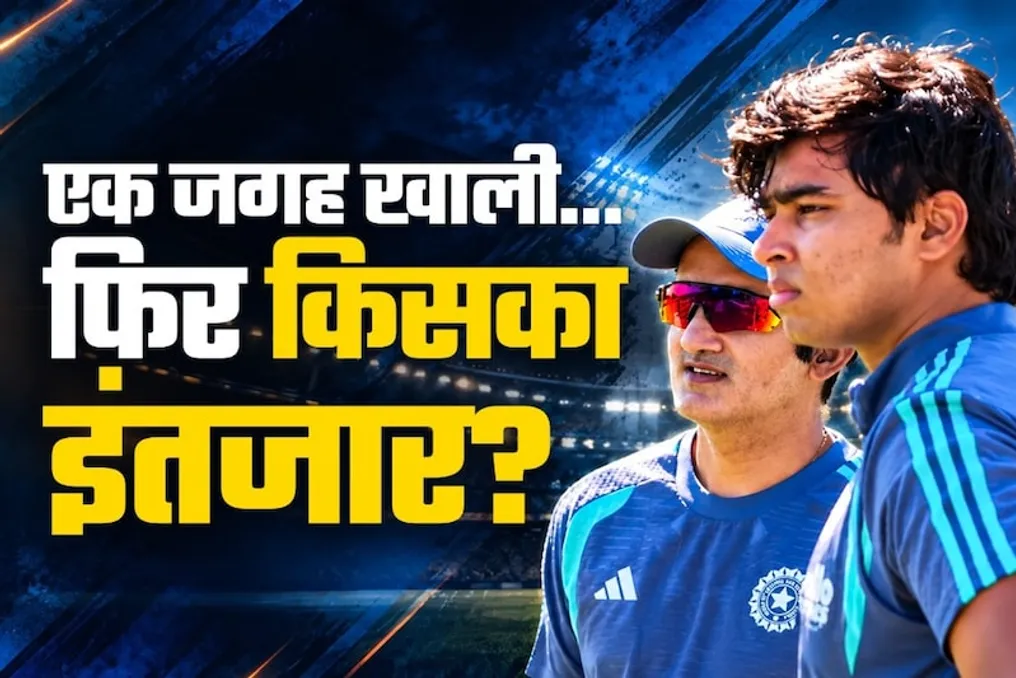
Questions about the possible inclusion of Vaibhav Suryavanshi in the squad after Ishan Kishan's injury
Read more
www.aajtak.in

Questions about the possible inclusion of Vaibhav Suryavanshi in the squad after Ishan Kishan's injury

It is not easy for young players in the Indian team to secure a spot, and the lack of chances in the starting lineup, even after making the team, presents a serious challenge. Vaibhav Suryavanshi is currently going through such a period. Attracting attention with his explosive batting, Vaibhav awaits his chance during the tour to New Zealand, but this wait is getting longer.

Whether it is the series against Afghanistan, matches against West India, or the current tour in New Zealand, Vaibhav constantly has to sit on the bench. The question is not whether Vaibhav can replace Sandeep Samson and Abhishek Sharma at the top order. The question is whether there is another way for Vaibhav if the team management does not want to part with this pair.

Before the second match of the five-match T20 series against New Zealand, the Indian team received a blow: wicketkeeper-batsman Ishan Kishan was ruled out due to a hamstring strain. This injury occurred during the first T20 match of the series. Following Ishan's injury, the possibility of Vaibhav playing naturally comes up, as a batsman's spot has opened up. However, there is no convincing reason to believe he will immediately be brought into the starting XI.

The team management could give a chance to another available player instead of Ishan. The pair of Sandeep and Abhishek played a key role in India's victory by four wickets, chasing a target of 226 runs in the first T20. Therefore, the decision to break up this pair will not be easy.

But here arises an important question: is opening batting the only path for Vaibhav? Why shouldn't he play at number three or four?

The team management's strategy regarding Vaibhav can be understood. Sandeep Samson and Abhishek are both in good form and have proven their usefulness in chasing big targets. Thus, changing a successful combination just for one young player could be a risky move.

However, the team composition does not mean that all paths are closed for the young batsman. If Vaibhav is considered part of future plans, then the possibility of testing him at number three or four should be considered.

Undoubtedly, there is a difference between opening and batting in the middle order. Facing a new ball and coming onto the field in the middle of an innings are two different types of tasks. Preparing Vaibhav for this role will also require time. But until he is given a chance, the question of assessing his multi-faceted abilities will not arise.

The team management needs to clarify whether Vaibhav is exclusively a future opener or if the team has plans to use him in various situations.

Vaibhav has another option. Ranji Trophy matches are being held in India. If he does not see a real chance to play in the New Zealand series, the team should consider the benefit of constantly sitting on the bench. Fielding Vaibhav for Bihar in the Ranji Trophy could give him an opportunity to play competitive cricket. First-class cricket, long-form games, and testing technique in different conditions would be beneficial for his development.

Nevertheless, sending him back to India mid-series is not a simple decision. This requires considering the team's needs, selectors' plans, and the schedule of matches in Bihar. But the general question remains: is it better to stay in the team without playing, sitting in the dressing room, or to play?

For a young player like Vaibhav, training is extremely important. Net practice is not enough to unlock talent; the real test happens on the field, where decisions must be made with every delivery and the innings managed under pressure.

Constant lack of opportunities does not automatically prove that the team management is against him. In international cricket, a place is determined by performance, team needs, and squad composition. The good play of Sandeep and Abhishek gives them a solid foundation to retain their spots in the starting XI.

However, the role of the young player in the team and the future plan must be clearly defined. If Vaibhav cannot be given a spot at the top order now, will he be prepared for the middle order? And if there is no chance in the near future, will the possibility of releasing him from the team to participate in competitive matches be considered?

Following Ishan Kishan's injury, all attention is now focused on the team management's decisions. Whether Vaibhav will be given a chance will be known later, but the team must explain when and how his talent will be utilized.
India and New Zealand Participate in Traditional Māori Greeting Before T20 Series Start
Read more
www.aajtak.in

India and New Zealand Participate in Traditional Māori Greeting Before T20 Series Start

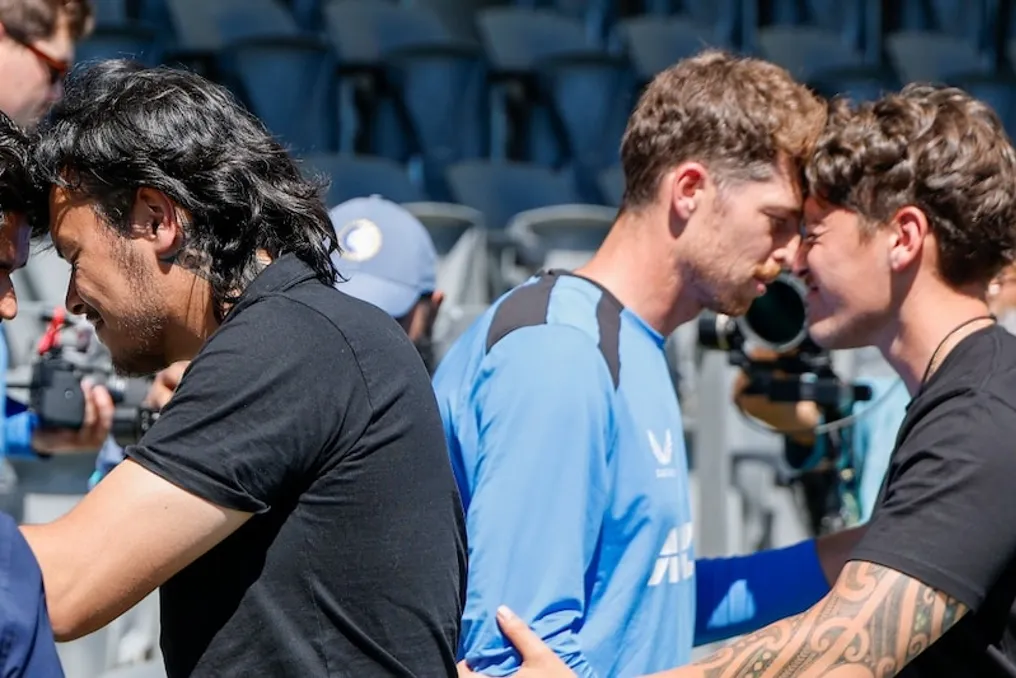
Before the start of the T20 series, teams from India and New Zealand were warmly welcomed in a special traditional style in New Zealand. The Board of Control for Cricket in India (BCCI) shared photos on social media showing Indian and New Zealand players during a traditional Māori greeting. Among these pictures were Shreyas Iyer and New Zealand captain Michelle Santner.

The BCCI accompanied the post with the caption: 'Beautiful Māori greeting to start the tour.' The board also announced that the series between India and New Zealand will begin on October 22.

In New Zealand Māori culture, this traditional greeting is called Hongi. In it, two people approach each other to touch noses. In some cases, they also touch foreheads. This is not just a way of greeting but a symbol of mutual unity and connection.

Behind this ceremony is the symbolic representation of exchanging life breath, known as 'Ha'. Thanks to this, guests and locals are able to establish relationships and a sense of closeness. This greeting is used at traditional gatherings and major celebrations of the Māori community, after which a handshake may follow.

Although Hongi is an important part of the cultural traditions of the Māori people, due to the threat of infection during the COVID-19 pandemic, some tribes and their councils temporarily suspended this greeting. The photos of the Indian and New Zealand players demonstrated the cultural connection between the two countries at the beginning of the cricket tour. Both teams will now meet on the field in the T20 International series, which starts on October 22.

Popular