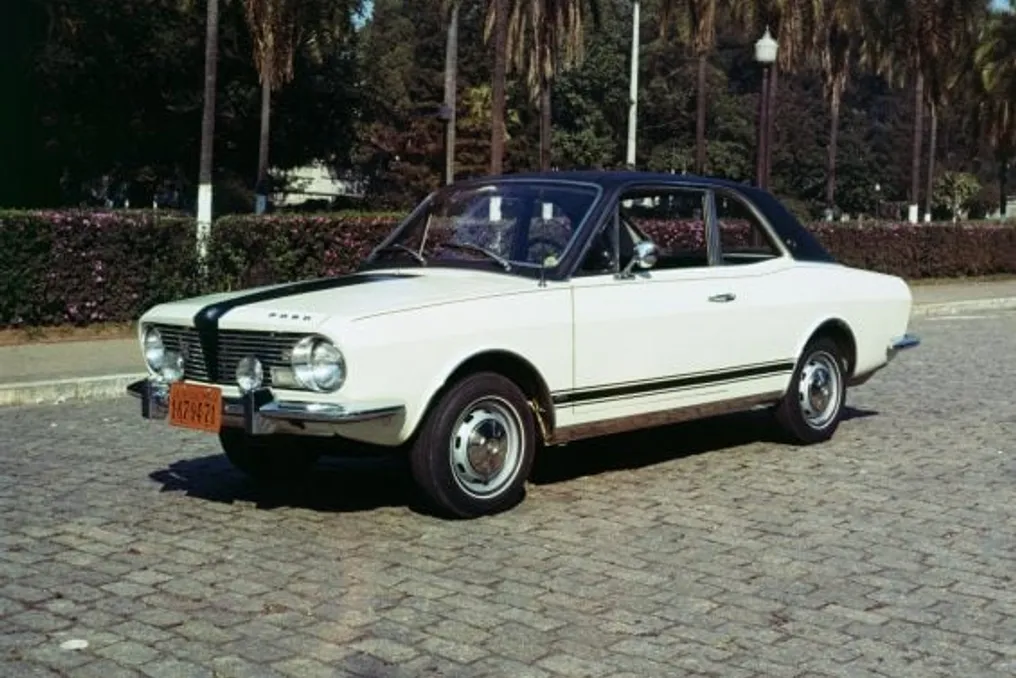
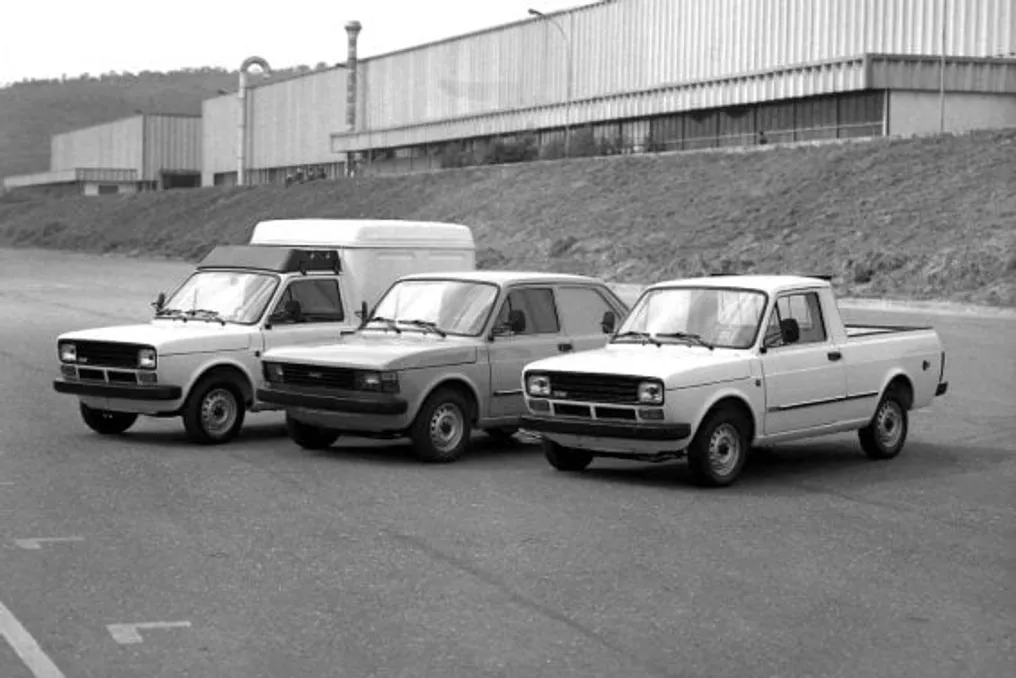
Fiat celebrates half a century in Brazil with nine pioneering models
Read more
AutoPapo
autopapo.com.br

Fiat celebrates half a century in Brazil with nine pioneering models

Fiat's trajectory in Brazilian territory reached 50 years. The brand made its largest investment outside of Italy with the inauguration of industrial facilities on July 9, 1976.

The decision to establish the factory in Betim, Minas Gerais, was considered bold, given that the location was 600 km from São Bernardo do Campo (SP), an area that already housed seven manufacturers responsible for almost 100% of the light and heavy vehicle industrial park at the time. Although the project faced the possibility of postponement, the government of Minas Gerais was fundamental in ensuring the completion of the works.

Fiat's Pioneering Models

The first vehicle launched, the 147, was a three-door hatchback based on the Italian 127 model. It featured several innovations, such as having only 3,627 mm in length, a 1,050 cm³ transverse engine designed to maximize interior space, 55 gross hp (SAE at the time), a spare tire located in the engine compartment, articulated steering, and dual-circuit brakes.

On July 5, 1979, the 147 equipped with a hydrated ethanol engine was presented to the market, just four years after the start of the Brazilian governmental program in response to the first global oil crises. Over half a century, the Italian brand claims the creation of nine distinct segments in Brazil, being a leader in passenger cars and light commercial vehicles since 2021, and also during the period from 2003 to 2015.

Among the pioneering milestones, the 147 Fiorino stands out, which introduced the van segment derived from a light pickup truck. The Uno Mille was the first car with modern 1-liter engines. The Uno Turbo was notable for being a pioneer in the use of this type of factory engine (1.4, 118 hp), a solution adopted by seven other models over the years to increase power and torque.

Furthermore, there were innovative models such as the one derived from the Palio Weekend wagon, which served as an adventure vehicle capable of handling less complex off-road routes. More recently, the Fiat Toro established itself as the first mid-size pickup truck, positioned between the light and medium categories, and built on a monocoque chassis.

Similar stories

Dealerships of brands like Fiat and Jeep will now sell Michelin and Continental tires
Read more
autopapo.com.br

Dealerships of brands like Fiat and Jeep will now sell Michelin and Continental tires

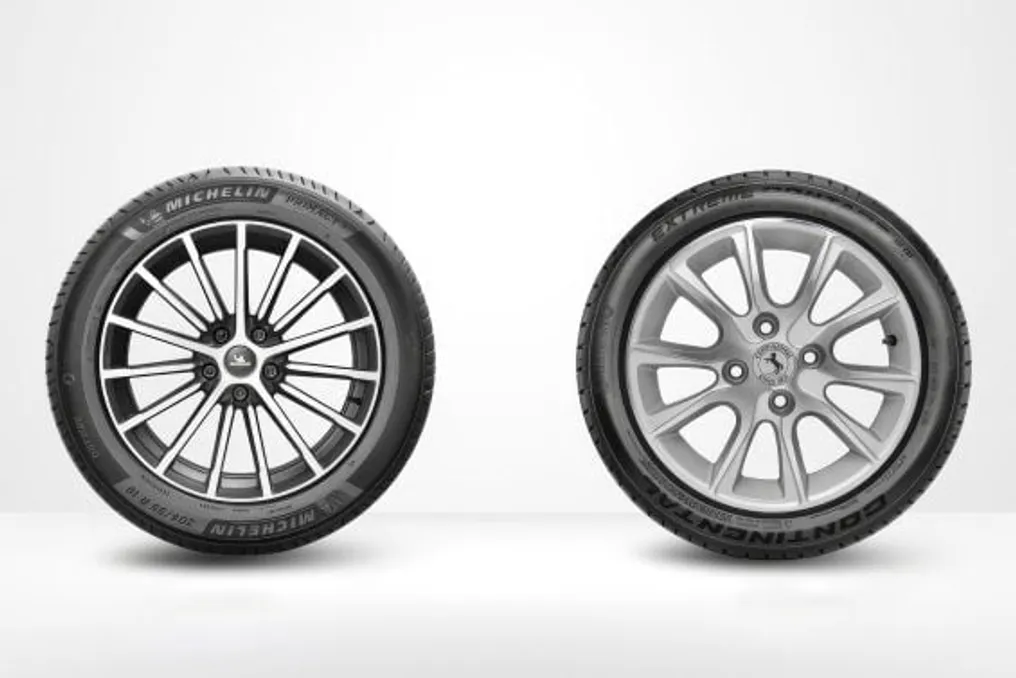
Owners of vehicles from Stellantis brands have gained a new option when replacing their tires. The company has started selling Michelin and Continental tires at Citroën, Fiat, Jeep, Peugeot, Ram, and Leapmotor dealerships, the latter being a Chinese partner company, throughout Brazilian territory.

These tires have been added to the after-sales catalog, which previously offered original parts, accessories, and lubricants.

The announcement of this novelty occurred this Wednesday, the 28th. Both manufacturers offer tires suitable for various types of vehicles, ranging from compact cars to SUVs, pickup trucks, utility vehicles, and sports models.

Both Michelin, of French origin, and Continental, German, have production units in Brazil: Michelin operates in Rio de Janeiro, and Continental is established in Camaçari, Bahia.

Michelin introduces a total of 35 products, organized into nine categories, covering rim sizes from 15 to 19 inches. According to Stellantis, 18 of these items are new additions to the dealerships' catalog.

This selection meets various usage profiles: it includes the Primacy line in three versions and Energy XM2+ for passenger cars; Agilis 3, intended for vans and cargo vehicles; X LT A/S and LTX Force, aimed at pickup trucks and SUVs (the latter being suitable for unpaved roads); Latitude Sport 3, for sports-profile SUVs; and Pilot Super Sport, for high-performance models.

Continental, for its part, integrates 32 items into the catalog distributed across seven lines. Its tires are compatible with rim sizes from 14 to 19, in addition to some applications for 20-inch wheels.

Continental's offering covers compact cars, sedans, SUVs, pickup trucks, and commercial vehicles.

By combining the offerings of both manufacturers, 67 items are made available in the stores of the six Stellantis brands, expanding replacement options without the consumer needing to leave the authorized network.

Recalling 5 vehicles that shared mechanics or origin with competing brands
Read more
autopapo.com.br

Recalling 5 vehicles that shared mechanics or origin with competing brands

Large automotive conglomerates that group various brands under one umbrella create cars with unexpected characteristics. For example, the new Jeep Avenger combines the off-road style of the American manufacturer but uses the French Peugeot 208 platform, an Italian Fiat engine, and a Japanese Aisin CVT gearbox.

The exchange of vehicles between different manufacturers is not a new phenomenon; it has existed since the earliest stages of the automotive industry. This article recalls examples of cars that originally belonged to one brand but were sold under another.

It is sometimes amusing to observe how people on social media call French cars 'bombs' and criticize the Renault Kwid for wheels secured with three bolts, while praising the Ford Del Rey or the Pampa pickup. The brand with the blue oval receives credit for the Corcel and its derivatives, but the true credit here belongs to France.

This story began with Willys-Overland in Brazil, which sold models from both the American parent company and Renault. The Dauphine, Gordini, and Interlagos models were French projects that did not find their place in the Brazilian market. The company worked on a new compact car based on the Renault 12, which was called Project M. Willys-Overland developed the design locally, as did the Aero sedan and Rural wagon.

Parallel to this project, Willys's Brazilian operation was acquired by Ford. Project M was launched in 1968 as the Ford Corcel; the first units came out with the Willys logo applied to the windows.

This merger proved to be very timely: it provided Ford with a modern, ready-to-produce compact car, as well as Jeep. Until then, the brand only produced pickups, trucks, and the luxurious Galaxie.

Renault also positively influenced the origin of the Corcel: the economical and reliable Cléon engine became the first front-wheel-drive car produced in Brazil and the first to pass inspection.

Fiat always sought to sell mid-sized pickups in Brazil. It created the compact car segment in the country and has dominated it for decades thanks to the Strada. Ten years ago, it created the intermediate model segment with the Toro, but it lacked something larger with a frame.

Fiat's acquisition of Chrysler in 2014 was late; at that time, American manufacturers only offered large models, and there was no interest in the mid-range there. The decision only came after Fiat merged with PSA to create Stellantis.

Peugeot designed a mid-sized pickup in partnership with Changan and was preparing to launch this model in Brazil as the Landtrek. After the formation of Stellantis, Fiat Brazil intervened because such a vehicle would have greater success in the Italian brand's network.

After replacing the grille and emblems, the Fiat Titano entered the market in early 2024. The pickup debuted with a 2.2 turbodiesel engine from Peugeot with 180 hp, in the version it was sold in Uruguay. This first version was temporary: Fiat engineers in Betim (Minas Gerais) were already working on replacing this engine with their 2.2 Multijet engine with 200 hp, implementing the 8-speed ZF gearbox from the Ram 1500, and improving suspension comfort. This second phase, starting in 2025, had more Fiat 'DNA', differing from the initial models.

The Brazilian Dodge Polara was one of many variations of the British Hillman Avenger. This compact car was created by European Chrysler and conquered the world, always undergoing small local changes.

In Argentina, it was sold as the Dodge 1500 and came in sedan and wagon body styles, always with four doors. Argentine Chrysler was bought by Volkswagen in 1980, as in Brazil. The Dodge 1500 continued to be sold in the market as the Volkswagen 1500, retaining the Chrysler emblem until 1987. Since then, the grille has featured the VW letters, making it the only passenger car in the brand's history with a front engine and rear drive.

The Argentine Volkswagen 1500 had some related components, such as wheels from Voyage and typography of the emblems. It was discontinued in 1990, giving way to Gacel—the name Voyage received there.

Subaru and Saab have a very similar origin. Both companies manufactured aircraft and transitioned to car production after World War II. They also pay great attention to quality engineering and the use of proprietary solutions.

Their paths intersected through General Motors, which owned Saab and held a 20% stake in Subaru. North American market research showed that the Swedish brand would benefit from having an entry-level model there.

The Saab 9-2X appeared based on the Subaru Impreza wagon, but with some technical modifications to look like a Swedish model. It received additional sound insulation and front seats with active headrests.

Saab also required the use of aluminum rear suspension arms and a reduction in unsprung mass. In the sporty 9-2X Aero version with a turbocharged engine, the STI model's steering linkage was used in a more direct manner.

The model was also better equipped, potentially offering a sunroof, leather heated seats, xenon headlights, and a CD player with a cassette. Despite being an upgraded WRX wagon, Saab fans were skeptical of the model, and it only lasted two years.

Seat became part of the Volkswagen Group in 1986, positioning itself as an affordable option with a sportier character. Their cars used the parent company's platforms with their own developments.

When they entered the executive sedan segment, the natural choice was to create a 'brother' to the Passat. But they chose a different path and used the Audi A4 to create the Exeo.

The third generation of the Audi A4 was discontinued in 2008, and its equipment was transferred from Germany to the Seat factory in Spain. Exeo breathed new life into this version of the German sedan. The Spanish version had a different front and rear design. The dashboard was taken from the convertible version with three round vents in the center to give it a sportier look. The wagon body was also returned to Seat.

The Exeo was released with 1.6 atmospheric, 1.8 20V turbocharged, and 2.0 turbo-diesel engines; starting in 2010, the turbocharged engine was replaced by the 1.8 TSI and 2.0 TSI. Unlike the Audi A4, the Seat sedan never had all-wheel drive and was sold only with front-wheel drive. In 2014, it was discontinued without a successor.
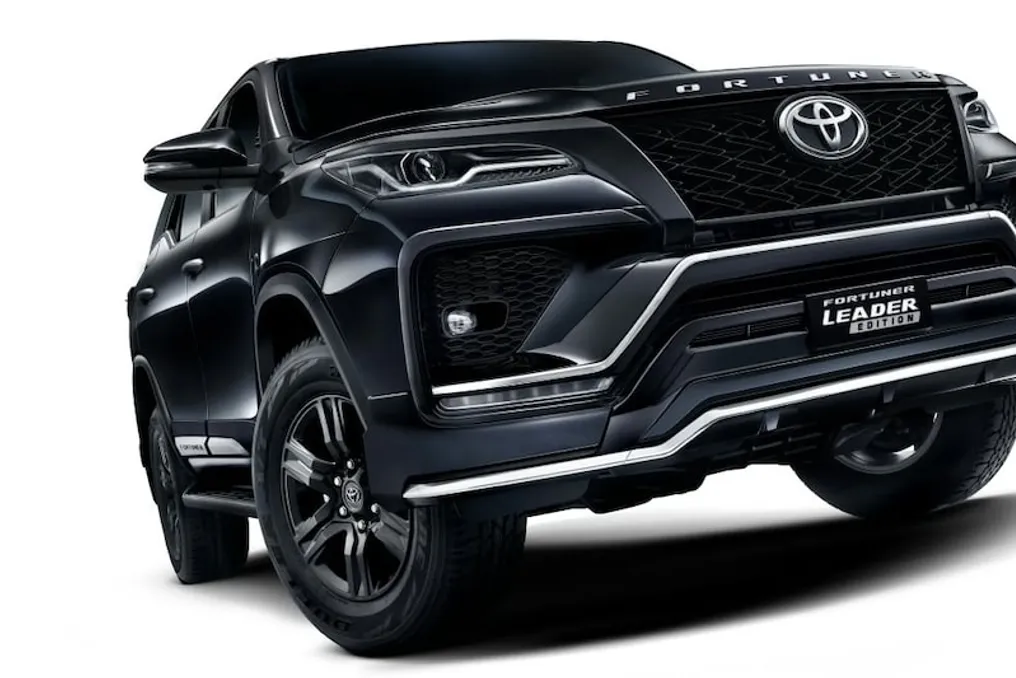
Toyota is preparing a new FORTUNER: the vehicle is undergoing testing in Thailand
Read more
www.aajtak.in

Toyota is preparing a new FORTUNER: the vehicle is undergoing testing in Thailand

Toyota recently updated the Glanza model, followed by observations of the updated version of the popular seven-seater MPV Innova Hycross being tested. However, the latest information about the Toyota Fortuner has emerged from testing conducted in Thailand. During these trials, the vehicle was completely covered in camouflage.

Recent photos from informants show the front end of the car, providing details on the grille, lighting design, and overall appearance. The vehicle will be equipped with a new front bumper. Let's examine the expected innovations for the popular Fortuner.

The most significant changes will affect the front end of the SUV. The SUV's front fascia will become sharper and bolder. The vehicle will feature a large central mesh grille. The upper grille and headlight area will have horizontally arranged elements. The overall look of the front end will resemble the new Hilux.

The side view of the car was also noted in recent leaks. The SUV features a large hood, a vertical cabin, and good ground clearance. The off-roader will have corresponding wheel arches, side steps, and multi-spoke wheels. These details were observed during testing, although due to the camouflage on the doors, mirrors, and rear panel, not many details are visible.

Regarding the interior, it also shows characteristics of the Hilux. The car will receive a more modern dashboard, which will include a large multimedia display, a digital instrument cluster, and additional connectivity features. The existing 2.8-liter diesel engine will be retained in the vehicle. An ADAS module may be installed at the front of the SUV. A panoramic roof is also anticipated.

Now, concerning the release timeline for this vehicle in India. Toyota released its new generation Hilux this year. The new Toyota Fortuner will be based on the same platform and maintain a similar style. It is anticipated that this vehicle might enter the market in 2027. Before that, Toyota may introduce the Innova Hycross in India in December.

Popular