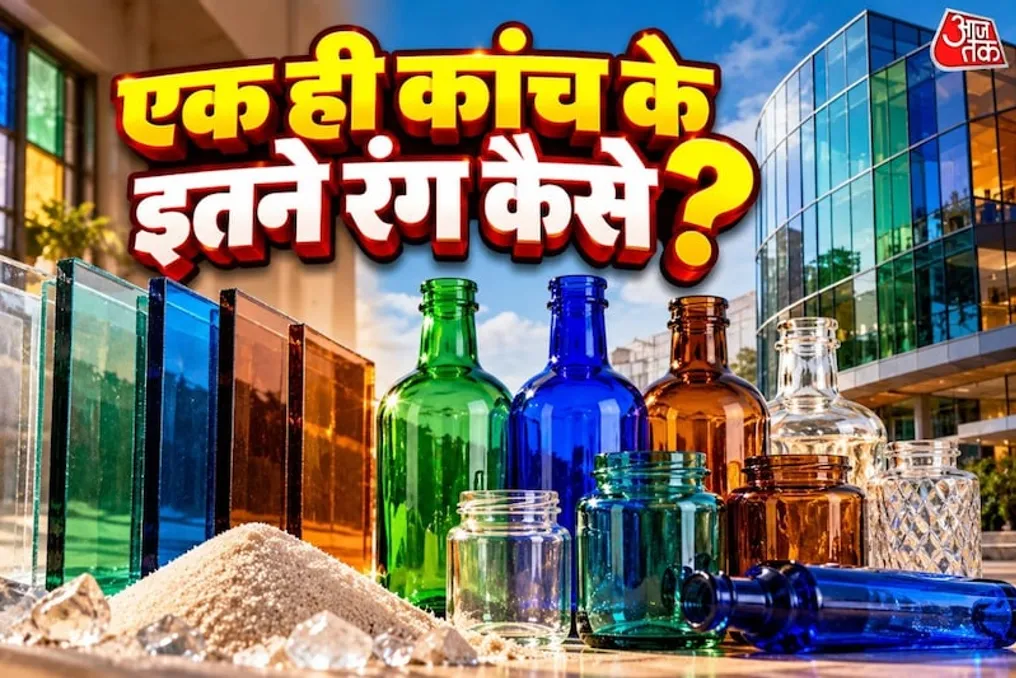
Glass is used in many areas of our daily lives, such as house windows, cars, bottles, spectacles, and shop doors. Some of these glasses are completely transparent, while others appear in various colors like green, blue, or brown. It is interesting to know why the color of glass varies; it primarily depends on the specific elements present within the glass and its interaction with light.
The main material used in the process of making glass is silica, or sand. However, ordinary sand cannot be turned into glass by simply heating it. For this, materials like soda ash and limestone are mixed with the sand. All these components are heated at extremely high temperatures, causing the mixture to melt into a thick liquid. Subsequently, it is given the desired shape and slowly cooled, resulting in the formation of glass. A characteristic of glass is that its internal structure lacks a regular crystalline arrangement, which is why it is called an amorphous solid.
When we look out of clear glass, we can see objects on the other side clearly. This happens because normal clear glass allows most parts of visible light to pass through it. When light strikes the glass, some portion is reflected back, some is absorbed, and the remainder passes through to the other side. Very little of the light visible in clear glass is absorbed, which is why looking through it is possible. However, it is not accurate to say that glass allows light to pass through completely; due to thick glass or impurities present in it, a slight green or another color may still be visible.
A slight green tint often appears on the edges of thick glass, which is caused by a small amount of iron present in the glass. Trace particles of iron may be present in the sand and other raw materials used in glass making, which remain in the glass during its formation. These iron particles absorb certain colors of light more than others, allowing green light to pass through more readily compared to some parts of red and blue light. Consequently, the glass appears slightly green. The thicker the glass, the longer the path of light transmission, making the green effect more apparent. This is why the edges of many common windows and thick glass sheets appear green.
To make blue glass, oxides of special metals are added, with cobalt oxide being a prime example. Even a small amount of it can impart a blue color to the glass. In fact, different metal oxides absorb different colors of light. When cobalt oxide is added to the glass, it absorbs light of certain colors and allows blue light to pass through, making the glass appear blue. Similarly, using other elements in the glass allows for the creation of light blue, dark blue, and many other shades.
Glass can be molded into many colors besides just green and blue. For this, various metals and their oxides are used during the glassmaking process. Examples include: iron oxide and chromium oxide for green glass, cobalt oxide for blue glass, compounds related to iron and sulfur for brown glass, manganese compounds for purple glass, and selenium or copper for red glass. However, the final color of the glass also depends on the quantity of these substances added and the method by which the glass is prepared.
Colored glass is not limited only to decoration; its purpose is not always to enhance beauty. Often, it is used keeping specific requirements in mind. For instance, green and brown bottles are used in the packaging of many medicines and beverages. These colors help block certain parts of light, protecting the products inside from damage caused by light. Additionally, colored glass in buildings is used to control sunlight and heat, as this specialized glass helps maintain room temperature by blocking some parts of sunlight and heat.