Electricity cost rise in South Africa amid Finance Ministry's refusal to cancel VAT
Read more
IOL
iol.co.za

Electricity cost rise in South Africa amid Finance Ministry's refusal to cancel VAT

Households in South Africa facing high electricity bills are forced to seek other forms of financial relief as the Ministry of Finance has ruled out the possibility of cancelling Value Added Tax (VAT) on electricity purchases.

According to DebtBusters, electricity tariffs have increased by 101% since 2021 and could reach 165% over the last decade. Despite these significant increases, the Ministry maintains that it does not plan to set a zero rate for electricity, either fully or up to a certain household consumption level.

The Department notes that the Ministry of Finance is aware of the tariff increases in recent years, but it has not yet conducted a specific assessment of the impact of VAT on electricity for low-income and middle-income segments. The Ministry insists that maintaining a broad VAT base is critical for the efficiency of the tax system, and a zero rate would lead to a reduction in government revenue.

According to the South African Revenue Service for 2025, the electricity, gas, and water sector generated approximately 22.21 billion rand in net VAT income in the 2024/25 fiscal year. Calculations show that an additional 150 rand in VAT is paid on a purchase of 1000 rand, and 450 rand on a purchase of 3000 rand.

Political pressure for VAT exemption

The uMkhonto weSizwe (MK) party is one of the parties advocating for including electricity in the list of goods and services subject to a zero VAT rate. MK Member of Parliament, Crown Prince Adil Nchabaleng, stated that the party presented this proposal to the Ministry during debates on VAT increases last year.

Nchabaleng emphasized that VAT increases financial pressure on households already struggling to pay for electricity. He considers it senseless to levy VAT on electricity in a weak economy that has yet to recover. Furthermore, he characterizes the tax as an 'inflationary tool' that diminishes the value of state-provided services.

He also raised the issue of double taxation, pointing out that VAT is charged even on free basic electricity, even though this provision is a grant. Nchabaleng noted that a household with an annual income of 50,000 rand spending 1000 rand per month on electricity dedicates almost a quarter of its annual income to energy, of which 1800 rand over 12 months is attributable to VAT.

However, the Organisation Against Tax Abuse (Outa) has not taken a final position on exempting electricity from tax. Executive Director Advocate Stephanie Fick believes that electricity should be subject to VAT unless it is recognized as a vital service requiring exemption. She added that the state would lose significant revenue that it cannot afford if it fails to act effectively.

The Ministry has not calculated the current fiscal cost of zero-rating all residential electricity and has not modeled the potential costs of exempting the first 50, 100, or 200 kWh consumed monthly by households.

Long-standing debate over zero rate

The proposal to cancel VAT, even partially, on household electricity consumption is not new. When VAT was introduced in 1991, the VAT Committee reviewed requests for a zero rate for basic electricity volume. It was ultimately decided that assistance to poorer households should be provided outside the tax system, rather than through VAT concessions.

This issue resurfaced in 2007 when the Ministry commissioned a study on the feasibility of maintaining existing VAT concessions. The analysis showed that a zero rate on electricity would be regressive, as wealthier households consume more electricity in absolute terms and would therefore receive the greater financial benefit. At that time, households spent about 15 billion rand annually on electricity, generating approximately 1.85 billion rand in VAT revenue.

In 2018, electricity was considered again when an independent commission appointed to review the list of zero-rated goods in South Africa received proposals for its inclusion. The commission rejected this proposal for similar reasons, concluding that higher-spending groups constitute a larger share of electricity expenditure and consequently receive greater benefits.

Free basic electricity remains the government's preferred option

Instead of providing aid through the VAT system, the government continues to rely on the Free Basic Electricity program to support needy households. Eligible households are allocated 50 kWh of electricity per month, and 21.6 billion rand has been allocated for basic energy in the 2026/27 budget.

The adequacy of this volume is currently under discussion. Last Friday, the Department of Energy published a revised Electricity Pricing Policy for public comment. The Department stated that pricing must balance economic efficiency with 'affordability and social justice considerations.' The policy stipulates that low-income households must have access to basic electricity through special or essential tariffs and other forms of direct or indirect subsidies.

The Ministry asserts that an intergovernmental working group is examining whether the existing monthly allocation of 50 kWh remains sufficient. However, the department warns that increasing this volume may not help more households if existing issues with the distribution of free basic electricity are not resolved. The Ministry points out that many needy households still do not receive the full benefit of the current provision due to weaknesses in registration, targeting, and delivery systems. Therefore, increasing the volume itself will not improve access or guarantee that additional funding reaches the intended recipients.
Similar stories

Government considers abolishing fuel taxes but faces serious financial obstacles
Read more
iol.co.za

Government considers abolishing fuel taxes but faces serious financial obstacles

Despite an initial statement that there would be no immediate reduction in fuel prices for drivers, the government announced a temporary postponement of price increases for November and December. The complete abolition of fuel taxes is also being discussed, but it is expected not to happen anytime soon.

Finance Minister Enoch Godongwana, responding to questions in a recent radio interview on station 702, stated that the government intends to eventually phase out the General Fuel Levy (GFL). However, he warned that the resulting huge revenue deficit would have to be compensated by other sources of income.

Godongwana noted: 'We must find a way to phase it out. But by doing so, we will lose about 80 billion rand.' He added that the issue of closing this gap would be subject to discussion.

The Minister also stated that the funding mechanism for the Road Accident Fund (RAF) would need to be reviewed. He emphasized that simply excluding the RAF would lead to a significant reduction in fuel costs, as it includes a charge of 2 rand per liter.

Godongwana did not provide timelines for the possible abolition of fuel levies. In the long term, it may become more difficult for the government if electric vehicle sales begin to grow rapidly, as these vehicles are not subject to fuel taxes.

Fuel Price Overview

Minister of Mineral Resources and Energy Gwede Mantashe previously stated that his department is reviewing the Regulatory Accounting System used to determine the margin included in fuel prices. This process is expected to be completed by March 2027.

In total, the two main levies add more than 6 rand to the cost of every liter of petrol. Currently, the GFL is 4.10 rand per liter of petrol and 3.93 rand per liter of diesel, while the RAF levy is 2.25 rand per liter of both fuels.

During his speech announcing the medium-term budget policy last week, Godongwana announced temporary measures to reduce fuel prices for the next two months. From November 4 to December 1, the GFL will be reduced by 1.50 rand per liter of petrol and by 3.00 rand per liter of diesel. Then, from December 2 to January 5, 2027, the reduction will be 1.00 and 1.50 rand respectively.

However, this reduction will be offset by the upcoming price increase, as the latest data from the Central Energy Fund (CEF) indicates a rise of 1.16 rand per liter of petrol and 1.40 rand per liter of diesel.

Fiscal Implications

Economists had previously warned that cutting fuel taxes could have other negative consequences. Hannah Marais, South Africa's chief economist at Deloitte Africa, recently told IOL that reducing fuel taxes entails huge fiscal costs.

Marais stated: 'Such relief will likely require additional borrowing or spending cuts somewhere, while maintaining fiscal credibility and supporting sustainable public finances remains particularly important for South Africa.'

Sanisha Packirisamy, group economist at Momentum, added that covering high fuel prices through additional government borrowing risks increasing the yield on government bonds and weakening the rand, while cutting public spending in other areas carries its own socio-economic costs of growth.

Packirisamy noted: 'It is politically difficult to argue against providing assistance to burdened consumers, but repeated extensions create an unrealistic expectation that the government will absorb every external energy shock.'

Reasons for receiving an electricity bill even without consumption
Read more
www.aajtak.in

Reasons for receiving an electricity bill even without consumption

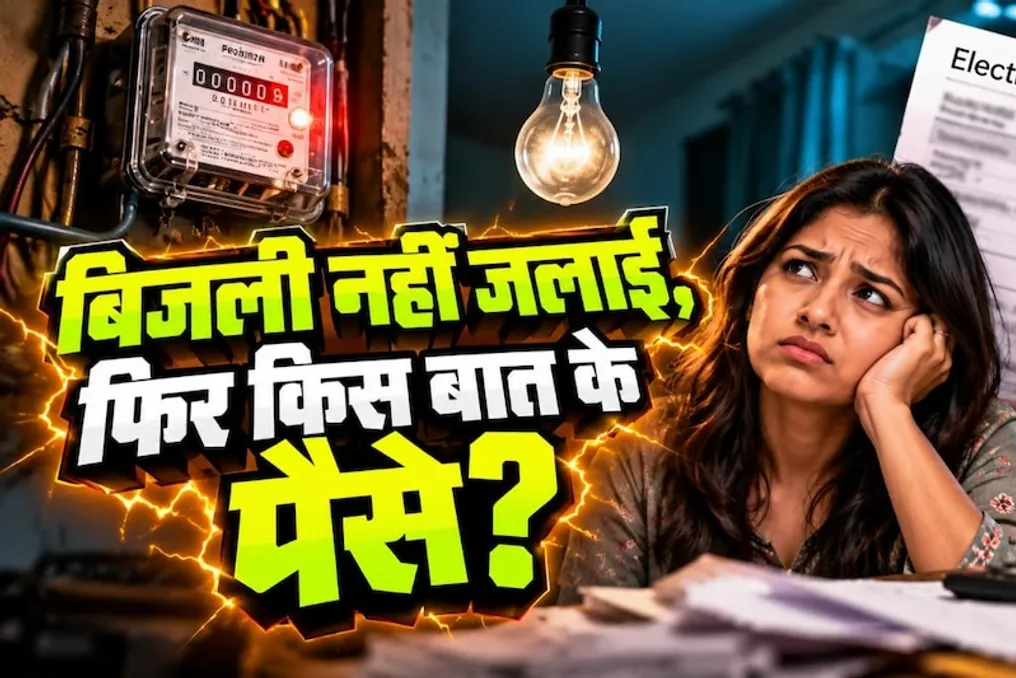
Even if no electricity is consumed in the house, a monthly bill may arrive. If the property is closed for a long time or you are away, the electricity bill will not be completely zero. The reason is that energy companies charge not only for the energy actually used but also for a number of other fees. Below, we explain in simple terms what payments might arise even if electricity was not used.

Fixed monthly charges

There is a fee that can be charged regardless of a decrease or complete absence of electricity consumption. The energy company maintains necessary systems, including connections and meters, to supply electricity to your home. Therefore, the bill may include a fixed amount that depends on your connection type, approved load, and regional power supply regulations.

The meter can also increase the amount on the electricity bill

In some cases, a fee related to the meter is included in the electricity bill. This charge is determined by the type of meter and the rules of the specific energy company. However, this charge is not mandatory in all regions or for all connection types. Even if electricity is not used, some fees may apply as long as the connection remains active. Therefore, it is crucial to familiarize yourself with information about any charge labeled 'meter' to understand the reason for its imposition and its applicability to your connection.

Minimum charge

According to the rules of some energy companies, a minimum charge is provided for collection. This means that even with low consumption or a complete absence of energy use during the billing period, you may have to pay a set amount. For example, if you go away for a month and do not consume electricity, the meter readings may be zero, but the bill may still include a minimum charge or another applicable tariff related to the connection. Nevertheless, this regulation is not standardized across all regions, so the presence of such a charge depends on the rules of your energy company.

Energy duties and other fees

Bills in some regions may contain energy duties and other state fees. The rates and calculation methods for these fees are established in accordance with local regulations. Some fees are calculated based on consumption, while others have separate rules. Consequently, the appearance of a charge without consumption depends on your region and electricity connection category. If there is a charge on the bill that you do not recognize, you should study the tariff list issued by the energy company or contact its customer service center.

Overdue payments and fines can also increase the bill amount

Sometimes the reason for issuing a bill despite no consumption is the existence of old debts. If you did not pay the previous bill in full, the remaining amount may be added to the next bill. Furthermore, payment delays may result in penalties according to the energy company's rules. Thus, even with zero consumption in the current month, the bill may show an amount. Therefore, when reviewing the bill, do not focus only on consumed units; you must check for old debts, fines, or other charges.

How to make the electricity bill zero?

If you want the bill to decrease when the house is not in use, first check the consumption indicated on the bill, as well as various fees. If a bill arrived even though no electricity was consumed, find out whether it is related to a fixed charge, a meter charge, or an old debt. If you believe that the bill indicates an incorrect charge, you can file a complaint with your energy company. If the house is planned to be closed for a long time and you do not require a connection, you can inquire with the company about the rules for temporary disconnection or complete disconnection. Before doing so, clarify what costs this will entail and how much the reconnection will cost in the future.

Note: It is important to remember that the appearance of an electricity bill even without consumption depends on your region, energy company, and connection category, as tariffs are not universal.

Uzbekistan proposes raising the basic electricity consumption norm for areas without gas supply
Read more
uzdaily.uz

Uzbekistan proposes raising the basic electricity consumption norm for areas without gas supply

Uzbekistan has put forward a proposal to increase the basic monthly electricity consumption norm from 200 to 350 kWh for residents in areas lacking gas connection or where natural gas supply is unstable.

This proposal is based on an analysis of actual electricity consumption during the winter period, as well as existing social support measures. Deputy Minister of Economy and Finance Khurshid Mustafayev presented this initiative at a press conference on October 14 dedicated to planned tariff changes and household support during the autumn-winter period.

Mustafayev noted that two main aspects were taken into account when preparing the proposal. Firstly, the existing mechanism for assisting low-income families was considered. Under this scheme, the Social Protection Agency compensates eligible households for the difference between the basic and increased tariffs for an additional 150 kWh above the current norm of 200 kWh, allowing these families to pay the basic tariff for this extra volume.

Secondly, an analysis of winter electricity consumption in areas without gas connections was conducted. The data presented showed that about 60% of households in such zones consume up to 300 kWh per month in winter. Based on this analysis, the authorities proposed setting the basic norm at 350 kWh.

The Ministry of Economy and Finance reports that approximately 4 million households in Uzbekistan are not connected to gas networks and use alternative sources, including liquefied petroleum gas cylinders. In some other places, centralized gas supply is unreliable due to pressure drops or temporary supply interruptions observed during the heating season.

To identify such zones, the authorities analyzed gas supply data for households from December 2, 2025, to March 13, 2026. The proposed increased norm will apply not only in areas without gas connection but also where there are disruptions in natural gas supply.

A previous option of setting the norm at 500 kWh was discussed, but no separate estimates of potential budgetary expenditures for this level were provided at the press conference.

President Shavkat Mirziyoyev approved this proposal on October 6. The draft government resolution was published for public discussion on October 13. An analysis prepared by the authorities, covering the period from September 2025 to August 2026, showed that during the heating season, the share of consumers without gas supply using more than 200 kWh of electricity per month increases from approximately 25% to 39%. Meanwhile, the share of households consuming up to 200 kWh decreases from 74% to 61%; the share of those consuming from 201 to 350 kWh increases from 17% to 19%, and the share of consumers in the 351–500 kWh range grows from 5% to 9%, while the share of those consuming over 500 kWh increases from 3% to 10%.

The number of households connected to gas networks but experiencing difficulties in receiving gas also varies greatly depending on supply conditions. According to official data, during the period from December 2, 2025, to March 17, 2026, this number fluctuated from about 5,000 on some days to 607,000 on others.

The proposed increase will lead to a reduction in the tariff for monthly consumption in the range of 201 to 350 kWh from 900 soms to 650 soms per kWh, which is a decrease of almost 28%. The authorities predict that the new norm will cover about 80% of consumers in areas without gas connection. Over 1.5 million consumers could save a total of about 171 billion soms during the heating season, with the average savings estimated at approximately 27,500 soms per household per month.

For households consuming 250 kWh per month, bills will decrease by 12,500 soms; for consumption of 300 kWh, savings will reach 25,000 soms; and for consumption of 350 kWh, it will be 37,500 soms.

It is proposed that the increased norm comes into effect on November 1, 2026, for the heating season. In Karakalpakstan and Khorezm region, it will be valid from October to February, and in other regions—from November to February. Regional administrations will approve lists of households facing gas supply problems based on proposals from the Uzenergoinspection, Khududgazt'aminot, and Regional Electric Grids.

Furthermore, the authorities had previously proposed one-time payments of 1 million soms in November to over 1 million needy families. It is also planned to expand the criteria for receiving compensation covering electricity, gas, and coal expenses, as well as extend these payments.

Popular