Ranbir Kapoor's Potential as Lord Rama in the Film 'Ramayana'
Read more
IOL
iol.co.za

Ranbir Kapoor's Potential as Lord Rama in the Film 'Ramayana'

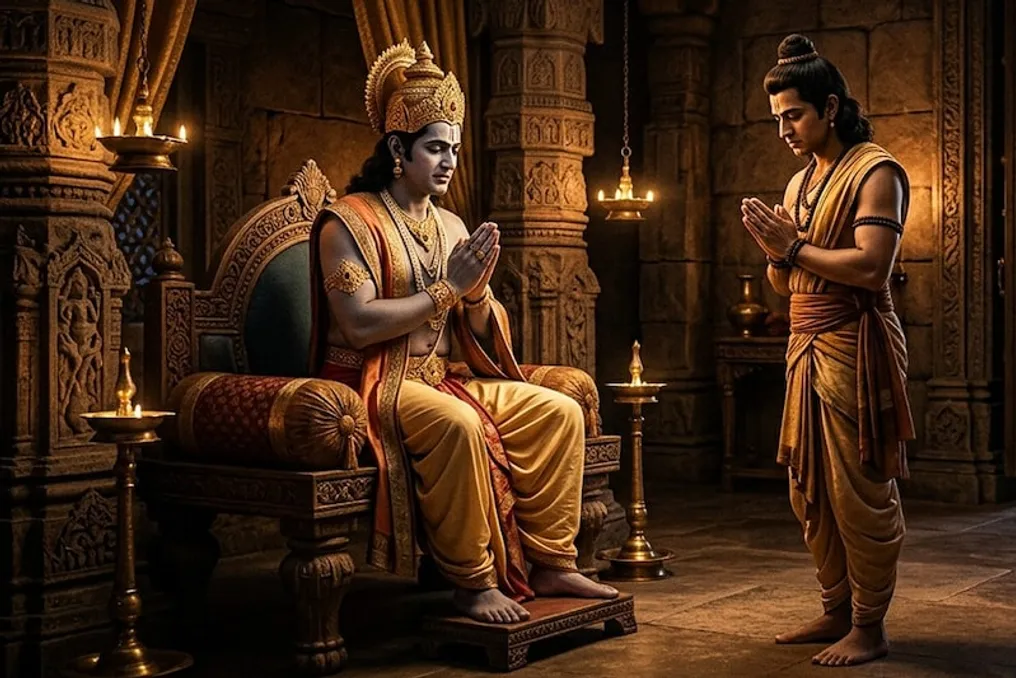
The role of Lord Rama holds immense spiritual and cultural significance in Indian cinema. Within one of Bollywood's most massive mythological projects, the film 'Ramayana,' all attention is focused on Ranbir Kapoor, who is preparing to embody the image of one of Hinduism's most revered figures.

The main question is whether this Bollywood superstar can honorably play a character representing righteousness, compassion, bravery, and unwavering devotion to duty. Ranbir is recognized as one of the most talented actors of his generation. He has demonstrated an impressive ability to transform for different roles, ranging from the complex young man in 'Rockstar' to the passionate lover in 'Ae Dil Hai Mushkil' and the hero in 'Animal.' His performance in 'Sanju' also showed his willingness to convey the mannerisms and personality of another person.

However, portraying Lord Rama presents a completely different challenge, especially given the extremely high expectations placed on Ranbir. For generations of Indian television viewers, Arun Govil, who played Lord Rama in the iconic television series 'Ramayan' in 1987, became almost inseparable from the image of this deity. Govil's calm demeanor, majestic expressions, and gentle portrayal made an indelible impression on the audience; many viewers began associating the actor with the deity itself, which speaks to the colossal cultural impact of his work. Notably, Govil will also play the role of Dasharatha in the 2026 film adaptation.

This creates a serious problem for Ranbir, as he will inevitably face comparisons with Govil, whose depiction remains deeply loved by millions. Nevertheless, instead of trying to imitate Govil, Ranbir must bring his own sincerity and interpretation to the role while maintaining respect for the character's spiritual significance. Another interesting aspect of Ranbir's preparation is his declared shift to a vegetarian diet for the film. This lifestyle change has drawn attention as part of his preparation to portray Lord Rama. Although a vegetarian diet itself does not guarantee authentic acting, it demonstrates a readiness for personal changes for the role.

Ultimately, the success of 'Ramayana' will depend on the script, direction, music, visual effects, and most importantly, Ranbir's acting. He possesses the necessary experience to create a convincing image, but winning the public's favor will require humility, sensitivity, and a deep understanding of the character. While the possibility exists that Ranbir can honorably play Lord Rama, expectations are extremely high because Govil left an unforgettable legacy, and Ranbir must create his own.

The real test will be whether viewers see not just a Bollywood superstar in costume, but whether they experience an image that honors the spirit of Lord Rama. The first part is expected to be released this week.
Similar stories

Review of 'Ramayana: Rise of the Legend' Film: Positive and Negative Reviews After Premiere
Read more
www.aajtak.in

Review of 'Ramayana: Rise of the Legend' Film: Positive and Negative Reviews After Premiere

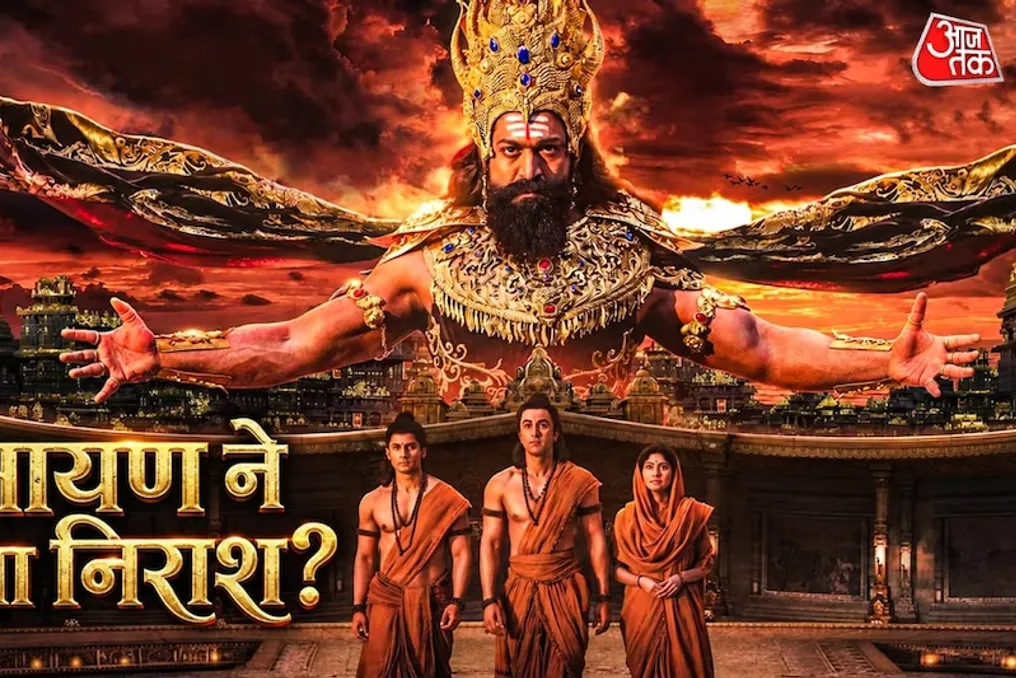
The film 'Ramayana: Rise of the Legend,' featuring Ranbir Kapoor and Yash, generated significant buzz. Its grand premiere took place in Los Angeles for invited guests and content creators, after which initial opinions on the picture began to emerge.

Reviews were divided: one foreign critic called the film extremely grandiose and magnificent, while another viral review raised serious questions regarding the plot, visual effects, and acting. This situation led to active discussion about the film.

One international reviewer highly praised the film as an epic spectacle, noting that the portrayal of Lord Rama in it differs from the usual depiction. While saying the name Rama, he jokingly mentioned that he hoped to pronounce it correctly. In this critic's opinion, the scale of the picture is vast, and its climax is capable of surprising viewers.

However, there is also a contrasting viewpoint: in one viral review, the film was given a rating of only 1.5 out of 5. This review noted that despite the large scale, the film lacks emotional depth. The critic also questioned the work on visual effects, the pacing of the narrative, and the actors' performances, although he emphasized that this is just one person's opinion and not a final verdict on the film.

The Climax Made the Critic Exclaim

The climax of 'Ramayana' caused the most resonance among positive reviews. A foreign critic recounted that after the film ended, the screen went dark, and he could not contain his reaction, loudly exclaiming 'No.' He also speculated that the ending is so captivating that viewers will wait for a sequel.

If we take this critic's words as truth, the climax could indeed be shocking for the audience, although he did not reveal any major plot twists. Now it remains to be seen how much the audience will like such an ending.

What Did the Critic Say About the Hindi Version?

Another interesting point is that this critic preferred to watch the original Hindi version of the film. According to him, the Hindi version was about 30 minutes longer than the English dubbed version. He wanted to see the film in its pristine form, so he chose the Hindi version.

This is significant because 'Ramayana' is a story closely tied to Indian culture and faith. How the dialogues, emotions, and cultural references are presented in Hindi can hold special meaning for viewers.

The Film Is Over Three Hours Long, Raising Questions About VFX

The negative review also criticized the film's length. The critic complained that the picture, lasting about 3 hours and 20 minutes, seemed too drawn out in some scenes. He accused that many moments slow down the development of the plot instead of advancing it. Furthermore, he expressed disappointment with the use of CGI in scenes depicting forests, palaces, and battles.

He also noted that the film does not pay enough attention to the emotional and moral aspects of the Ramayana story. Nevertheless, these remarks reflect only this critic's point of view, not the general opinion of all viewers.

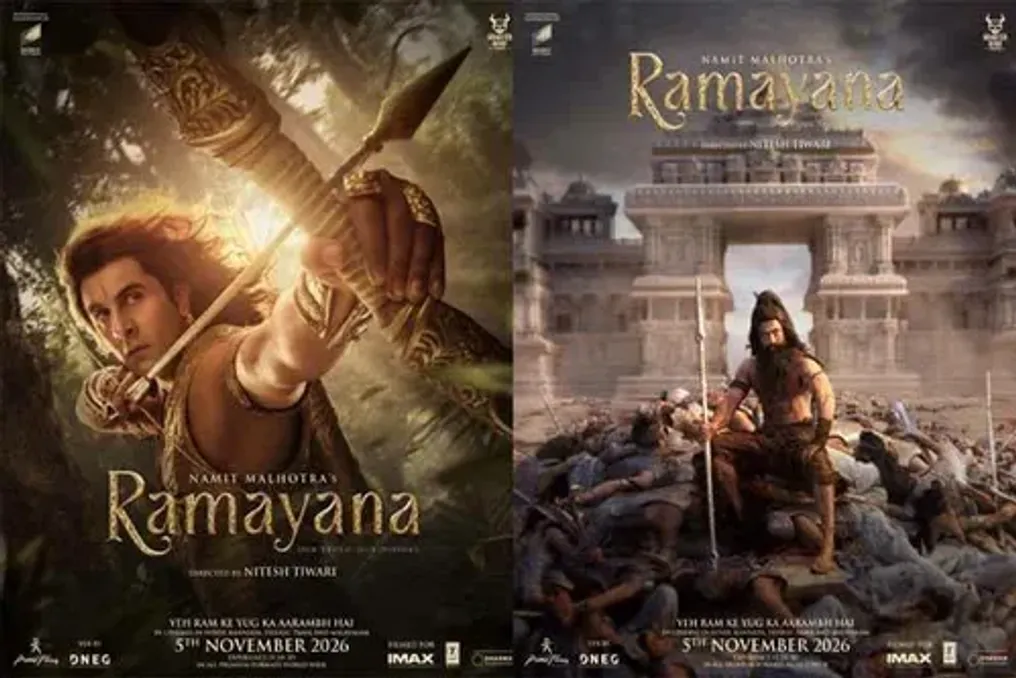
'Ramayana: Rise of the Legend,' directed by Nitish Tiwari and starring Namit Malhotra, the first episode will be released in theaters on November 5, 2026, for the celebration of Diwali. Ranbir Kapoor plays Lord Rama, Sai Pallavi plays Sita's mother, and Yash plays Ravana. The second part is planned for release in Diwali 2027.

At present, opinions on the film are divided: some have praised its grand scale and climax, while others have questioned the plot and visual effects. It remains for the audience to decide how impressive the experience of watching this millennia-old epic on the big screen will be.

Akshay Kumar and Raveena Tandon Duo Returns with Re-release of 'Mohra' to Counter 'Ramayana'
Read more
www.aajtak.in

Akshay Kumar and Raveena Tandon Duo Returns with Re-release of 'Mohra' to Counter 'Ramayana'

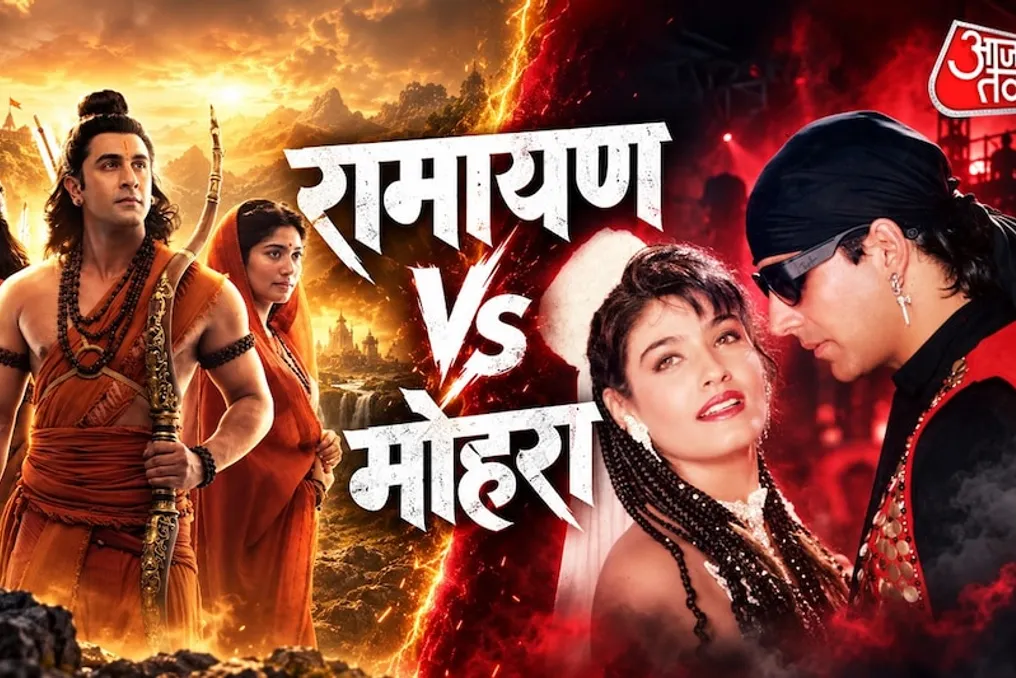
Ahead of the Diwali festival, the blockbuster 'Ramayana' is expected this year, preparing for its release in the first phase. However, to create direct competition for 'Ramayana,' Akshay Kumar is entering the arena with his hit 'Mohra,' which will be re-released in cinemas.

The popular 90s action film 'Mohra,' starring stars such as Akshay Kumar, Raveena Tandon, and Sunil Shetty, will be shown in restored 4K format after 32 years. This was announced by Trimurti Films, which also shared a trailer for the film on its official YouTube channel. The creators noted that viewers will once again be able to see the action, thrilling moments, and songs that made this film unforgettable.

The film 'Mohra' was first released on July 1, 1994. Rajiv Rai directed the movie, and Gulshan Rai produced it. In the film, Sunil Shetty played Vishal Agnihotri, Raveena Tandon played Roma Singh, and Akshay Kumar portrayed Inspector Amar Saxena. In addition to the plot and action, the songs from 'Mohra' gained immense popularity.

Songs like 'Tu Chiz Bade Hai Must Must' and 'Tip Tip Barsa Paani' remain very well-known among the public even today. Among other compositions in the film, there were 'Na Kajre Ki Dhar,' 'Subha Se Lekar,' and 'Dil Har Koi.' The duo of Akshay Kumar and Raveena Tandon created a real sensation on screen in 'Mohra.'

'Mohra' became one of the biggest Hindi films of 1994. That year, it ranked second in box office collections among Indian films after Salman Khan's 'Hum Aapke Hain Koun.' The film's music score also achieved colossal success, with reports stating that over 800 thousand units of the soundtrack were sold.

Now, after 32 years, 'Mohra' is being released in an updated 4K format. This re-release is scheduled for the day after 'Ramayana,' which is November 6th.

The conflict between the films 'Mohra' and 'Ramayana' is a significant event. Although most viewers' attention will likely be focused on Ranbir's film, high ticket prices for 'Ramayana' are worrying many in advance. Furthermore, finding a suitable showtime might be difficult after the premiere.

Under these circumstances, people who cannot watch 'Ramayana' may turn to cinemas to see 'Mohra.' Since cinemas are expected to be crowded, the superhit Akshay may get a chance. Some viewers will also want to experience the wave created by the Akshay-Raveena pair in the 90s. It remains to be seen whether 'Ramayana' will spoil the re-release of 'Mohra' or not.

Reasons Why Rama Was Forced to Make a Harsh Decision Regarding Lakshmana
Read more
www.aajtak.in

Reasons Why Rama Was Forced to Make a Harsh Decision Regarding Lakshmana

In the epic Ramayana, the relationship between Lord Rama and Lakshmana is considered an example of brotherhood, self-sacrifice, and devotion. Lakshmana left the comfort of the royal palace to accompany his elder brother during the fourteen-year exile. However, one of the well-known stories of the Ramayana describes a situation where Lord Rama had to face the necessity of pronouncing a death sentence on his dear brother. What circumstances forced Rama to make such a harsh decision? This story is connected to a promise made to Yama, the anger of the sage Durvasa, and Lakshmana's sacrifice to save the inhabitants of Ayodhya.

After Mother Sita dissolved into the earth, Lord Rama realized that the purpose of his incarnation on Earth was achieved, and it was time for him to return to Vaikuntha, the abode of Lord Vishnu. According to a common legend, Rama threw his ring into the underworld to distract Hanuman. He instructed Hanuman to find this ring, after which Hanuman went to Patala Lok. During this search, Yama arrived at Lord Rama to have an important private conversation with him.

Yama set a condition before Lord Rama: no one should interfere during their conversation. If anyone violated this rule, they would face the death penalty. Rama agreed to this condition and instructed Lakshmana to guard the entrance. Lord Rama gave his brother clear instructions not to let anyone in until the conversation was over. Lakshmana faithfully performed his duty, unaware that a situation would soon arise where he would have to choose between his brother's order and the defense of Ayodhya.

While the conversation between Lord Rama and Yama was taking place, Maharshi Durvasa arrived. He immediately expressed a desire to meet Rama. Lakshmana informed him that Lord Rama was having an important private discussion, so a meeting was not possible at that moment. Hearing this, Rishi Durvasa became angry and warned that if he was not brought to Rama immediately, he would curse Lakshmana, his family, and all of Ayodhya. The threat from Durvasa, known for his wrath, put Lakshmana in a difficult moral position. If he continued to obstruct, disaster could befall the entire kingdom. On the other hand, informing Rama would mean breaking a promise made to Yama, putting himself at risk of execution.

Lakshmana placed the welfare of the people of Ayodhya above his own fears. He decided that to save the entire kingdom from the sage's curse, he had to reach Lord Rama. He entered during the private conversation and informed Rama about Durvasa's arrival. Rama concluded the conversation with Yama and went to meet the sage. Durvasa asked for food, and Lord Rama hosted a feast for him. Satisfied with the food, the sage left, and the danger hanging over Ayodhya passed. Nevertheless, now Lord Rama faced the task of keeping his promise, as Lakshmana had entered his chambers.

Lord Rama did not want to punish his beloved brother. Lakshmana accompanied him through every difficult situation, from childhood to exile. The thought of parting from such a brother caused Rama immense pain. According to the legend, to resolve this dilemma, Rama consulted his teacher Vasishtha. The Guru explained that refusing a loved one could also be considered a form of death for him. Thus, Rama could renounce Lakshmana to uphold the honor of his promise. Following his teacher's advice, Lord Rama decided not to impose a direct death sentence on Lakshmana, but instead to renounce him.

Lakshmana understood his brother's predicament. He persuaded Rama to keep his promise and maintain the boundaries of Dharma. For him, his brother's honor and keeping a promise were more important than his own life. Lakshmana did not want Lord Rama to backtrack on his word because of him. To save the people of Ayodhya, he had already risked his safety, and now he made a sacrifice to preserve the honor of his brother's promise.

After bidding farewell to Lord Rama, Lakshmana approached the bank of the Saru River. According to common mythological beliefs, he entered the river and sacrificed his life through yoga. The narrative states that at the moment Lakshmana's soul departed, the god Indra appeared and took him to heaven in physical form. Thus ends Lakshmana's life. This sacrifice by Lakshmana demonstrates not only his love for his brother but also his determination to save the people of Ayodhya from calamities.

Popular