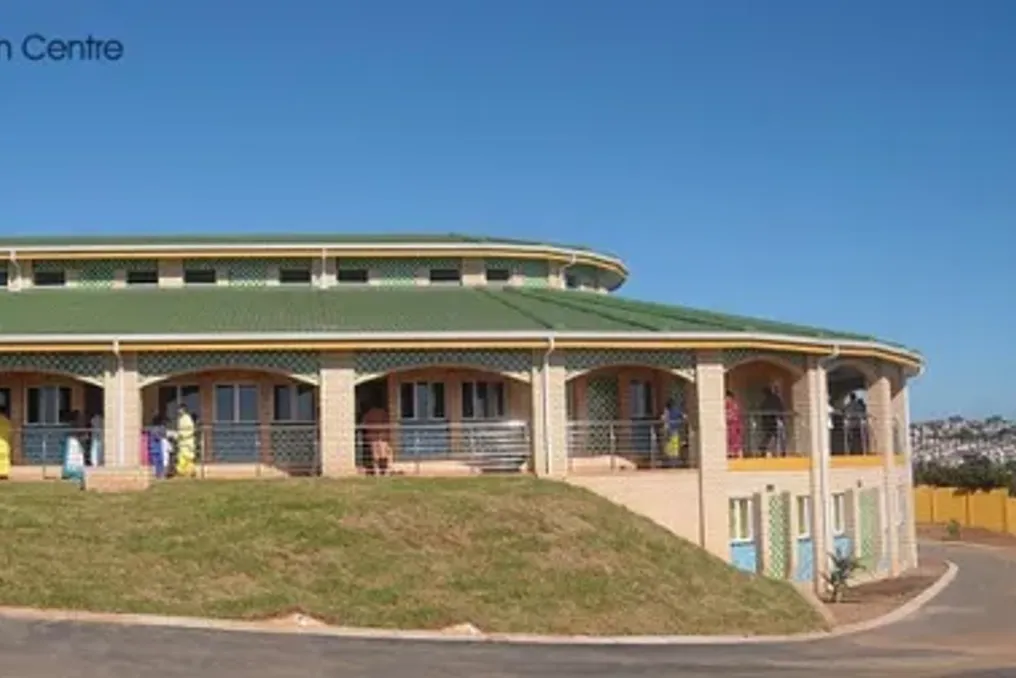
Occupational therapy services in Gauteng have significantly increased, aiding patient recovery
Read more
IOL
iol.co.za

Occupational therapy services in Gauteng have significantly increased, aiding patient recovery

From April to September 2026, the Gauteng Department of Health registered 346,105 occupational therapy sessions for patients in public healthcare facilities in Gauteng. These interventions helped patients recover from injuries and illnesses, gain independence, and improve their quality of life by providing them with mental health support and mobility assistance.

This data was released by the department on Tuesday as part of the celebration of World Occupational Therapy Day with the 2026 theme 'Participation Matters'. Over six months, 5,372 children were screened for developmental delays, allowing problems to be identified early and access to intervention services to be provided.

Furthermore, support was provided to 15,552 users of mental health services, and 9,942 patients underwent hand and upper limb rehabilitation. The department also conducted 214 functional ability assessments and work-related assessments to help patients return to work and resume daily activities.

The department noted that the demand for occupational therapy services was also reflected in the provision of mobile support across the province. Occupational therapy teams issued 2,621 wheelchairs and specialized seating, while 745 wheelchair users underwent seating, positioning, and mobility assessments to enhance comfort, safety, and participation in daily tasks.

The latest figures follow the 2025/26 financial year, during which occupational therapists in the province conducted 726,050 contact sessions with patients. In the same financial year, 7,890 children were screened for developmental delays, and 8,631 users of mental health services received interventions. Occupational therapy teams also provided 29,068 hand and upper limb rehabilitation interventions and issued 5,529 wheelchairs and specialized seating.

These achievements demonstrated the significance of occupational therapy services in supporting patients across the province. The department emphasized that these interventions highlight the vital role played by occupational therapists in preventing unnecessary disability, promoting recovery, supporting independent living, and ensuring people have full opportunities to participate in their family, school, workplace, and community.

The Department Stresses the Importance of Participation

World Occupational Therapy Day is observed annually to raise awareness about the profession and its contribution to health, rehabilitation, and independent living. This year's theme, 'Participation Matters', recognized that involvement in daily activities is a central element of health, well-being, and dignity.

The department explained that this theme recognizes that participation in daily activities is the foundation of health, well-being, and dignity, while simultaneously highlighting the role of occupational therapy in helping people overcome barriers that may limit their full participation in society.

Occupational therapy services are available throughout the entire Gauteng public health system, including primary, district, regional, tertiary, and central hospitals, specialized hospitals, rehabilitation centers, mental health services, and community programs. These services support children with developmental disabilities and disabilities, people with mental illnesses, patients recovering from illness or injury, as well as people with disabilities and elderly individuals needing assistance to maintain independence.

As part of the awareness campaign, occupational therapists across Gauteng conducted community education campaigns, developmental screenings, disability awareness programs, caregiver support initiatives, and mental health awareness events. These initiatives also included community outreach projects, wheelchair sports events, and stakeholder engagement. The department stated its commitment to strengthening rehabilitation services, improving access to occupational therapy, promoting early intervention, and expanding access to assistive devices, striving to enable more residents to lead independent, productive, and fulfilling lives.

Similar stories

Service delivery crisis in Gauteng questions province's appeal amid rising prices in Cape Town
Read more
iol.co.za

Service delivery crisis in Gauteng questions province's appeal amid rising prices in Cape Town

Local elections on November 4 might give Gauteng residents reason to reconsider moving to Cape Town if political changes lead to tangible improvements in municipal governance.

According to Stats SA estimates, between 2021 and 2026, Gauteng attracted the largest influx of interprovincial migrants in the country—about 1.42 million people, compared to 500,093 in the Western Cape. Gauteng's population is approximately 16.3 million, accounting for 25.7% of South Africa's total population of 63.52 million, making it the most populous province in the country according to Statistics South Africa data.

However, poor municipal service delivery in Gauteng, including Johannesburg, and low quality of services have negatively affected the interest of property buyers and investors, according to Renier Kriek, managing director of the alternative housing finance company Sentinel Homes. The Centre for Development and Entrepreneurship warned that unpaid client bills in Johannesburg reached nearly 72 billion rand, describing a cycle where unreliable services reduce clients' willingness or ability to pay, weakening revenue available for servicing and investment.

Kriek notes: 'When basic services such as water, electricity, or waste removal cannot be guaranteed, it affects sentiment in the housing market and property prices.' Conversely, Cape Town, according to Kriek, has seen a significant influx of new residents due to higher quality service provision. However, the city's reluctance to quickly allocate land and fast-track project approvals has led to a housing shortage and sharp price increases.

The real estate firm Lightstone found that the Western Cape was the only province to record a net increase in sellers over buyers in the last five years. Nevertheless, its analysis also showed that in 2025, the Western Cape attracted fewer residents in the price range above R500,000 than in previous years. Gauteng appears to have lost the fewest residents since 2021—a shift that Lightstone partially attributes to rising prices and accessibility issues in Cape Town, reduced remote work opportunities, and relatively attractive property prices in Gauteng.

Kriek argues that the emerging affordability crisis may prompt more households to consider Gauteng or convince potential migrants not to leave at all. He emphasizes: 'Tangible improvements in Gauteng can change calculations for households considering a move. Cape Town cannot rely on Johannesburg remaining broken, nor can it expect good services to indefinitely compensate for exorbitant housing costs.'

According to Kriek, the South African Municipal Association and most leading analysts anticipate more coalition governments after the elections. He believes that winning the election, forming a governing majority, and managing the municipality are separate hurdles that must be overcome. Kriek warns that election winners cannot achieve change overnight, as public sentiment regarding lack of progress always precedes any improvements that require time to materialize, and this can influence the rise or fall of property prices and investments.

Kriek explains that when investing in property, one is effectively acquiring a stake in the municipality that manages everything outside their front door. He adds: 'Capital has a choice; poor municipal conditions increase costs and uncertainty. Investors and homebuyers react to this by closing deals at lower prices, demanding higher returns, or taking their money elsewhere. Strong renter demand can still make a deal worthwhile—but municipal risk is always factored into the price.'

A poorly managed municipality can make buying a home initially cheaper but more expensive in the long run. Households paying a lower purchase price may still be forced to independently arrange for water storage, backup power, and security on top of existing pressures on South African households. Furthermore, Kriek warns that falling property prices do not automatically mean more affordable housing.

He points out that the supply shortage is the primary driver of irrational and unsustainable price growth, making housing unaffordable for people in large metropolises, especially in Cape Town. In his view, 'the political failure is allowing this artificial shortage to persist.' Kriek adds that the serious deficiency in state infrastructure across the country, particularly public transport, exacerbates the problem. As urban nodes become denser, reliance on cars and private minivans becomes increasingly irrational.

Kriek concludes that South Africa has entered a phase where coalition politics has become the norm. This new era could provide a better balance in municipal governance and a more diverse pool of leaders to introduce new ideas. The most important evidence to watch is practical aspects: funded infrastructure works, more reliable services, faster project approvals, and actual completion of housing construction. He calls for: 'We need innovative policies and processes for rapid land allocation and project approval, improved service delivery, and accelerated affordable housing initiatives, and we must hold our new leaders accountable for their results, good or bad.' He concludes with: 'Gauteng's opportunity is to give people reasons to stay. Cape Town's task is to make room for those who want to come.'

Grupo Med Imagem expands testing and surgery offerings through SUS in Teresina
Read more
g1.globo.com

Grupo Med Imagem expands testing and surgery offerings through SUS in Teresina

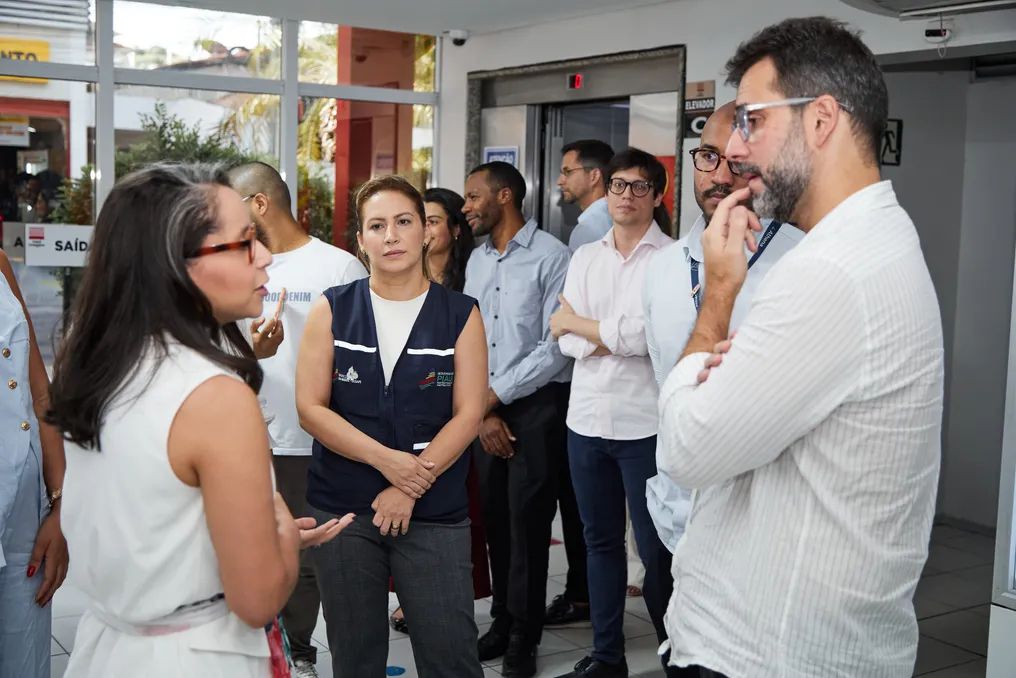
Grupo Med Imagem, managed by Athena Saúde, will increase the availability of tests and surgical procedures through the Unified Health System (SUS) in the city of Teresina. This expansion was recently realized through a collaboration established with the Ministry of Health.

This expansion is part of the program called Agora Tem Especialistas and includes a financial contribution of R$ 8.9 million aimed at strengthening specialized care in the state of Piauí, with the goal of reducing long waiting lists in the public health network.

The partnership allows hospital infrastructure to be used to serve patients under SUS, covering exams such as MRI, CT scan, endoscopy, and colonoscopy, in addition to various surgical procedures. During the formalization event, the Work Plan and Execution Term related to the proposals from Hospital Santa Maria and Prontomed Adulto were signed, both units belonging to Grupo Med Imagem in the Piauí capital.

At Hospital Santa Maria, the expansion includes the introduction of new surgical options, such as bariatric and gynecological surgeries, including vaginal hysterectomy. The project is scheduled to be executed over the next twelve months. According to data provided by the State Health Secretariat (Sesapi), these units have already performed more than 1,500 surgeries within the scope of the program until October 2026.

Felipe Scipiao, national medical manager of Grupo Athena Saúde, celebrated the achievement, stating that the signing of the partnership with the Ministry of Health, via the Agora Tem Especialistas program, will allow the Piauí population to access MRI, CT scan, endoscopy, and colonoscopy exams. He emphasized that this reinforces Grupo Med Imagem's commitment to providing high-quality healthcare in a coordinated and integrated manner with the local community.

Rodrigo Alves, director of the Department of Strategies for Expansion and Qualification of Specialized Care (DEEQAE) representing the Ministry of Health, highlighted the expansion of services at Hospital Santa Maria. He expressed satisfaction at returning to Teresina, Piauí, to sign the addendum, which represents the expansion of a successful project. Alves mentioned that, in addition to general surgeries, bariatric surgeries will be incorporated, which have a great social impact.

The director also stressed the collaboration between the federal, state, and municipal governments to improve access to specialized services and reduce waiting times. Meanwhile, Phamela Vieira, Hospital Operations Manager at Med Imagem, underlined the importance of maintaining this initiative. She confirmed the inclusion of gynecological surgeries and vaginal hysterectomy, classifying it as a significant milestone. Vieira guaranteed that the execution of these procedures will continue over the next 12 months, as they bring great benefits to both society and the group itself.

According to the manager, this collaboration strengthens Grupo Med Imagem's presence in supporting the Piauí population, uniting the service capacity of Prontomed Adulto and Santa Maria hospitals with the efforts of the Ministry of Health to expand SUS access to specialized treatments and exams. With this expansion in Teresina, the initiative helps address accumulated demand and ensures greater access for the population to healthcare.

Spirituality and community contribute to the healing of South African youth
Read more
iol.co.za

Spirituality and community contribute to the healing of South African youth

The author shares an achievement that describes not as a personal award, but as a lifelong spiritual foundation that awakened inner consciousness to understand human suffering. These reflections are particularly relevant in connection with the recently observed anniversary of Guru Dev Shri Swami Sivananda's birth in September 2026.

Shri Gurudev was born on September 8th and founded the global Divine Life Society in 1936 to spread his 'Yoga Synthesis'—a path combining selfless action, devotion, and meditation. This path views the suffering of youth not merely as a biological defect, but as a deep existential problem of the soul.

A spiritual pioneer and founder of the modern Divine Life Society in South Africa, Shri Puja Swami Sahajananda Maharaj, dedicated 58 years to transforming the country. He spent his nights printing spiritual literature and his days building over 300 schools, clinics, and world centers to help the underprivileged, laying the foundation for the Sivananda Sun Path Program established in 2006.

The author expresses deep gratitude to his parents for the divine love and blessings that formed the basis of his worldview and analytical thinking. His parents introduced him to the sacred scriptures of Shri Gurudev during his upbringing at Reservoir Hills, where the headquarters of the Divine Life Society in South Africa, Sivanandashram, is located. There, he found a safe space intended for the salvation of any troubled mind.

Unlike modern psychiatry, which diagnoses clinical crises, this movement roots young minds in a deeper truth. Working in KwaZulu-Natal (KZN) with over 3000 members, the Sun Path Center and the Sun Path Schools Program remind young people that God is their true Friend, Mother, and Father. Today, science recognizes how neuroplasticity reflects these principles, proving that clinical psychiatry is most effective when integrated with spiritual anchoring.

True Grace meets youth at this threshold, where the program serves as a refuge saving young souls from the shadows of mental and psychological destruction. Overcoming the heavy fog of depression may seem impossible, leading many to mistakenly consider permanent escape a temporary worldly problem. However, the true crisis often stems from a deep alienation from the Divine. How can a soul on the brink find peace through quiet prayer? There is no simple biological formula; Grace enters like a silent storm, rewriting internal chemistry.

This subconscious reprogramming is achieved by cultivating Divine Thinking—a psycho-spiritual bridge activated by the Shift of Divine Enlightenment. Based on ancient wisdom, this shift marks the moment when the young mind undergoes a sacred transformation from cosmic isolation to spiritual alignment, awakening it to heal its psychological ecosystem.

The Sivananda Sun Path Schools Program creates this practical framework by distributing free quarterly literature throughout KZN, continuing the Society's legacy in the form of Jnana Yajna—the dissemination of spiritual wisdom. These 'Spiritual Lovers' take an oath to reject social evil, using daily prayer, structured spiritual journals, and the Sun Path journal to transform themselves into resilient warriors of light. In doing so, they realize the Divine Life Society's sacred motto: 'Serve, Love, Give, Purify, Meditate, Realize,' as well as the Sun Path motto: 'God is my Guide.'

For a long time, the society maintained a false separation between the clinical couch and the prayer altar, viewing mental health and spiritual transcendence as separate domains. The Sivananda Sun Path Center in Chatsworth breaks down this artificial division. Built on land donated by the Vedanta Mission, this sanctuary proves that true healing requires an integrated ecosystem.

The center operates free of charge to eliminate financial barriers, offering expert emotional guidance and professional counseling to youth struggling with substance abuse, depression, and suicidal tendencies, near the sacred Center of Peace and Prayer Hall. By practicing Karma Yoga, the science of selfless action, the Center provides computer literacy, soy production, workshops, organic gardening, and alternative therapies such as homeopathy and Ayurveda.

Although skeptics question the possibility of integrating ancient systems with modern medicine, the program responds with a strictly non-confessional approach. Based on the universal teachings of Shri Swami Sivananda, it welcomes youth from all walks of life, proving that Divine Grace belongs to all. The movement reprograms the mind through daily autosuggestions, prompting youth to repeat powerful formulas: 'I am Yours. All Yours. Be Your will, O Lord' and 'By God's Grace, I become better and better every day in all respects.'

When a broken mind finds refuge in the repetition of these truths, it experiences an inner sanctuary that elevates the soul. However, scaling this process requires a collective national response. It is necessary to support the President's urgent call to end Gender-Based Violence and Femicide (GBVF), recognizing that pervasive GBVF trauma is a direct catalyst for the catastrophic surge in depression and suicidal despair among youth in our homes.

It is critically important that our interventions do not focus only on women and children; we must also reach out to our young men and fathers who often suffer in silent solitude, broken by both internal family expectations and external social demands. To truly heal, we must return to the fundamental African philosophy of Ubuntu—the deep truth that 'I exist because we exist.' When our men, women, and youth suffer, the entire collective ecosystem is disrupted.

Following the universal vision of the Sun Path, every church, mosque, temple, synagogue, and gurdwara across KZN should become a sacred sanctuary for the mental health of youth, welcoming young people regardless of their background and grounding them in their shared divine nature.

The integrative model of Divine Grace, operating parallel to psychiatric science, shows that a prescription slip cannot replace holistic healing. While depression, GBVF, university admission pressure, and suicidal despair collide, modern psychiatry can map the neurobiological damage, but spiritual anchoring initiates the ultimate internal healing. True salvation requires harmonious integration, where clinical science yields to Divine Grace, allowing clinical couches to sit alongside prayer altars in a unified public front.

If we continue to view our youth as mere clinical malfunctions, draining the spiritual engine embedded in their very DNA, are we truly providing them with support in this world, or are we simply allowing them to drift into darkness? Our youth are the foundation of the future, and we must care for them properly to ensure a stable environment.

Popular