'Ingoma-busuku' Debuts in Pretoria, Evoking Strong Emotions
Read more
IOL
iol.co.za

'Ingoma-busuku' Debuts in Pretoria, Evoking Strong Emotions

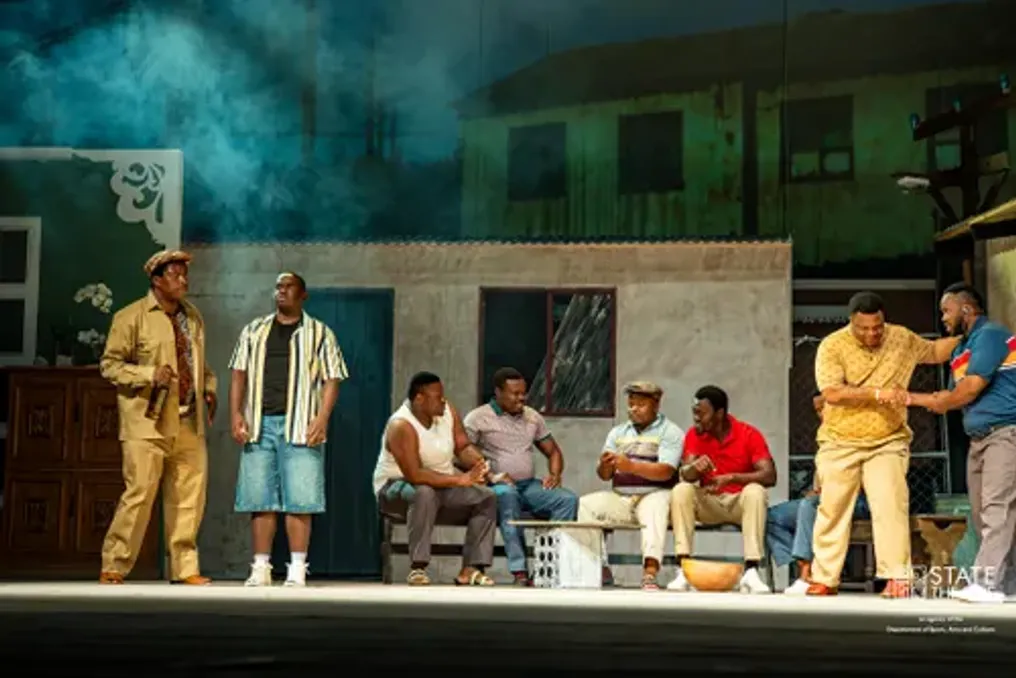
Some theatrical productions aim to entertain, while others strive to evoke deeply personal feelings. The play 'Ingoma-busuku' (Night Song) belongs to the latter category, having premiered on October 21, 2026, at the South African State Theatre Drama Theatre.

This richly developed musical journey explores themes of identity, memory, and the unique heritage of the isicathamiya style. Audiences were greeted by the delicate harmonies of the isicathamiya singers, creating an atmosphere that was both intimate and energetic, with the evening marked by applause and cheers celebrating the richness of South African musical storytelling.

The directorial work of Themba Mhize and Aubrey Sekhabe focuses on the story of Jabulani, brilliantly portrayed by Mthobisi Hanile. He depicts a young man searching for a father he never knew. His journey takes him through the world of labor migration, dormitory life, and the musical traditions that shaped his father's character.

Hanile demonstrated impressive acting, particularly through his outstanding vocal control and ability to move between the contrasting musical worlds of opera and isicathamiya. Scenes with Mrs. Smith, played by Rostislava Pashkevich-Ngobeni, are among the most captivating moments of the production.

Their musical exchanges question the historical hierarchy between European classical music and indigenous African traditions, demonstrating the potential for artistic dialogue. Sikelelwa Zuma brings warmth and conviction to the character of Nomasonto, Jabulani's mother, especially when she defends the dignity of African music. Meanwhile, Uncle Muzi, played by Sabelo Segoto, provides humorous comic relief using his drunken wit and tendency to reveal family secrets, eliciting laughter without losing the dramatic essence of the character.

The visual language of the performance is also highly compelling. Sheldon Marema's impressive set design places suburban domestic spaces alongside the world of dormitory life, serving as a vivid reflection of South Africa's social disparities. Pretty Masemola's thoughtful lighting design, complemented by expressive projections, beautifully conveys the shifting moods and settings.

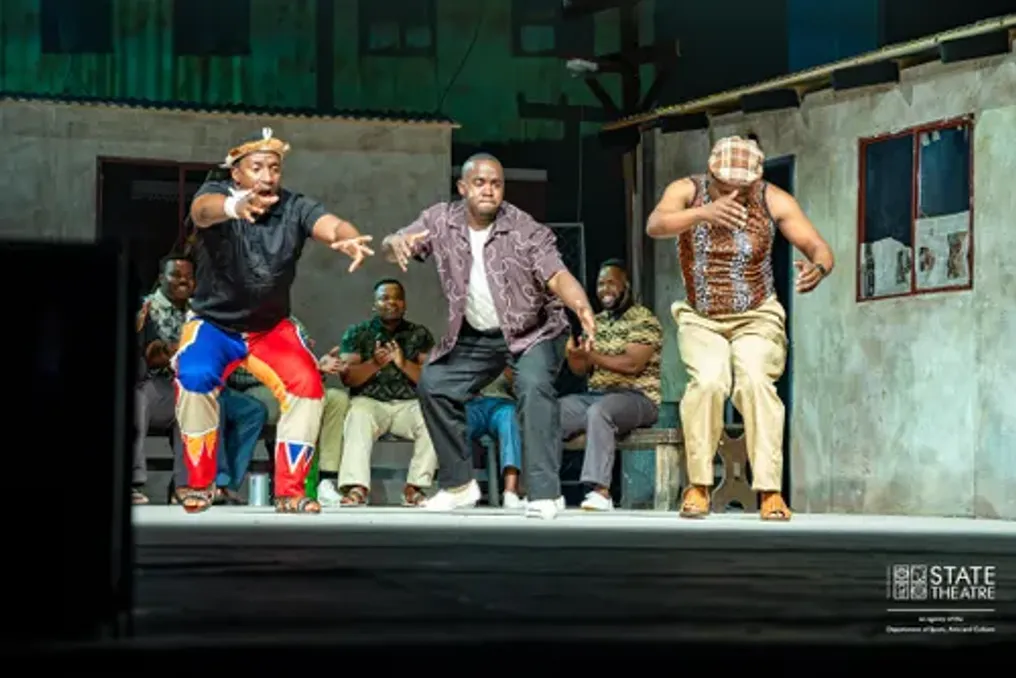
One of the evening's main pleasures was the musical arrangements, the live instrumental accompaniment, and the meticulously coordinated isicathamiya movements. The singers display exceptional vocal discipline, and Oscar Butelezi's choreography conveys the soft yet complex physical vocabulary of this genre.

However, it is noted that the educational intentions of the production sometimes overshadow its dramatic impetus. Some explanations of the history and musical techniques of isicathamiya could have been more organically woven into the action.

The narrative reaches its greatest strength when the music and the performers' bodies convey what words cannot express. Despite this, it does not diminish the cultural significance of the production. Returning to the experiences of migrant workers, domestic workers, and dormitory communities, 'Night Song' reminds audiences that isicathamiya is more than just a musical genre; it is a living archive of South African history.

Perhaps the greatest achievement of the production is its ability to make the audience feel the history rather than just learn about it. The laughter, spontaneous applause, and cheers at the premiere reflected a wonderful connection between the stage and the audience. Jabulani begins his journey in search of a father but discovers something much greater: a musical legacy connecting him to generations past.

Although 'Ingoma-busuku' has dramatic shortcomings, its exceptional harmonies, impressive scenography, and sincere performances make it a valuable theatrical experience. Long after the last note fades, one truth remains: sometimes the voices we search for our whole lives have been within us all along.

'Ingoma-busuku' (Night Song) runs at the South African State Theatre Drama Theatre in Pretoria until November 1, 2026.

Similar stories

Stories from Bhopal: Features of Local Narration and Folklore
Read more
www.aajtak.in

Stories from Bhopal: Features of Local Narration and Folklore

There is an old story about an armed robbery of a mansion in Chandni Chowk. Four or five robbers entered with weapons, committed the robbery, but the police received news and arrived. By that time, the robbers were already fleeing. One of the policemen opened fire, wounding one of the criminals, after which they disappeared. An investigation began to find out their origin and identity, but there was no evidence. When the police recreated the scene, they remembered that the wounded robber shouted: 'Are Khan, you shot!' The police assumed that 'Khan' was a word used in Bhopal, and the idea arose that they might be from Bhopal. After this, the investigation was conducted in Bhopal, and six months later, the robber was found and arrested by the police specifically in Bhopal.

It is unknown whether this story is true or fictional, but many people pass it on, associating it with Bhopal. Undoubtedly, it is about the fact that the Bhopal dialect is very melodious, but if you listen closely, you can notice that it is a language of storytelling, a language of exaggeration. That is, it is a language that uses excessive generalization to bring pleasure to the listener.

This dialect has developed in such a way that it allows a story to be told in a way that interests the listener. For example, if someone asks: 'What happened, Khan, why did you come so fast? Did you avoid traffic jams?' The answer might sound like this: 'Once my brother Sahu... It happened that the Nawab's helicopter broke down. It was a brand new machine. Many mechanics were called, engineers came, but nothing worked. Then the Nawab called us and said: 'Come and see what the problem is. The Nawab valued us greatly. We started looking: look, the helicopter engine starts, but when you try to engage the gear, it remains motionless.'

I also told the Nawab: 'Nawab, we sat under the sun for a long time thinking about it. We ourselves have managed large helicopters and made them old. We brought our wrenches, disassembled the parts, but... the matter is unclear. We looked for a long time, then he hit his palm on the hood, and the hood... And we immediately understood that the fan belt had broken.' The Nawab was pleased and said: 'Mian, you surpassed great engineers.' He asked: 'What is your fee?' I replied: 'Nawab, do not humiliate me. The fee is taken from outsiders.' He said: 'We will not let you leave empty-handed. Alright, take this. Here is fuel for our helicopter; there were two barrels. Take it.' I swear, I took both these containers of helicopter fuel home and poured it into my motorcycle. Now my motorcycle is running two feet above road traffic for three days, so I arrived quickly.

This story is called 'patiyabazi'—it is a feature of the Bhopal dialect and its amusing stories. Today in Storybox, I will talk about the Bhopal language and some famous stories told in it.

Every city has its own culture. For example, if you go to Lucknow, you will find food lovers and refined Urdu culture. In Banaras, the culture is different—a spiritual atmosphere. Similarly, Hyderabad has its own culture. What about Bhopal? Here, the 'patiyabazi' culture means that 'paties' (sitting places) are set up on the streets, intersections, and tea stalls where people gather and tell stories. The interesting thing is that both the storyteller and the listener know that the story is fictional, but it brings them pleasure. They will tell you a story so exaggerated that you will like it, and lie so skillfully that you will believe it as truth, even knowing it. As Sher Vasim said, he lied very skillfully. If I didn't trust, what would I do?

This is a fading art of the people of Bhopal, but today there are still people who support this 'batolebazi' art. The idea to talk about this in Storybox came after meeting one of such storytellers two days ago. We talked about the weather, and he said that it would soon get cold, and this time it would be cold. He said: 'Mian Jamshed Bhai, it is getting cold now. In our time, it was so cold that both the big pond and the small pond froze. The situation was such that we could play cricket on the pond, bro, and the fours and sixes we hit flew to Areera Colony. And one shot flew to Saket Nagar. One ball fell three kilometers from Indore.'

I laughed and asked: 'When you throw like that, why do you throw the ball three kilometers from Indore? Why not throw it right in Indore?' He answered: 'Okay, can we lie three kilometers now?'

Another story told by our friend Salim Nasheedi, an addict. In Bhopal lived a gentleman named Salim Nasheedi, who lay in his room all day using drugs. He had no connection to work or affairs and never cared about hygiene. One day some 'jamatis' came to him—men with beards who guide lost people and explain to them that they need to work, build something in life, take care of cleanliness, and observe prayers and fasting.'

South African Theatre Presents Musical Production Nightsong
Read more
iol.co.za

South African Theatre Presents Musical Production Nightsong

The South African State Theatre (SAST) presents the production Ingoma-busuku/Nightsong: A Journey of Music, Longing and Discovery. This captivating South African musical theatre performance will run from October 16 to November 1, 2026, at the Dramatic Theatre.

The work is based on the rich tradition of isicathamiya and combines music, ancestry, history, as well as the intense search for identity and belonging by a young man.

The action of Nightsong unfolds in Durban and tells the story of Jabulani (Jabu), a talented teenage musician haunted by recurring night songs—dreams carrying the voices of ancestors and unfinished stories.

Raised by his mother Nomasonto in Berea and trained in Western classical music by retired concert pianist Mrs. Smith, Jabu increasingly gravitates towards isicathamiya and the mysterious heritage of his absent father, Stitch, a revered isicathamiya singer.

Moving between Berea, Dalton Hostel, and Inanda settlement, the production enters into a powerful dialogue between Western classical and African musical traditions.

Inspired by the nocturnal gatherings of apartheid-era isicathamiya, Nightsong views music not merely as entertainment; it becomes a sanctuary, an archive of memory, and a strong expression of resistance, community, and survival.

Through authentic isicathamiya vocals, a live band, and a dynamic ensemble, Nightsong celebrates African music as a heritage, an inheritance, and a cultural force.

At its core lies a touching story of reconciliation, family, and the courage to discover one's origins in order to understand oneself.

Tembeka Mkhize directs and provides musical direction, while Dr. Mxolis Norman co-directs, with Oscar Buthelezi creating the choreography, alongside the creative team bringing this unique South African story to life.

Audiences are invited to listen to how the night sings. From October 16 to November 1, the Dramatic Theatre will transform into a meeting place for music, memory, and ancestors—where the songs of the past find a voice in a new generation.

Popular