
African Music Awards Recognize Contribution of Specialists Supporting Artist Careers
Read more
IOL
iol.co.za

African Music Awards Recognize Contribution of Specialists Supporting Artist Careers

Success in the music industry depends not only on performers standing before a microphone. There are several other factors that influence musicians' career growth: managers sign contracts, public relations specialists increase visibility, publishers protect songwriters' rights, and booking agents help artists find new audiences. However, much of this work often goes unnoticed by the public.

The Music Business Awards Africa (MBAA) initiative aims to change this situation by recognizing the professionals and companies that contribute to the development of artists and the functioning of the music industry.

The awards ceremony is scheduled for Saturday, November 21st, at Mercedes-Benz Sandton. Public voting will be open until November 15th.

These awards were founded by Gift Mdlalose and focus on the part of the industry that rarely receives the same public recognition as the artists themselves, despite their key role in building successful careers and creating commercial opportunities.

Mdlalose noted: 'For years I have watched the music industry celebrate what the audience sees on stage, while many people responsible for building these careers remain largely invisible.' He added that managers, A&R specialists, publishers, lawyers, PR professionals, booking agents, educators, and music companies are vital elements of the ecosystem, and MBAA was created to provide this side of the industry with its own authoritative platform for recognition.

According to available information, Mdlalose is a qualified specialist in music technology and an audio engineer, educated at CAC/City & Guilds London Institute. He is also the founder of Music Business Academy Southern Africa, which trains aspiring music professionals in practical industry skills through structured education.

Furthermore, he founded Music Business Network (MBN)—a platform for the South African industry through which he built business partnerships. His experience includes artist management and label development, helping artists and contributing to the creation and structuring of independent record companies.

In 2025, Mdlalose was recognized in Egypt as one of 40 young African entrepreneurs under 40 for his contribution to industry development and entrepreneurship. The following year, he published his business book in partnership with the University of Johannesburg School of Business.

The awards cover individual achievements, companies, and special recognition categories, reflecting the diverse roles involved in the functioning of the music business. Individual nominations include 'Best Artist Manager of the Year,' 'Best A&R Manager of the Year,' and 'Best Commercial Songwriter of the Year,' as well as the 'Industry Champion Award' and 'Young Legend Award.'

Corporate categories cover independent record labels, artist management firms, music publishers, music law practices, live music events, booking agencies, PR and marketing, music education, and music business conferences. Platforms that amplify music, which help artists reach wider audiences and access opportunities, will also be recognized.

Nominees include Katlego Malatji for the 'Industry Champion Award' and Singai Darangwa for the 'Young Legend Award.' Zee Nkosumalo, along with other South African artists, has nominations in the categories of 'Best Digital Artist Presence,' 'People's Choice Artist of the Year,' and 'Artist Commercial Enterprise Award.' Punchline Projects is nominated for 'Best PR and Marketing Agency in Music' and 'Best Artist Management Company.'

The range of categories is intended to highlight the career paths available to people who wish to work in music without becoming performers. Artist development, rights management, marketing, legal services, and live entertainment require specialized skills, business knowledge, and networks that help creative work reach listeners. By recognizing these roles, MBAA seeks to elevate their prestige and encourage more people to consider a career in the music business, as well as including the companies and specialists supporting artists in a broader dialogue about the structures needed to create a sustainable industry.

Similar stories

Risks for coaches who leave iconic club players on the bench
Read more
iol.co.za

Risks for coaches who leave iconic club players on the bench

Michael Carrick's decision to leave Bruno Fernandes on the bench before Manchester United's home 3-0 defeat to Bournemouth has once again raised one of European football's long-standing dilemmas.

After Fernandes publicly criticized Carrick's tactical instructions regarding retreating instead of high pressing during United's heavy 4-1 away loss to Como in the Champions League, Carrick decided to keep his captain on the bench against Bournemouth. This move turned into a disaster: United suffered a passive defeat, and Fernandes remained an unused substitute as the coach opted for academy players.

Having suffered such a crushing defeat without his playmaker, Carrick undermined his authority and left the board of directors with a familiar choice: sack the coach or retain the indispensable star asset.

Nevertheless, history shows that turning tactical disagreement into an existential conflict rarely saves a struggling manager. From Ruud Gullit and José Mourinho to the rare institutional authority of Sir Alex Ferguson and Galáctico's rebellion against Rafa Benítez—coaches who challenge established superstars almost always fail.

The Story of Ruud Gullit vs. Alan Shearer

A cautionary tale that set this modern precedent occurred in August 1999 at St James' Park. Newcastle coach Ruud Gullit, seeking to implement a flexible tactical vision, grew tired of the dominant influence of Alan Shearer in the dressing room.

During the Tyne-Wear derby in the rain against Sunderland, Gullit made the bold decision to leave Shearer and attacking partner Duncan Ferguson on the bench in favor of newcomer Paul Robinson. Newcastle missed their advantage and lost 2-1.

When Gullit provocatively stated after the match that the team looked sharper without Shearer, the Tyneside management and fans reacted furiously. Having lost all leverage, Gullit resigned three days later, thereby cementing Shearer's untouchable status.

Sir Alex Ferguson's Situation Against David Beckham

A historical exception confirming the general rule took place at Old Trafford in 2003. Convinced that David Beckham's growing celebrity status was deteriorating his defensive concentration, Sir Alex's anger erupted after the FA Cup defeat to Arsenal, leading to the player receiving a cut above his eyebrow from a flying boot in the dressing room.

Several months later, Ferguson dared to leave Beckham on the bench in a crucial Champions League quarter-final against Real Madrid. Unlike fragile managers, Ferguson had the support of institutions and 17 years of trophies. Even after Beckham scored twice from the bench, Ferguson sanctioned his sale to Madrid that summer, proving that a coach with full board support is more important than any superstar.

Andre Villas-Boas' Conflict with the Chelsea Core

Chelsea demonstrated a masterclass in dressing room resistance in 2012 when thirty-three-year-old Andre Villas-Boas attempted to replace the club's battle-hardened core squad. Accused of modernizing the team, Villas-Boas distanced Frank Lampard, John Terry, and Ashley Cole due to inflexible tactical demands and remote team management.

As his position in the national championship sharply deteriorated, AVB benched Lampard, Cole, and Michael Essien before an important away trip to Napoli in the Champions League quarter-finals, where the team suffered a humiliating 3-1 defeat. By staking his authority and sidelining veterans, Villas-Boas was fired two weeks later. After Roberto Di Matteo was appointed interim manager, the same veterans famously came together to win Chelsea's first Champions League title.

José Mourinho vs. Paul Pogba Rivalry

Mourinho's toxic final chapter at Old Trafford illustrated the immense financial power of the modern star player. The 2018-2019 season turned into an exhausting conflict between Mourinho and Paul Pogba, a record £89 million signing, over positional freedom and defensive discipline.

After publicly stripping Pogba of his vice-captaincy, Mourinho played his last match at Anfield, leaving the French World Cup winner unused on the bench during United's humiliating 3-1 defeat to Liverpool. Instead of boosting the team, this display proved that Mourinho had lost the dressing room's support. United's board sacked him within 48 hours, immediately reinstating Pogba as midfield organizer.

Rafa Benítez vs. Cristiano Ronaldo

In Spain, Benítez discovered the dangers of Galáctico's micromanagement attempts. Arriving at Real Madrid in 2015, Benítez soon alienated Cristiano Ronaldo and Sergio Ramos due to rigid tactical structures and meticulous training drills, famously offering unsolicited advice on shooting to the Portuguese icon.

Reports suggest Ronaldo told club president Florentino Pérez that Madrid would achieve nothing under Benítez. Internal discord flared in November when the divided Madrid team suffered a humiliating 4-0 home defeat to Barcelona in El Clásico. Pérez sacked Benítez seven months into his tenure, appointing Zinedine Zidane, who quickly solidified Ronaldo's and Ramos' positions, allowing them to win three consecutive Champions League titles.

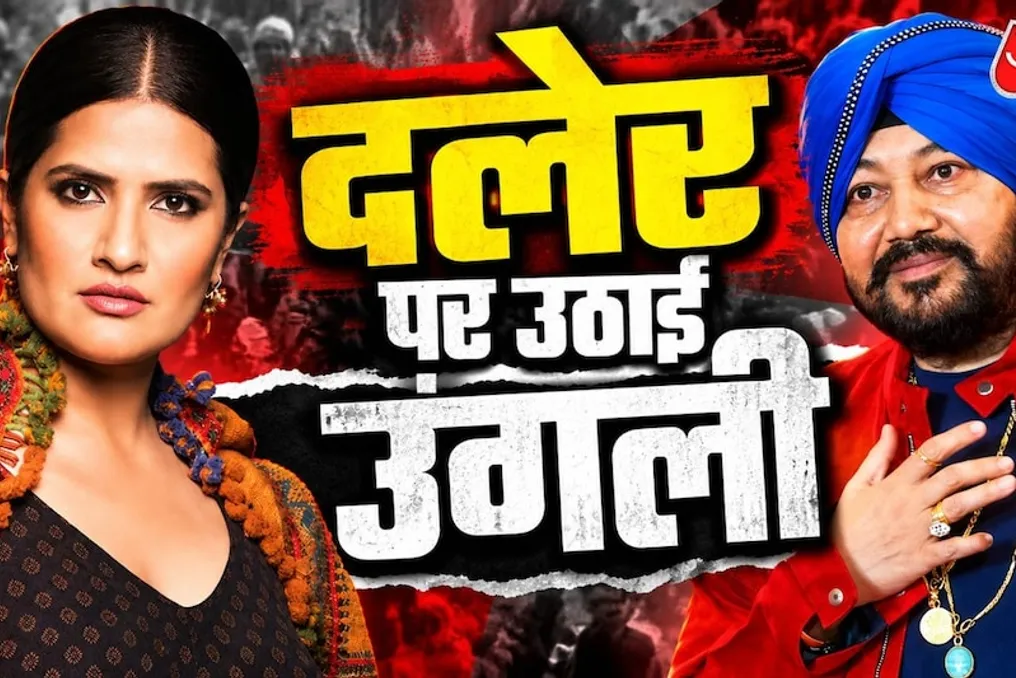
Sona Mohapatra criticized Daler Mehndi's performance, stating the audience's right to an honest rendition
Read more
www.aajtak.in

Sona Mohapatra criticized Daler Mehndi's performance, stating the audience's right to an honest rendition

A controversy surrounding singer Daler Mehndi's performance in Uttarakhand continues to escalate. While singers like Mika Singh and Badshah supported Daler Mehndi, singer Sona Mohapatra raised a completely different issue regarding this matter. Sona emphasized that respect for major and distinguished artists is present, but people who buy tickets also deserve honesty.

Sona shared her experience attending Daler Mehndi's performance at the Sufi Heritage Festival in Delhi. She reported that she and her team traveled specifically to listen to Daler Mehndi's Sufi style, but what they witnessed caused them disappointment.

On Monday, Sona Mohapatra posted on Instagram about her experience attending the second Sufi Heritage Festival in Delhi. She mentioned that they had arrived there for Daler Mehndi's performance, expecting the singer to showcase something new in the Sufi style. However, according to Sona, the performance did not meet her expectations.

She asserted that during the performance, Daler Mehndi appeared somewhat tense and lost. Furthermore, Sona noted that the singer could not hold notes for long and constantly repeated the same musical line. As the audience began leaving the event despite having paid for admission, Sona admitted that she and her team felt awkward and sad, but out of respect for Daler Mehndi, no one said anything. Nevertheless, the question now arises whether silence in that moment was appropriate.

Sona wrote: 'Yet, none of us said anything. Neither my team nor I. We stood there, feeling awkward and sad, but silent. Out of respect. But now an awkward question arises. Was it truly respect? Or did we, with our silence, contribute to something that should be questioned?'

Sona Mohapatra clearly stated that the contribution of any senior and experienced performer cannot be ignored. She expressed respect for Daler Mehndi's long career and achievements. However, in her opinion, it is also important to consider the expectations and money of the audience. Sona wrote: 'Two things can be true at the same time. Firstly, a distinguished artist should be shown respect, sympathy, and gratitude for their entire life. And secondly, the audience has the right to expect an honest performance, or at least honestly admit when that is no longer possible.'

She added that if an artist is ill or feeling unwell, this situation should be handled with sensitivity and responsibility. Sona stressed: 'What is unacceptable is that the audience and organizers constantly suffer from this, while everyone around the artist turns a blind eye to it.'

In Sona's view, it is wrong to humiliate an artist if they are sick, but it is also unacceptable to leave the audience disappointed without any explanation.

The dispute surrounding Daler Mehndi's performance began when Uttarakhand minister Subodh Uniyal interrupted the singer's performance on stage during a cultural event in Nai Tehri. Following this, a discussion started on social media regarding the minister's behavior. Some people questioned the minister's mannerisms, while others began discussing Daler Mehndi's performance itself.

Sona Mohapatra wondered if the issues related to the performance were overshadowed by the criticism of the minister's conduct. She clarified, however, that she cannot comment on whether the minister's presentation of his viewpoint was right or wrong. According to her, these two issues are different. Sona said: 'I say this as an artist who knows I might be criticized for this. Respect is not a one-sided right. It is a relationship based on mutual responsibility. Mentioning Daler Mehndi's contribution, she continued: 'And for Daler Mehndi's exceptional legacy, with sincere respect. But shouldn't we also show respect to our audience?'

Daler Mehndi arrived in Nai Tehri, Uttarakhand, to perform at the Siddhpit Ma Kunjapuri tourism and development fair on Sunday. During the event, Uttarakhand Minister Subodh Uniyal questioned his performance right on stage. The minister stated that the singer was invited to entertain the audience. Subsequently, various claims emerged on social media regarding Daler Mehndi's performance. Some accused the singer of drug use and of being unable to sing properly, although there is no independent confirmation of these allegations. On the other hand, Mika Singh supported Daler Mehndi. In a conversation with ANI, Subodh...

Popular